A seated terracotta figure from the Mayap chiefdom in the Sultanate of Foumban, Cameroon. A bearded man in a decorated cap holds his hands against his chest, on a base with incised bands.
1. Form and Modelling
The figure is modelled in clay with a smooth, rounded body. The head is large, with wide almond eyes outlined by rows of fine dots, rounded ears, a broad nose and full lips above a pointed beard that falls onto the chest. A necklace or collar circles the neck. The cap is tall and cylindrical, with a band of incised triangles and vertical bars.
The arms are bent so that both hands, with carefully marked fingers, meet in front of the chest. The belly is full and the navel is marked. The figure sits with knees drawn up, and an apron-like panel with a fine incised pattern covers the lap. The base is a cylinder with a zigzag band.
2. Use and Context
The collection catalogue lists the piece as an ornate prestige pipe from the Mayap chiefdom. Because this chiefdom ranks among the most important in the Sultanate, its chieftains long commissioned objects with which their wealth and power could be shown. Such objects were usually placed near the chieftain's throne in the audience chamber and were never used for smoking.
3. Surface
The clay has a dark, glossy red-brown surface, smoothed on the face, chest and belly and finely textured on the cap, apron and legs. Small dry patches and fine abrasion appear on the shoulders and base.
Summary
A modelled terracotta figure in which the catalogue sees a prestige pipe, shown as a bearded, capped man with hands at his chest.
Written with AI assistance from the collection appraisal, object photography and our own research; editorially reviewed. Mistakes are possible — corrections are welcome. How we work →
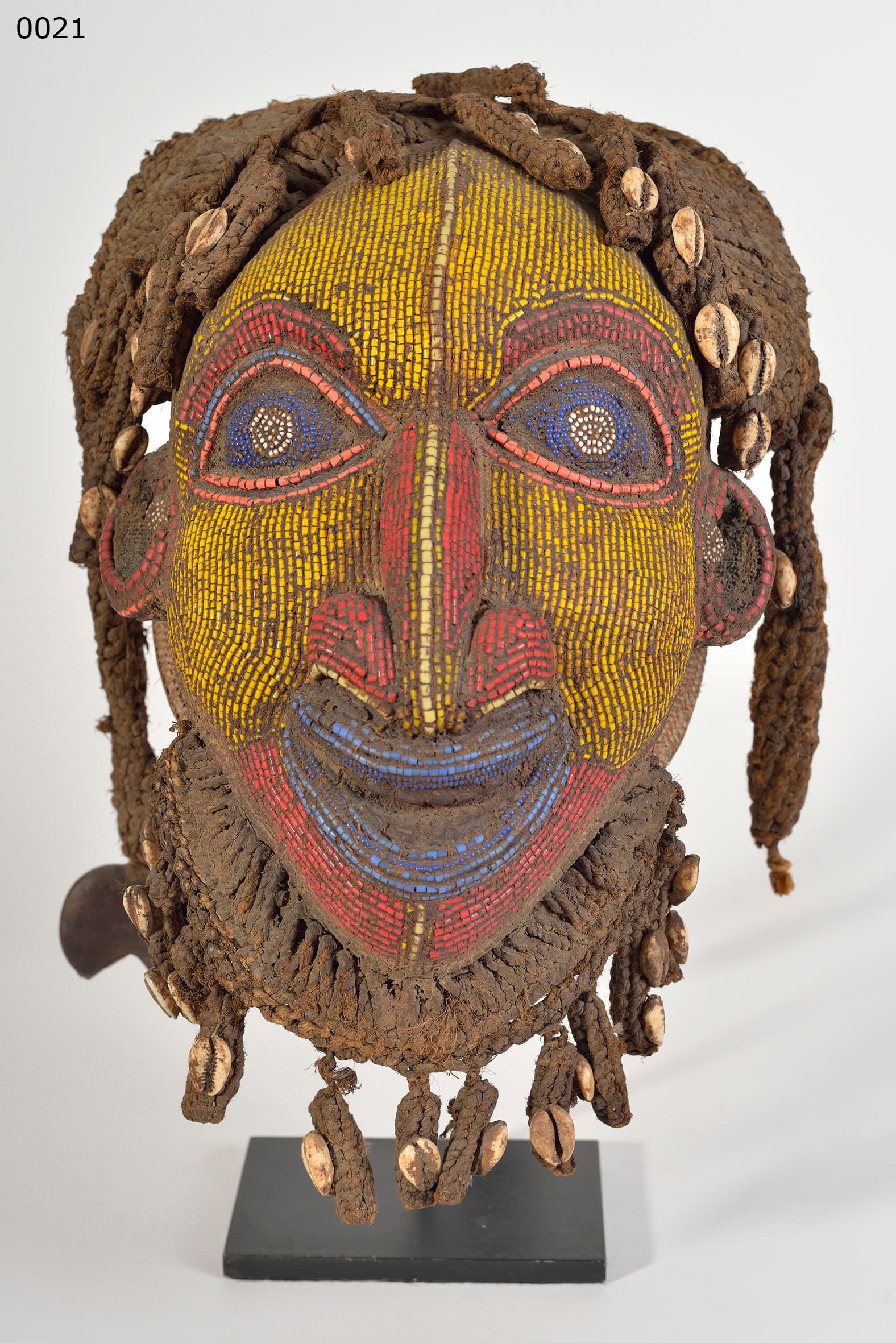
mask (covered with beads - shells on cloth)
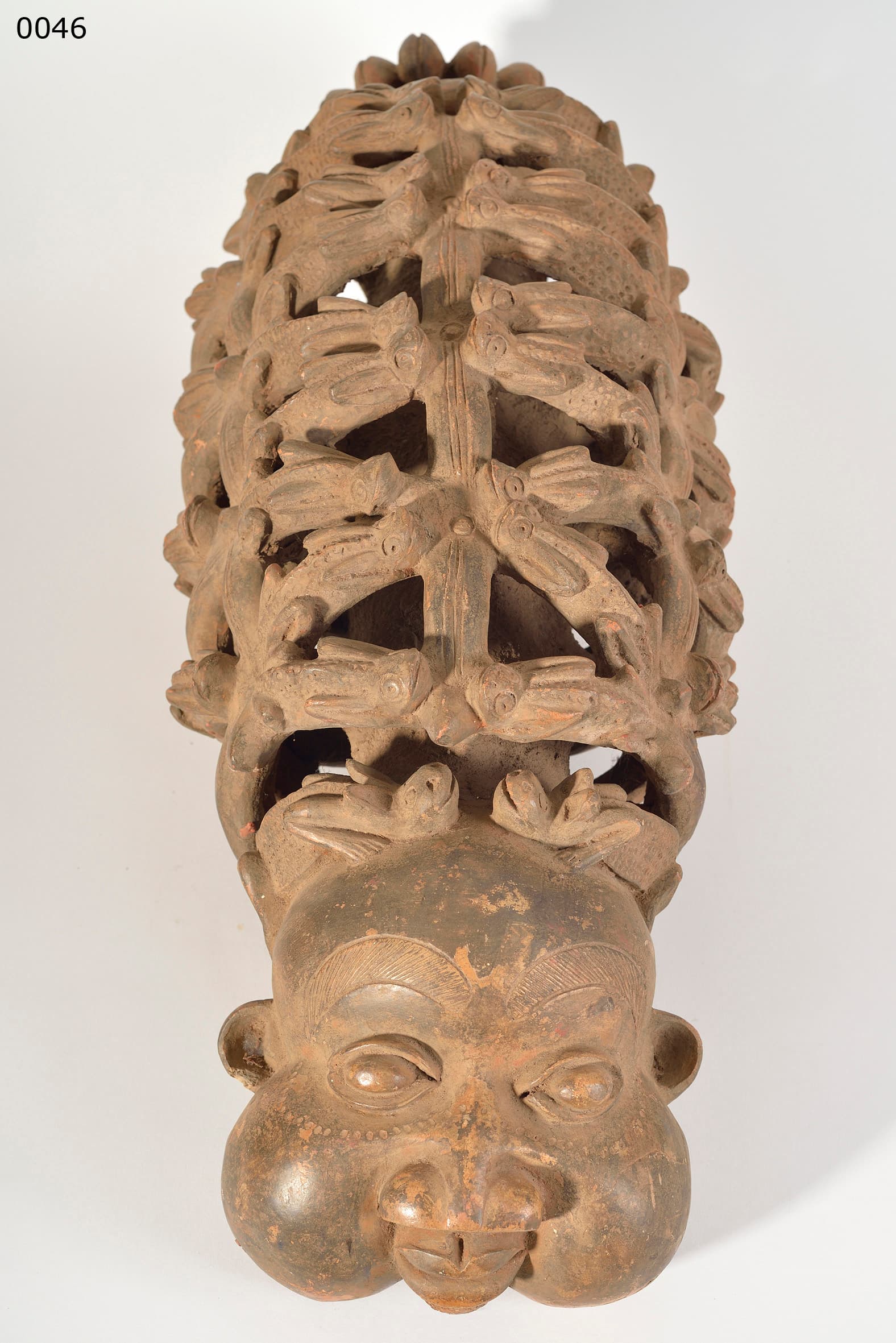
prestige pipe head
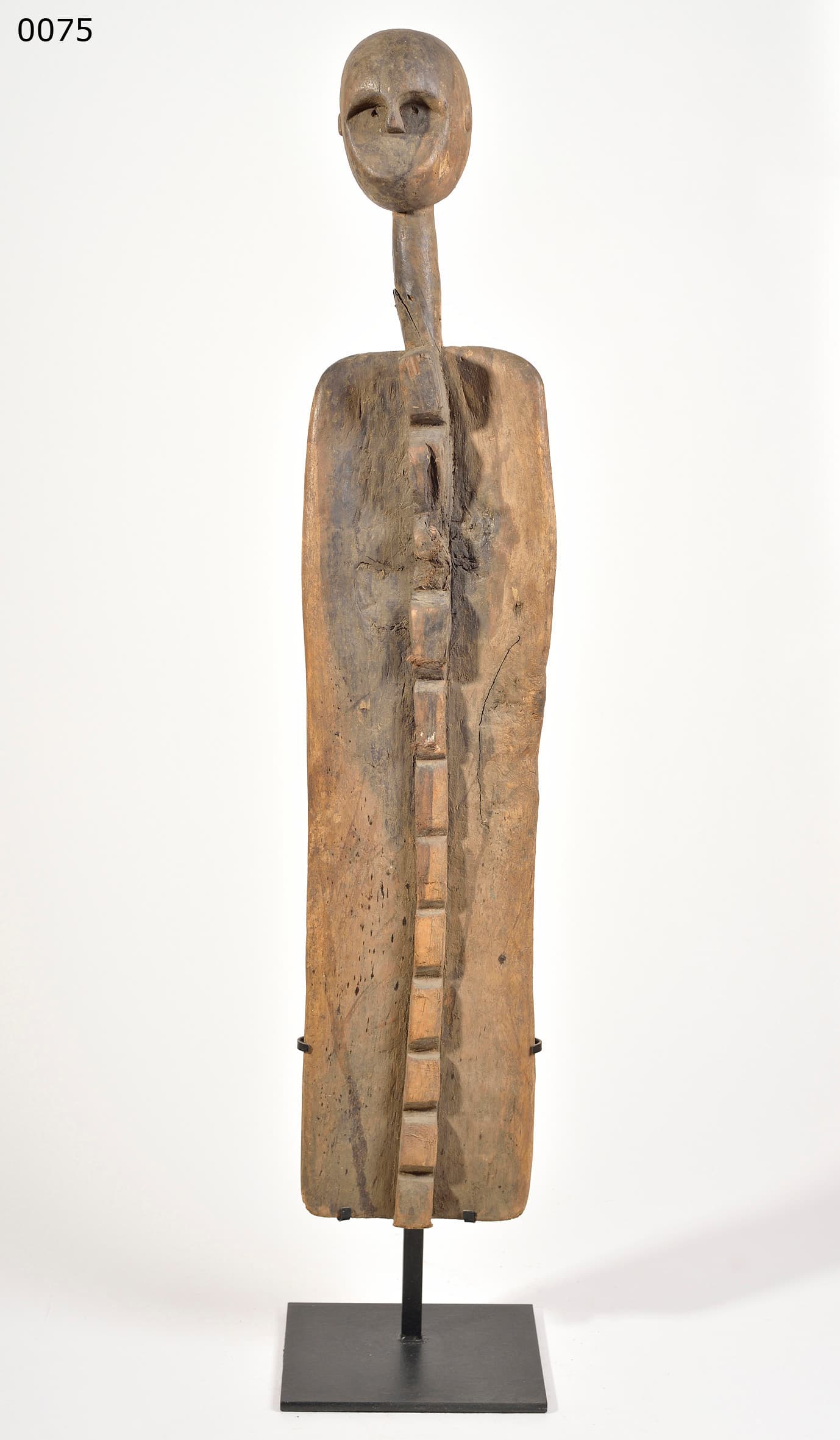
rare friction instrument