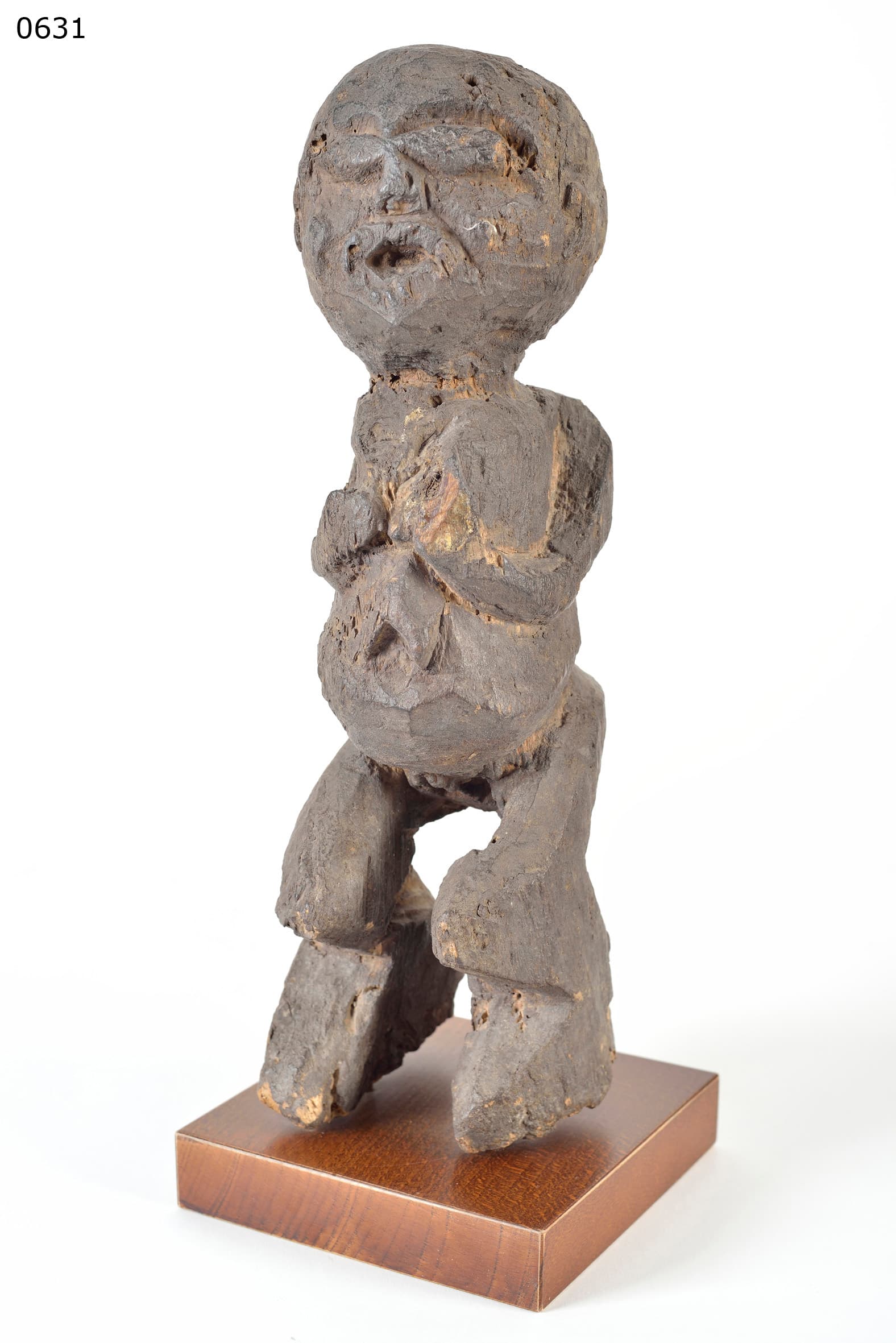
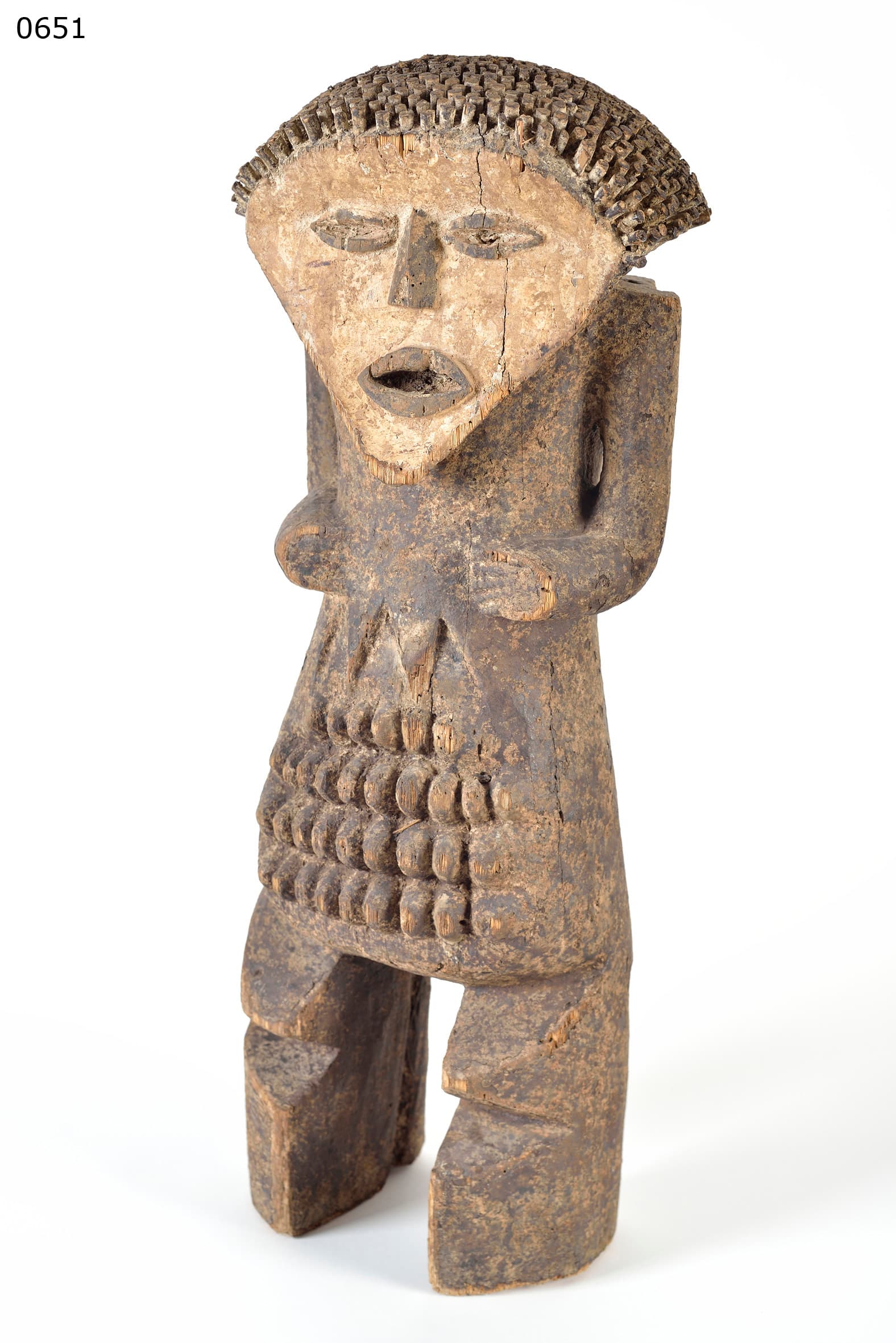
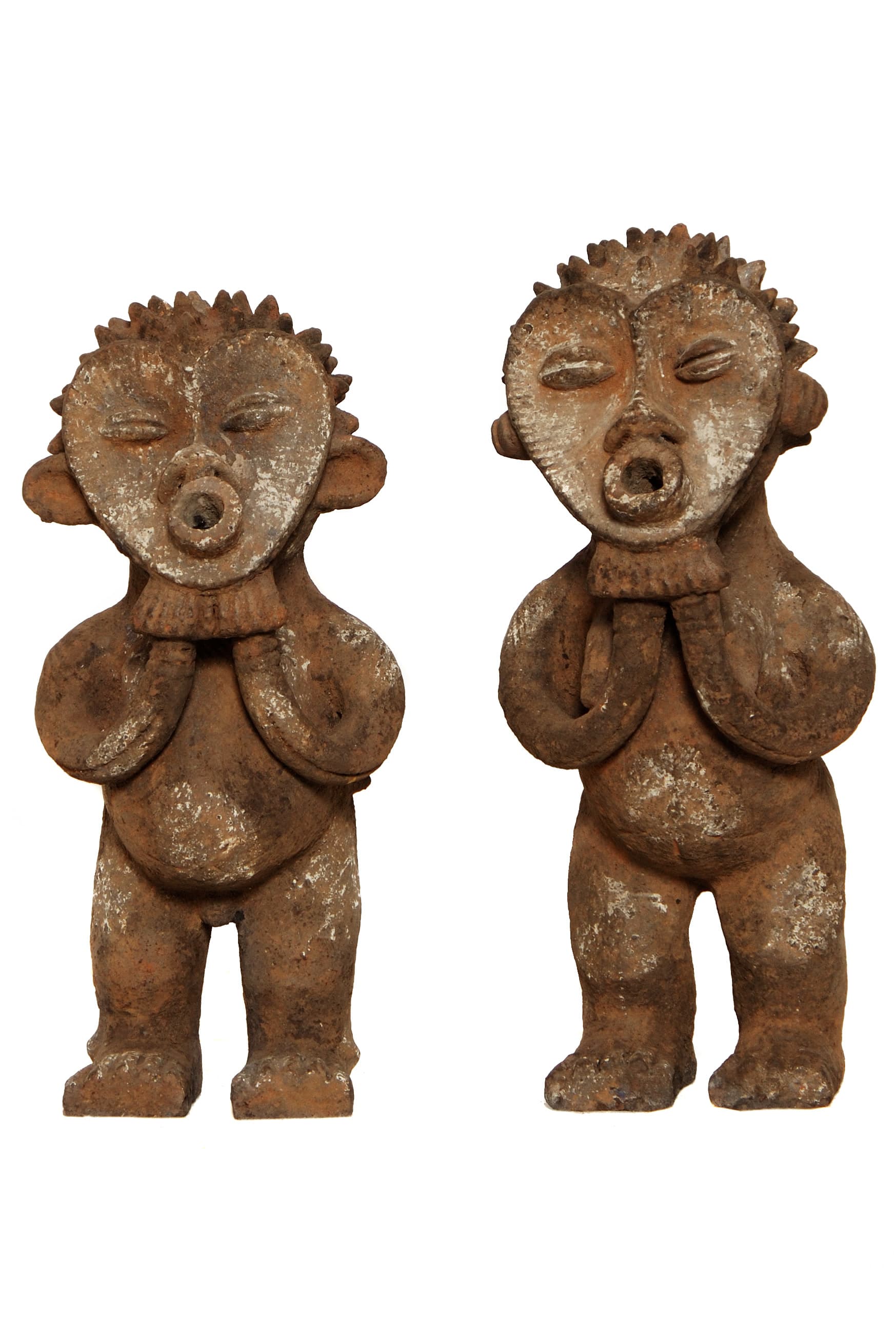
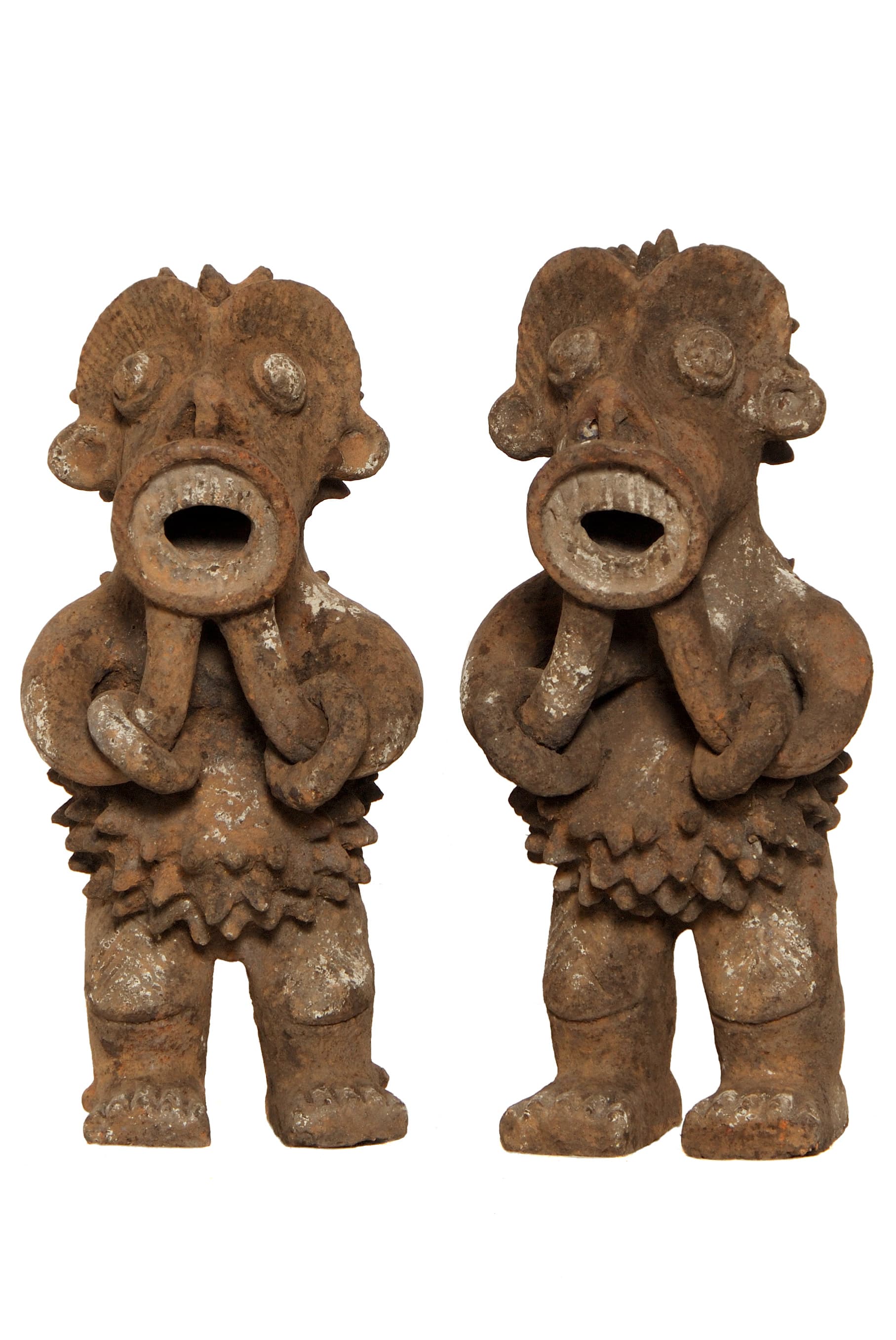
A terracotta vessel, 38 cm high, with a bulbous body covered in raised nodules. A figure rises from the shoulder of the vessel, its raised hands framing a round, open mouth. The vessel stands on a ring of plaited fibre.
1. Form and Surface
The lower body is rounded like a gourd and covered all over with small, raised nodules; the same nodular surface continues over the figure's head and torso. The arms are bent, and the hands are raised to the open round mouth, which serves as the opening of the vessel. A second, smaller view shows the back of the figure, with its head set above the nodular body.
2. Use and Context
According to the collection catalogue, which gives the Foubiegouo Chiefdom as the place of origin, vessels of this kind were used in transformation rituals. The transformation of a person, usually a chieftain, into an animal takes place under the influence of alcohol, in this region palm wine, but primarily through self-suggestion in occult séances in which only the initiated may take part. The transformation into a leopard is described as reserved for chieftains and involves a leopard mask, a woven basket with strips of leopard fur and two eye holes.
3. Surface and Condition
The fired clay has a dry, earthy grey-brown surface with lighter patches. The collection catalogue describes the terracotta vessels of this group as partly damaged and, in part, as having received offerings.
Summary
This nodular terracotta vessel with a figure at its mouth belonged to the transformation rituals of the Mambila region, as described in the collection catalogue.
Written with AI assistance from the collection appraisal, object photography and our own research; editorially reviewed. Mistakes are possible — corrections are welcome. How we work →