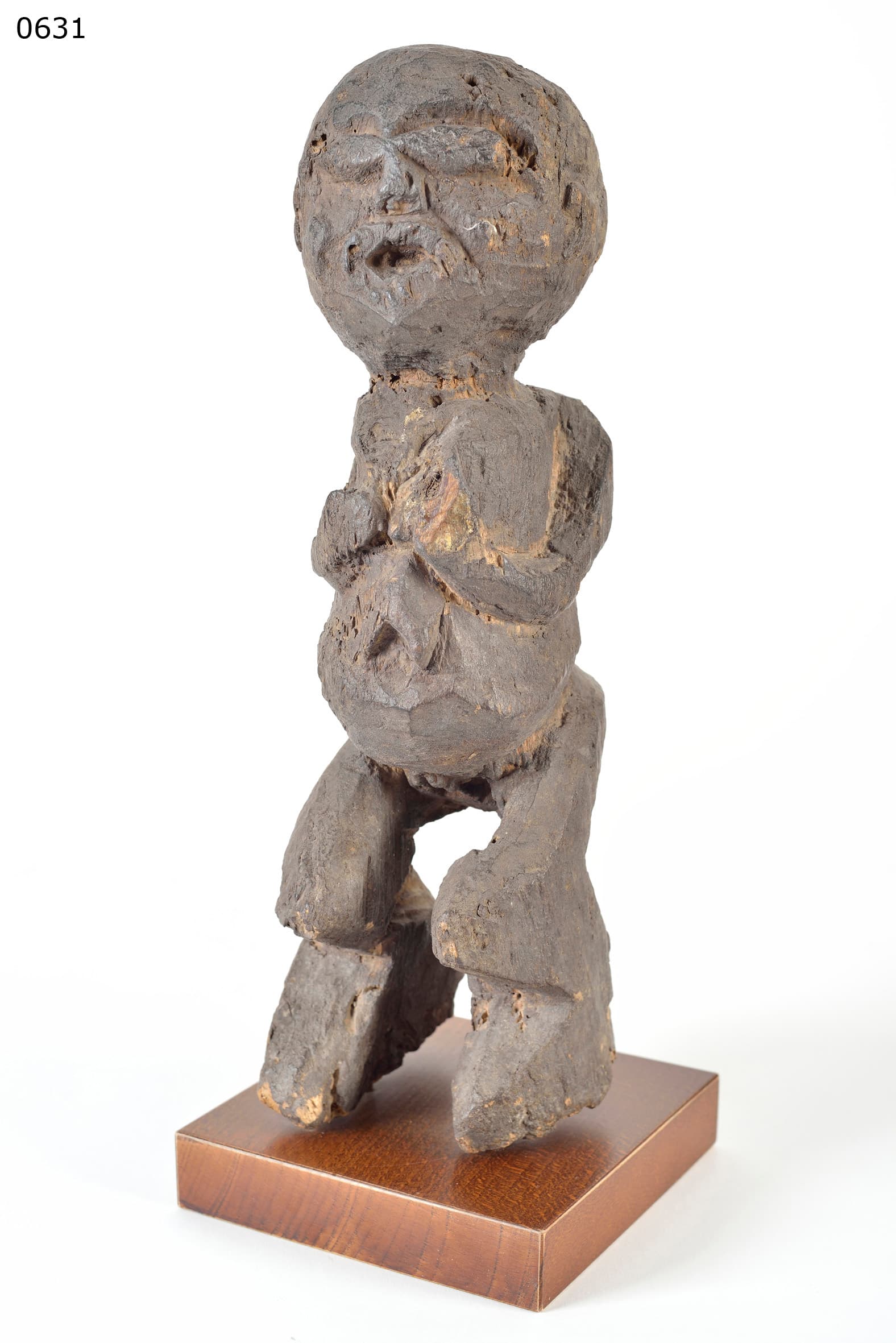
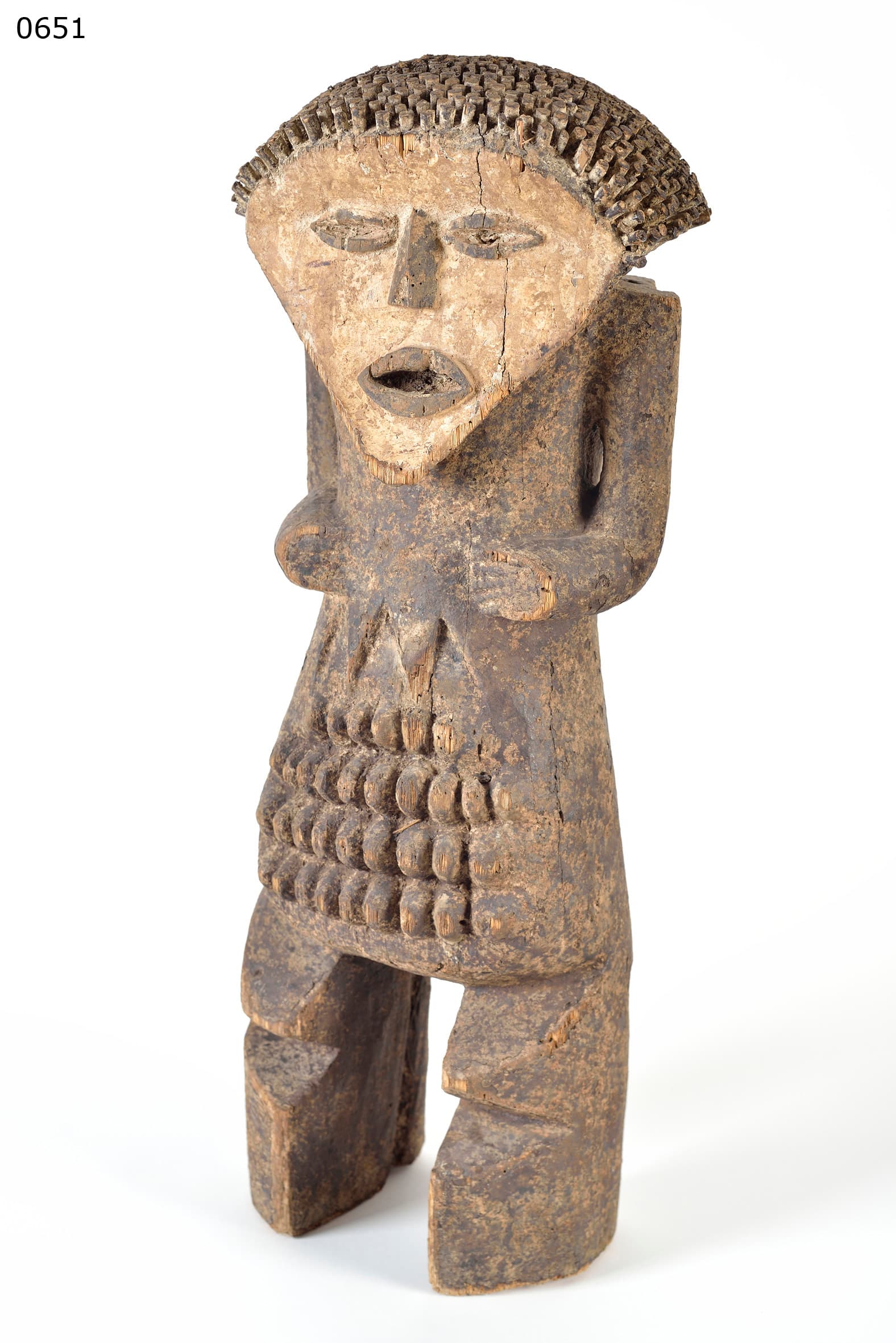
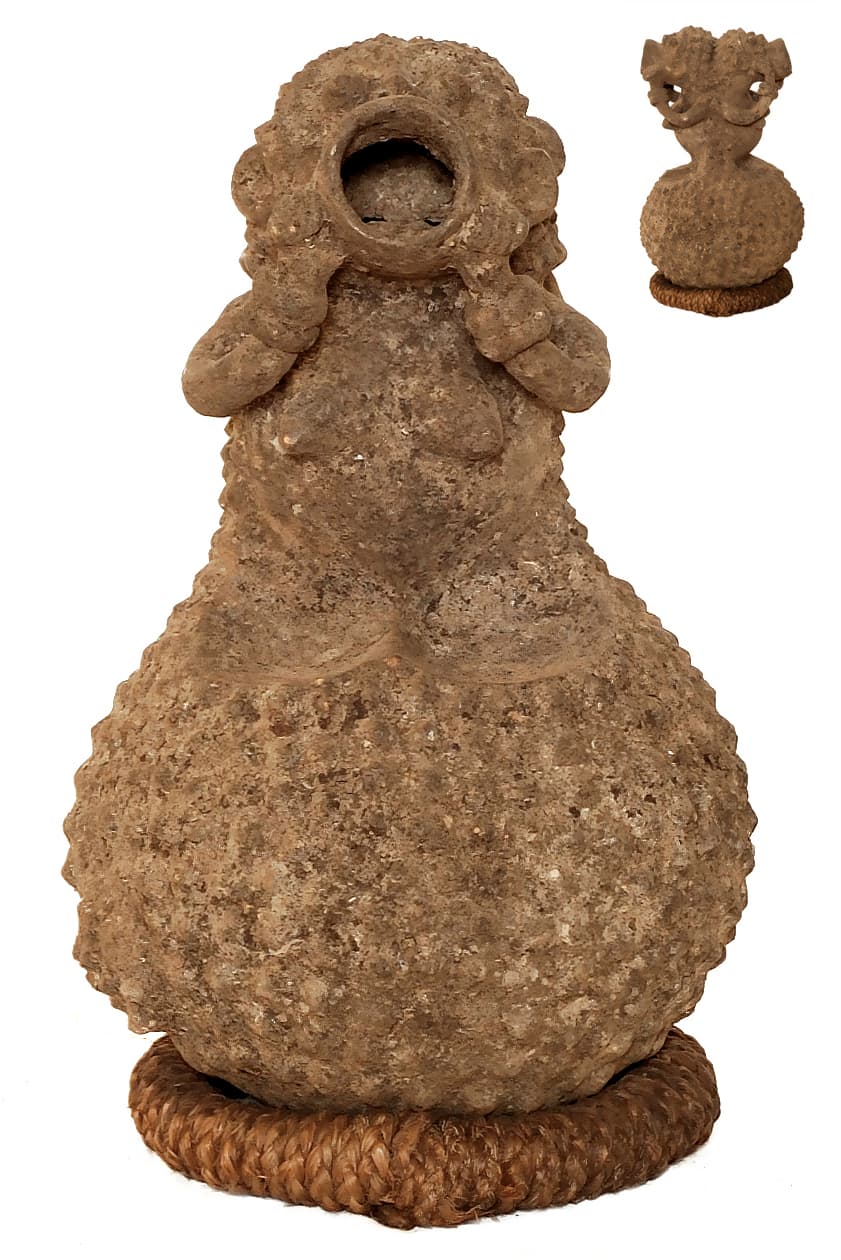
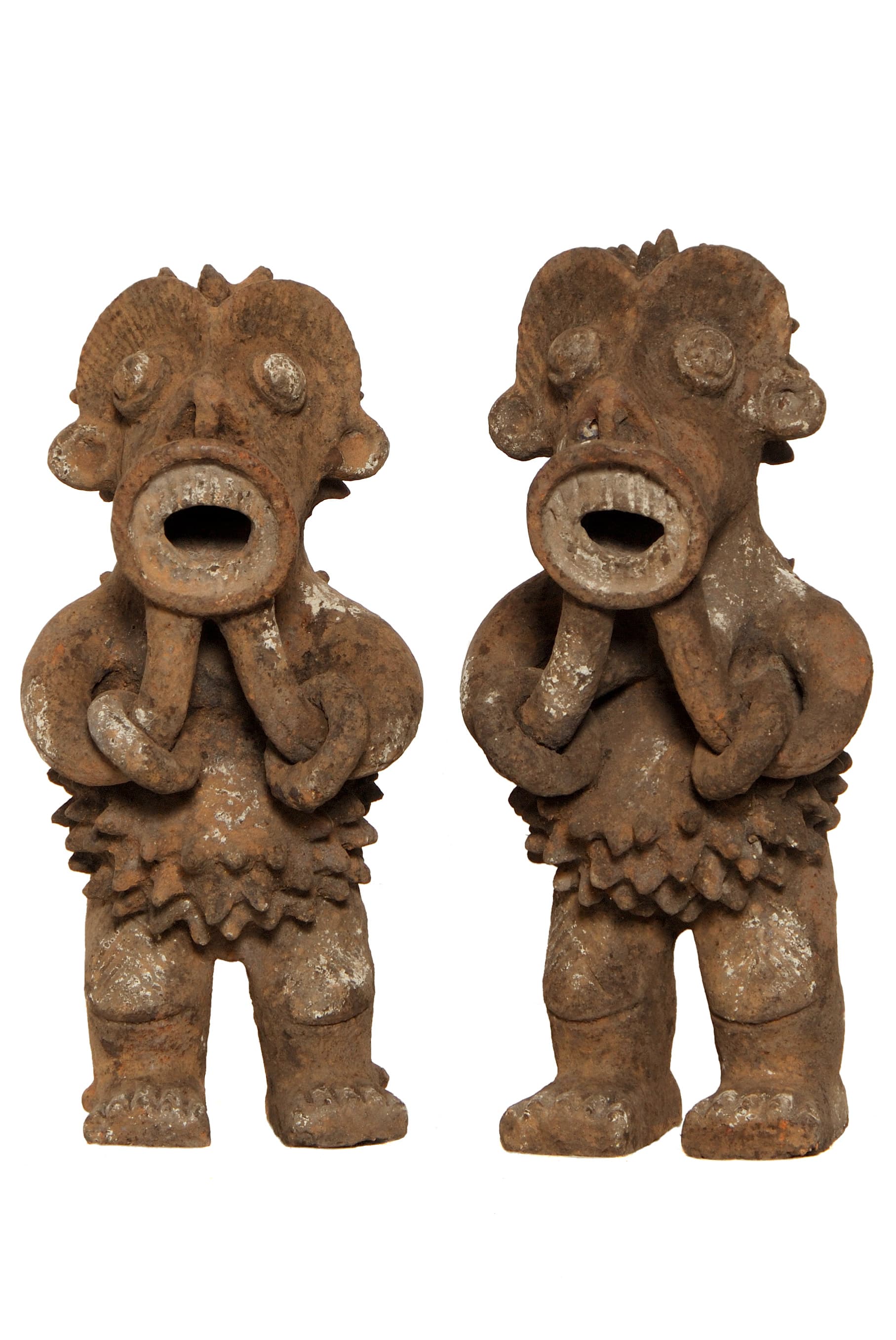
A pair of highly expressive, stocky figures featuring stubble-like hair, large heads, and open mouths. Their bodies are smooth, with rounded bellies and short legs; a companion pair (item 138) is catalogued separately.
1. Aesthetic Style
While the Mambila are primarily known for wooden carvings, these rare clay figure pairs from the Foubiegouo Village demonstrate an earthy, stoic, and highly expressive ceramic tradition. The figures are grounded and solid, projecting an aura of heavy, static observation. The heart-shaped faces with slit eyes, the pursed tubular mouths and the spiky "stubble" hair are the traits that Hornek and the Stepic catalogue single out as typical of Mambila work.
2. Ritual Function and Occult Observation
These figures functioned within the deeply secretive environment of the Mambila transformation cult. Rather than acting as active vessels, they served as symbolic observers and supernatural guardians. Found in situ surrounded by transformation vessels (like Items 133-136), they were placed on altars to oversee the terrifying rituals where the chief transformed into a leopard. They ensured that these highly dangerous occult practices proceeded safely and in strict accordance with the will of the ancient ancestors.
3. Patina, Material Weathering, and Age
The clay surfaces exhibit a dry, dusty, and highly oxidized patina. The deep crevices of the facial features and hair have accumulated a thick layer of soot and red earth, consistent with placement near the ritual hearths of a secret society hut. The fragile nature of the clay and the minor edge abrasions are visible on the figures.
Summary
These rare Mambila clay figures are notable examples of stoic, observant shrine art. Their presence in situ among transformation vessels confirms their vital role as silent guardians of the chiefdom's most dangerous occult rituals.
Written with AI assistance from the collection appraisal, object photography and our own research; editorially reviewed. Mistakes are possible — corrections are welcome. How we work →