A seated figure, measuring 32 cm in height, entirely constructed from tightly woven, brightly colored glass beads. The beadwork meticulously contours the facial features, limbs, and the small object held to the figure's chest, creating a striking visual presence characteristic of the Cameroon Grassfields.
1. Aesthetic Style and Beadwork Technique
This piece from the Bamun people is a highly developed example of Grassfields beadwork. The application of the beads is precise, utilizing contrasting colors to outline the eyes, mouth, and structural planes of the body, giving the figure an expressive quality. The face is dominated by light blue beads, accented with white to define the features and a geometric diamond motif on the forehead, while the body features dynamic, alternating bands of red and blue. The density of the imported glass beads—a valued and tightly controlled commodity—transforms the sculpture into a significant prestige object.
2. Ritual Function and the Adornment of Power
Unlike sacrificial objects or ancestral vessels, this beaded figure is not documented as having an occult function; its purpose is understood to be primarily declarative. It functioned as a "display figure" (Perlenbeistellfigur). During major events and public ceremonies at which the chieftain appeared, this figure was placed nearby to simply be "present." Its presence served to "adorn" the ritual and broadcast the chief's wealth and social standing, rather than playing a role in the ritual's esoteric content. It served as a status symbol, indicating the chieftain's immense resources.
3. Material Condition and Surface Characteristics
The figure's beadwork shows signs of use. The glass beads show subtle surface wear, and the organic threads binding the beadwork matrix exhibit signs of desiccation. In a few small areas, particularly near the lower edge of the circular base and the joints, the tension of the thread has relaxed slightly, allowing minor movement in the bead rows and revealing the underlying structural binding. The base of the figure shows smooth wear consistent with being repeatedly placed on surfaces during royal displays.
Summary
This finely crafted beaded figure (Inv. no. 070) is a manifestation of Bamun economic power and artistic refinement. It served as a visual witness to the wealth and prestige of the chieftain, adorning royal ceremonies through its vibrant material presence.
Written with AI assistance from the collection appraisal, object photography and our own research; editorially reviewed. Mistakes are possible — corrections are welcome. How we work →
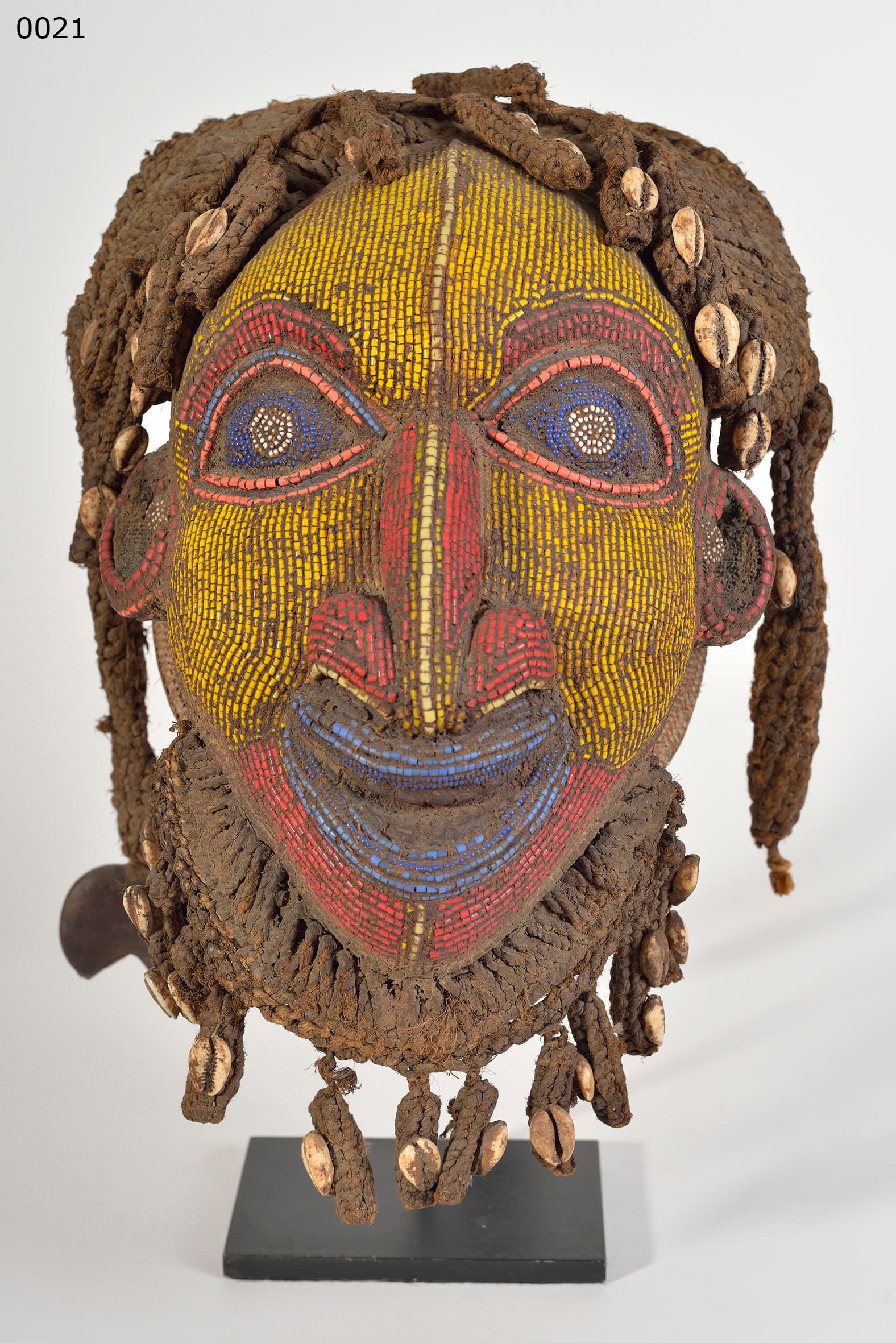
mask (covered with beads - shells on cloth)
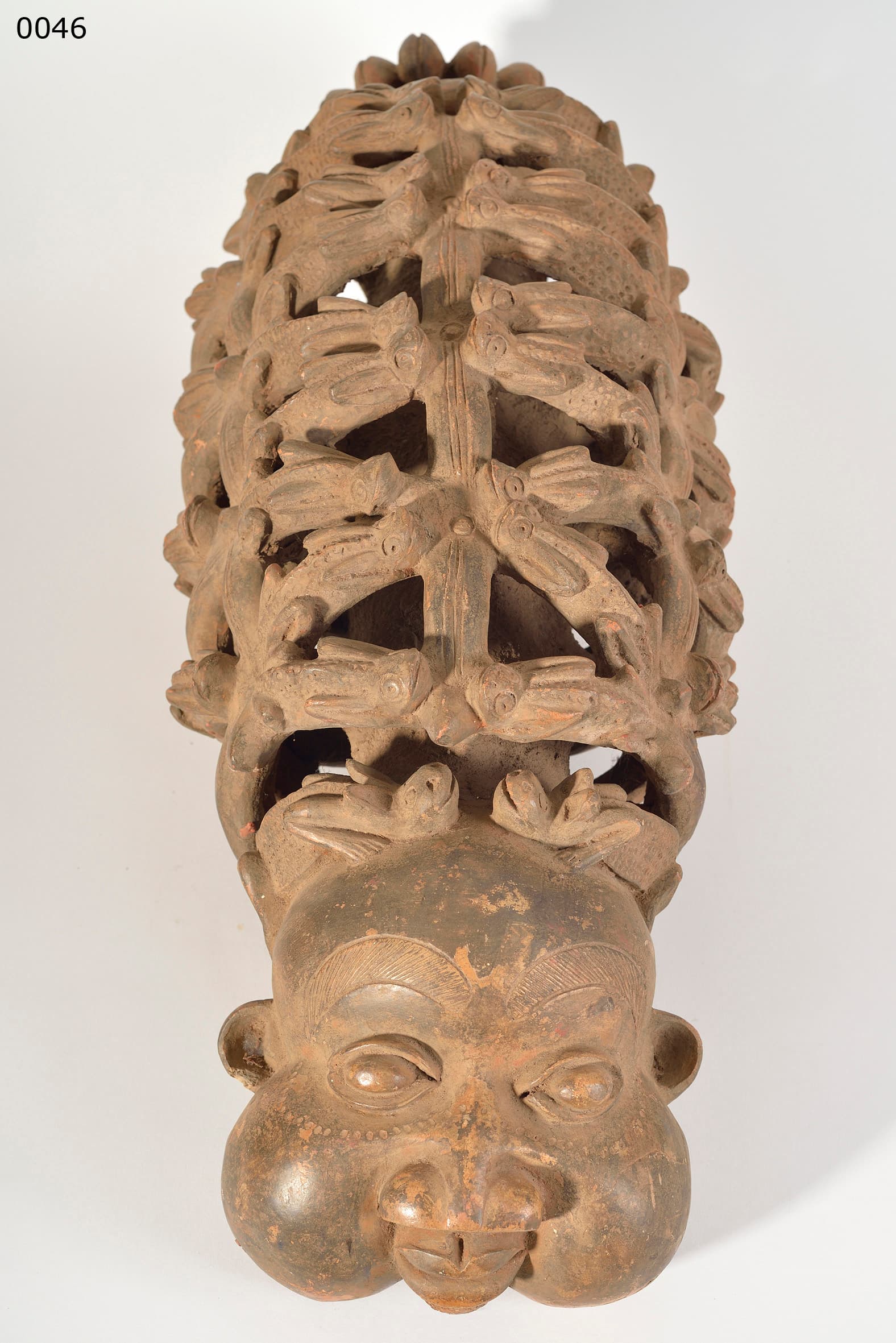
prestige pipe head
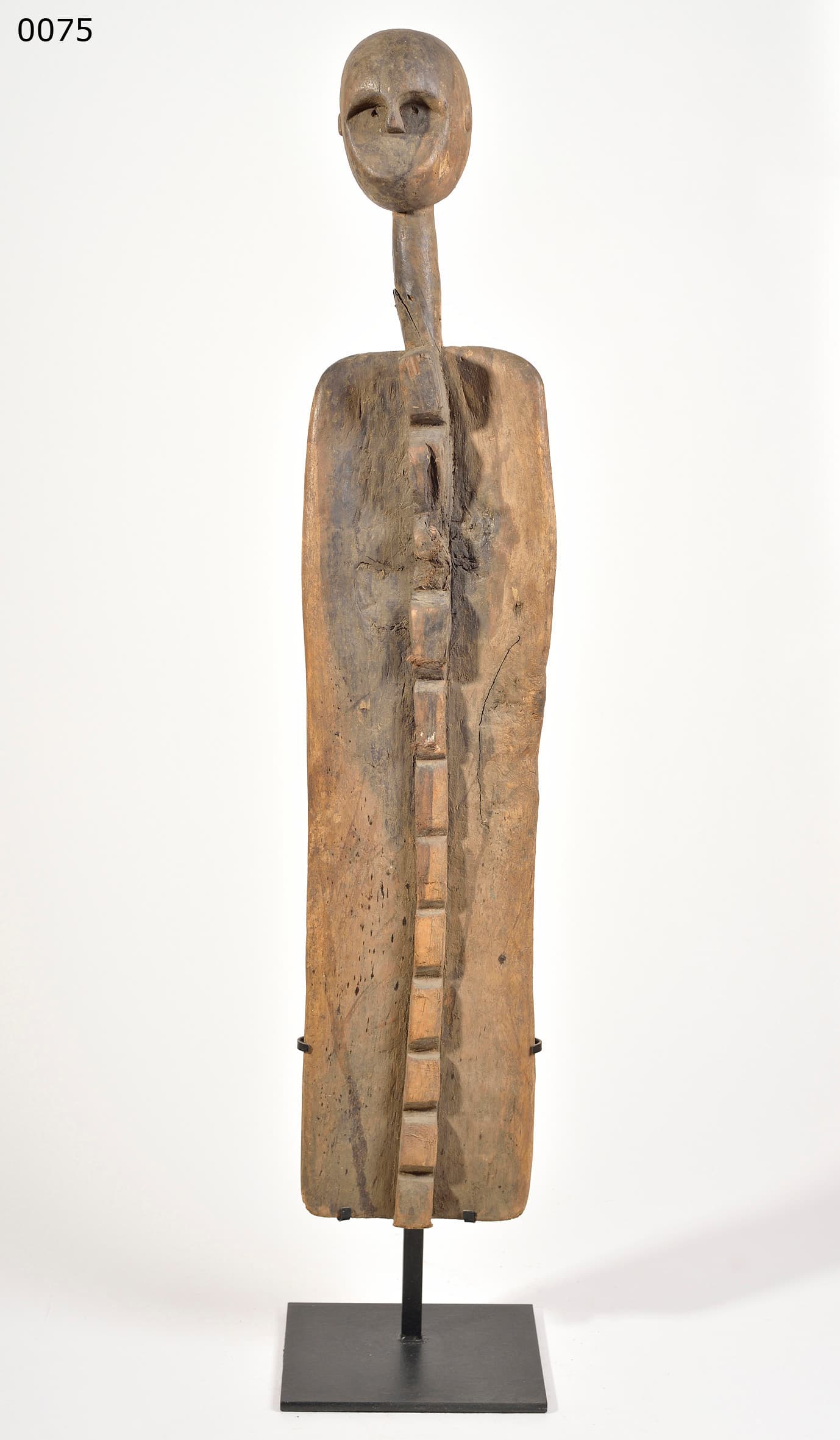
rare friction instrument