A terracotta pipe bowl covered in raised, oval and round studs, with a grid-patterned band around the mouth and a finely dotted and incised surface below.
1. Form and Decoration
This terracotta pipe comes from the Mabouo Chiefdom within the Sultanate of Foumban. The body is divided by raised ridges into fields, each filled with oval studs, and rows of larger studs run along the back. A grid pattern frames the flaring mouth, while the underside carries fine incised dots and lines. The warm orange-brown clay has a slightly glossy surface.
2. Use and Context
According to the collection catalogue, terracotta pipes are very popular objects with which Grassfields chiefs show their wealth. They are never used for smoking but are kept in the treasure houses or audience chambers of the chiefs. At the NGOUN festival, held every two years at the court of the Sultan of Foumban, chiefs have objects from their treasure houses carried to the Sultan by servants and set up there.
3. Surface and Condition
The surface is smooth and well preserved, with small areas of wear on the tips of the raised studs and at the rim of the mouth.
Summary
This terracotta pipe from the Mabouo Chiefdom is covered in raised studs and a grid pattern. It was made as a showpiece of status, not for smoking.
Written with AI assistance from the collection appraisal, object photography and our own research; editorially reviewed. Mistakes are possible — corrections are welcome. How we work →
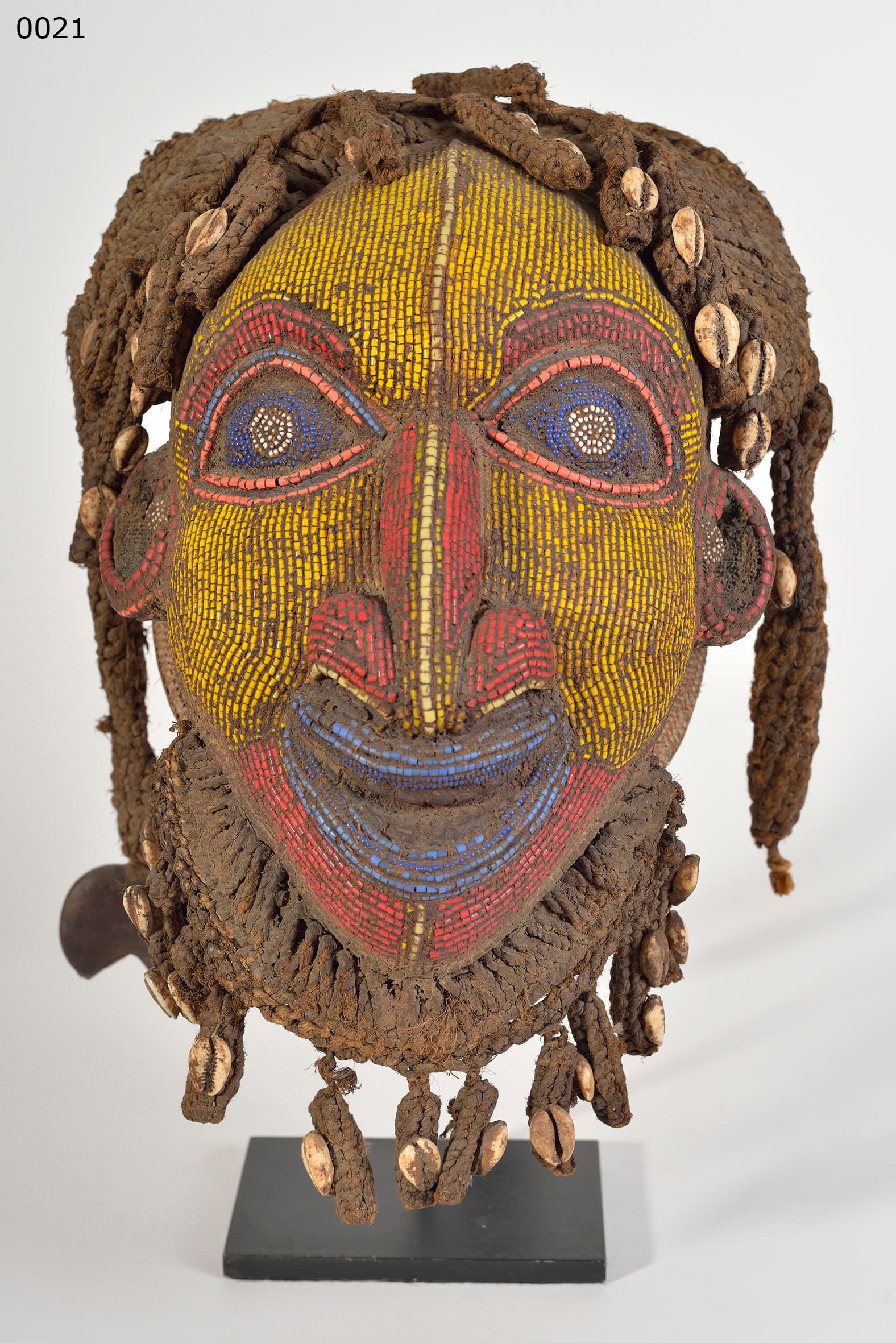
mask (covered with beads - shells on cloth)
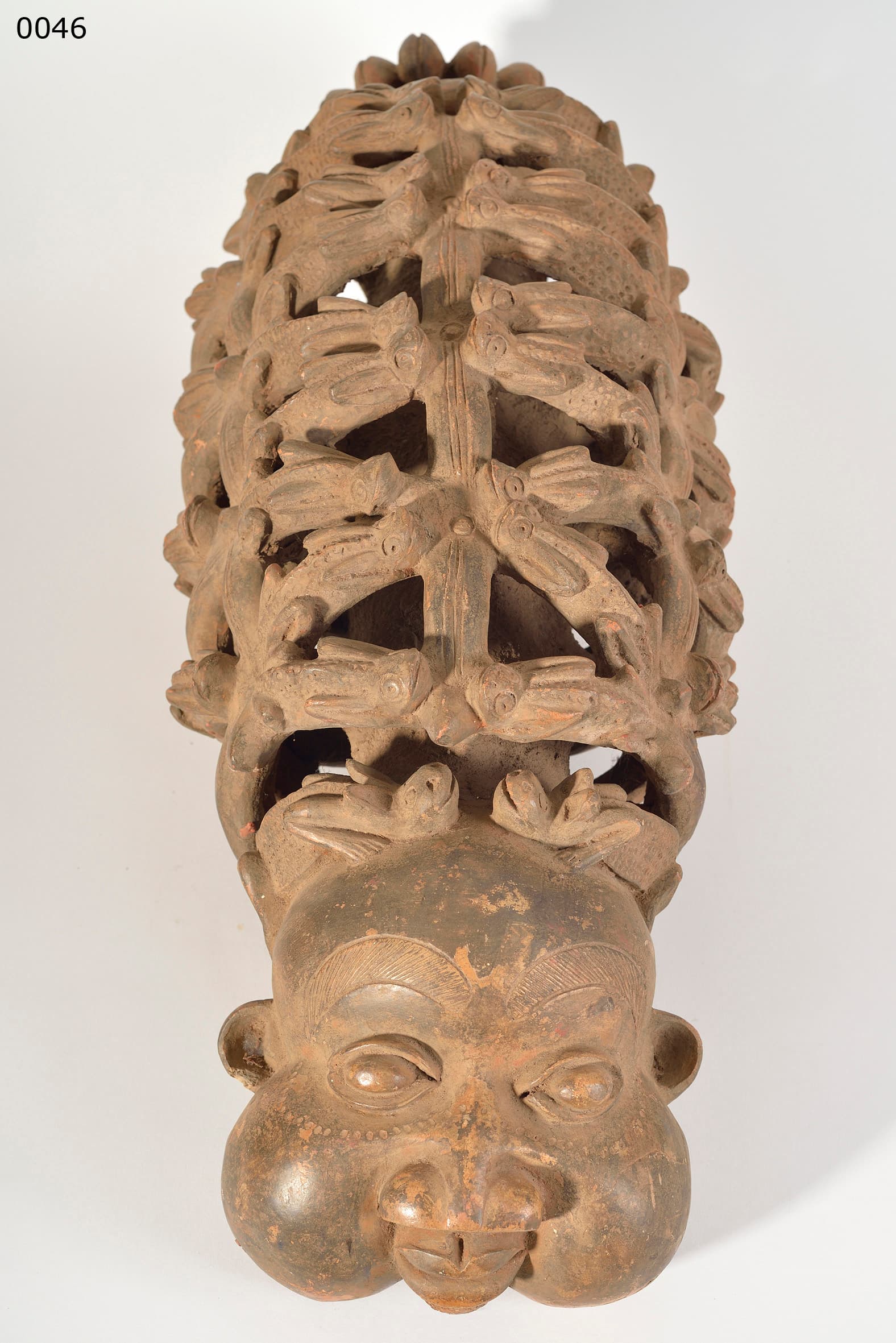
prestige pipe head
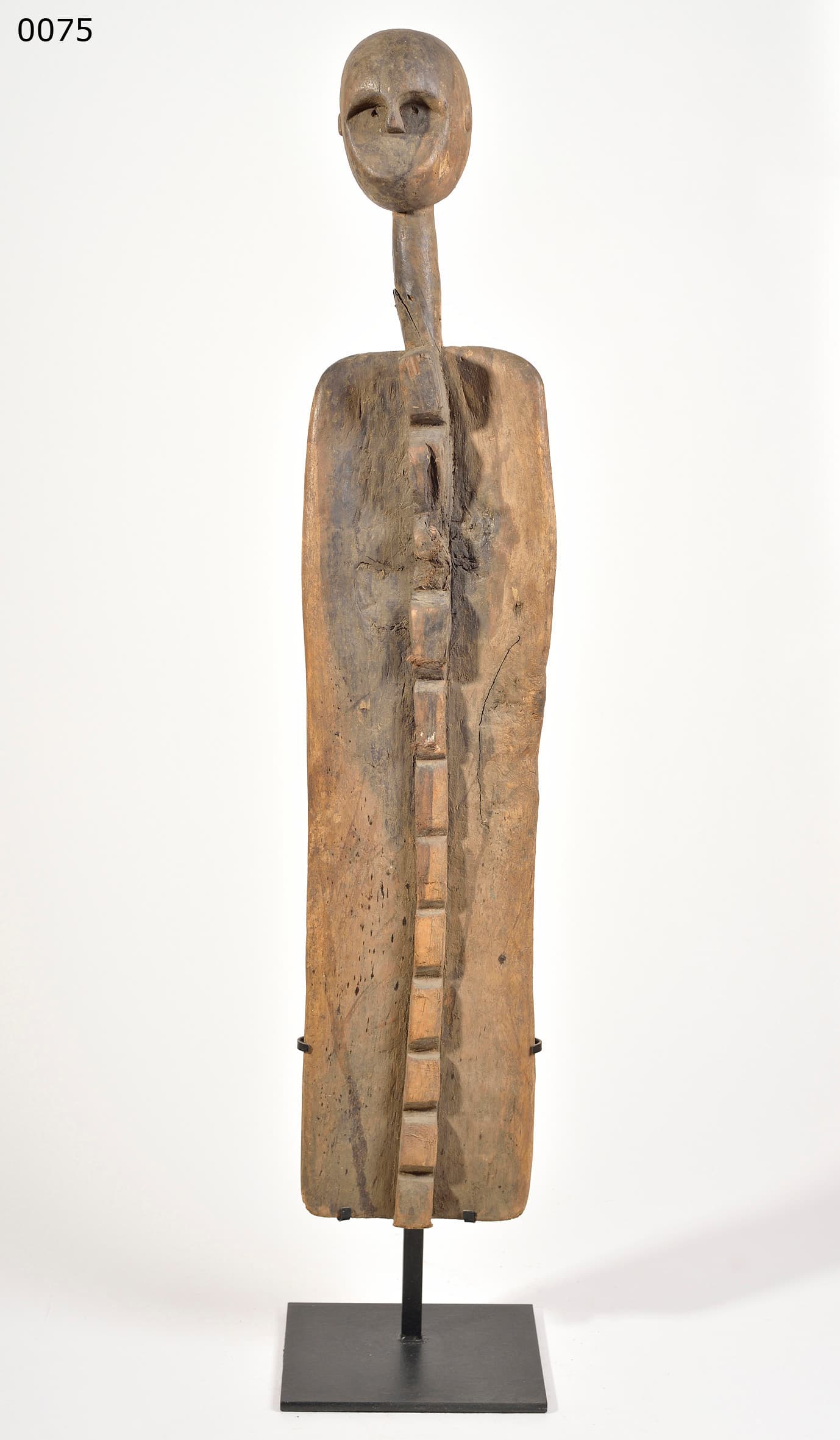
rare friction instrument