A carved wooden lid from the Mayap chiefdom in the Sultanate of Foumban, Cameroon. A domed cover with an incised border carries a squatting figure who holds a long pipe in both hands.
1. Form and Carving
The lid is a low, rounded dome whose lower edge is decorated with a band of incised chevrons. On top, the figure squats with knees apart and feet planted on the dome. Both hands, with bracelets on the forearms, grip a long pipe whose bowl rests against the lid and whose stem rises to the mouth.
The head is carefully worked. The hair is rendered in fine parallel incisions and crowned by an arched crest with a small round knob above the brow. The eyes are narrow and the nose straight. Small marks on the cheeks, a short pointed beard and rings at the neck complete the face, while the chest shows rounded breasts.
2. Use and Context
According to the collection catalogue, such skilfully carved and elaborately decorated bowls were used only by the chieftain and his family. Certain objects were reserved for the so-called royal family, as they still are today, and their use by anyone outside the elite is considered a sacrilege fraught with consequences. The vessel was probably used to dispense a slightly creamy mass prepared from plant extracts, with which one lightly brushed oneself before entering the chieftain's audience chamber, probably as a symbolic act of submission.
3. Surface
The wood is dark brown with a warm, slightly glossy patina on the figure and a drier, scuffed surface on the dome. Small losses of surface appear on the crest and along the rim.
Summary
A lid in which a pipe-smoking figure crowns a domed cover, from a vessel type that the collection catalogue ties to the chieftain's household.
Written with AI assistance from the collection appraisal, object photography and our own research; editorially reviewed. Mistakes are possible — corrections are welcome. How we work →
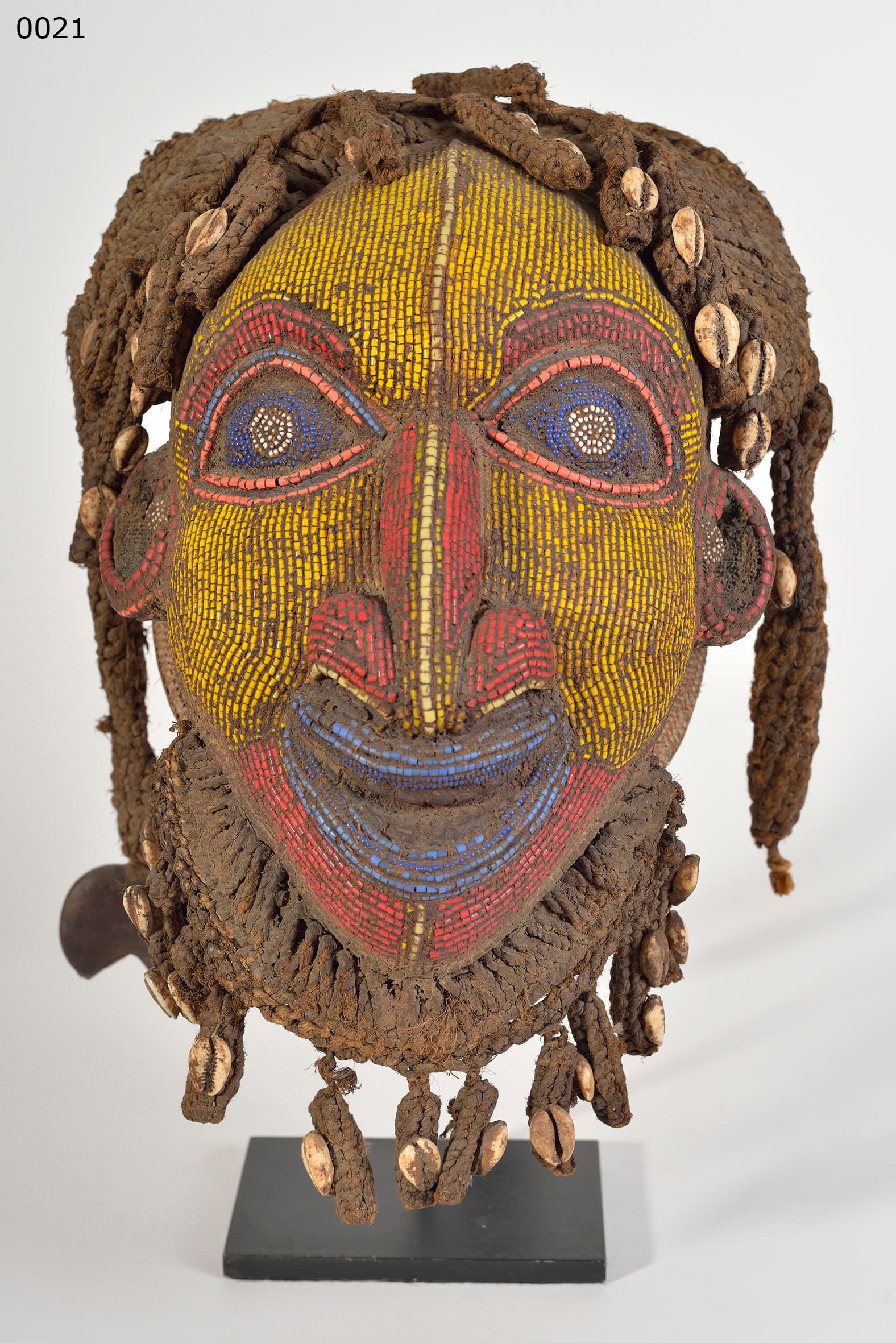
mask (covered with beads - shells on cloth)
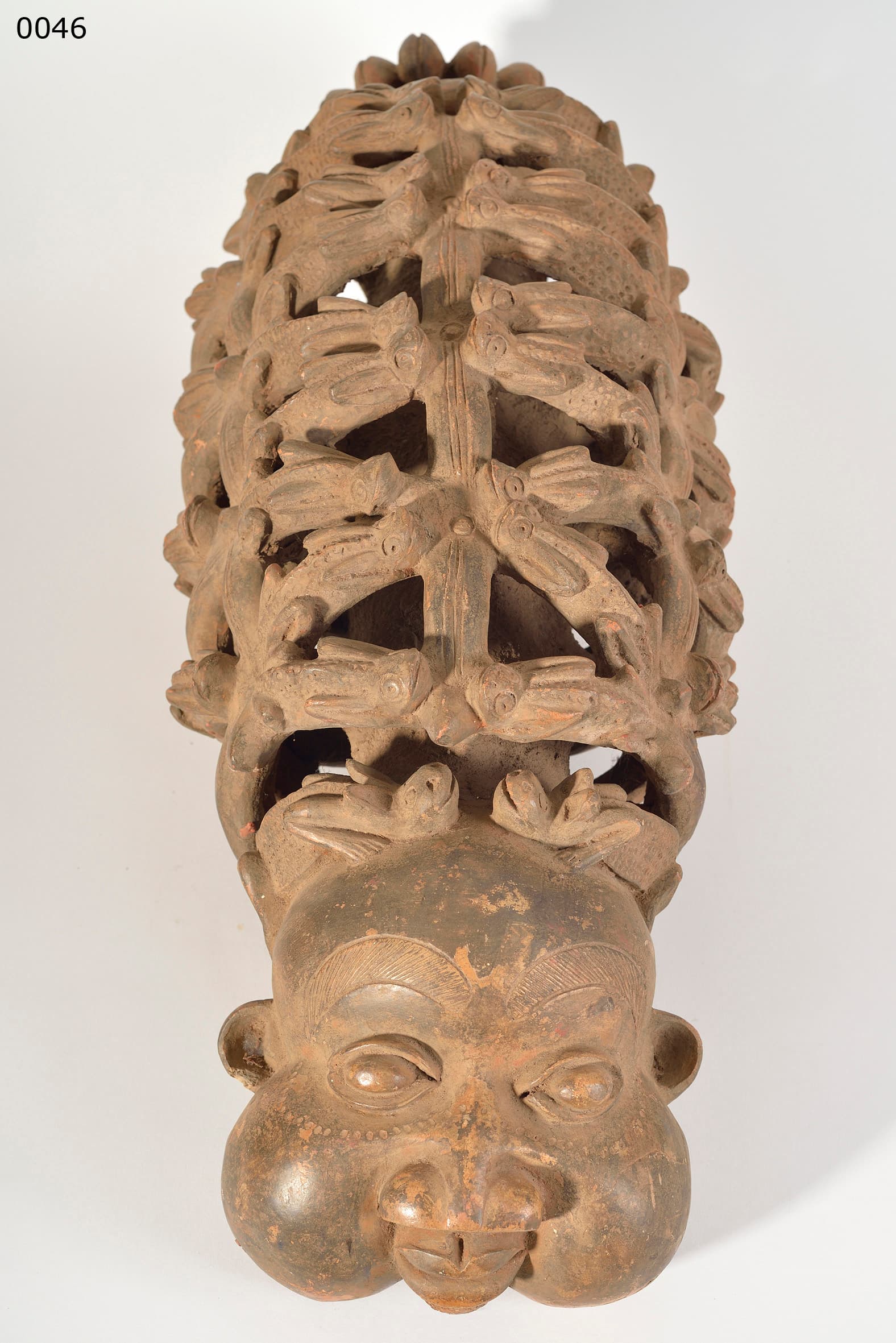
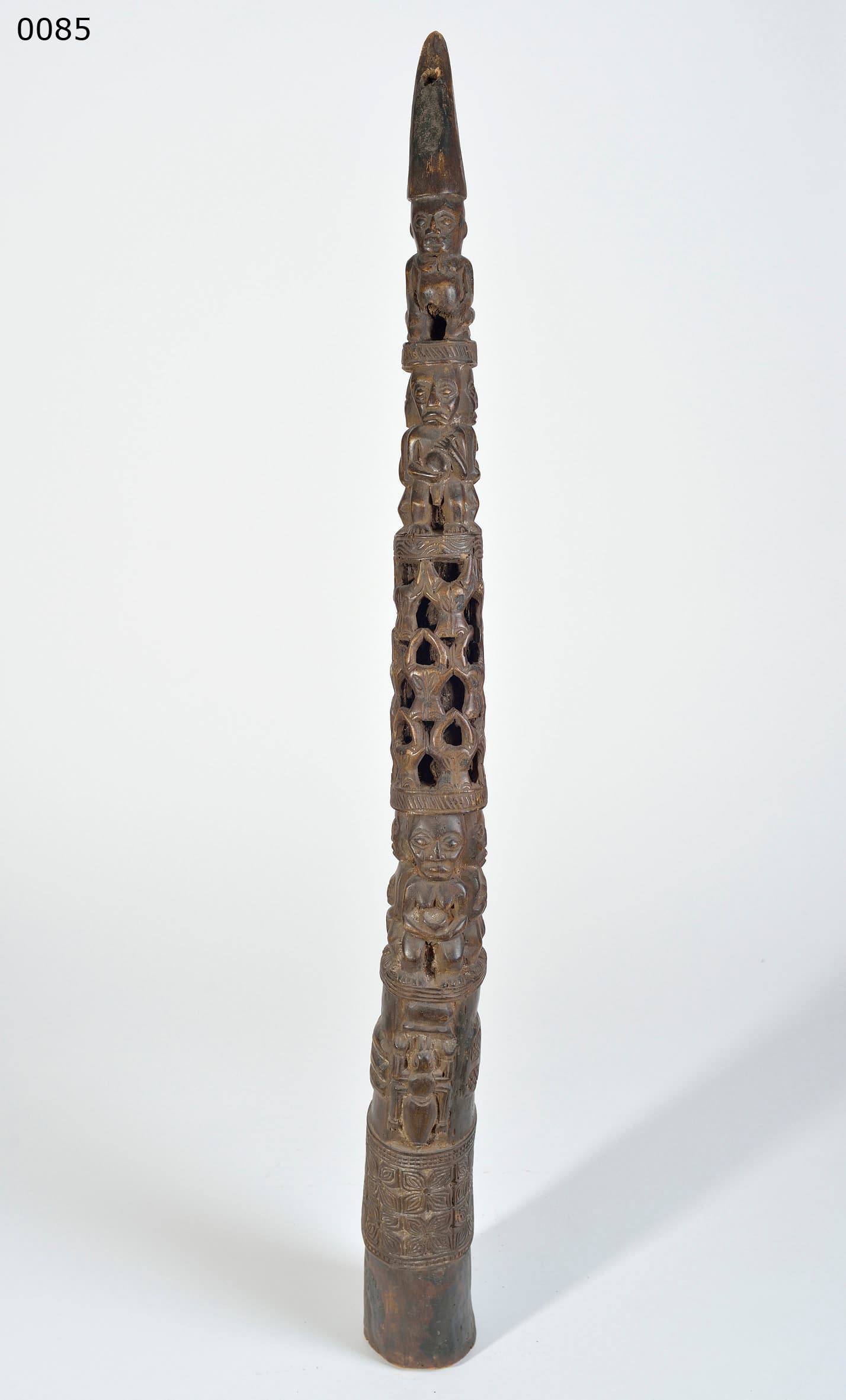
prestige pipe head
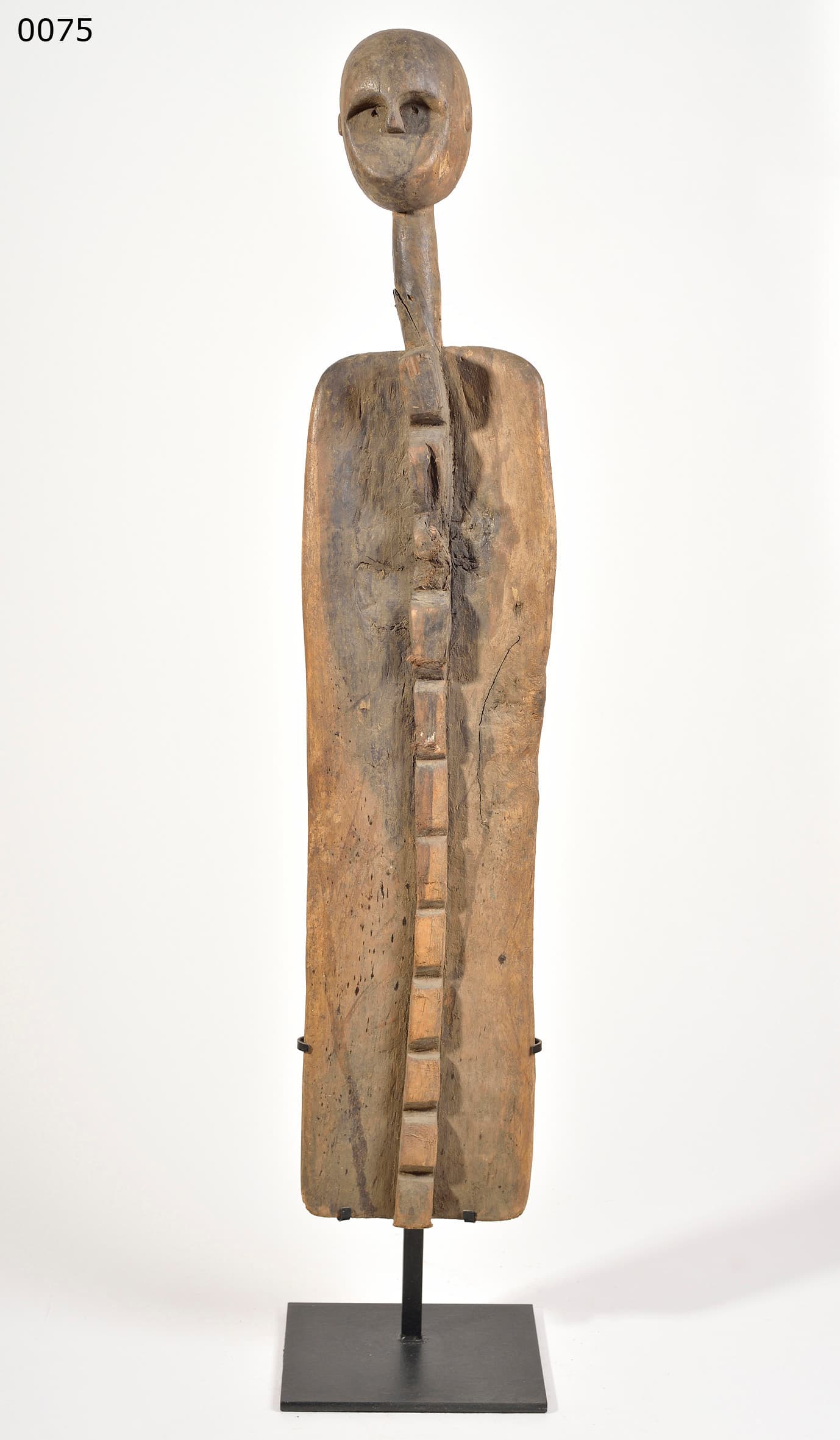
rare friction instrument