A cast metal spoon of the Bamum, with a rounded bowl and a handle shaped as a slender standing figure. One hand rests on the head, the other at the waist.
1. Form and Casting
The spoon is cast in a golden-brown metal that looks like brass or bronze. The bowl is large and ovoid, divided by a vertical beaded ridge. Over its surface, wavy and zigzag lines are incised in a dense, rhythmic pattern, and a bordered band of fine texture closes the bowl towards the neck.
The handle is a tall, narrow figure standing on a short socket. The body is elongated and almost columnar, the legs thin, with a ring at each ankle. A necklace of small beads lies on the chest, a short skirt is marked by fine lines, and the torso carries delicate incised hatching. The right arm bends up to the head, the left to the waist. A small ring rises from the top of the head, so that the spoon could be hung.
2. Use and Context
The collection catalogue explains how such spoons were used. A visitor to a chief, whether summoned or coming of his own accord, symbolically deposited his own power, the pouvoir, in the spoons handed to him by the chief or his nchinda, a kind of personal secretary, before the audience was granted. The visitor was thereby powerless, and the chief could deal with him as he saw fit. Such symbolic objects occur in various forms within a chiefdom and are still widely found in or near the chiefs' houses.
3. Surface
The metal has an even, warm patina, with brighter golden tones along the incised lines and the high points of the figure.
Summary
A cast spoon whose figure handle and incised bowl belong to the objects with which, according to the collection catalogue, a visitor symbolically gave up his power before meeting the chief.
Written with AI assistance from the collection appraisal, object photography and our own research; editorially reviewed. Mistakes are possible — corrections are welcome. How we work →
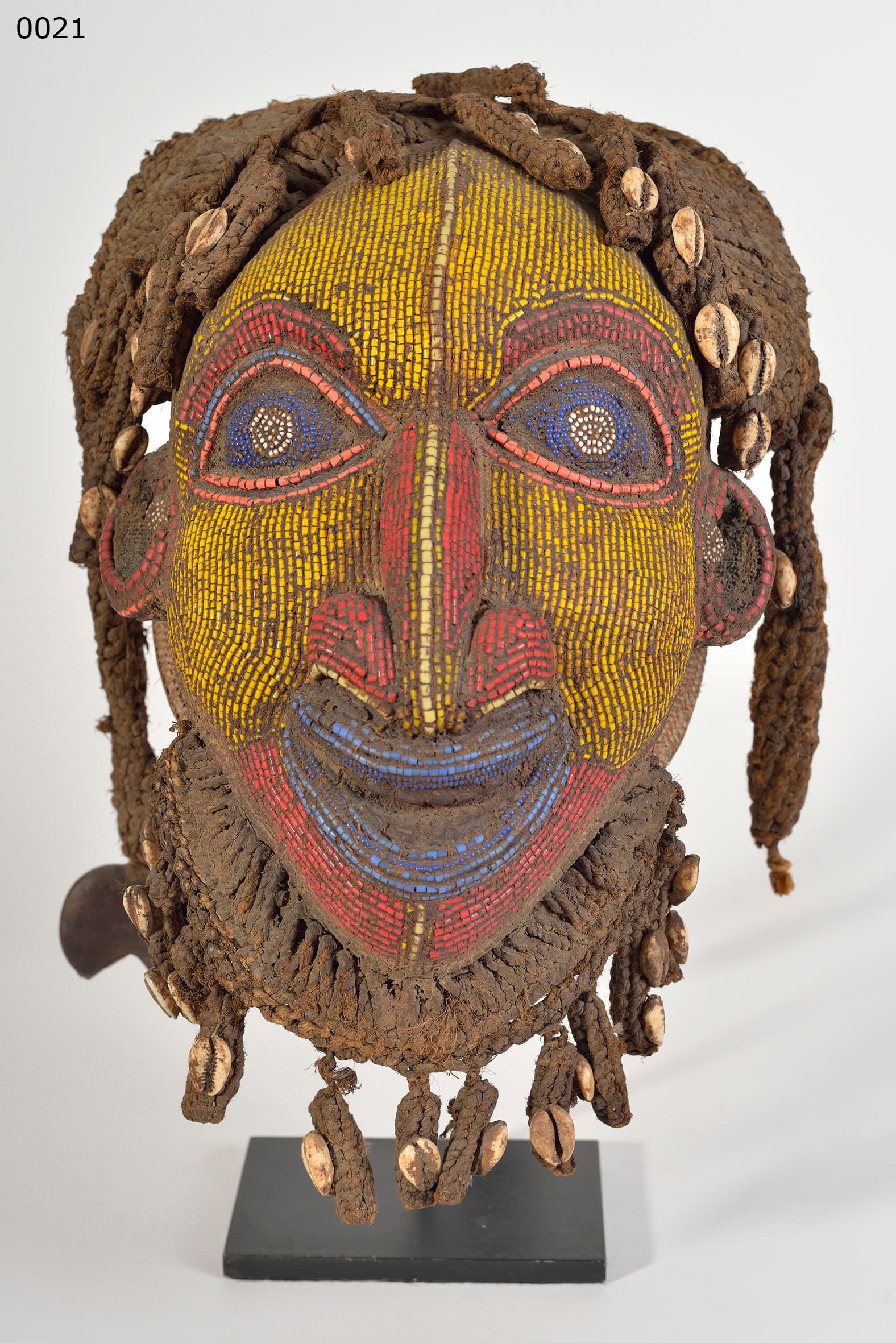
mask (covered with beads - shells on cloth)
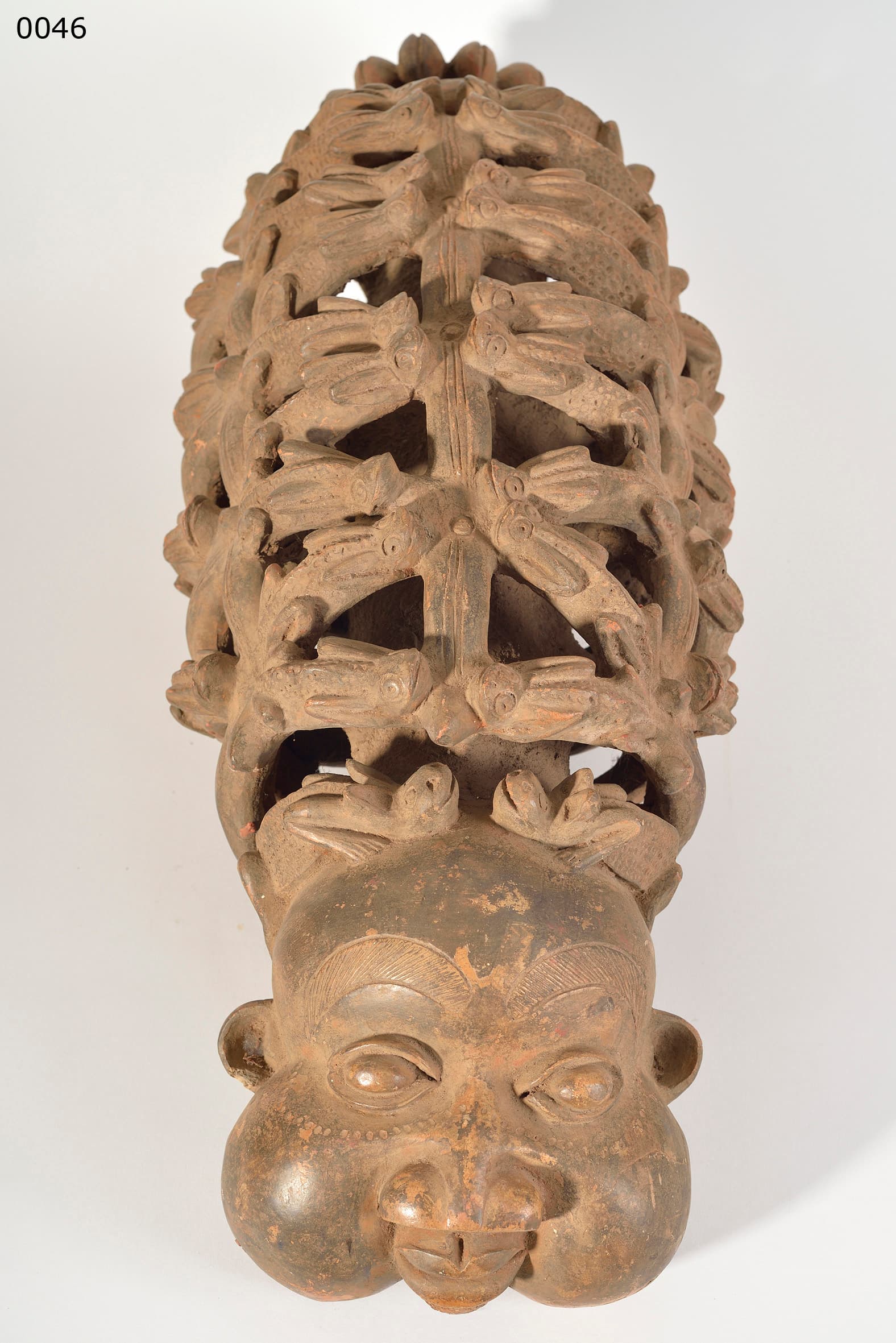
prestige pipe head
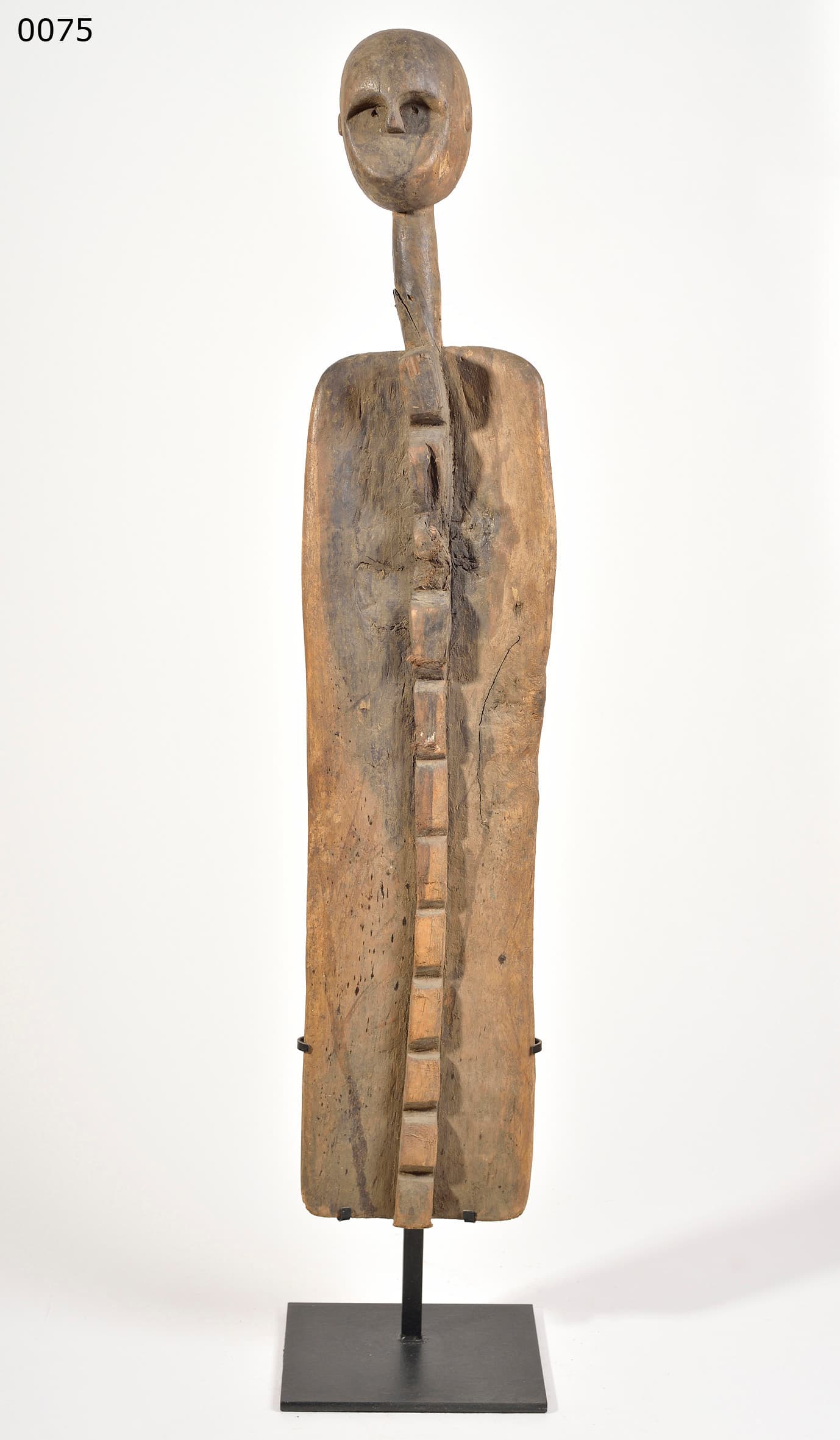
rare friction instrument