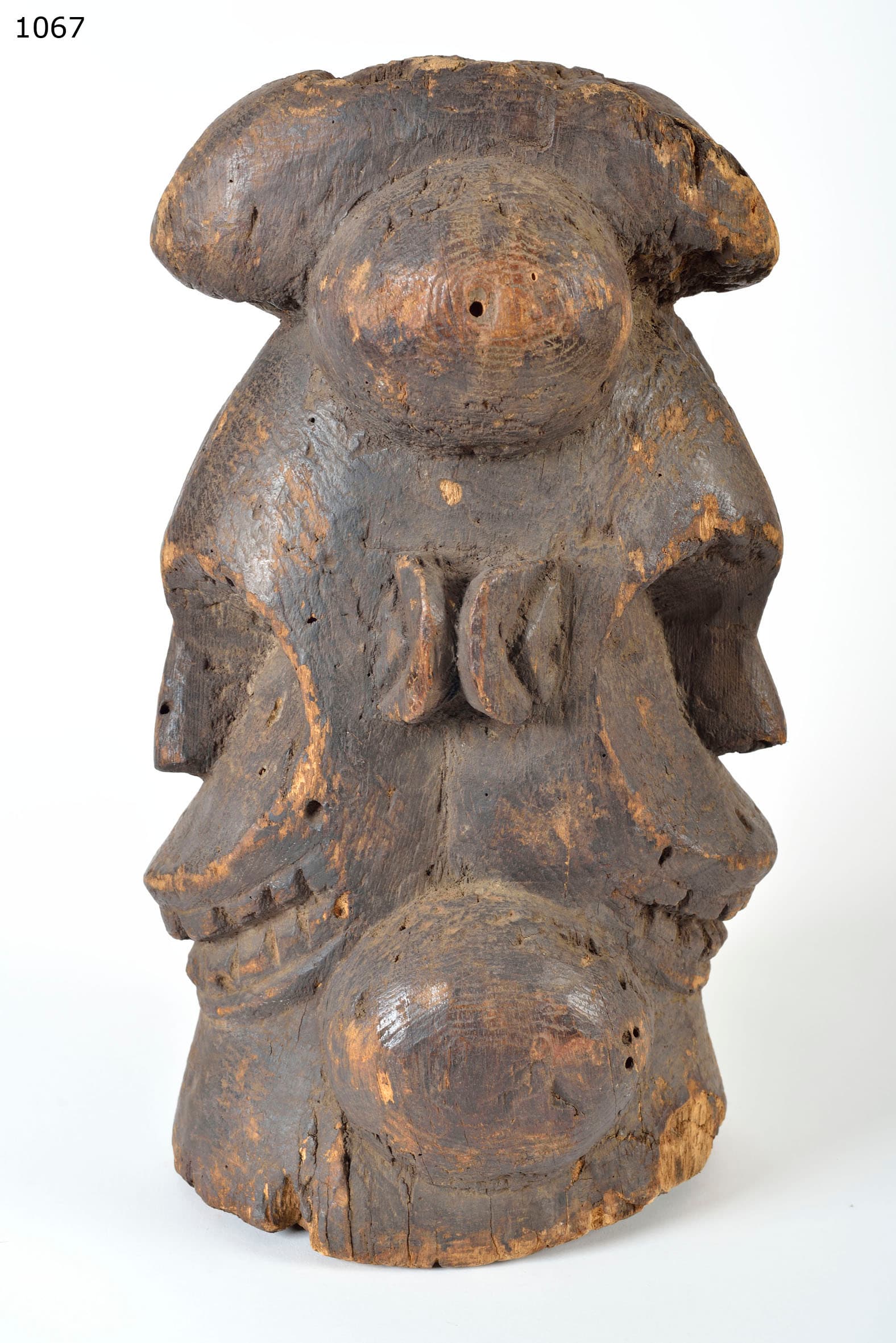
A heavy, textured sculptural head, 44 cm high, with half-closed eyes, a broad nose and a slightly open mouth. The crown is covered in a raised, knobby texture of pointed studs, resembling a prestige cap.
1. Aesthetic Style
The Bangwa, part of the Bamileke cultural complex in the Cameroon Grasslands, are known for expressive sculpture. This commemorative head is calm rather than fierce: the heavy, lowered eyelids, the broad nose and the slightly open mouth give the face an inward, concentrated expression. The cap of pointed studs, divided by a central ridge and ending in a projecting brim, is a clear marker of status. According to the collection catalogue, the form and shape of the face indicate its place in the hierarchy of notables.
2. Ritual Function and the Oracular Conduit
The head comes from a village near Foutem. According to the collection catalogue, such heads were also used to make contact with the ancestor they represent. The head was placed on the ancestor's grave, and the following day it was worn on the head of the person who was to receive messages from the ancestor. That person then relayed statements about coming events such as deaths, births and good or bad luck, which were seen as oracular and not referring to a particular person. Because of the special rituals and the personal meaning attached to such objects, they are rarely displayed.
3. Surface and Condition
The surface is dry, earthy and matte, with pale patches where the top layer has flaked off, especially at the chin and lower lip. According to the collection catalogue, the crusty patina, the weathering and the traces of dirt result from the head being placed on the grave.
Summary
This Bangwa ancestral head shows a calm face with half-closed eyes beneath a cap of pointed studs. According to the collection catalogue, it served to contact the ancestor it represents.
Written with AI assistance from the collection appraisal, object photography and our own research; editorially reviewed. Mistakes are possible — corrections are welcome. How we work →
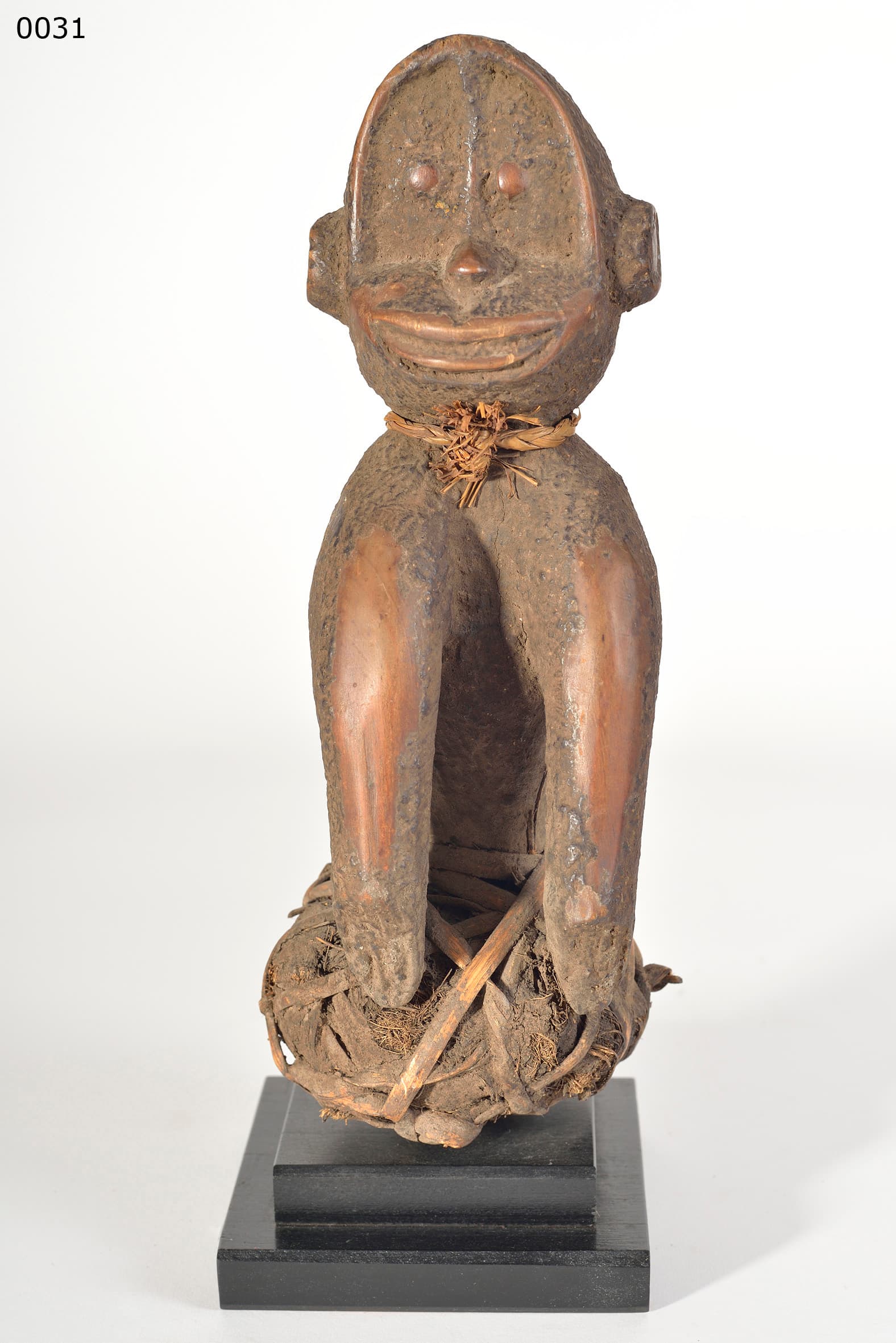
simian figure
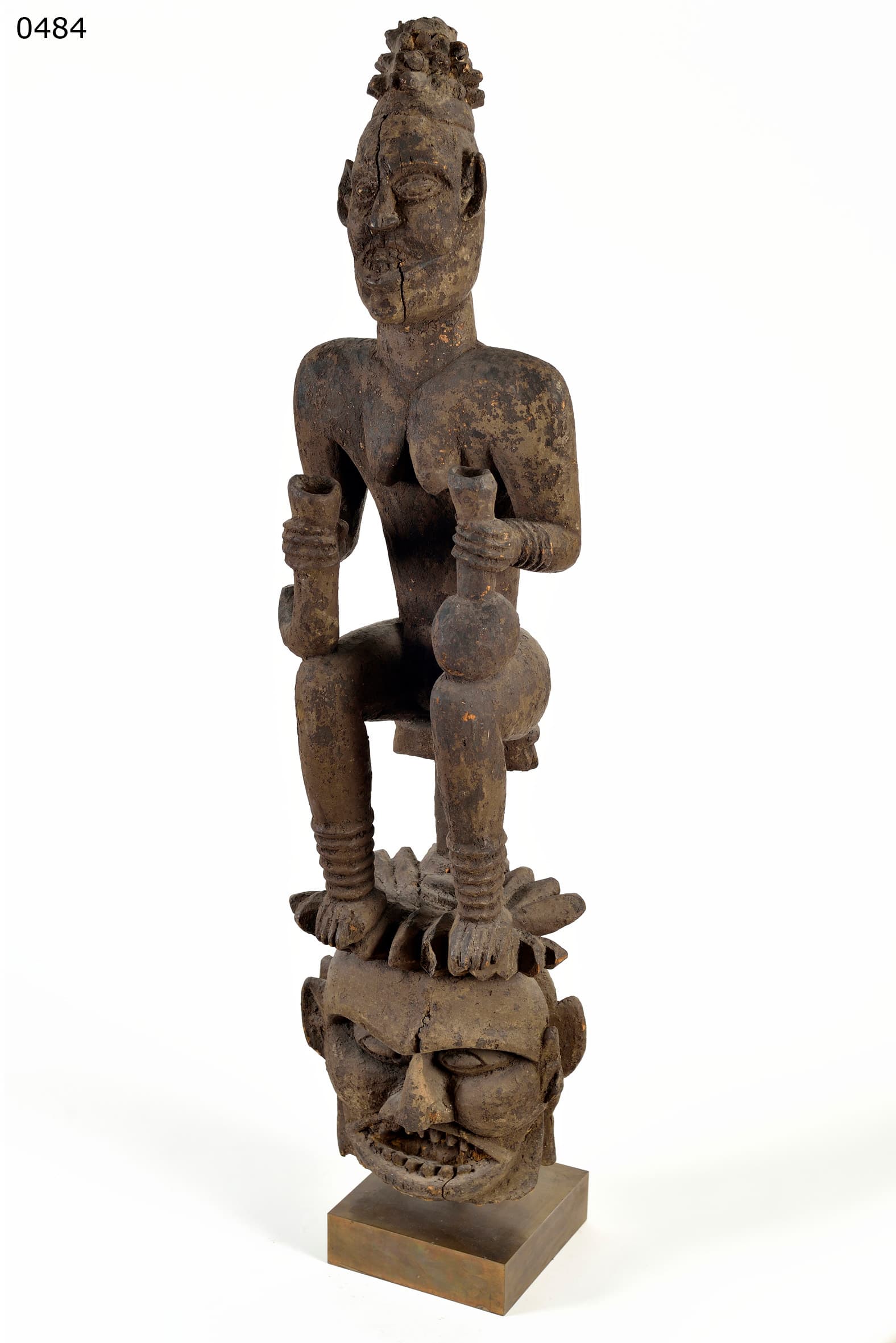
reliquary guardian statue, stood in front of inside door of a local chief's (also called FON) reliquary room (very rare)