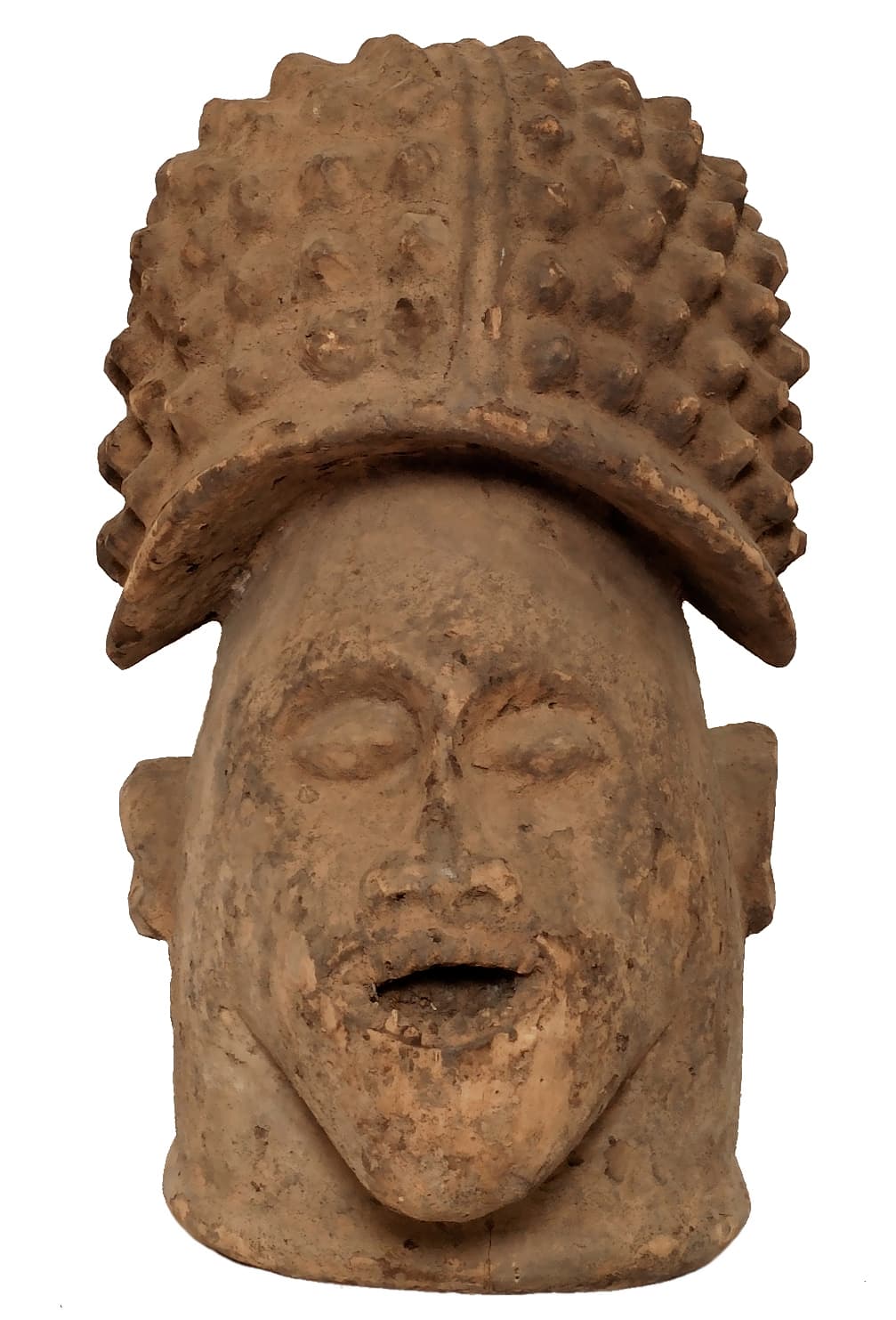
This expressive, 43 cm wooden mask features heavily swollen, asymmetrical cheeks, deeply recessed eyes, and a protruding, bulbous forehead and mouth. The dense wood is covered in a thick, dark, encrusted patina consistent with sacrificial applications.
1. Aesthetic style — grassfields expressionism and the night mask
The Bangwa kingdoms of the Cameroon Grassfields are known for an aesthetic of dynamic expressionism. This piece is consistent with the classic "Night Mask" type (associated with the Troh or Kwifoyn regulatory societies). The carving subverts natural human anatomy, creating a face that is grotesquely swollen, asymmetrical, and deeply shadowed. This extreme distortion is traditionally understood not as a caricature, but as a visual form designed to inspire awe, intended to manifest the power of the spirits associated with the dark.
2. Ritual function — social control and the executioners
Night masks are traditionally understood to have served as agents of social control. Traditionally worn horizontally on top of the head by the enforcers of the chief (Fon), these masks are said to have appeared primarily at night. The dancers were reportedly tasked with hunting down witches, enforcing laws, and, historically, carrying out executions. The dramatic visage of the mask is believed to have helped ensure that villagers would respect the dancer, supporting the decrees of the secret society and the authority of the king.
3. Physical patina — extreme sacrificial encrustation
The surface of this mask shows wear consistent with a 19th-century attribution. The mask is covered in a thick, dark patina. This encrustation, often referred to as a "power crust," is consistent with the traditional practice of "feeding" the mask with animal blood, palm oil, soot, and chewed kola nuts during ritual use. This dense, layered crust is consistent with extended ritual use and shows no obvious signs of modern restoration.
Summary
Utilizing grotesque, asymmetrical swelling to project authority, this Bangwa Night Mask presents an example of Grassfields expressionism. Its thick crust is consistent with its attributed 19th-century history as an instrument of social control.
Written with AI assistance from the collection appraisal, object photography and our own research; editorially reviewed. Mistakes are possible — corrections are welcome. How we work →