A compact footstool of the Bamum from the Mayap chiefdom in the Sultanate of Foumban, Cameroon, about 28 cm at its longest. It is hewn from a single block of wood and pierced by two angular openings.
1. Form and Carving
The footstool is a solid rectangular block with softly rounded edges and a slightly dished top. Its form relies on subtraction rather than ornament. On one long side, two openings are cut through the block, each shaped as an angular cavity with a pointed projection rising from below and another hanging from above, so that the voids interlock like teeth. At one end a larger oval passage runs through the block. The carving is bold and direct, with visible tool facets inside the cuts.
2. Provenance and Context
The collection catalogue places the stool with the throne of the Mayap chiefdom. Mayap is a second-tier chiefdom whose seat lies about 40 km north of Foumban. Because both its territory and its population are relatively large, it ranks among the most important chiefdoms in the Sultanate, which explains the history of violent conflict between its chieftains and the sultans. The current chieftain, Homgoupayon, who has reigned for more than fifty years, sold a number of objects inherited from his father and grandfather, among them the throne, the pride of the chiefdom. The catalogue considers it probable that the throne dates from his father or grandfather.
3. Surface
The wood is a warm honey-brown with a smooth, hand-worn surface. Fine grain cracks run along the top, and the corners show light wear.
Summary
A footstool carved from one block of wood, which the collection catalogue assigns to the Mayap throne ensemble.
Written with AI assistance from the collection appraisal, object photography and our own research; editorially reviewed. Mistakes are possible — corrections are welcome. How we work →
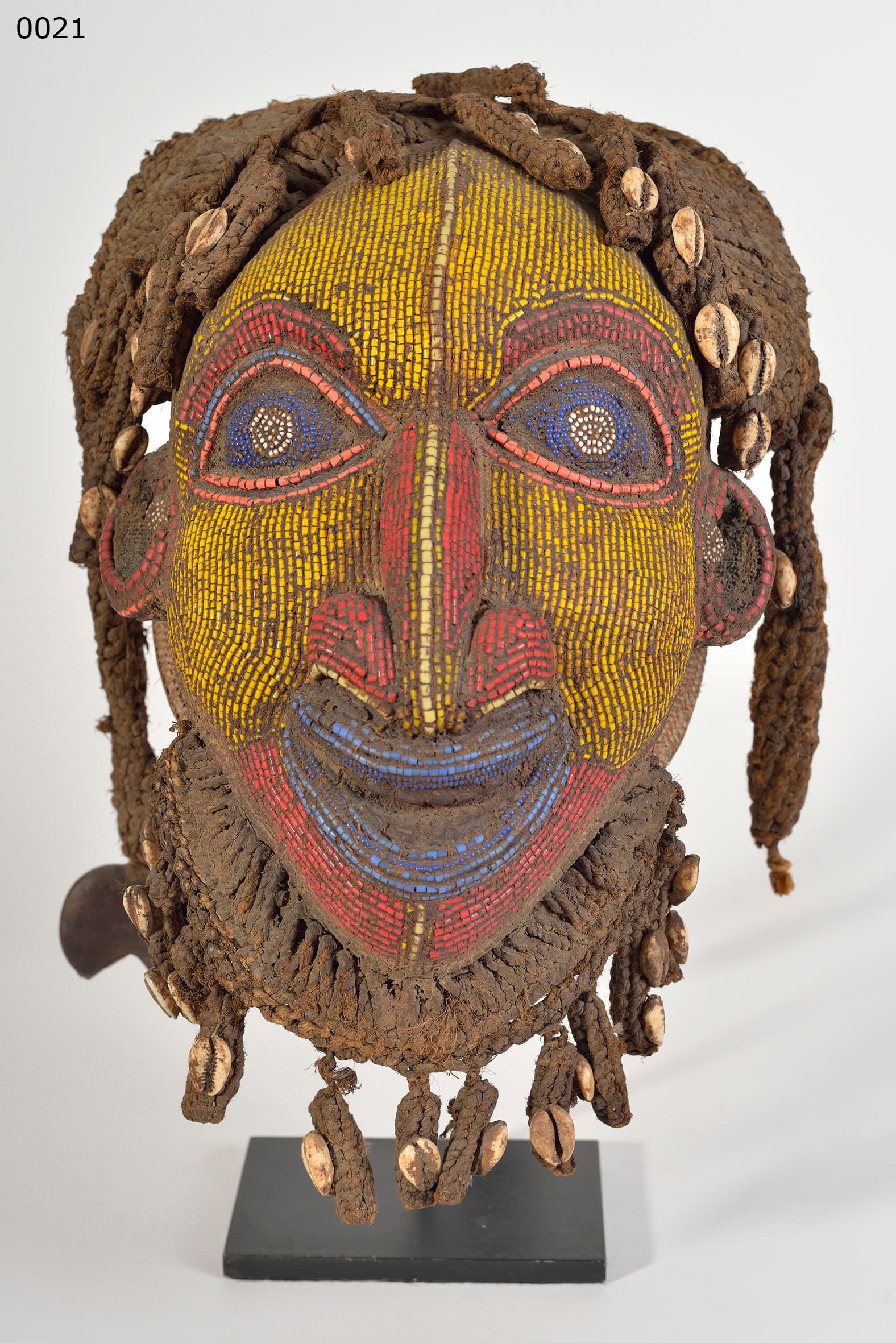
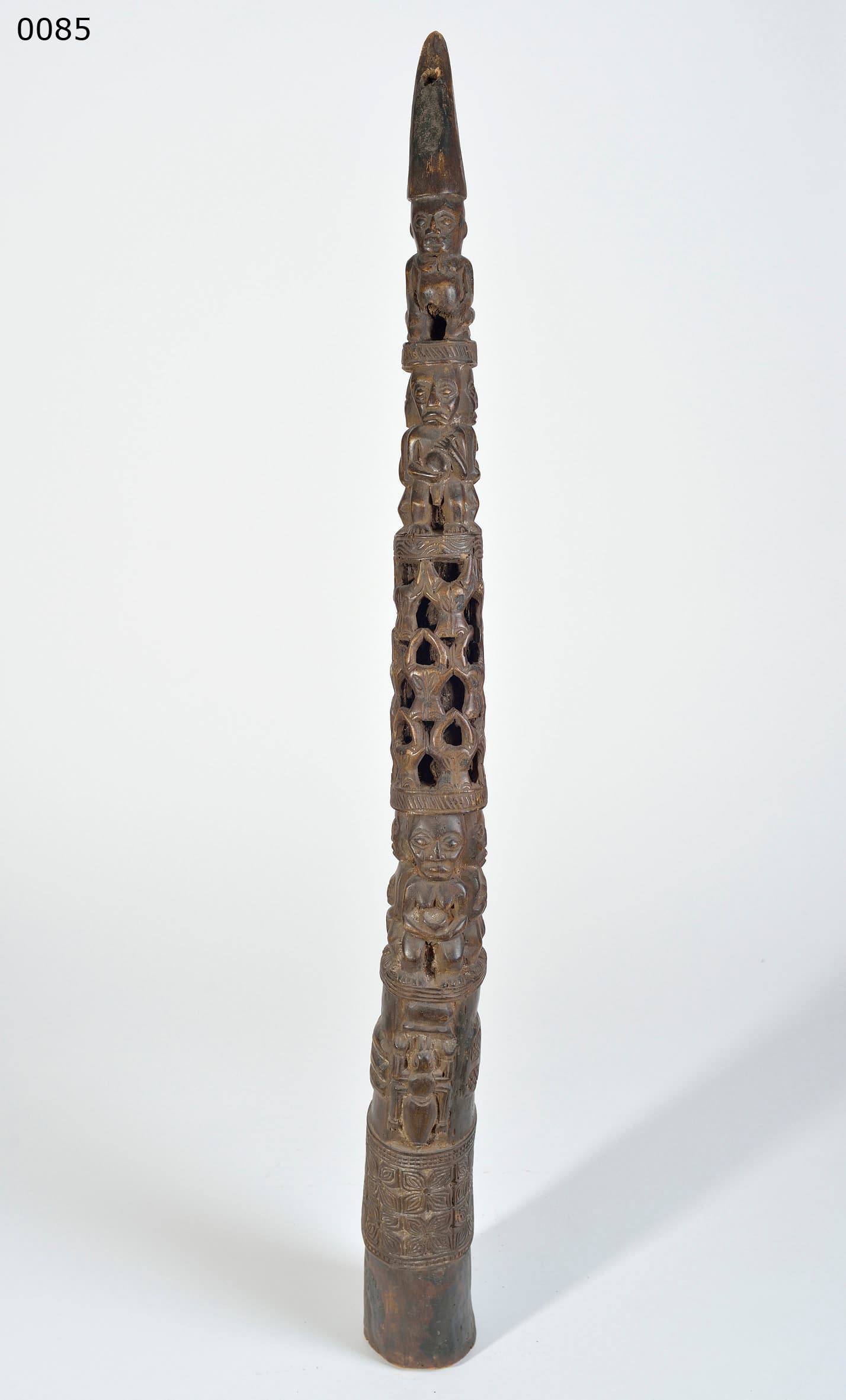
mask (covered with beads - shells on cloth)
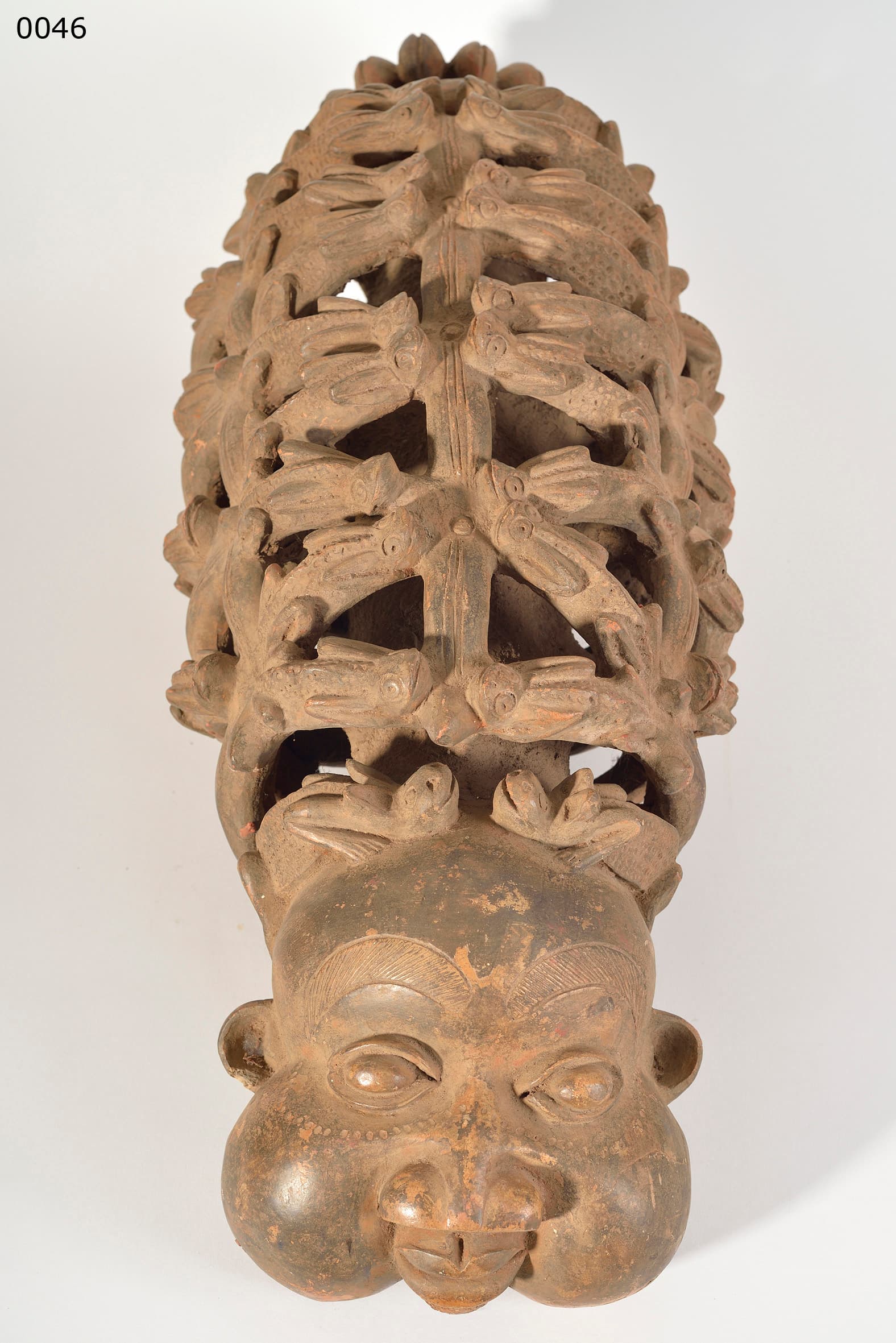
prestige pipe head
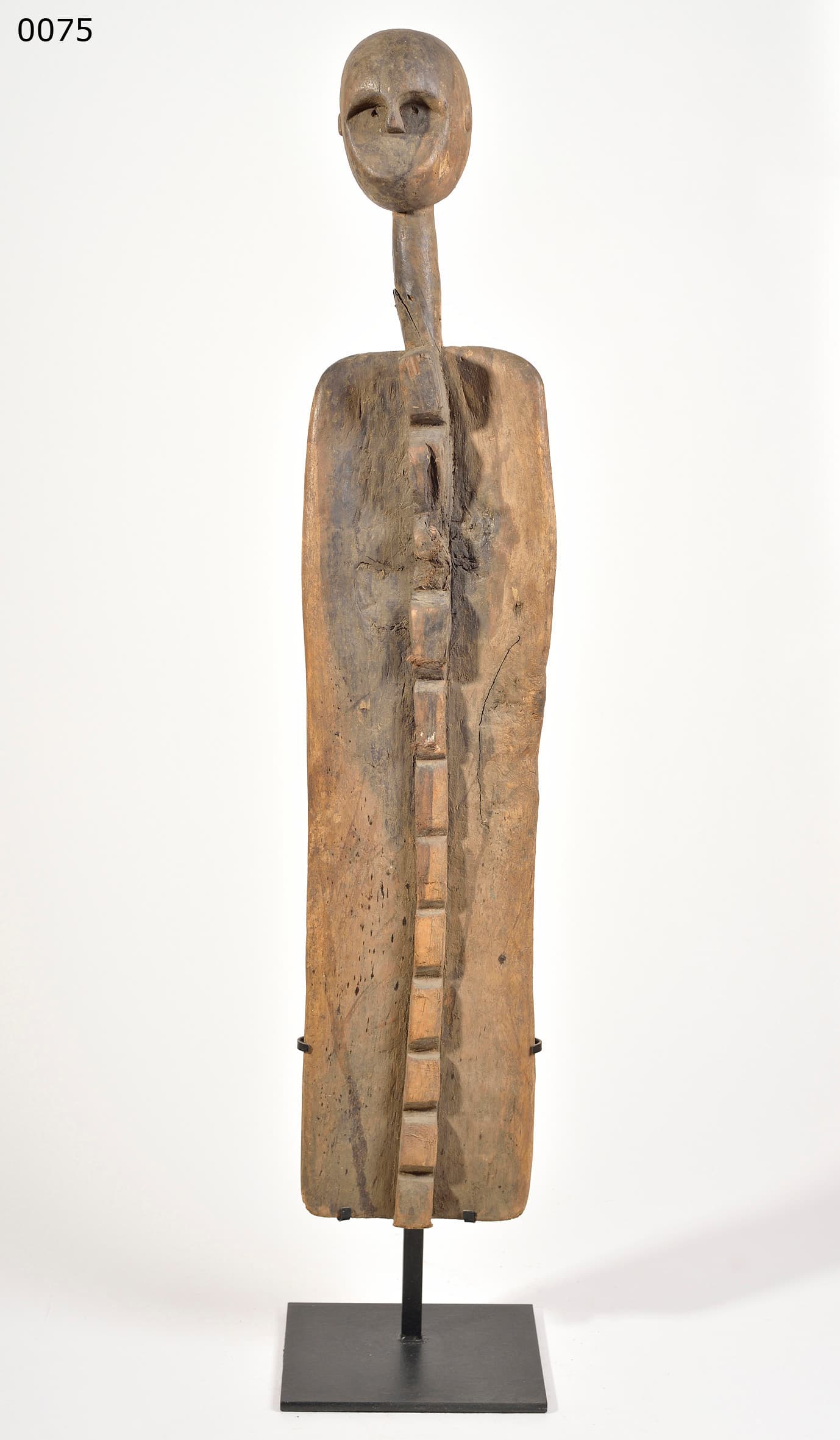
rare friction instrument