A dark wooden pull-on helmet mask with large, bulging eyes, a wide mouth showing teeth, and a tall carved cap with finely grooved bands and rows of short pegs.
1. Aesthetic Style and the Prestige Cap
This mask comes from the Babungo Chiefdom in the Anglophone region of Cameroon. The form is volumetric and designed to be pulled over the wearer's head rather than strapped to the face. The most striking feature is the carved upper section: a tall, tapering cap with fine horizontal grooves, set with rows of short, faceted pegs on both sides. The crisp lines of the head-covering contrast with the rounded, bulging facial features, with ringed eyes, a broad nose and a toothy smile.
2. Ritual Function and Elite Privilege
According to the collection catalogue, the Babungo chiefdom was among the most important in the region, as shown by the right of its chieftain to be carried on a bamboo frame by slaves, a privilege shared by only two other chieftains. The catalogue describes the carved head-covering of this pull-on mask as the mark of a person of higher rank, worn only by chieftains of rank.
3. Surface and Condition
The wood has a dark, smooth, glossy patina. Small losses show lighter wood at the tip of the nose, on one cheek and at the ends of some pegs.
Summary
This Babungo pull-on mask combines a lively face with bulging eyes and a toothy smile and a tall cap of grooved bands and pegs. According to the collection catalogue, the carved cap marks a chieftain of rank.
Written with AI assistance from the collection appraisal, object photography and our own research; editorially reviewed. Mistakes are possible — corrections are welcome. How we work →
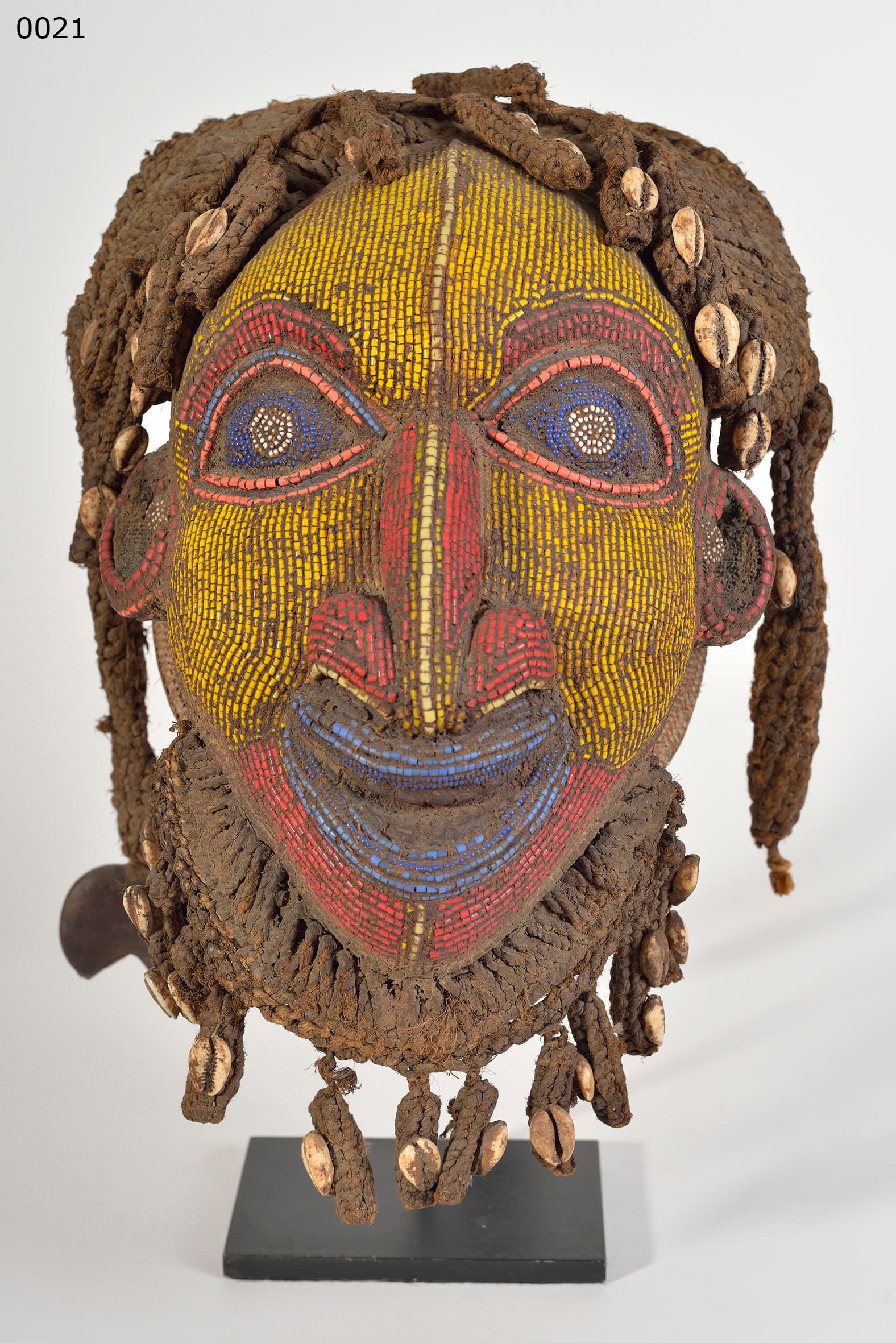
mask (covered with beads - shells on cloth)
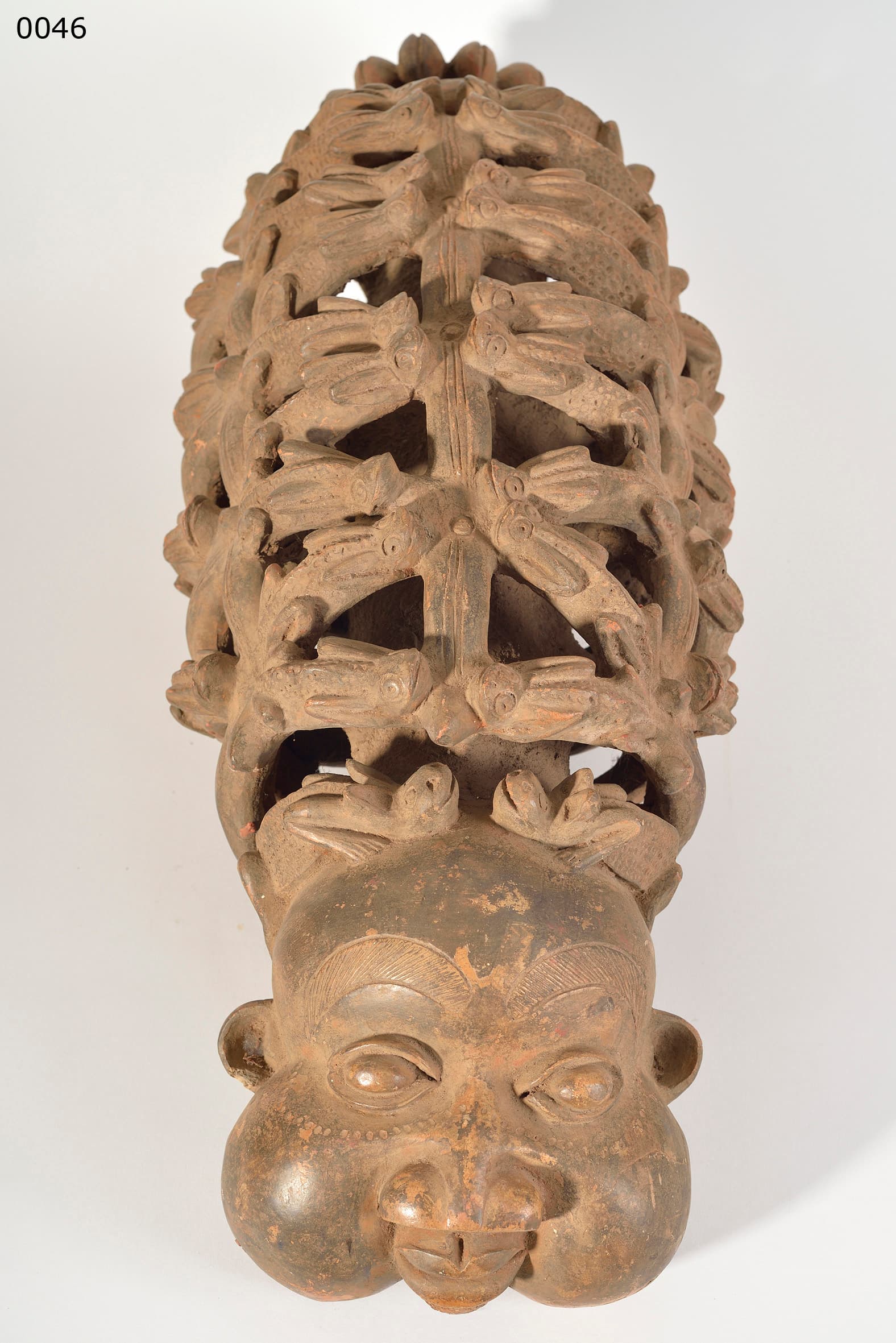
prestige pipe head
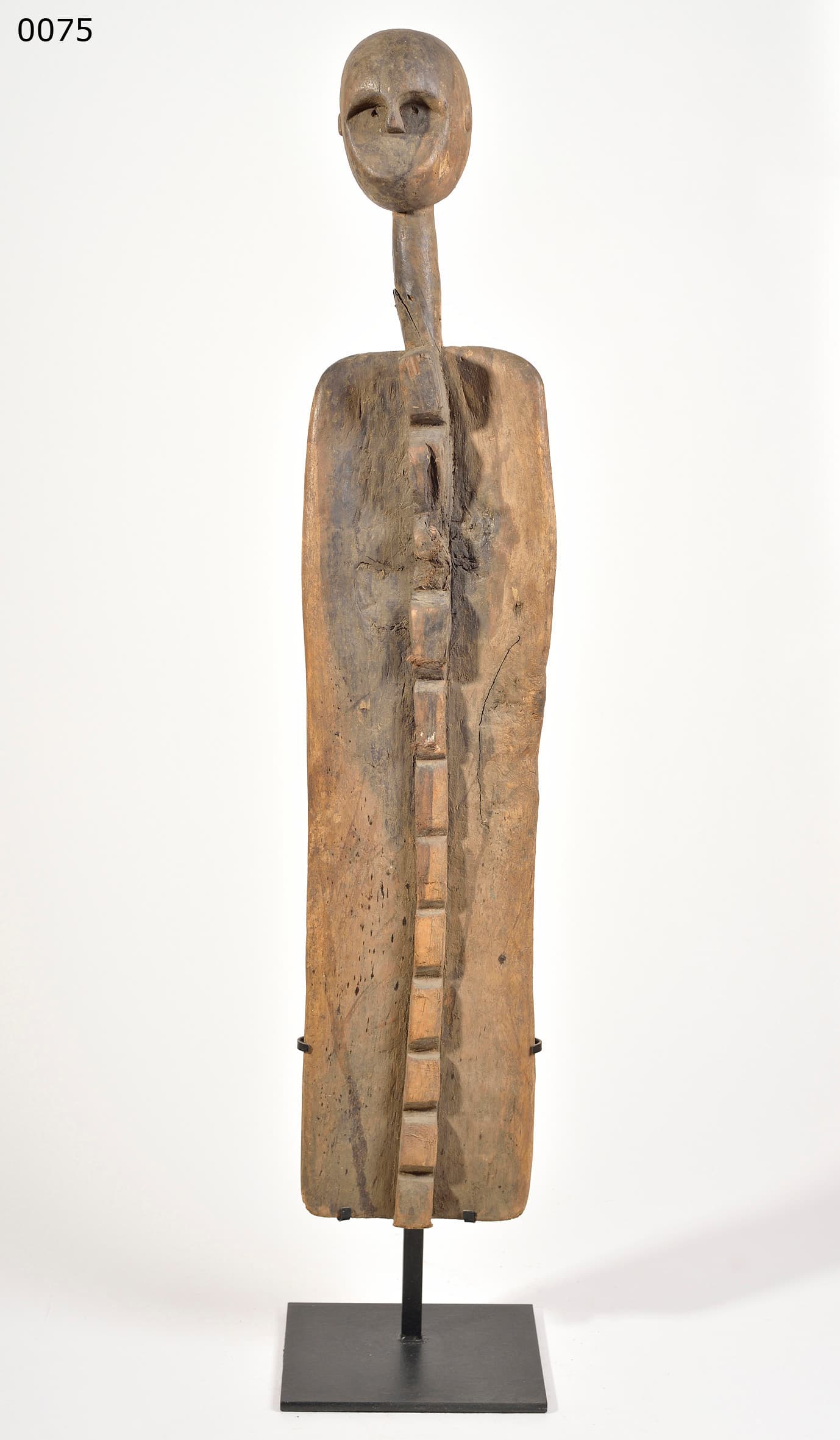
rare friction instrument