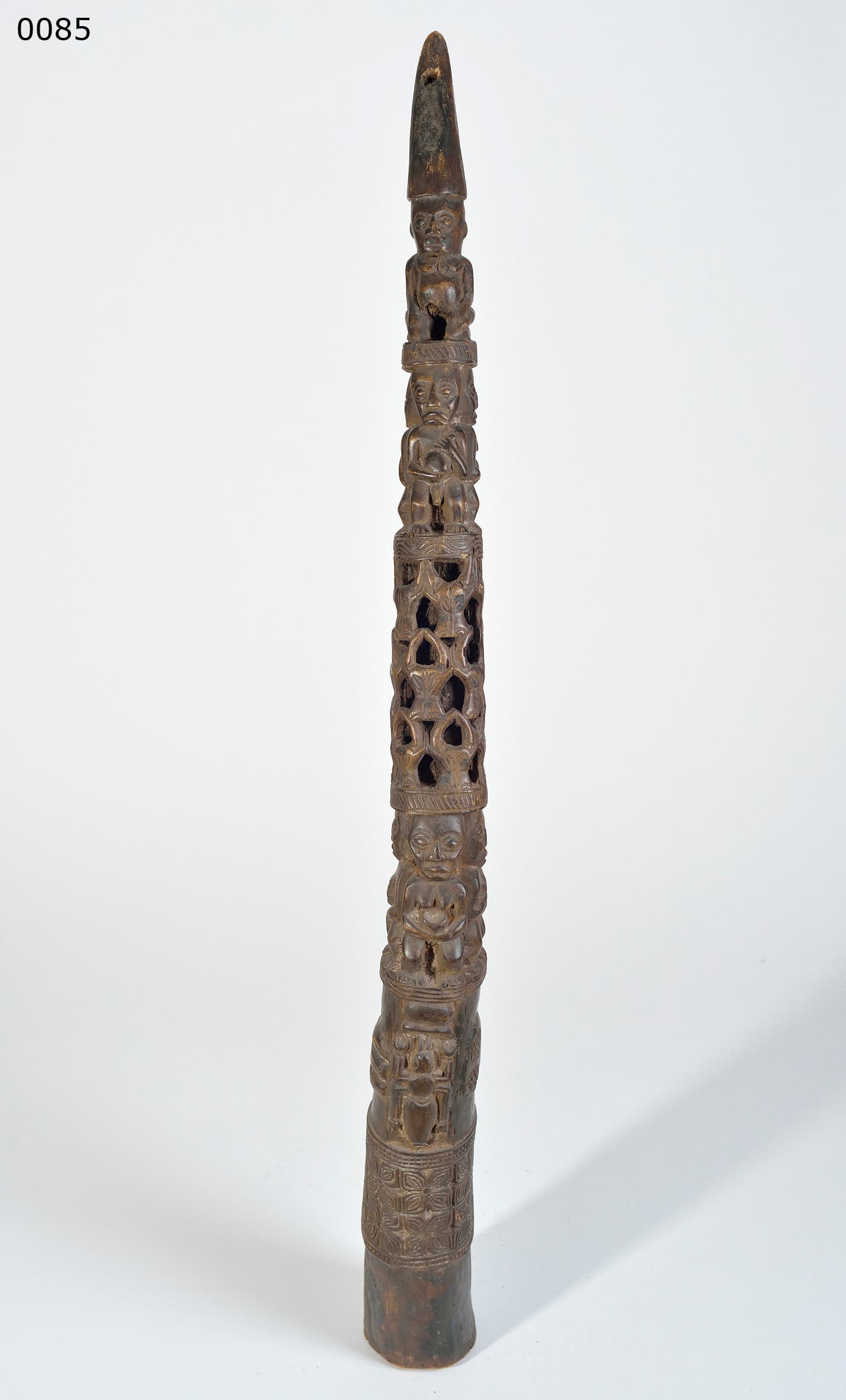
This highly ornate prestige pipe, cast in brass, features a complex anthropomorphic figure surmounted by an elaborate headdress with zoomorphic motifs. Measuring 30 cm, the object exhibits a dark, oxidized surface with polished highlights, reflecting the specialized artisan traditions of the Cameroon Grasslands.
1. Aesthetic Style and Sculptural Complexity
Originating from the Mabouo Chiefdom within the Foumban Sultanate, this pipe exemplifies the Bamun tradition of transforming ceremonial objects into elaborate sculptural works. The composition is dominated by a prominent human figure with enlarged, expressive facial features, positioned behind a stylized animal head. The figure wears a towering, fan-like headdress adorned with a relief depiction of a lizard or crocodile. This structural density and intricate detailing are characteristic of the highly specialized artisan castes of the Noun Plateau.
2. Ritual Function and Prestige
As explicitly noted in the collector's appraisal, pipes of this specific typology were not and are not used for smoking. Instead, they functioned exclusively as objects of prestige and ceremonial display. Within the complex political structure of the Bamun kingdom, such elaborate brass castings served as visual markers of status and authority. Displayed during audiences or royal gatherings, the unsmoked pipe acted as a physical manifestation of the dignitary's rank and their access to the esteemed Foumban workshop traditions.
3. Patina, Material Characteristics, and Condition
The object is executed in cast brass, likely utilizing the traditional lost-wax technique. The exterior displays a rich, dark oxidation patina, contrasting with lighter, glossy highlights on the prominent facial features, the brow, and the animal snout below—suggesting generations of handling and ceremonial display. The casting process is evident in the intricate relief work of the headdress, which also exhibits characteristic casting anomalies, such as small perforations where the metal did not fully flow. The absence of functional wear related to heat or combustion physically aligns with its purely ceremonial purpose.
Summary
This unsmoked prestige pipe is a striking example of Bamun courtly arts. Its dense, symbolic brass casting and rich patina underscore its role as a ceremonial emblem of status within the Mabouo Chiefdom, highlighting the sophisticated metallurgical traditions of the Cameroon Grasslands.
Written with AI assistance from the collection appraisal, object photography and our own research; editorially reviewed. Mistakes are possible — corrections are welcome. How we work →
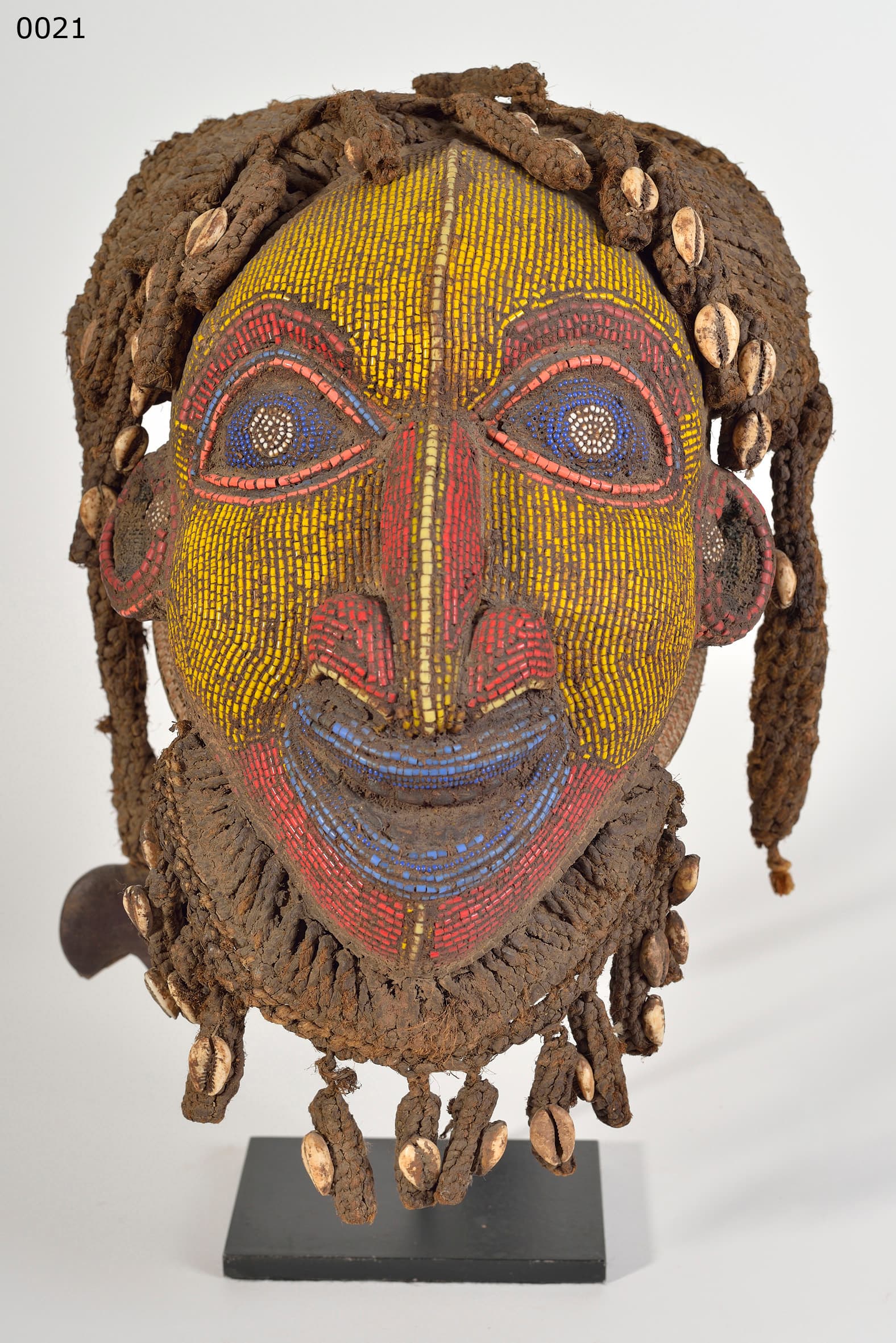
mask (covered with beads - shells on cloth)
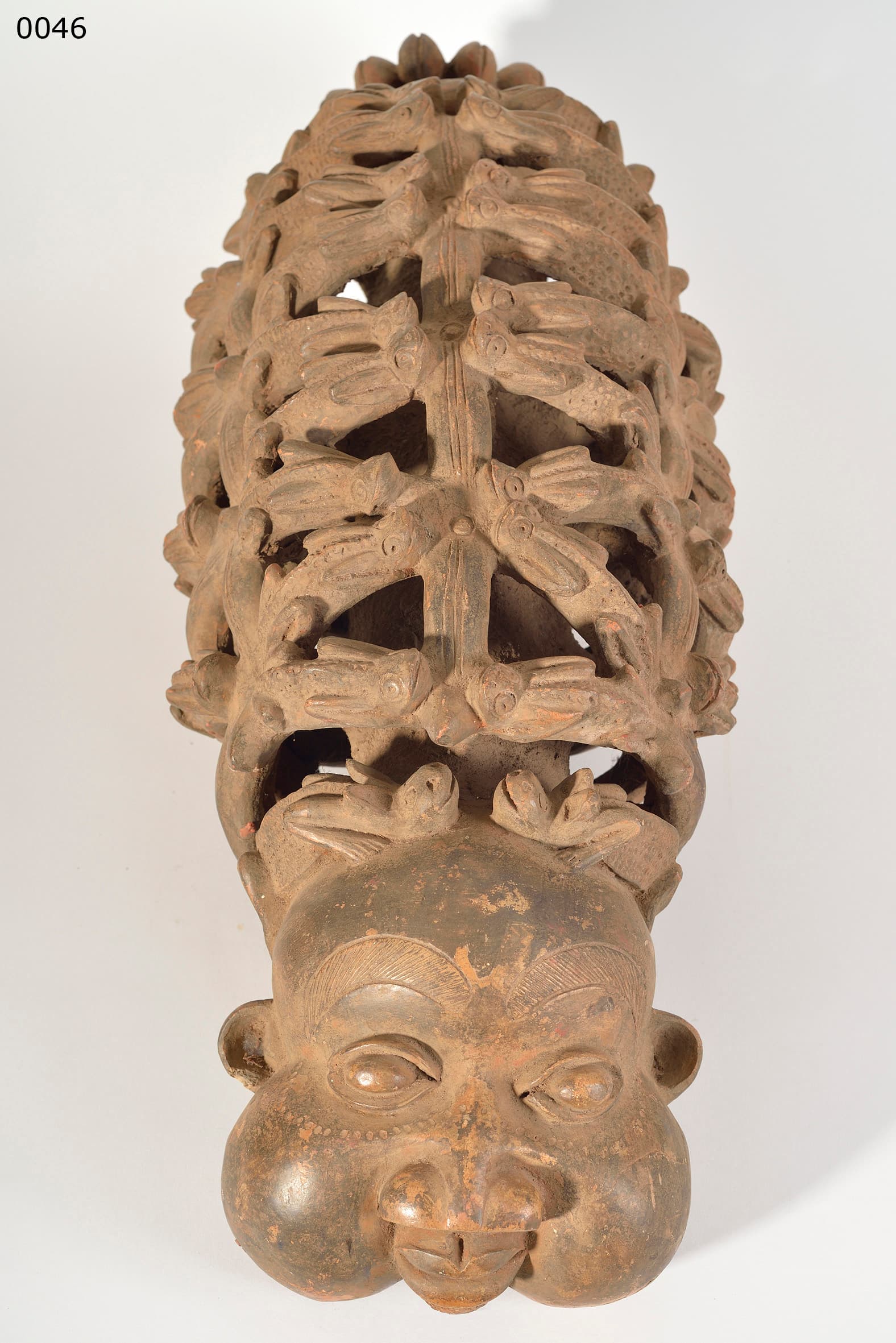
prestige pipe head
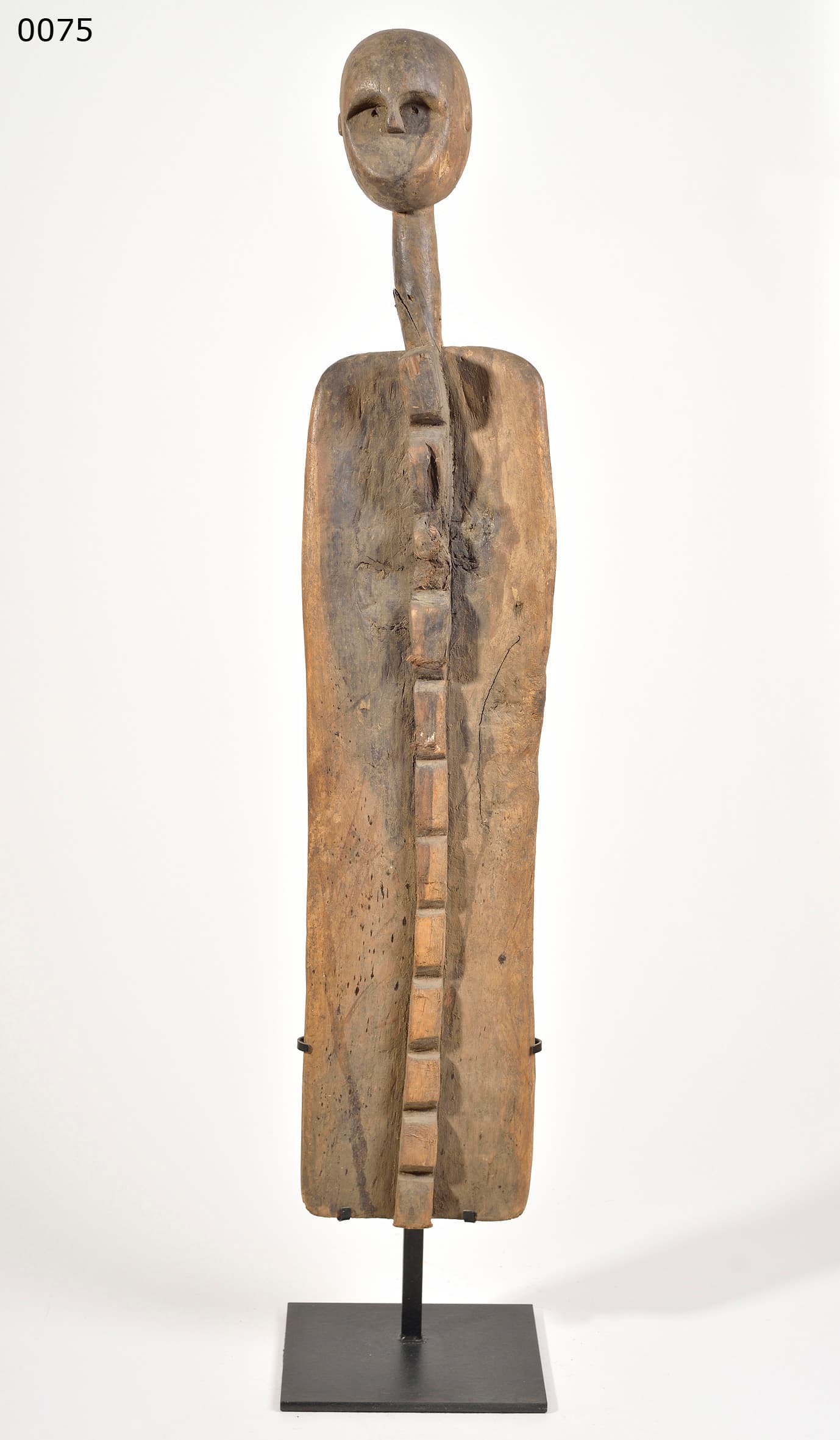
rare friction instrument