This wooden mask, 48 cm high, shows a stylized animal head, recorded in the collection as a monkey, with large rimmed eyes beneath a V-shaped brow, an elongated, rounded muzzle with flaring nostrils and drooping ear flaps. A flat, pyramid-shaped cap covered in braided fibre sits on top.
1. Aesthetic Style and Regional Isolation
This mask comes from the Machapa Chiefdom, a remote area that, according to the collection catalogue, is difficult to reach and accessible only on foot during the rainy season. The catalogue links this isolation to distinctive stylistic elements in the chiefdom's masks and figures and to a particularly wide variety of animal masks, especially of monkeys. The mask relies on smooth, sweeping lines: the brow ridges meet in a V above the nose, and the long muzzle pushes forward below the large eyes. Braided cords of fibre hang over the pyramid-shaped cap.
2. Ritual Function and the Symbol of Wisdom
According to the collection catalogue, the monkey is revered as a symbol of wisdom, and masks of this kind are therefore worn only by the most important members of the chiefdom.
3. Surface and Condition
The wood has a warm brown, worn surface with orange-brown traces. The edges of the ear flaps and the cheek area are chipped or frayed, and the braided fibre of the cap is dry and darkened.
Summary
A stylized monkey mask from the Machapa Chiefdom, with large rimmed eyes, a long muzzle and a cap of braided fibre. The monkey stands for wisdom, and such masks are worn by the most important members of the chiefdom.
Written with AI assistance from the collection appraisal, object photography and our own research; editorially reviewed. Mistakes are possible — corrections are welcome. How we work →
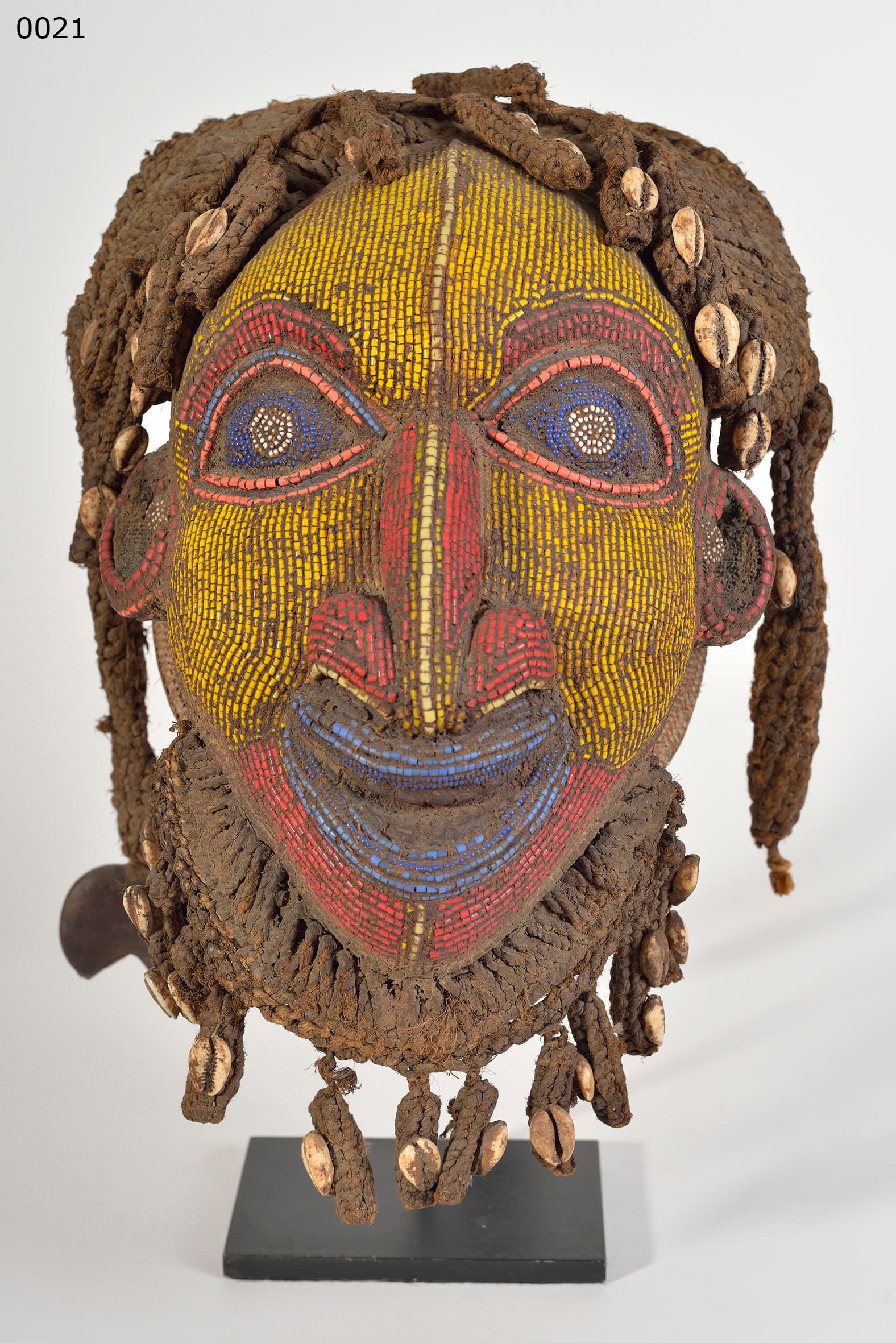
mask (covered with beads - shells on cloth)
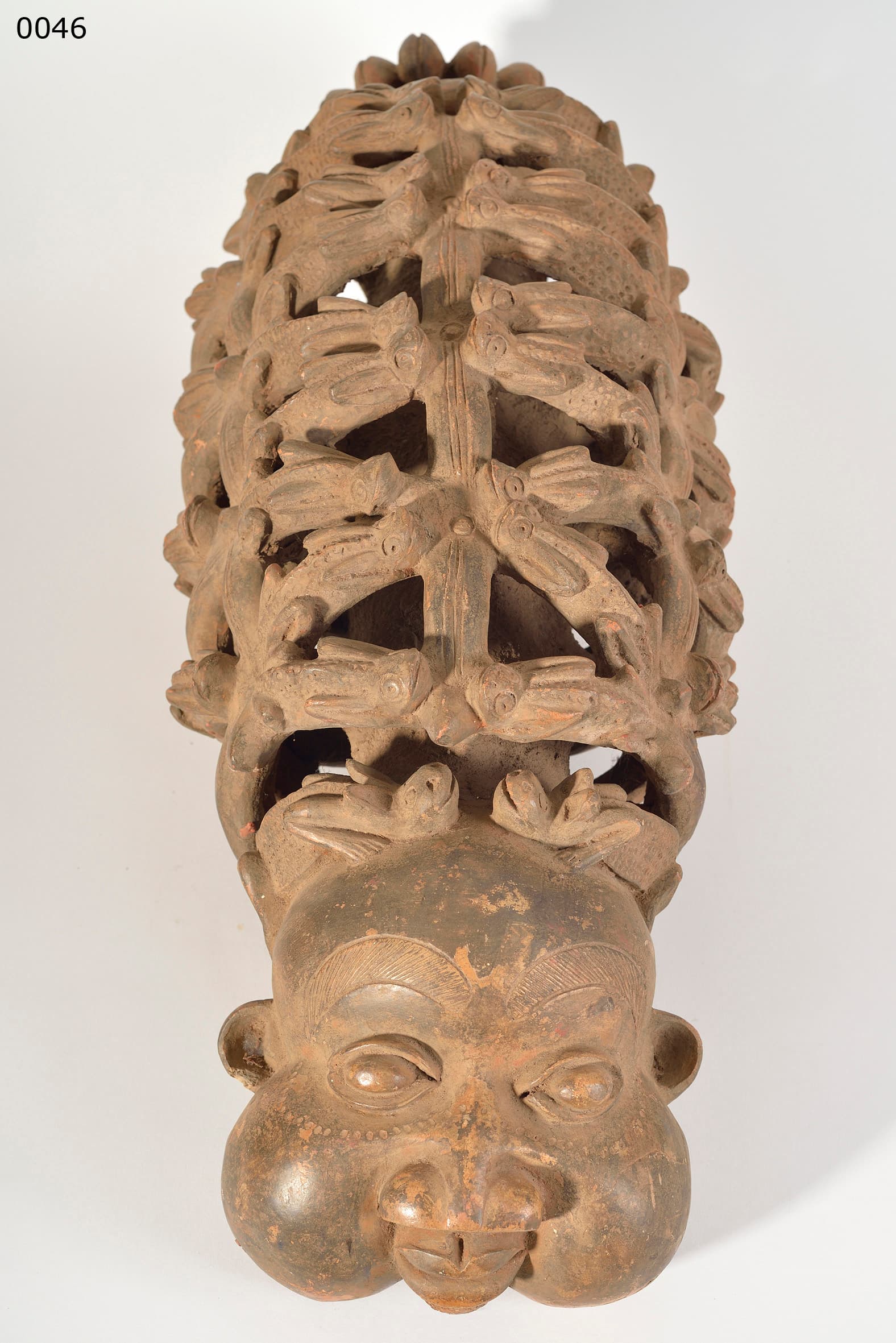
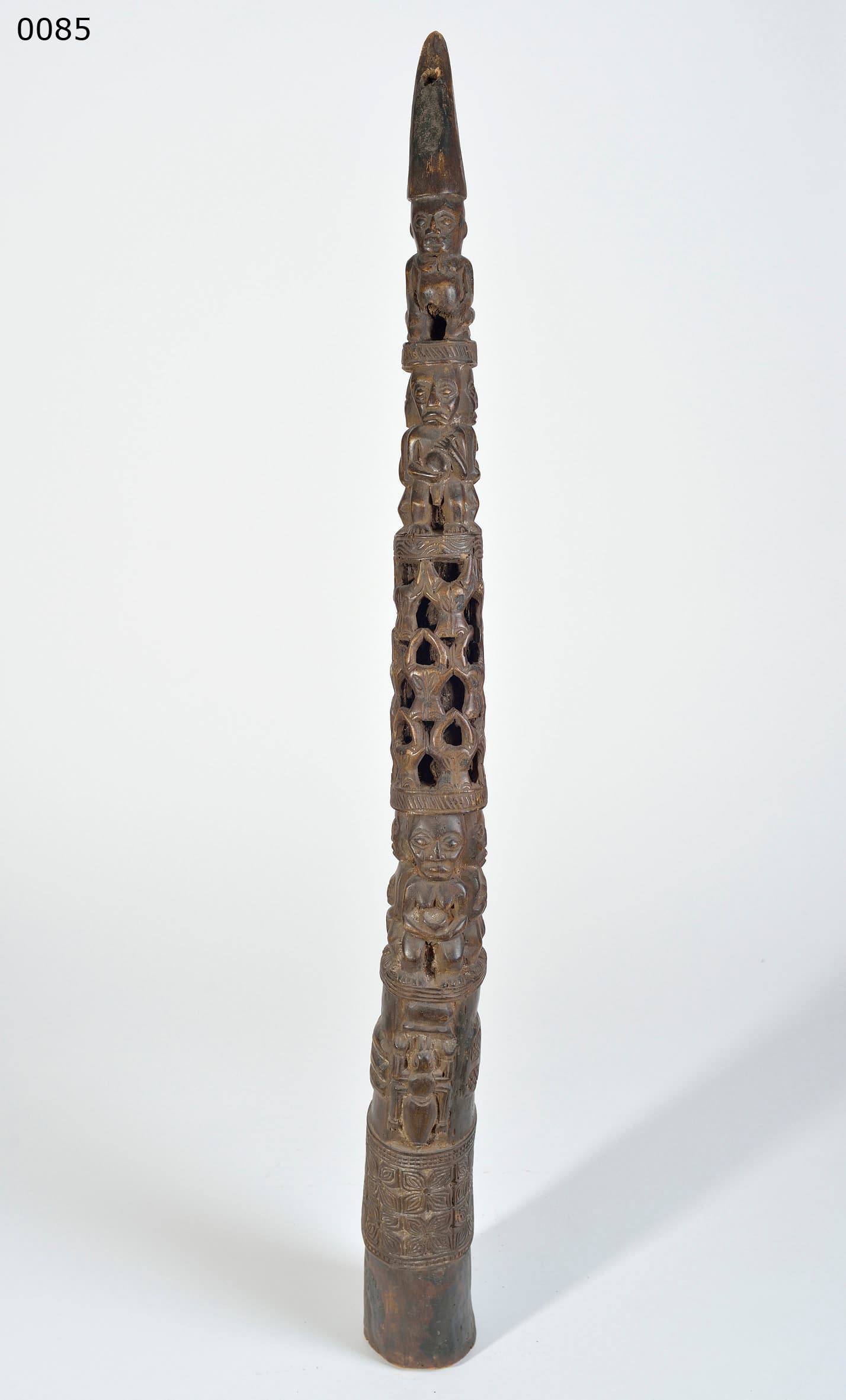
prestige pipe head
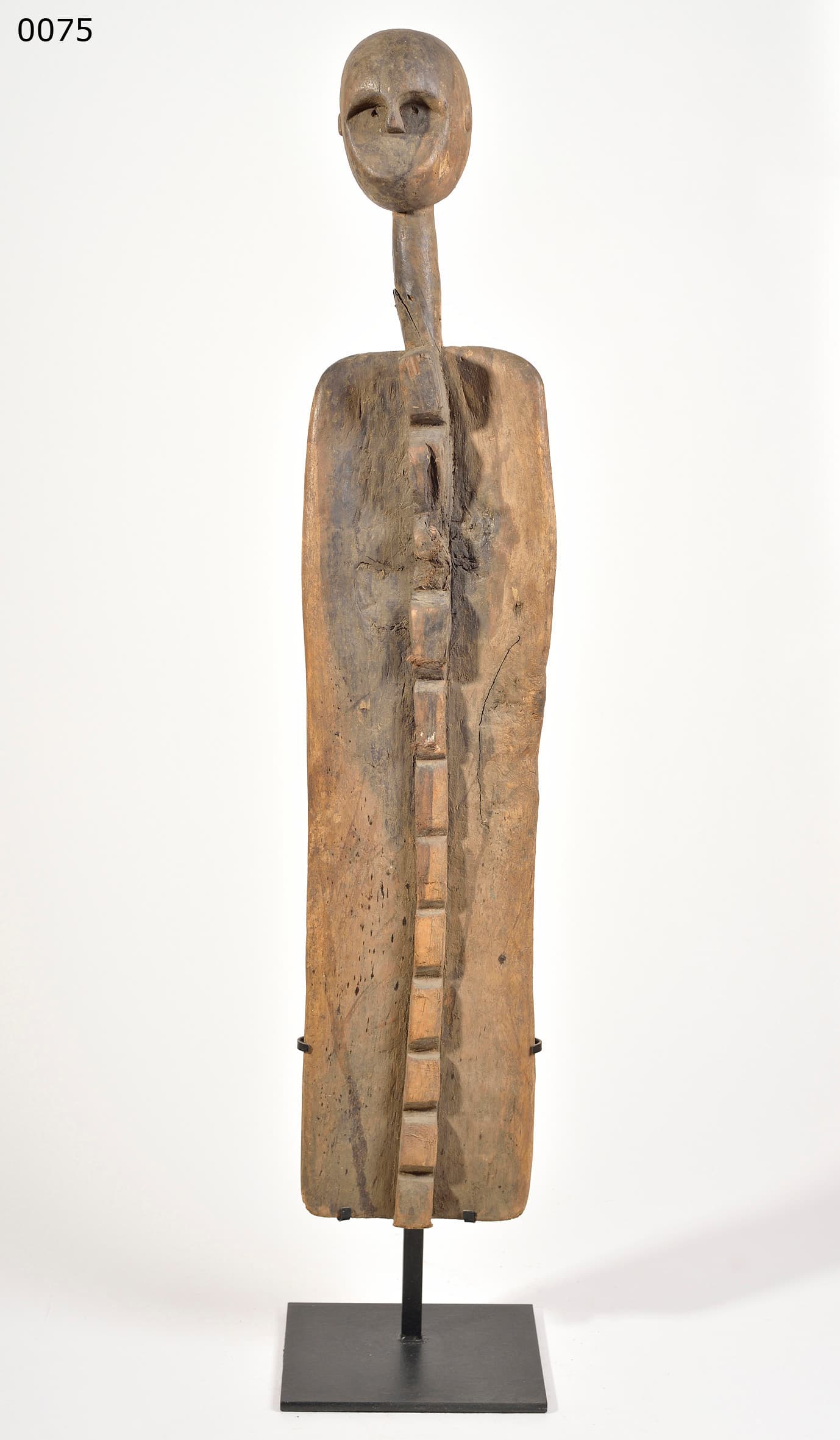
rare friction instrument