A heavily carved wooden female figure in a stoic, squatting stance, holding an infant against her belly. The large, volumetric head has wide, staring eyes, prominent ears and a flat, textured cap or coiffure; both breasts carry cross-hatched incisions.
1. Aesthetic Style and Grassfields Volumetrics
Originating from the Machapa Chiefdom, this figure exhibits the typical, heavy volumetric style of Bamum woodcarving. The artist has drastically oversized the head in proportion to the body, a deliberate aesthetic choice emphasizing the head as the center of wisdom and spiritual presence. The deep, heavy adze marks remain visible, giving the figures a rugged, earthy vitality. The textured coiffure, the cross-hatched breasts and the child carried at the belly point to a person of standing, setting her apart from common villagers.
2. Ritual Function and the Cultivation of Favor
In Grassfields animistic culture, the daily fortunes of the living — health, harvest, and luck — are entirely dependent on the disposition of the dead. Consequently, contact with the ancestors must be permanently "cultivated." According to the collection catalogue, figures of this kind embody highly placed relatives of the chiefdom. By providing these spirits with earthly, recognizable bodies bearing their traditional insignia, the living could offer them palm wine, food, and prayers, thereby propitiating them to secure their ongoing protection and favor.
Patina, Material Weathering, and Surface Wear
The wood is saturated with a dense, dark brown patina that is particularly rich and glossy on the face, chest and limbs. This "handling polish" is consistent with the figure being repeatedly touched, anointed with palm oil, and venerated during family rituals. The natural desiccation of the wood, visible in minor vertical age cracks, is consistent with long use as a shrine object.
Summary
This ancestral figure is a classic expression of Bamum spiritual obligation. Its heavy, volumetric carving and dark, glossy patina reflect its role in cultivating the favor of the ancestors.
Written with AI assistance from the collection appraisal, object photography and our own research; editorially reviewed. Mistakes are possible — corrections are welcome. How we work →
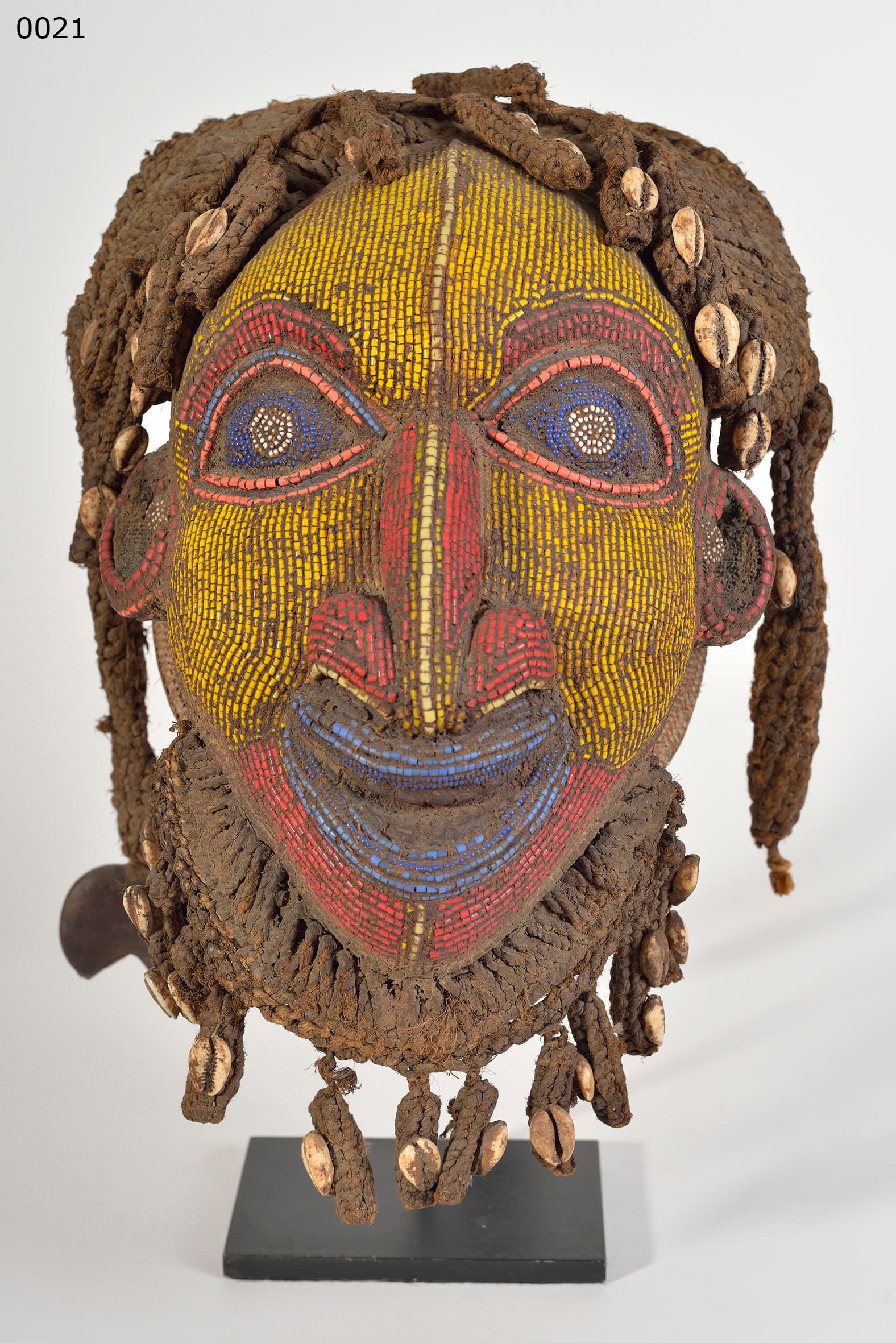
mask (covered with beads - shells on cloth)
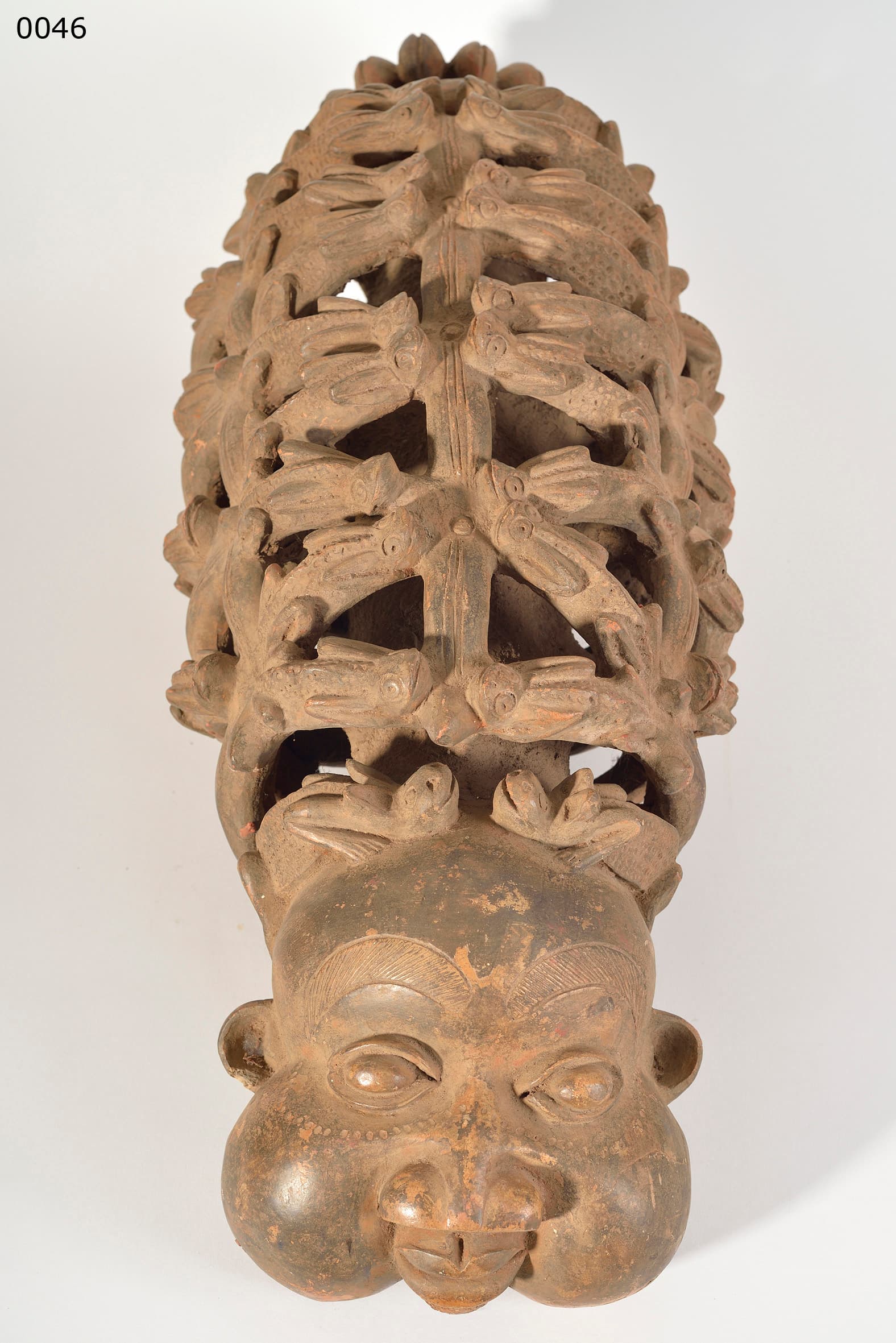
prestige pipe head
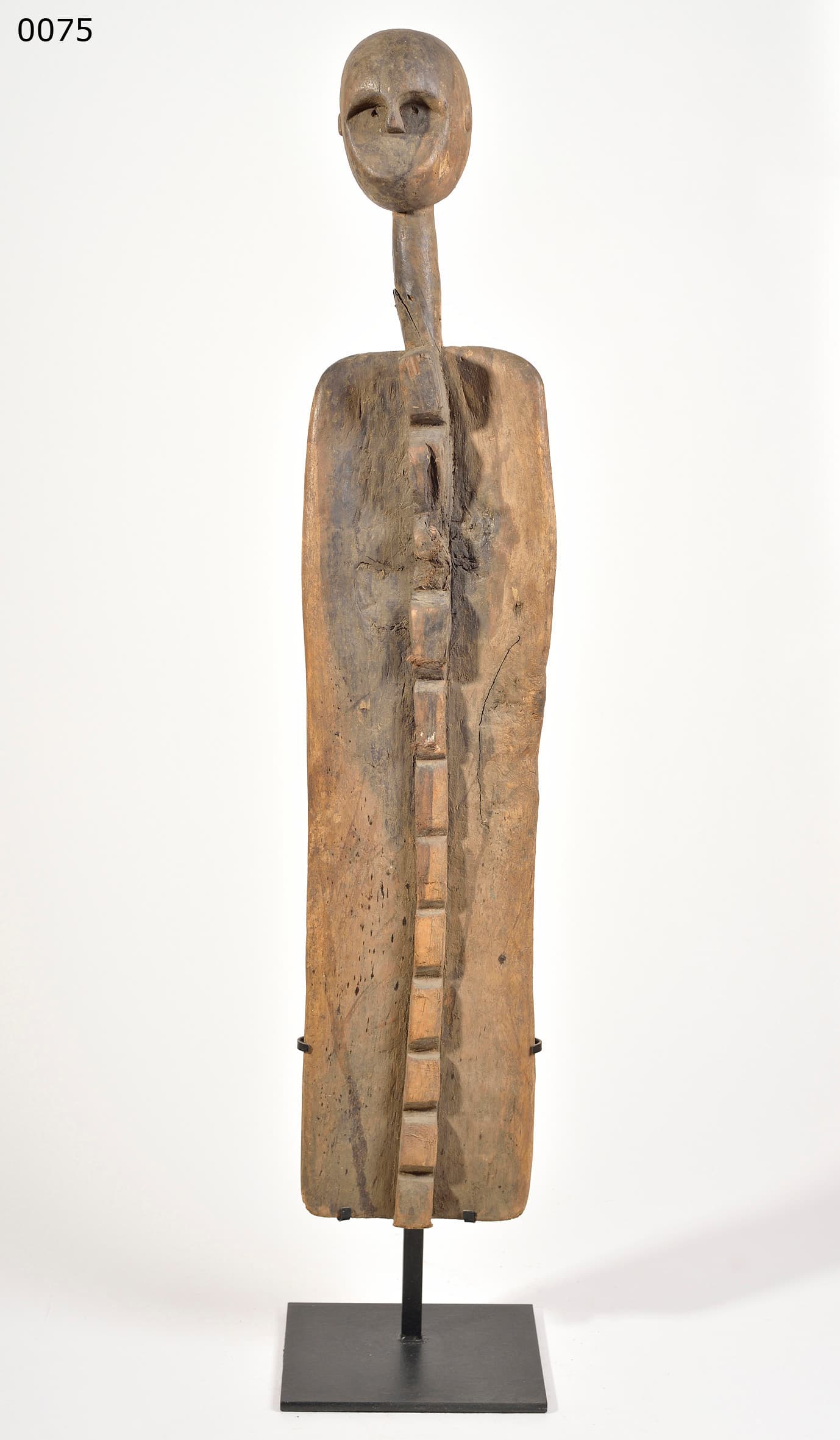
rare friction instrument