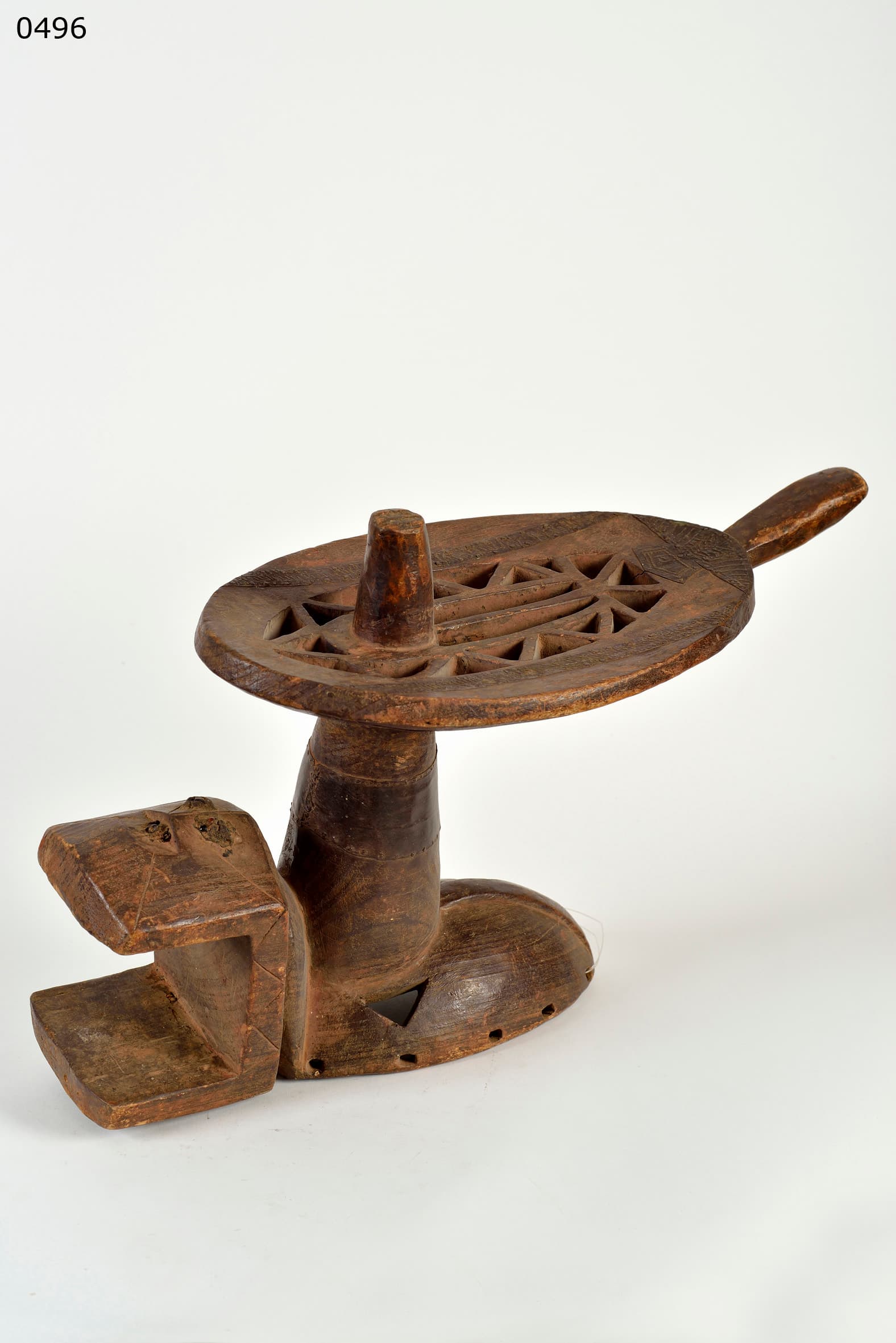
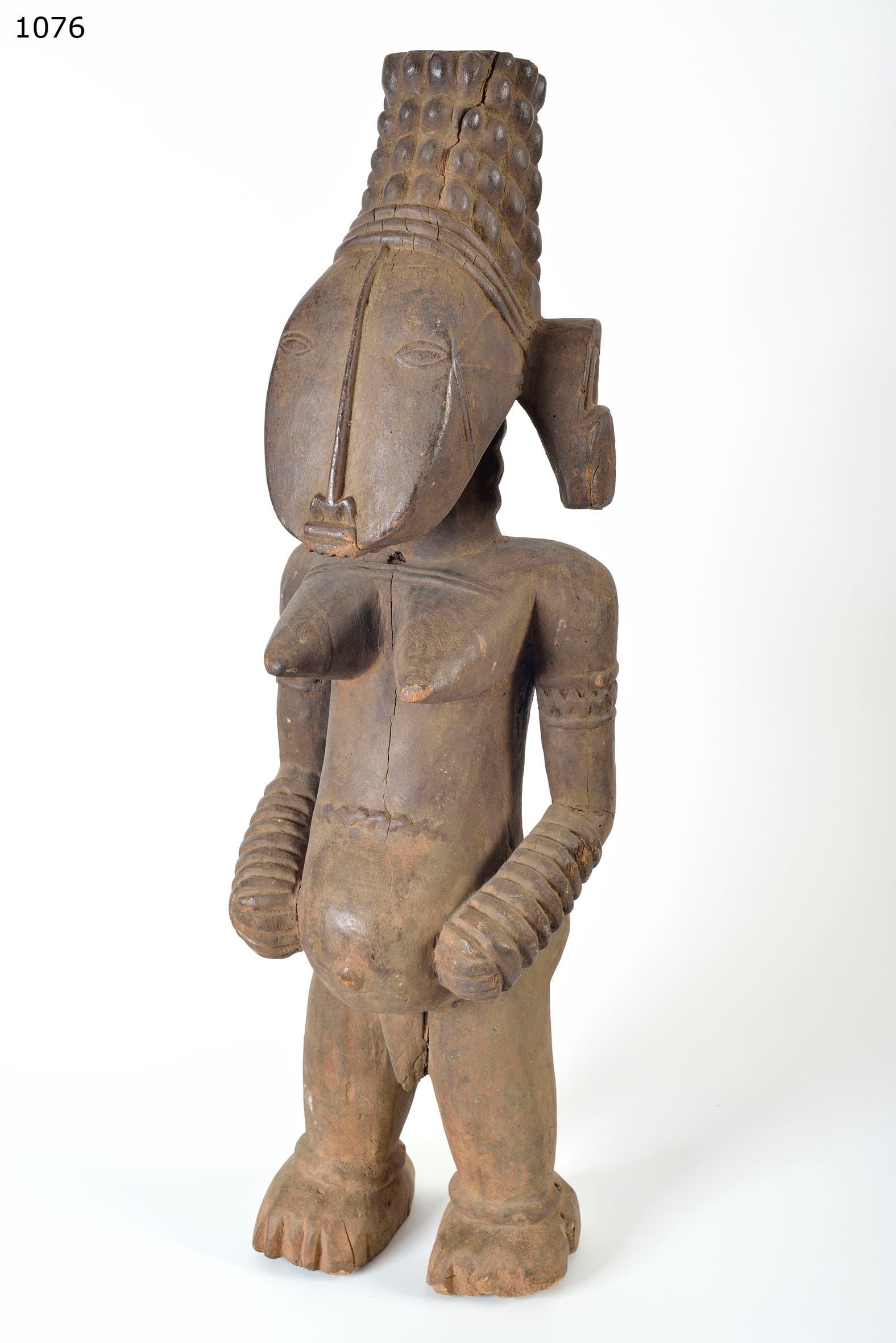
A tall, highly abstracted wooden shoulder mask: a small, stylized head with a crest and iron rings hanging from the ears sits atop a long, slender columnar neck, which rises from a ring of small carved heads set on a large, block-like body. Traces of red, green and white paint are visible.
1. Aesthetic Style and Benoue River Abstraction
This object is attributed to the Karim people of the Benoue River basin in northeastern Nigeria. The aesthetic shares a geometric abstraction with their neighbors, the Mumuye. The human form is stretched and reduced to its basic structural elements: a long, columnar neck supporting a sharply carved, diminutive head, with a ring of small heads at its base. Incised lines and painted accents in red, green and white give the mask a graphic presence designed to be legible from a distance during outdoor festivals.
Use and Attribution
Literature on Karim traditions is scarce. According to the collection catalogue, what is known about how this kind of mask is worn rests mainly on the oral account of the collector's buyer: it is worn partly on the shoulder, partly in such a way that the dancer "slips" into the mask and wears it on his head. Karim, Yukun, Waya and Mumuye share similar figure and mask types and mixed carving styles, so the attribution of individual objects can be difficult.
Patina, Material Weathering, and Wear
The wood is dry and evenly aged, with a weathered, fibrous surface and visible losses at the base of the body block. The red, green and white paint is worn and survives mostly in patches. The iron rings at the ears are attached and show signs of age.
Summary
This Karim shoulder mask is a significant example of Nigerian geometric abstraction. Its towering verticality and weathered, partly painted surface make it a compelling testament to the performative traditions of the Benoue River basin.
Written with AI assistance from the collection appraisal, object photography and our own research; editorially reviewed. Mistakes are possible — corrections are welcome. How we work →