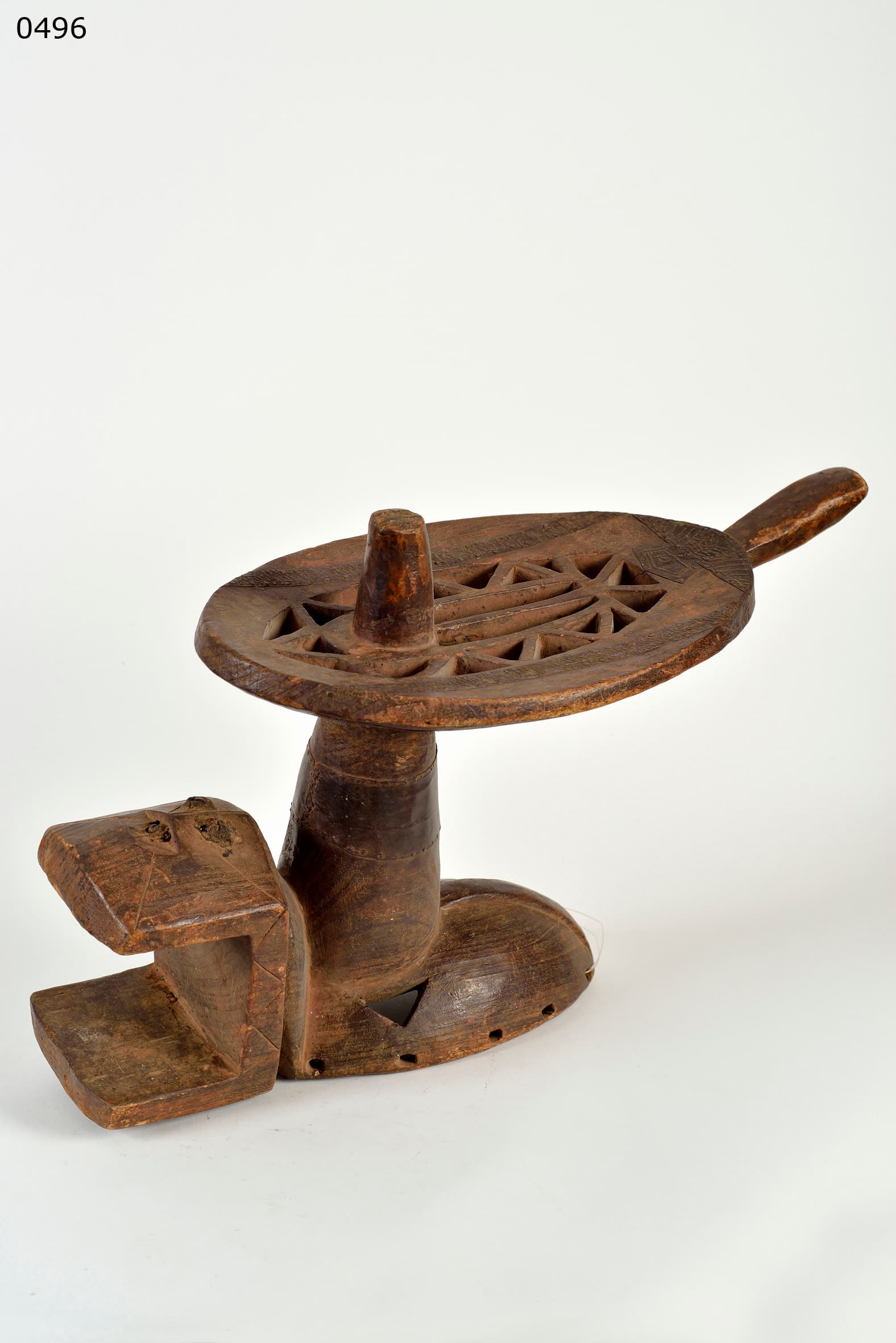
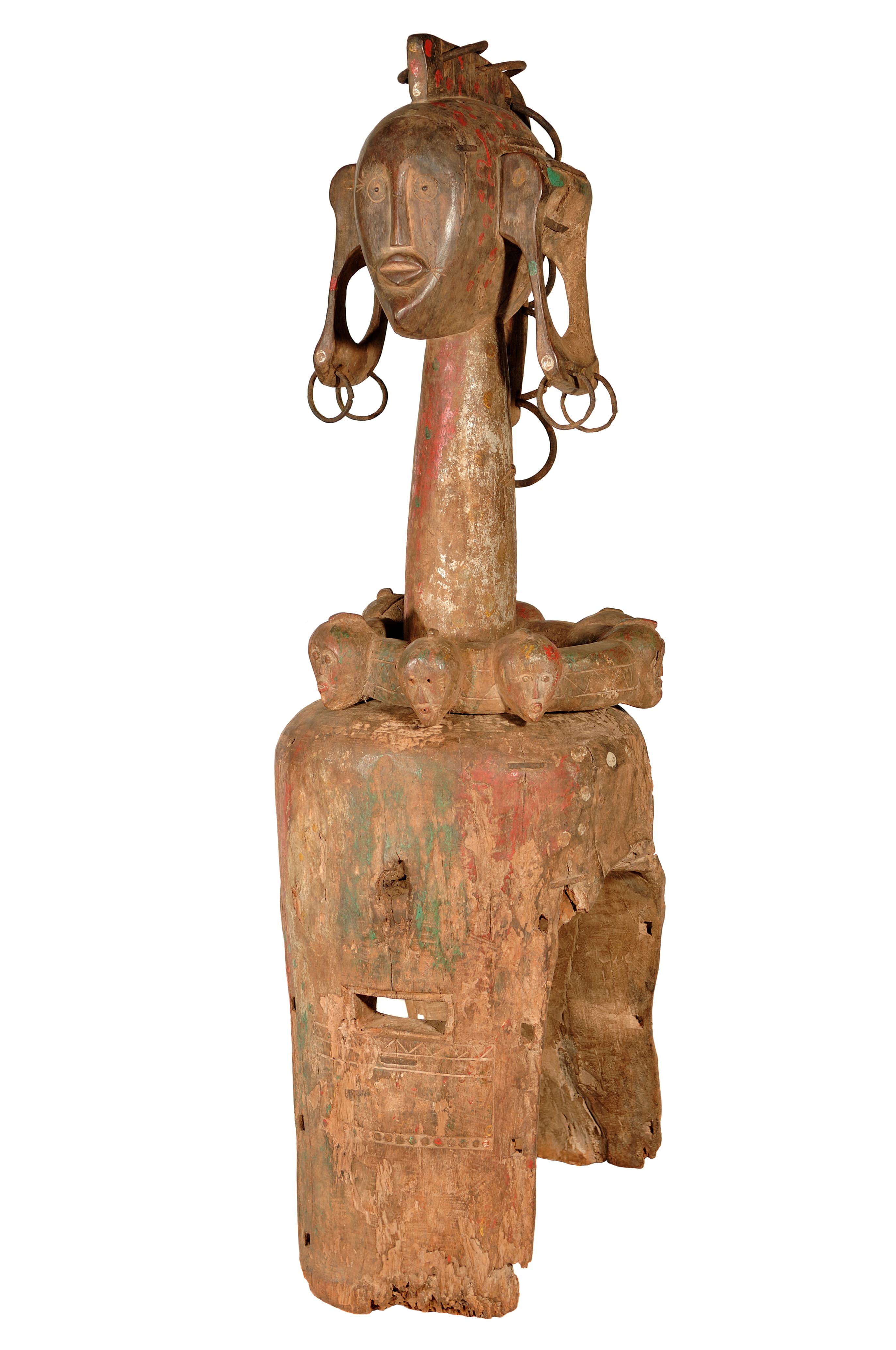
Standing an imposing 90 cm tall, this wooden female figure is characterized by a highly stylized, mask-like face, prominent conical breasts, and a spectacular, sweeping sagittal crest coiffure studded with large, carved nodes. The heavily desiccated wood is covered in a dry, crusty, earth-toned patina.
1. Aesthetic style — benue river cubism and the studded crest
The Jukun people of the Middle Benue River valley in Nigeria produce statuary defined by severe, columnar cubism. This rare female ancestor figure rejects fluid naturalism; her torso is a rigid cylinder, and her arms (adorned with thick, carved bracelets) hang statically at her sides. The visual climax of the sculpture is the towering, sagittal hairstyle. Studded with heavy, carved pegs or nodes, this coiffure mimics the elite, mud-packed hairstyles historically worn by high-ranking Jukun and Wurkun women, serving as an eternal marker of her aristocratic lineage.
2. Ritual function — the akuma cult and royal guardianship
Monumental figures of this scale were central to the highly secretive Akuma cult, which governed the spiritual and political life of Jukun communities. This female figure represents a deified royal ancestor or a founding matriarch. She was housed in the darkness of a specialized shrine hut, hidden from the uninitiated. The priest (often the king himself) would consult her, offering sacrifices to ensure the fertility of the land, the successful transition of the seasons, and protection against disease and warfare.
3. Physical patina — deep shrine encrustation and desiccation
The 90 cm figure presents an uncleaned "power patina." It is enveloped in a dry, thick, and highly textured crust of sacrificial matter, dust, and aged wood sap. The base and the extremities exhibit significant natural desiccation and deep age cracks, a direct result of standing continuously on an earthen shrine floor in the hot, shifting climate of central Nigeria. This profound, multi-layered weathering is consistent with an early 20th-century period of primary use.
Summary
Commanding the space with extreme Benue River cubism and a towering, studded coiffure, this monumental Jukun figure is a rare manifestation of female royal ancestral power. Its thick, uncleaned sacrificial crust and deep structural desiccation are consistent with its traditional role as a guardian of the Akuma cult.
Written with AI assistance from the collection appraisal, object photography and our own research; editorially reviewed. Mistakes are possible — corrections are welcome. How we work →