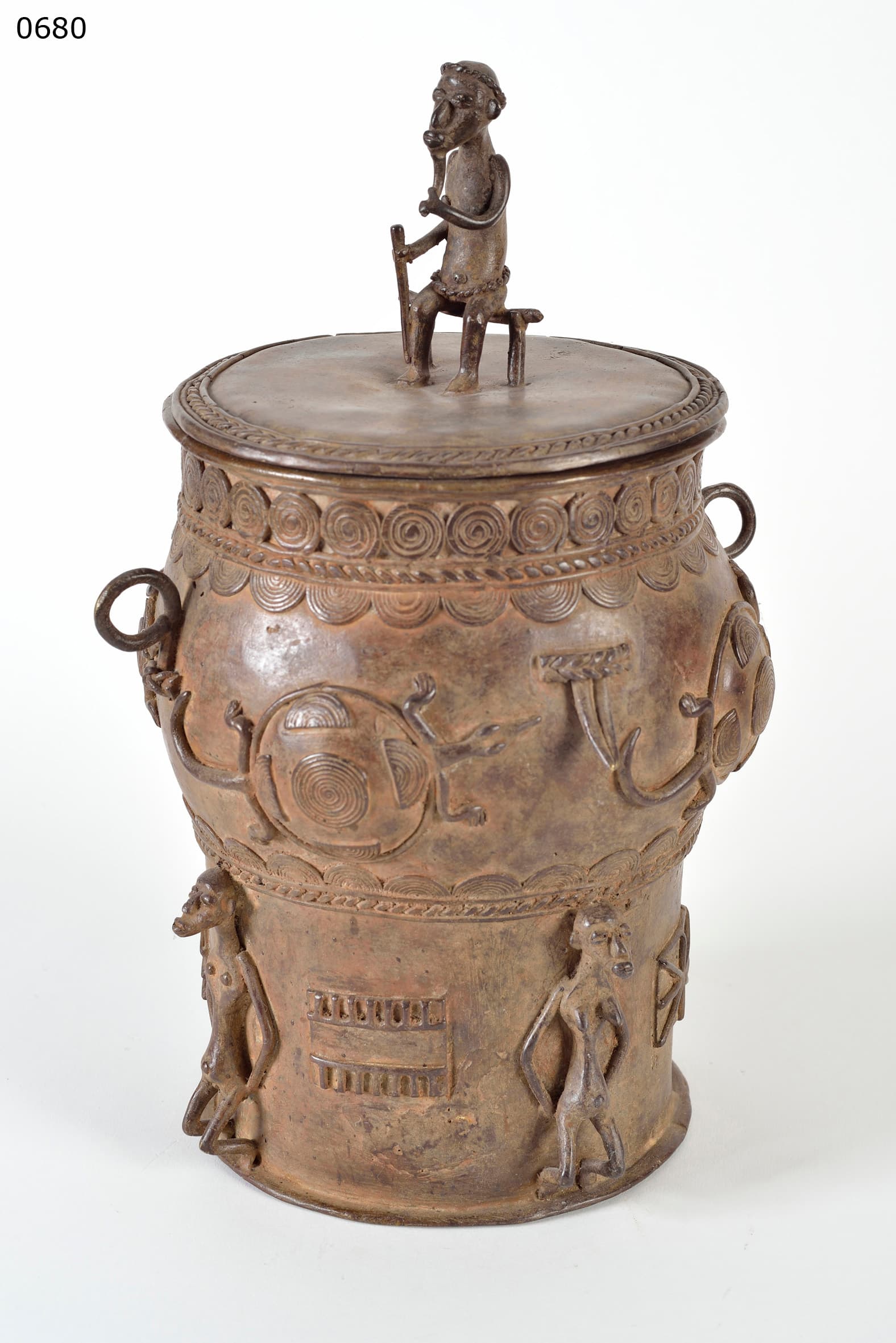
A large, brightly colored textile composed of multiple long, narrow, hand-woven strips stitched together edge-to-edge. It features a highly complex, syncopated geometric pattern utilizing green, yellow, red, and black threads.
1. Aesthetic Style and Bonwire Strip-Weaving
This textile is an example of Asante Kente cloth, a widely recognized woven fabric in African art. Associated with the tradition of the villages around Bonwire, a major center of Asante weaving, the aesthetic is fundamentally architectural. Male weavers operate simple hand-and-foot looms to create strips of cloth no wider than a few inches, which are then sewn together. The skill of the weaver is reflected in the intentional staggering of the geometric blocks of color across the seams, creating a dynamic optical rhythm that suggests careful planning and labor-intensive dedication.
2. Ritual Function and Elite Social Stratification
In Asante culture, Kente is traditionally understood as more than a garment; it serves as a wearable declaration of social hierarchy. The specific colors and pattern combinations are often read as indicating the wearer's social position, wealth, and religious standing. While these hierarchical codes have relaxed over recent decades, the cost of commissioning a hand-woven Kente cloth of this type suggests its role as a prestige object associated with high social strata.
3. Patina, Material Weathering, and Wear
A Kente cloth may show tactile softening and a mellowing of its dyes. The cotton or silk fibers have softened into a supple, heavy drape, showing wear consistent with use. The dyes exhibit a gentle muting. The hand-stitched seams show stress and pulling consistent with use as a garment.
Summary
This Kente cloth is a striking textile that reflects the wealth and complex social stratification traditionally associated with the Asante kingdom. Its intricate weave and signs of wear make it a notable example of West African elite identity.
Written with AI assistance from the collection appraisal, object photography and our own research; editorially reviewed. Mistakes are possible — corrections are welcome. How we work →
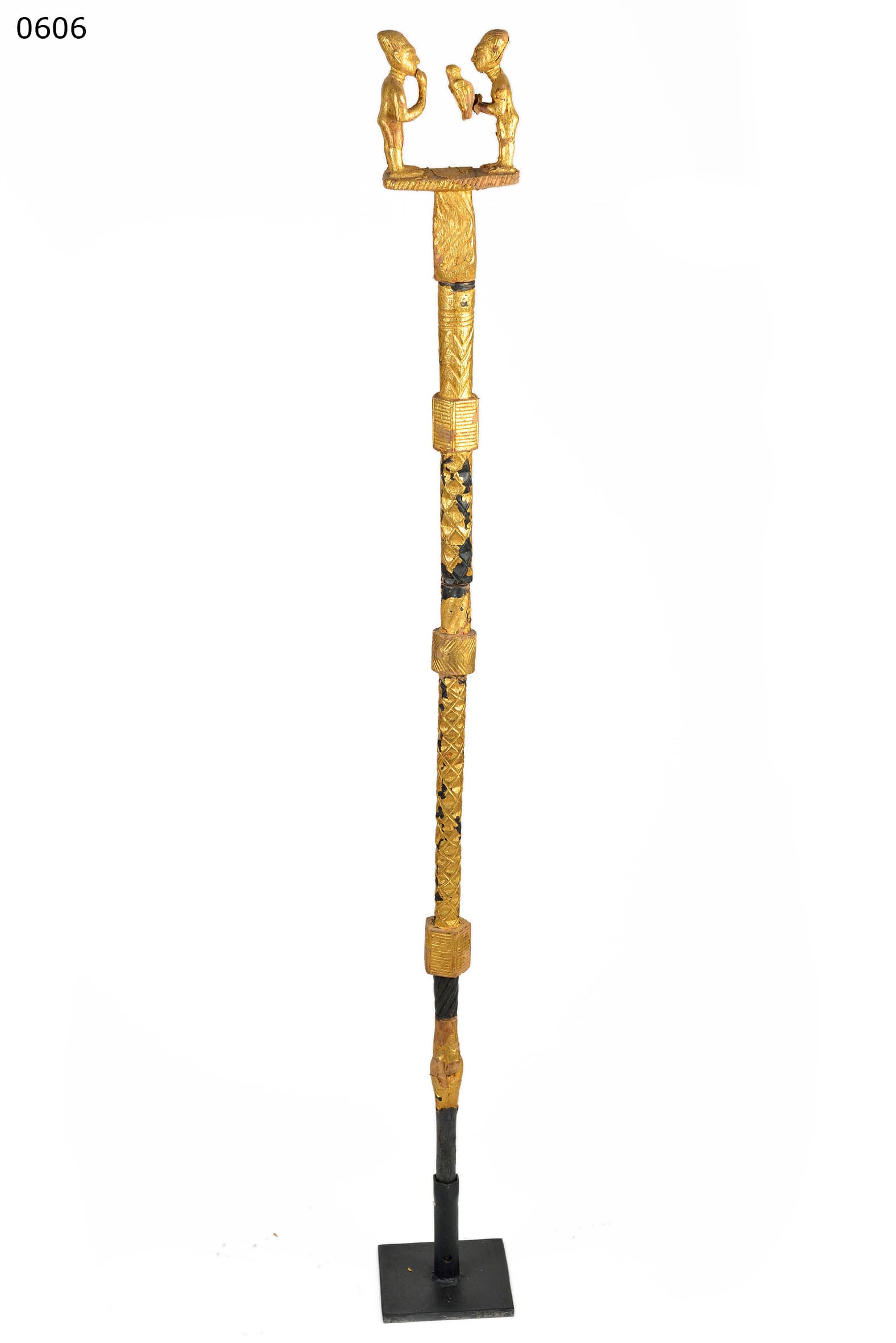
ceremonial staff of an official speaker
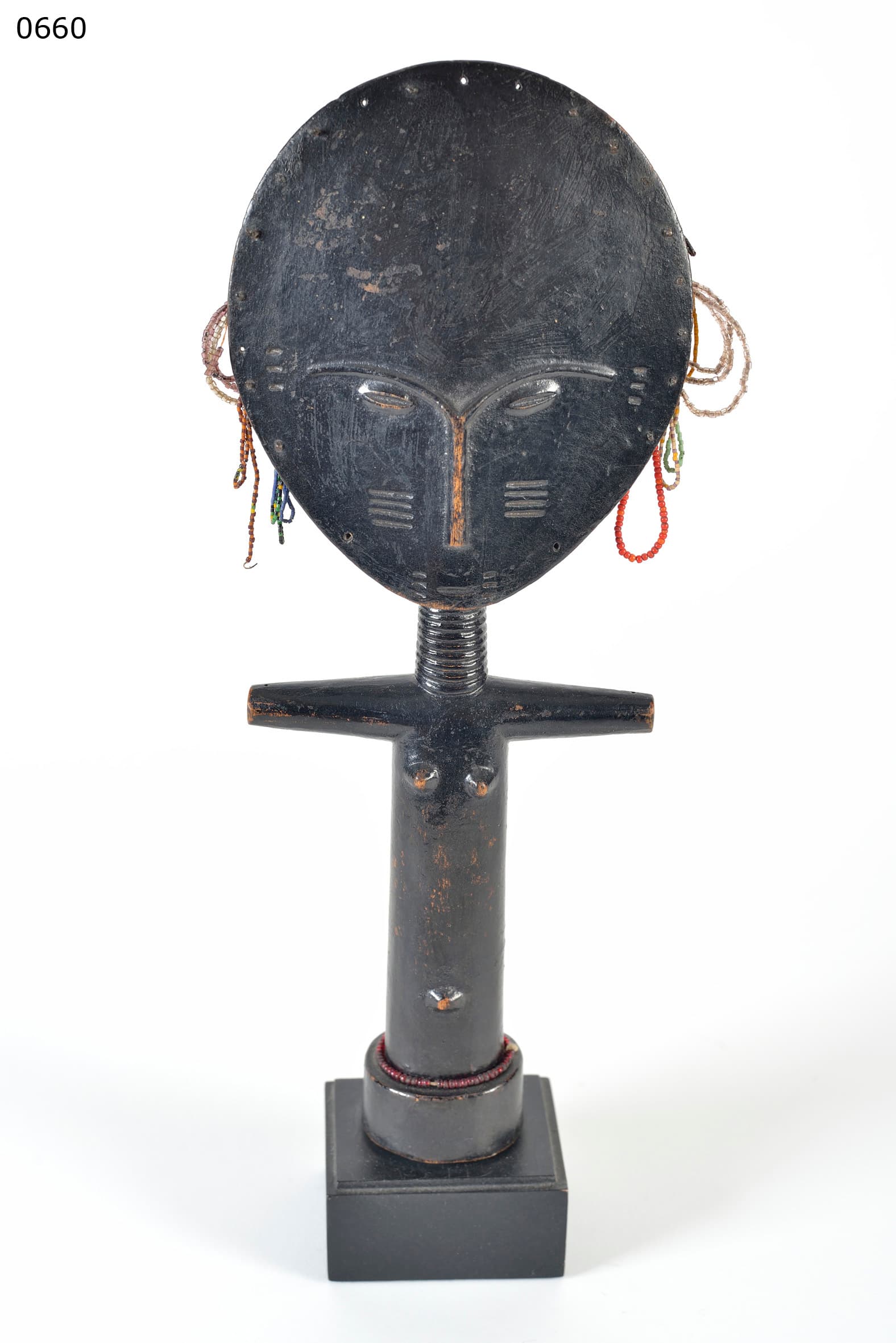
Akua-ba fertility doll (Asante disc-head variant)
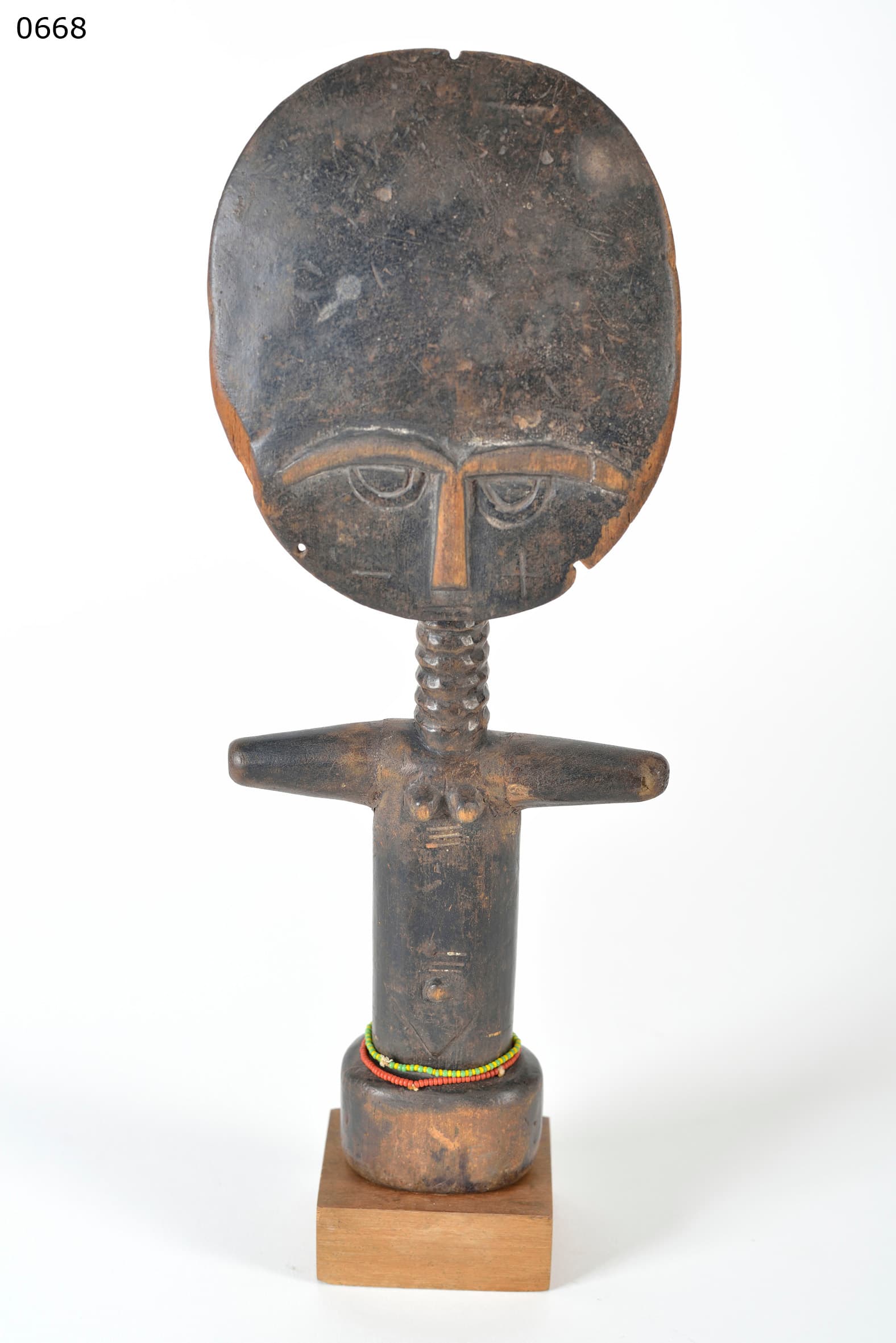
fertility doll (AKUABA)