A round throne stool from the Njimem chiefdom in the Sultanate of Foumban, Cameroon, around 60 cm in size. A thick seat covered in hammered brass sheet rests on an openwork lattice with figures carved in relief.
1. Form and Carving
The stool stands on a broad round foot carved with a continuous border of looped, leaf-like motifs. Above it the body flares upward like a drum and is worked as a lattice of diamond-shaped openings. Ribbed, arched bands rise against the lattice, and between them small figures stand out in relief: a central figure in a banded cap and necklace, holding a bar-like object across his lap, with a further figure on each side. The seat is a thick, rounded disc with an overhanging rim.
2. Brass Sheathing
The top and rim of the seat are covered with thin brass sheet, hammered into diamond patterns. Reddish tones show in the pattern fields, and golden patches have been worn bright where the metal was handled. The collection catalogue describes this geometric plating as recalling the form of German colonial-era orders and attributes the stool to the grandfather of the present chief.
3. Provenance
Njimem is one of the oldest chiefdoms of the Cameroon grasslands. According to the collection catalogue, the rulers of the Njikoumnjouo dynasty can be traced back to the fourteenth century, and the story of the chiefdom's founding is painted on the walls of the chief's audience chamber. The keeper of the royal treasury told the cataloguer that most of the objects kept there come from the present chief's father or grandfather.
Summary
A round Bamum throne stool from the Njimem chiefdom, with a brass-covered seat above an openwork lattice and relief figures.
Written with AI assistance from the collection appraisal, object photography and our own research; editorially reviewed. Mistakes are possible — corrections are welcome. How we work →
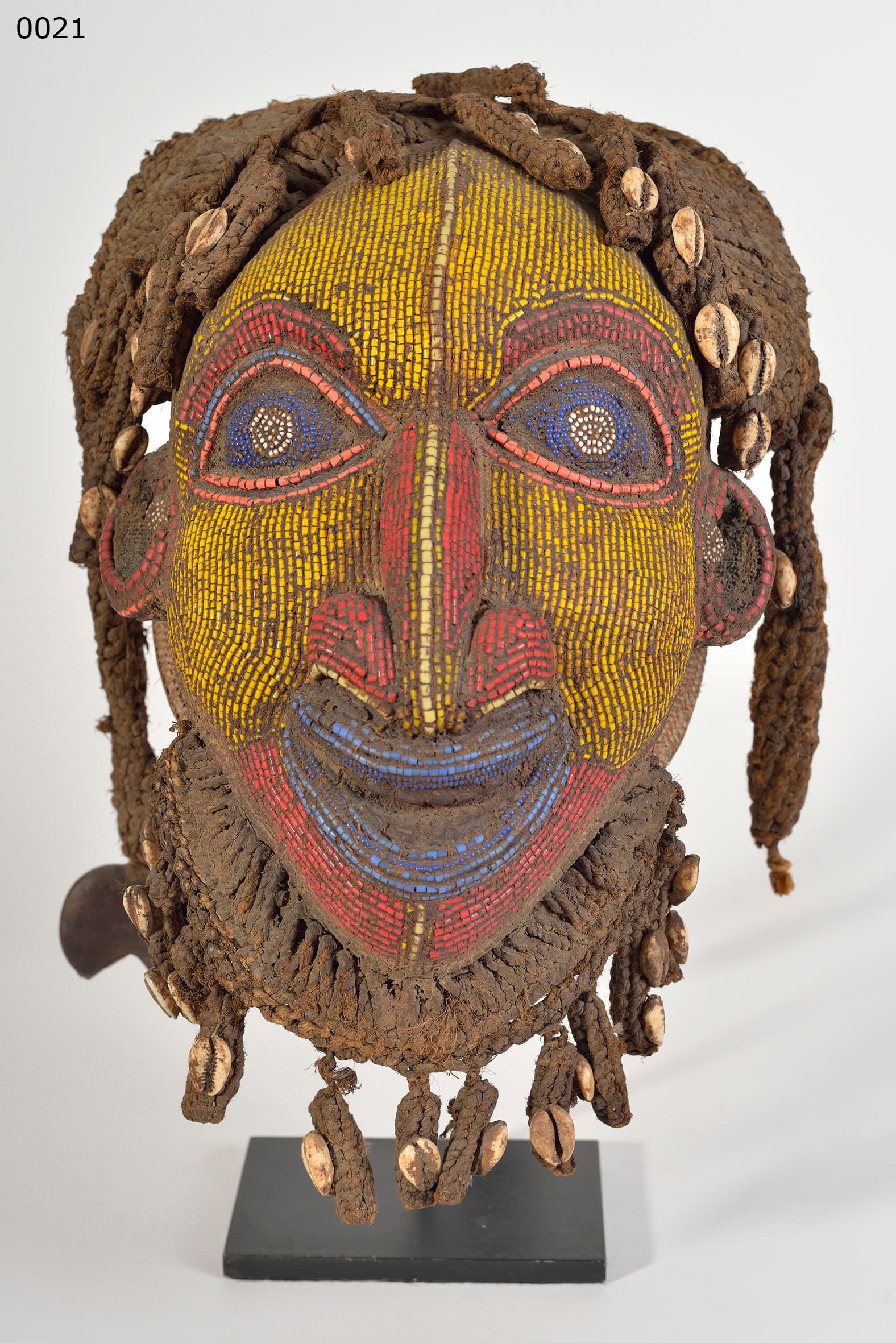
mask (covered with beads - shells on cloth)
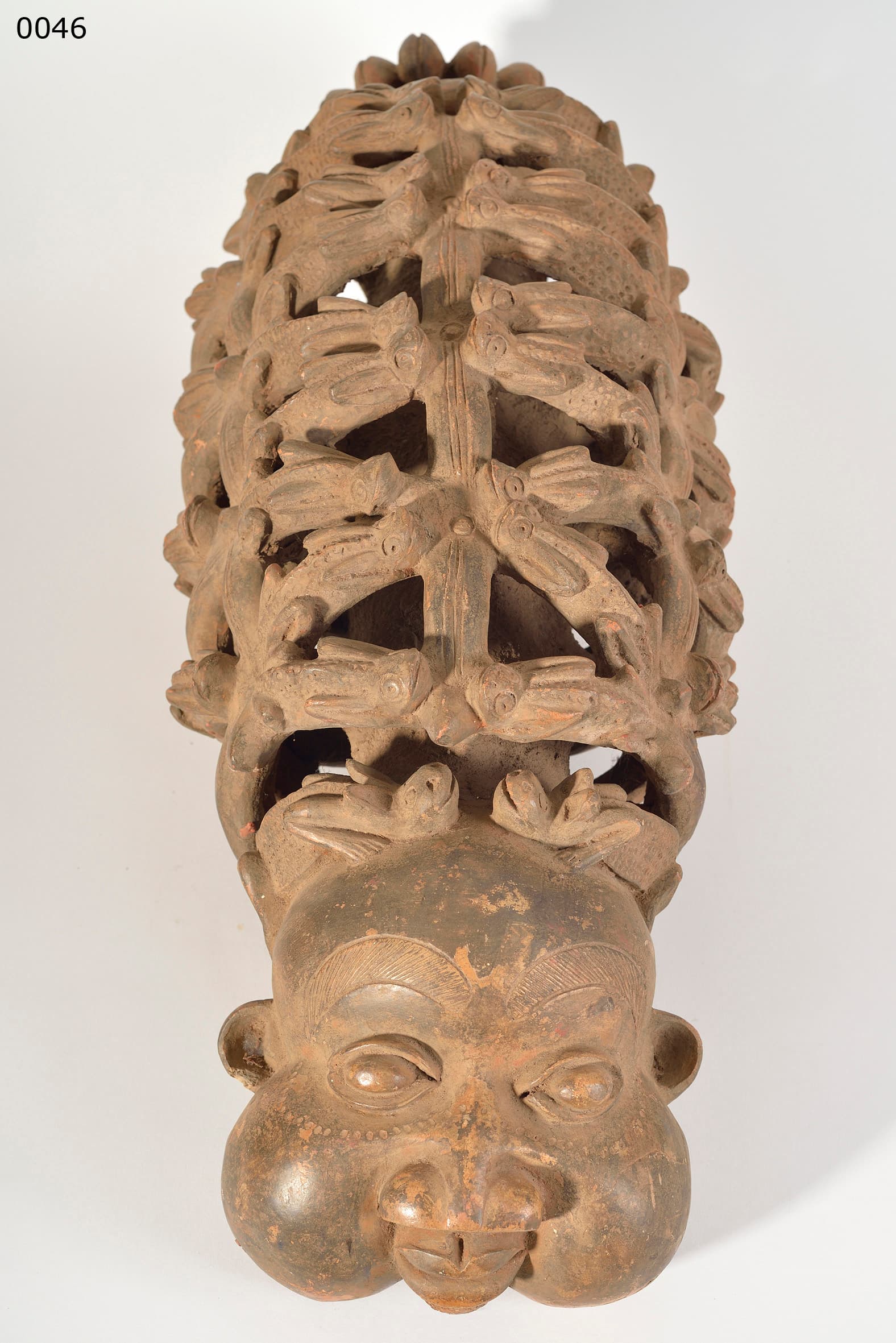
prestige pipe head
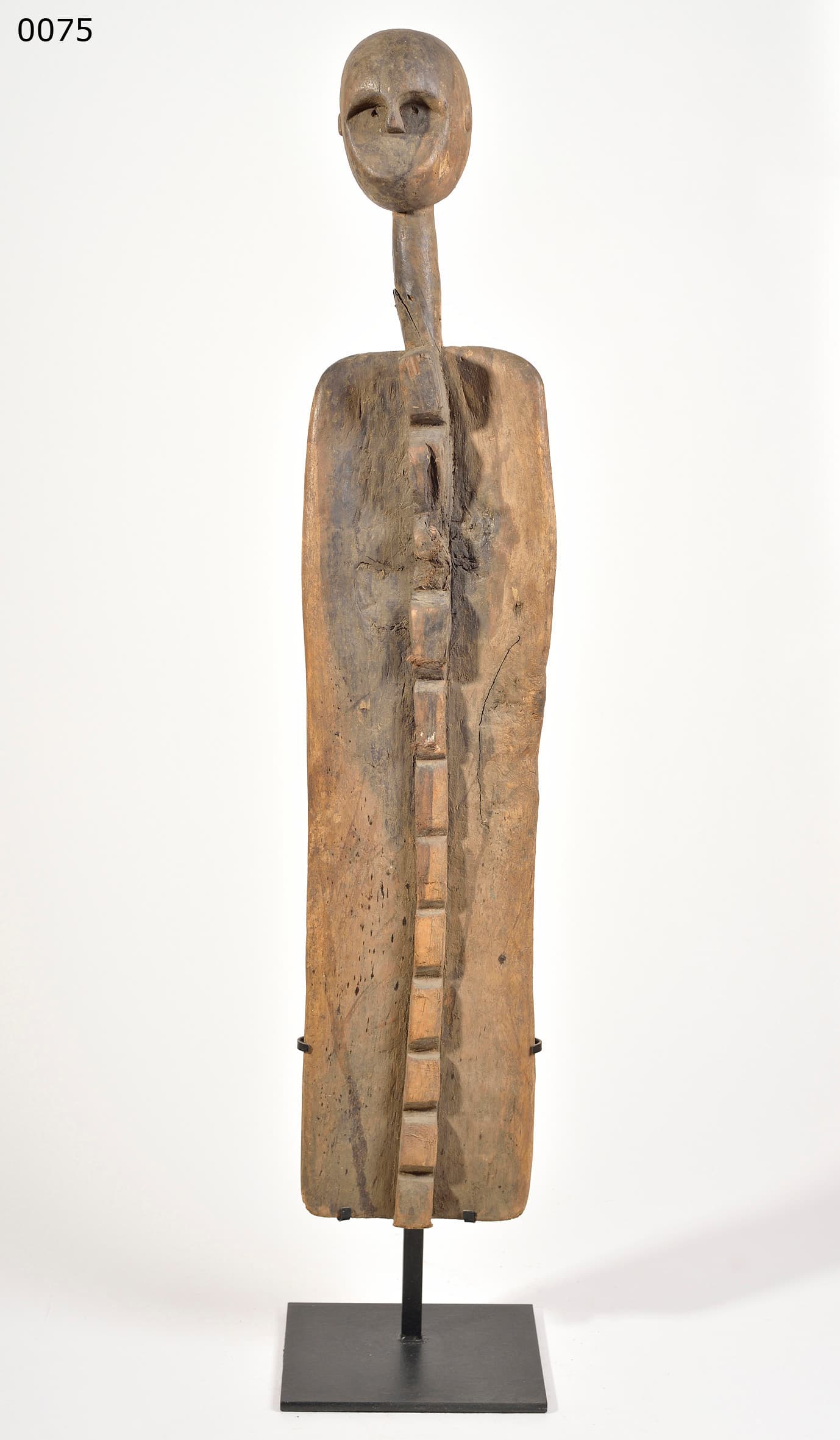
rare friction instrument