Two small, heavy, stone-like figures carved or modeled in highly abstract, rounded forms. They feature barely discernible, eroded facial features and stubby limbs, projecting a raw, primal aesthetic.
1. Aesthetic Style and Primal Reduction
Originating from the ancient Njimem Chiefdom, these small figures stand in stark contrast to the elaborate, high-relief wooden carvings of the Bamum court. Their aesthetic is one of extreme, primal reduction. The forms are rounded, heavy, and almost formless, resembling natural river stones that have been slightly coaxed into human shape. This intentional lack of refined detail speaks to a deeply animistic worldview, where spiritual power is believed to reside in raw, unworked mass rather than in delicate, ostentatious artistic embellishment.
2. Ritual Function and the Ancestral Communicator
In the complex political and spiritual landscape of the Njimem Chiefdom — one of the oldest in the Cameroon grasslands, with the Njikoumnjouo dynasty traceable to the 14th century — these unassuming, stone-like figures functioned as vital, direct communication devices with the spirit world. They were utilized by the clan leaders to establish symbolic contact with the ancestors. When faced with both minor daily issues and significant community problems, the chief would use these small figures as a focused medium, transmitting the community's concerns into the stone and waiting to receive the ancestors' silent, guiding responses.
3. Patina, Material Weathering, and Age
The objects display a highly eroded surface. According to the chief's confidant, Amidou Kouandou, these figures were inherited from the current chief's father or grandfather, which suggests they are probably several decades old. The completely smoothed, featureless extremities and the dense, compacted patina possibly resulting from handling, earth contact, and ritual anointing, are visible on the figures.
Summary
Stripped of all decorative excess, these small, stone-like figures are profound concentrations of Bamum animistic belief. Their heavily worn, primal forms served as direct, handheld conduits to the wisdom of the Njimem ancestors.
Written with AI assistance from the collection appraisal, object photography and our own research; editorially reviewed. Mistakes are possible — corrections are welcome. How we work →
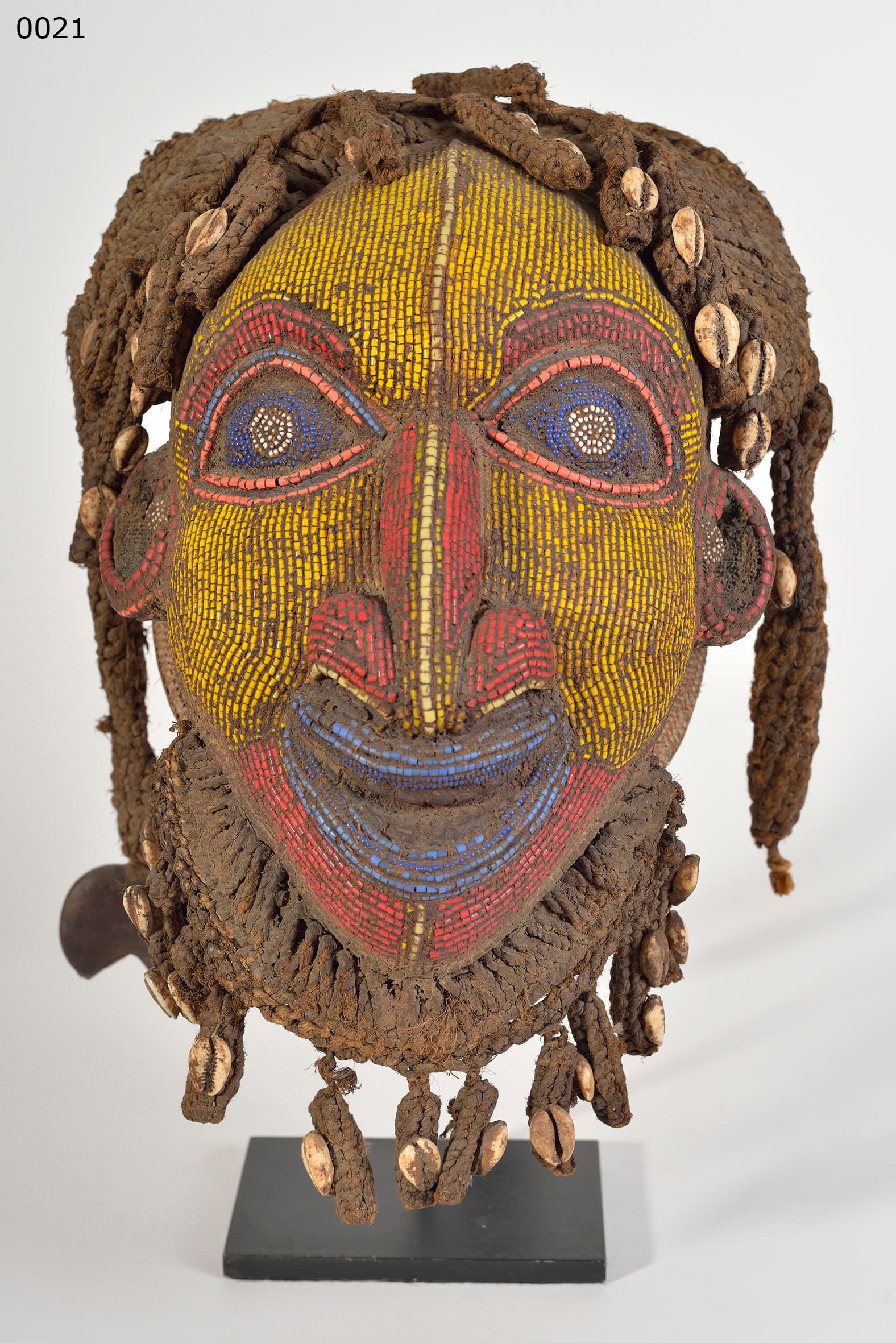
mask (covered with beads - shells on cloth)
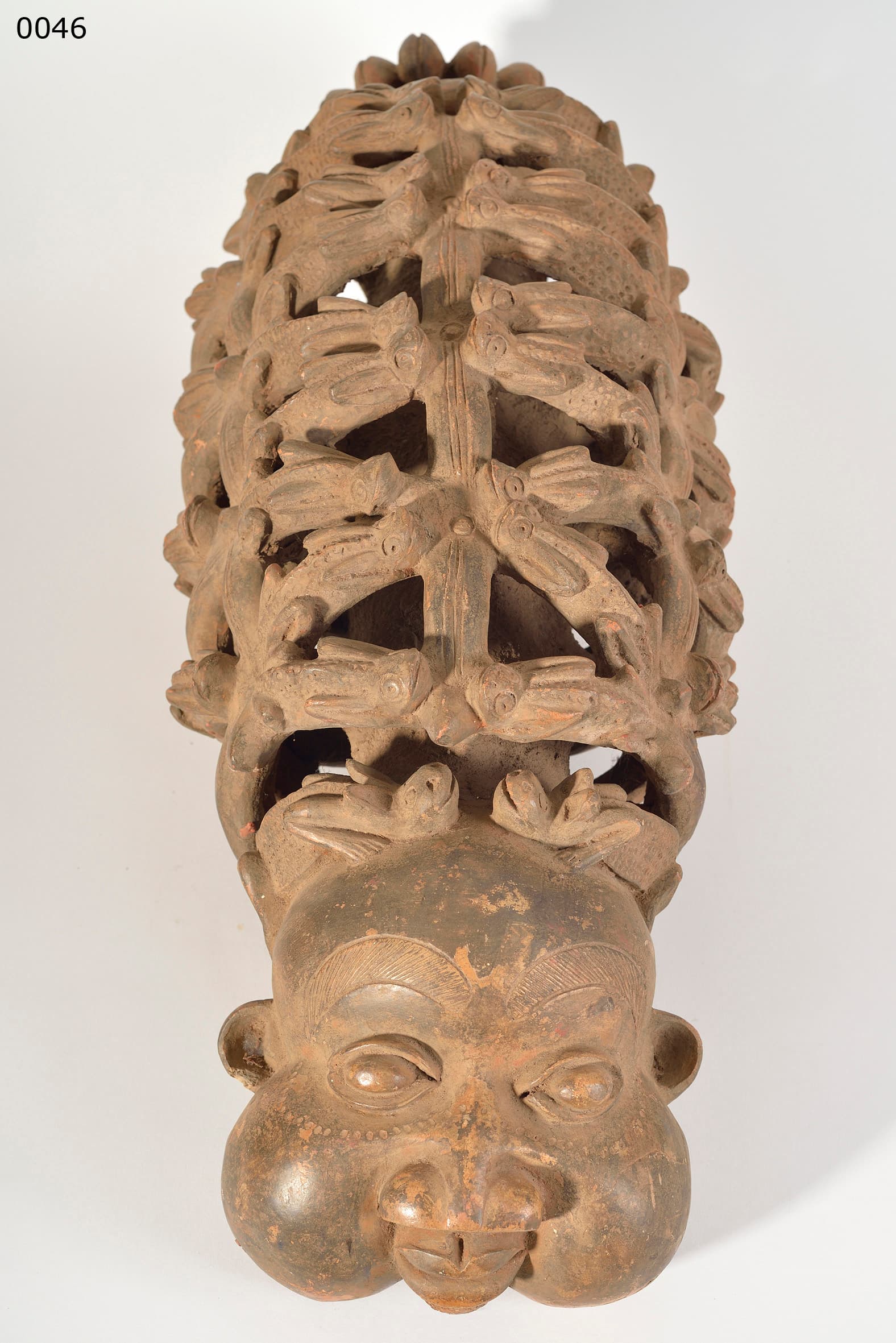
prestige pipe head
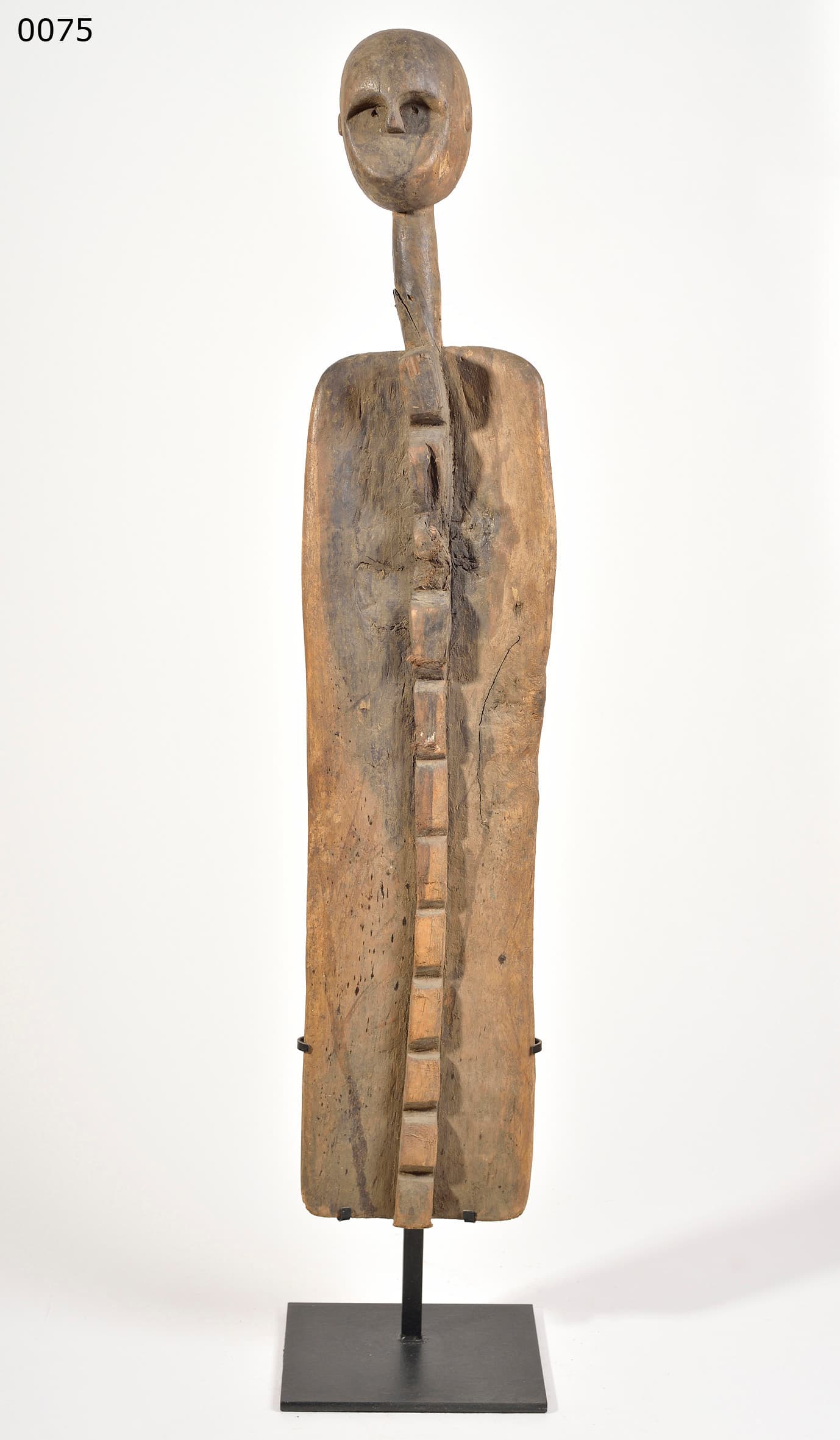
rare friction instrument