A monumental wooden throne featuring an immensely detailed, high-relief carved backrest depicting complex, multi-figure narrative scenes, supported by a base of rhythmic, repeating human figures.
1. Aesthetic Style and Narrative Woodcarving
This throne from the Njimem Chiefdom is a highly developed example of the woodcarving traditions of the Cameroon Grasslands. Unlike many thrones that rely solely on repeating animal motifs, the rear of this backrest is treated as a vast, complex narrative canvas. The intricate figural scenes are traditionally understood to act as a visual historical record. The lower section, supporting the actual seat, utilizes the classic Bamum caryatid structure, where groups of carved figures — representing the ancestors and the common people — symbolically bear the weight of the ruler.
2. Ritual Function and the Seat of History
This throne was traditionally a highly significant object within the Njimem chiefdom. Consistent with accounts associated with Hornek, the scene-like depictions carved into the wood are described as referencing the eventful history of the chiefdom's founding and survival — including the founding-myth footrace-coup of the two brothers, associated with the 14th-century Njikoumnjouo dynasty. By sitting upon this throne, the chieftain was physically resting upon the history of his people, visually projecting his authority and his direct connection to the foundational myths of the clan.
3. Patina, Material Weathering, and Surface Wear
The heavy tropical hardwood exhibits a well-developed patina. The seat itself displays significant, smoothed handling wear and a dark, oily polish consistent with prolonged contact with royal garments. The deep recesses of the narrative carvings on the backrest are caked with dust and soot suggestive of preservation within the chiefdom's main buildings. The natural desiccation cracks along the base suggest environmental exposure.
Summary
This throne is a highly accomplished example of Bamum narrative sculpture. It served as an important physical and historical anchor for the Njimem chieftains, projecting their authority through intricately carved clan mythology.
Written with AI assistance from the collection appraisal, object photography and our own research; editorially reviewed. Mistakes are possible — corrections are welcome. How we work →
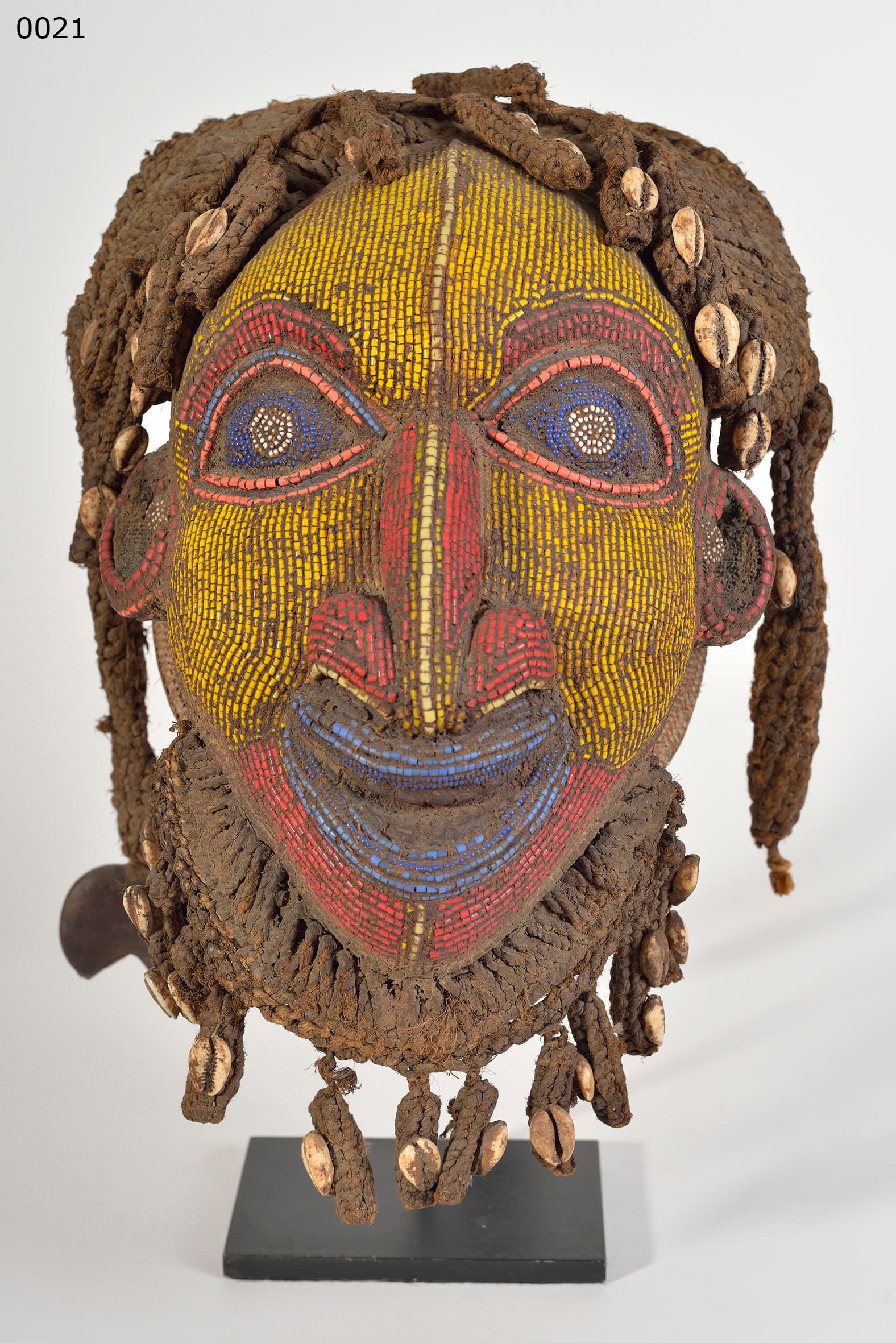
mask (covered with beads - shells on cloth)
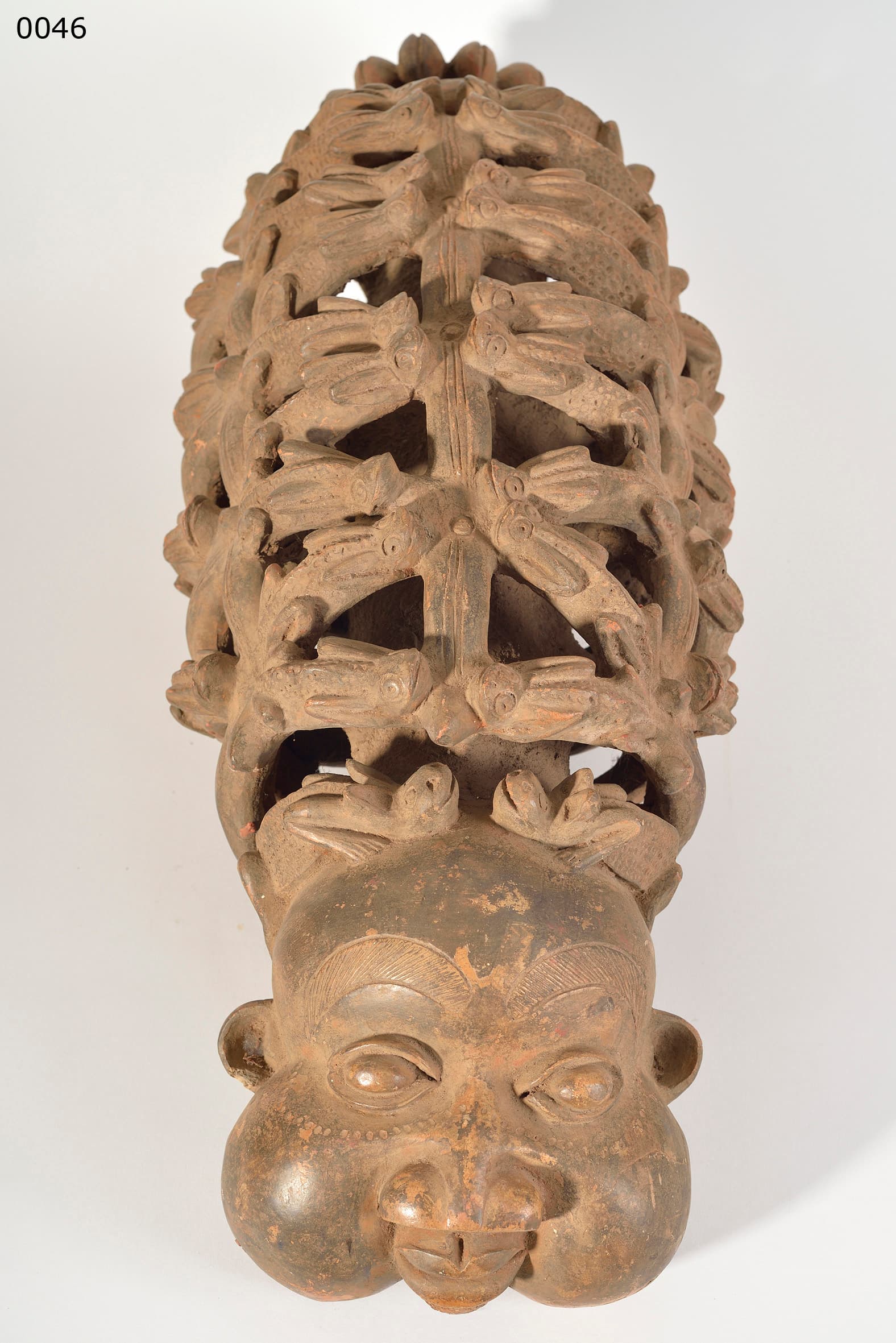
prestige pipe head
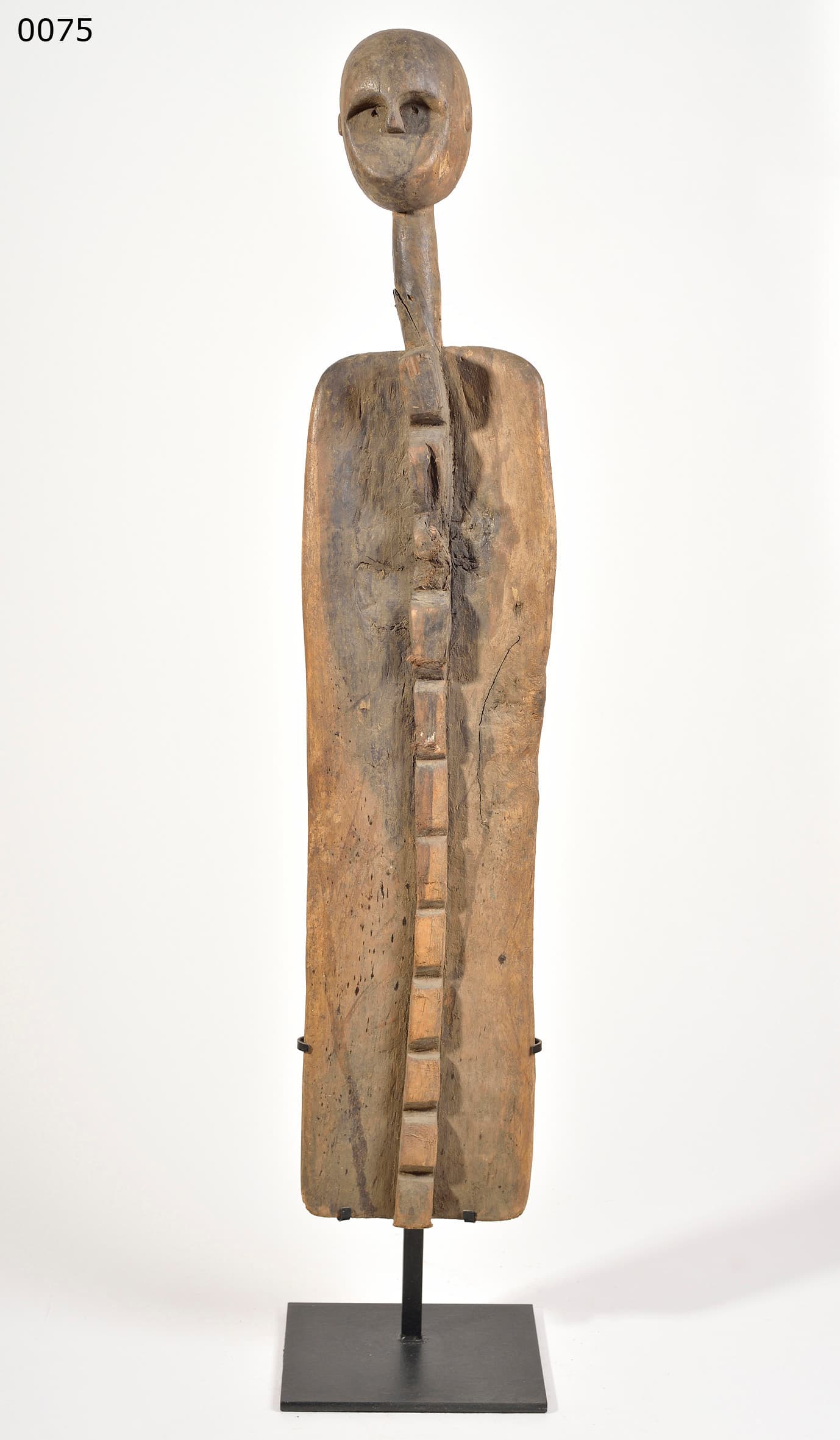
rare friction instrument