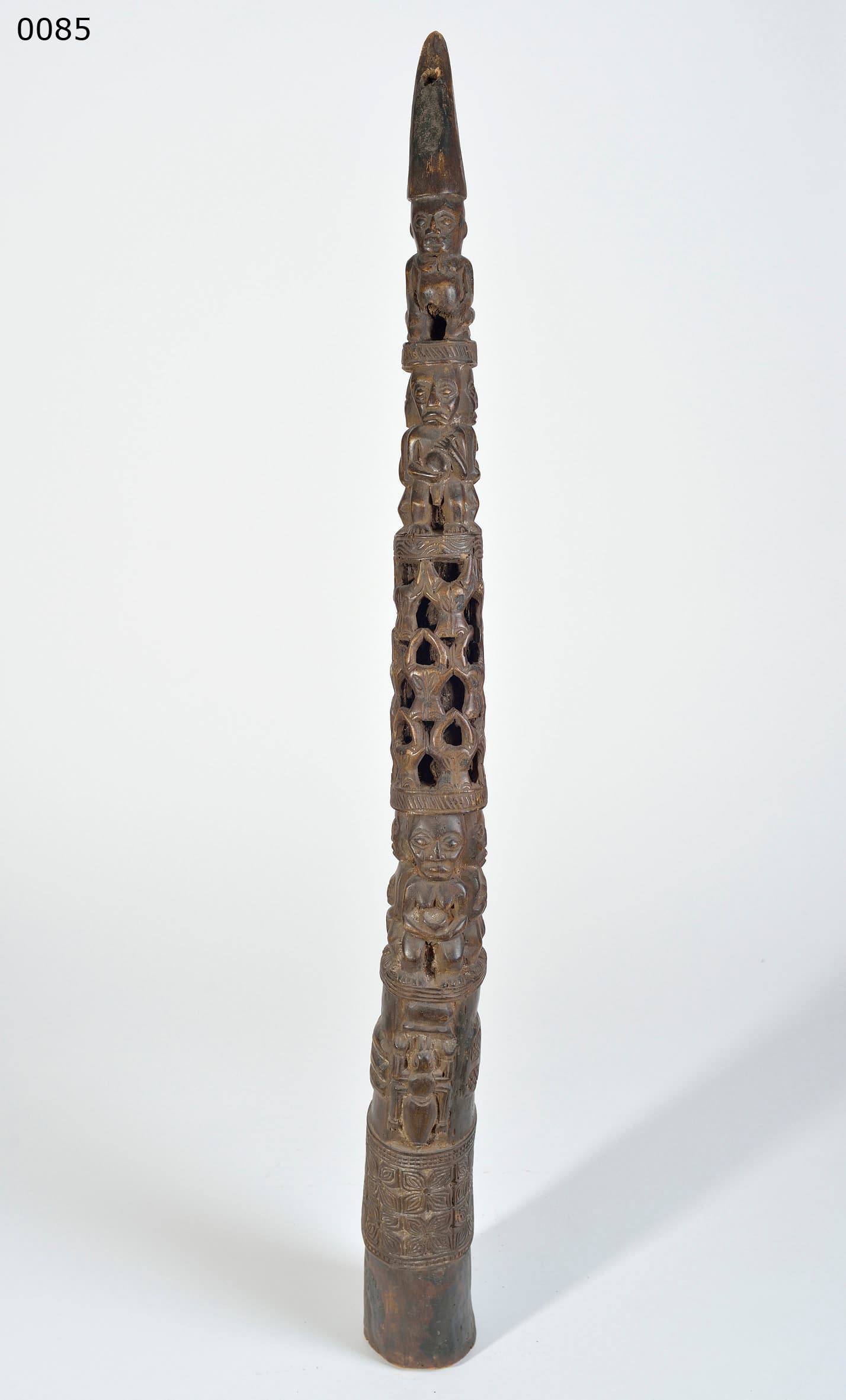
A colossal, 180 cm tall cast bronze vessel featuring an intricate, openwork base and a tall, ornamented neck. It is sealed by an expressive, sculpted "stopper figure" with stubble-like hair.
1. Aesthetic Style and Monumental Casting
Hailing from the Malin Chiefdom, this massive bronze vessel is a significant example of Grassfields metallurgy. Standing at 180 cm, it demonstrates the ambitious scale of the cire perdue (lost-wax) casting process. The aesthetic is designed to project presence; the dense, intricate openwork and high-relief ornamentation project an aura of wealth and authority. As Hornek notes, the use of a fully realized, expressive human "stopper figure" merges practical design with monumental portraiture, resulting in a vessel that commands the space around it.
2. Ritual Function and the Ashes of Sacrifice
This vessel holds historical and symbolic weight for the Malin clan, embodying — in Hornek's words — "their identity and cohesiveness." Originally, it was a sacred object used to store the ashes remaining from sacrificial rituals, keeping the spiritual essence of those offerings protected within the royal treasury. Over time, its function evolved: most recently it was prominently displayed in the chief's reception hall, where Hornek notes it was "intended to immediately command respect from every outsider" — showing visitors and rival clans the chiefdom's identity.
3. Patina, Material Weathering, and Age
The bronze exhibits a deep patina consistent with long-term indoor display. The deep crevices of the openwork base and the stopper figure's hair retain dark, stable oxidation, while the protruding elements (such as the figure's face and the rim of the vessel) display a warm, golden-brown handling polish. The massive weight and the presence of minor casting imperfections are compatible with a pre-industrial casting from a Bamum royal foundry.
Summary
This colossal bronze vessel is a significant metallurgical work that embodies the identity and power of the Malin Chiefdom. From storing sacred ashes to receiving rival diplomats, it represents a notable expression of Grassfields statecraft.
Written with AI assistance from the collection appraisal, object photography and our own research; editorially reviewed. Mistakes are possible — corrections are welcome. How we work →
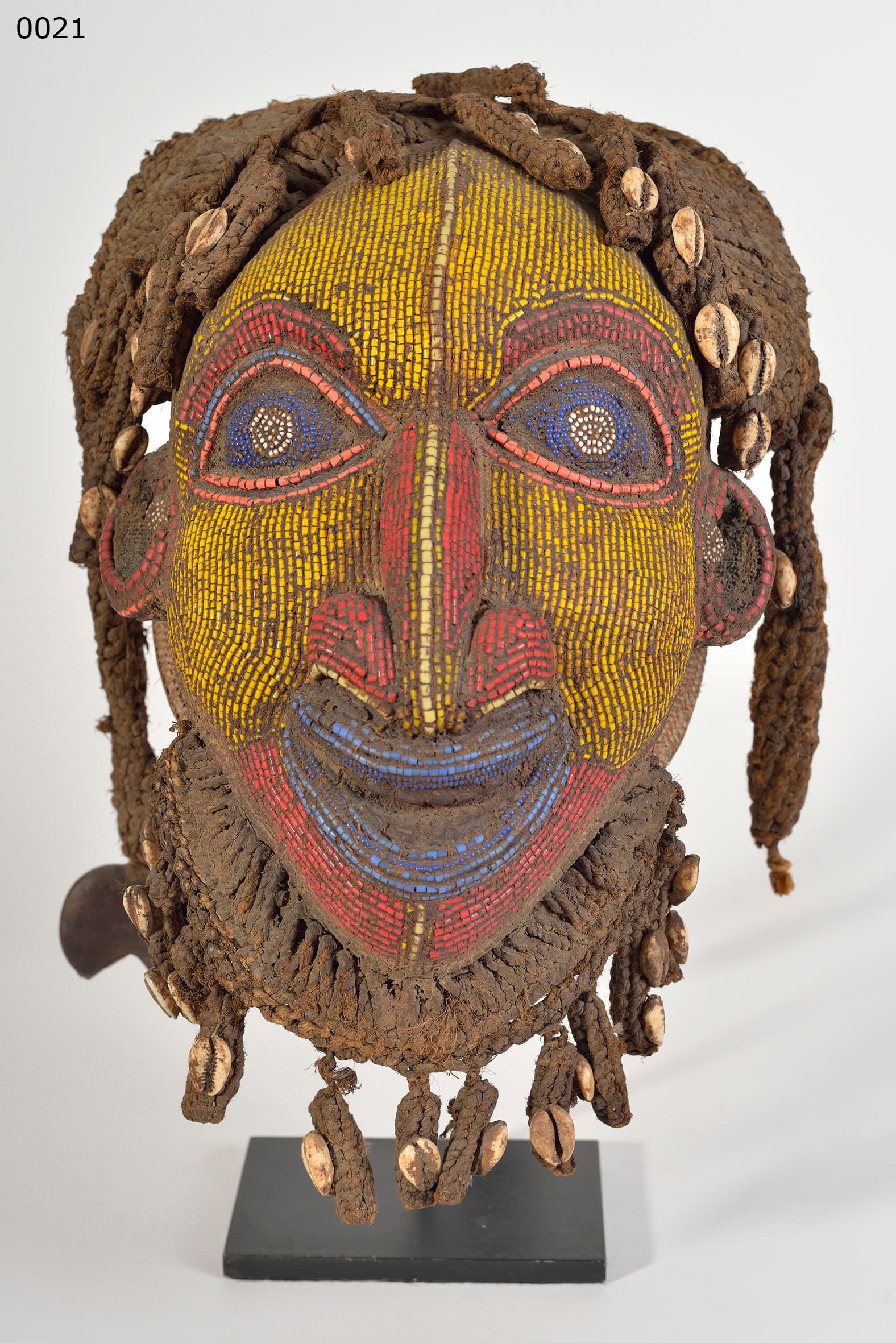
mask (covered with beads - shells on cloth)
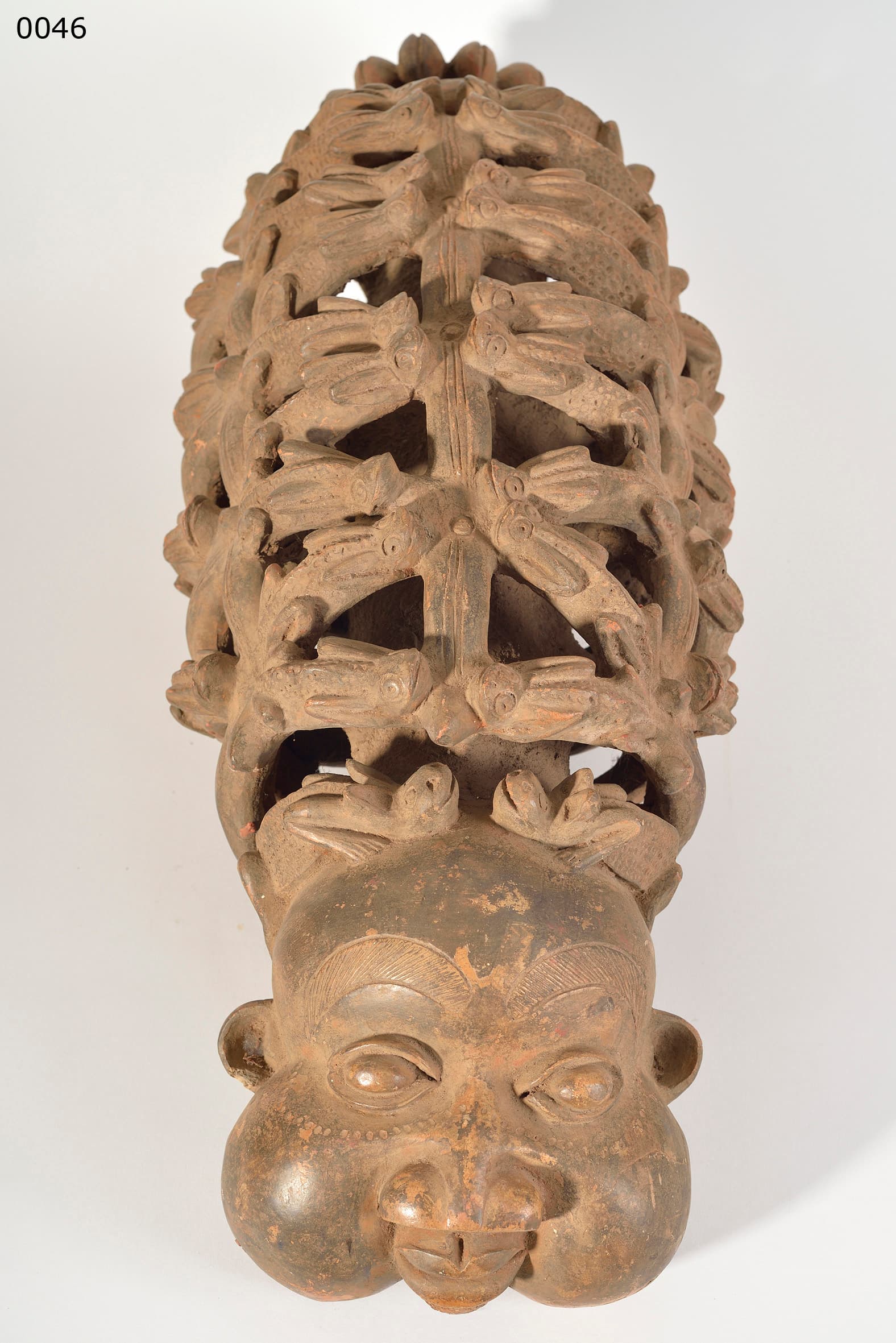
prestige pipe head
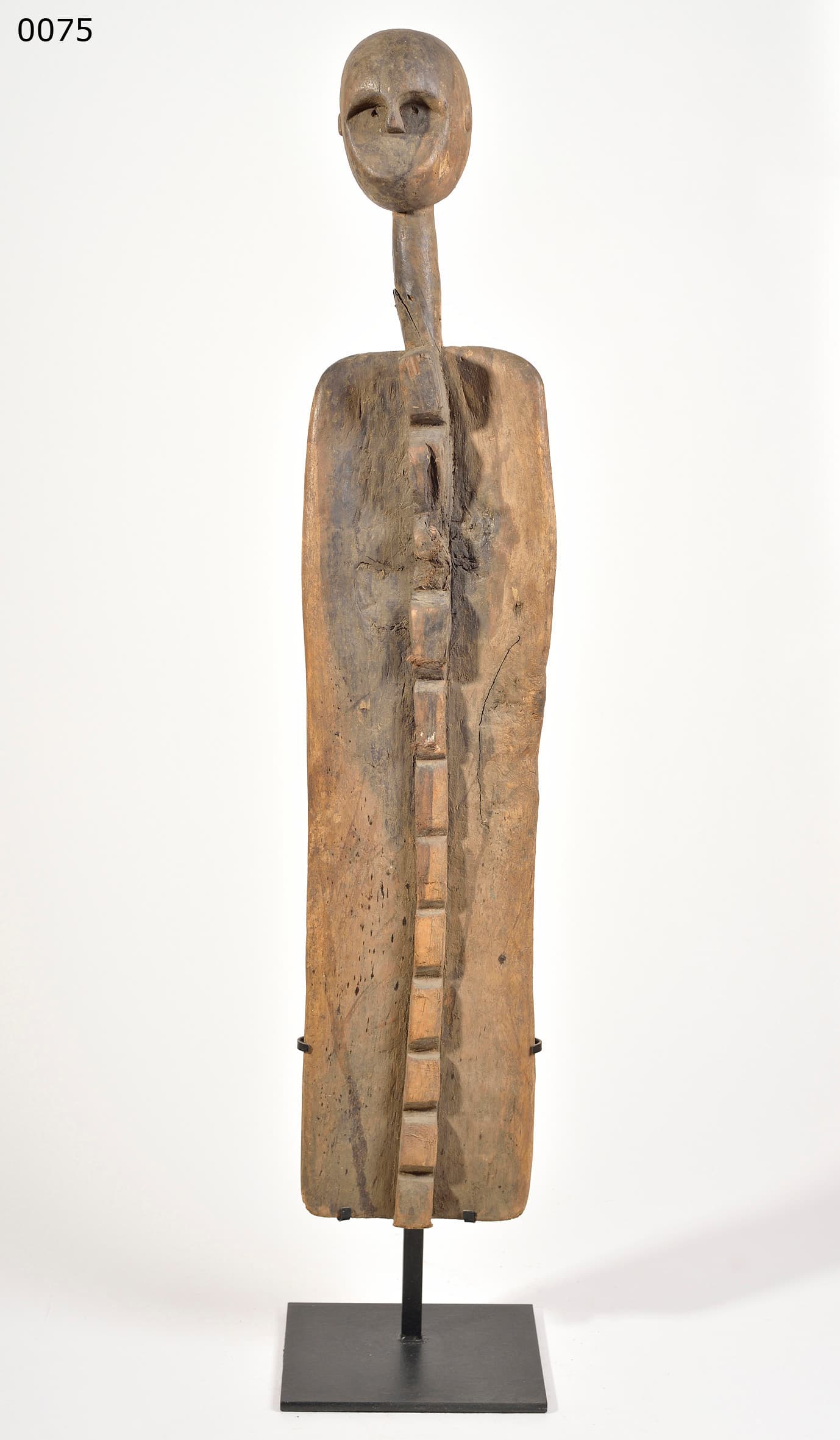
rare friction instrument