A significant ensemble of large terracotta sculptures: a seated fertile queen holding twins, a standing nurse figure holding a pot, a queen with neck rings seated on a stool, and a separate two-handled ritual vessel ("pot du peuple") resting on a wooden stool.
1. Aesthetic Style and Terracotta Monumentality
Hailing from the Kounden Chiefdom, this is a highly detailed, multi-figure terracotta installation. The collection catalogue highlights its artistic design and expressiveness. The artist has achieved a sophisticated level of narrative clay modeling, utilizing scale and specific physical attributes to map the complex hierarchy of the Bamum royal court. The fertile queen is rendered with maternal, grounded volume, while the accompanying nurse and the highly adorned, tattooed representational queen display stiff, formal postures. The intricately modeled "pot du peuple" (pot of the people), a two-handled vessel with faces in relief around the shoulder, on its wooden stool ties the human figures to the traditional practices of the chiefdom.
2. Ritual Function and the Court Hierarchy
This ensemble is associated with the complex pragmatism of Grassfields royal politics, as documented in the collection catalogue:
-
The seated queen with twins (one of the many wives of the clan leader, royal insignia chain around her neck) represents ultimate fertility. Her sole task was to bear children.
-
The nurse figure with the pot lived in her own separate house and was responsible for raising those royal children.
-
The queen with neck rings and tattoos served purely for representational, diplomatic purposes. According to the collection catalogue: because she could never be allowed to stand taller than the king, nor have pregnancies interfere with her representational duties, she was historically sterilized.
-
The "pot du peuple" on its specially-made stool held the actual, physical power of the ensemble: traditional healing substances, magic potions, and ingredients intended to lend power to the people of the community.
3. Patina, Material Weathering, and Surface Characteristics
The low-fired terracotta objects exhibit a dry, highly oxidized, and dusty treasury patina. The deep crevices of the tattoos, neck rings, and coiffures hold soot and red earth. The wooden stool supporting the ritual pot shows desiccation and a dry surface. The sheer scale and fragile nature of this complete, unbroken terracotta ensemble surviving in a traditional architectural setting support its attribution as an exceptionally protected and highly revered royal commission.
Summary
This terracotta ensemble offers a compelling physical record of Bamum royal hierarchy. From the celebration of fertility to the pragmatism of court representation, it represents a highly significant document of Bamum cultural history.
Written with AI assistance from the collection appraisal, object photography and our own research; editorially reviewed. Mistakes are possible — corrections are welcome. How we work →
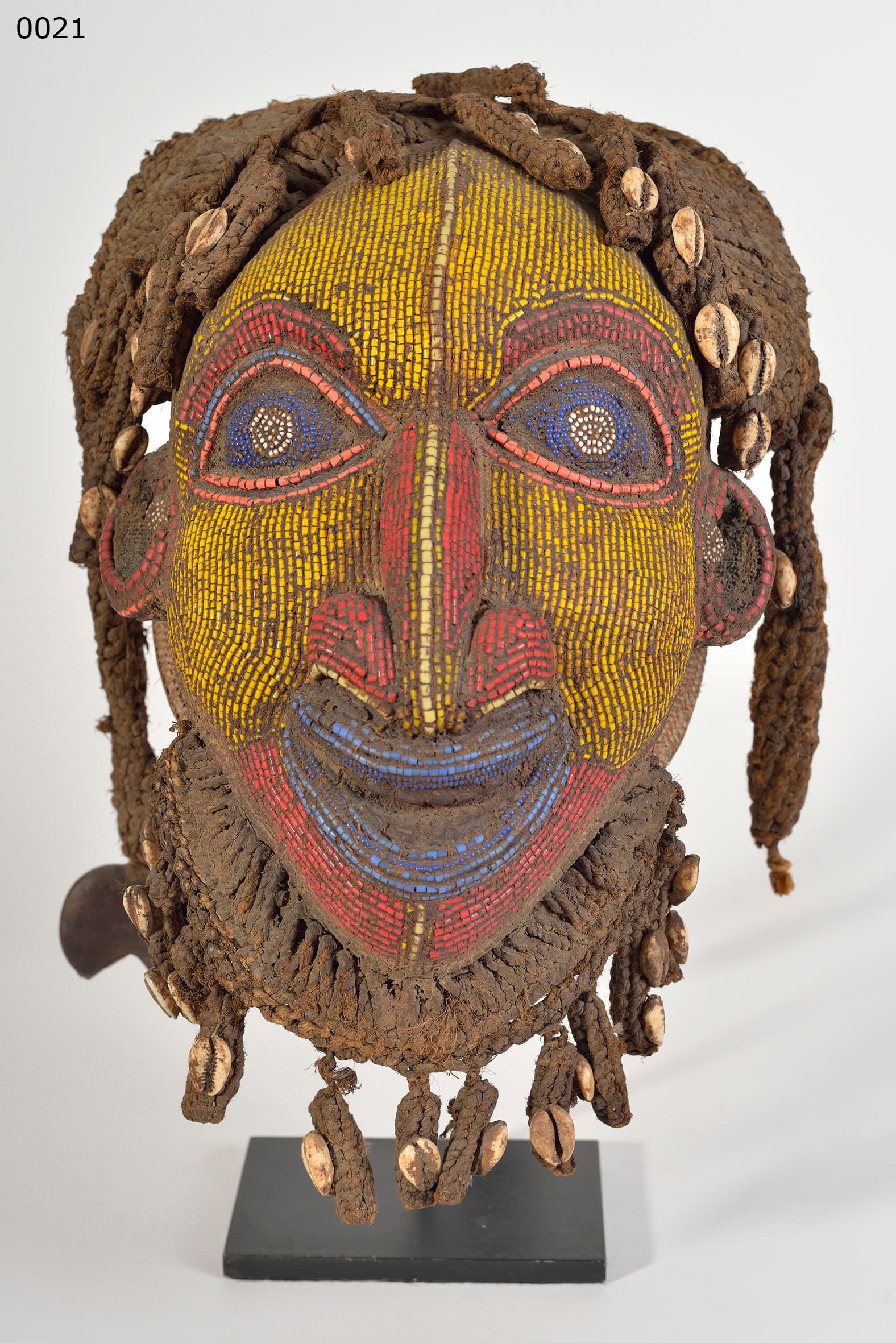
mask (covered with beads - shells on cloth)
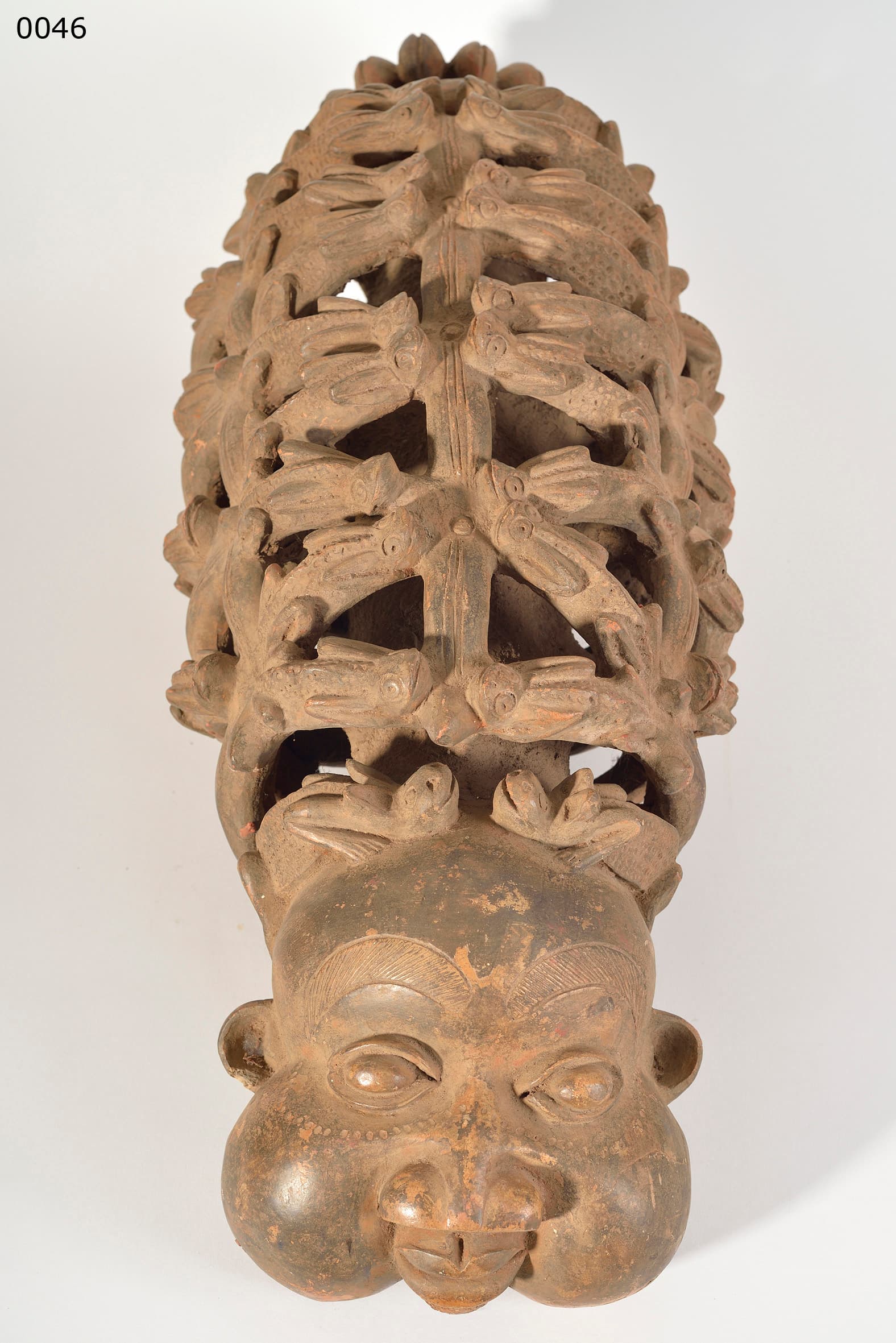
prestige pipe head
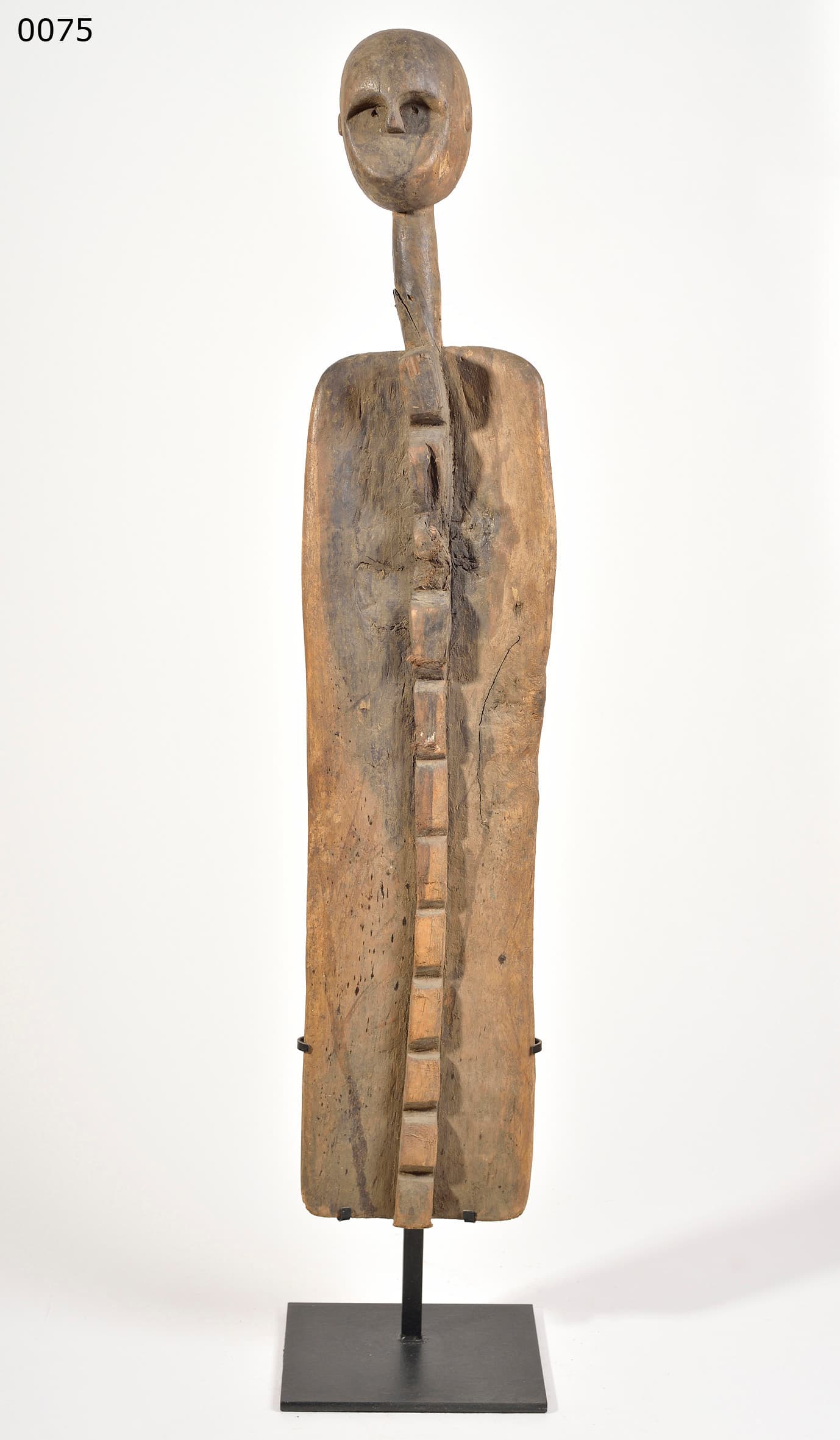
rare friction instrument