A pair of tall, heavily carved, dark wooden figures, one male and one female. They stand in rigid, upright postures, each holding a long staff and smoking a long pipe, and feature elongated faces, white-painted eyes, and pointed crested headdresses.
1. Aesthetic Style and the Founders' Portraiture
Associated with the Kounden Chiefdom, this pair of figures embodies the classic, solemn aesthetic of Grassfields ancestral carving. Unlike the dynamic, kinetic display figures used in dances, these statues are carved with severe, unyielding frontality. The deep adze strokes define their strong, vertical posture and the highly structured, elongated geometry of their faces. The artist has paid specific attention to their pointed headdresses, pipes and staffs, attributes that suggest ancestors of high standing.
2. Ritual Function and the Tangible Lineage
According to the collection catalogue, these figures are probably a pair of forefathers, a symbolic representation of the "clan founders" of the Kounden. In Grassfields spirituality, the genesis of the tribe can seem distant and abstract. The creation of these large, heavy wooden figures served to pull the ancient founders out of the mythic past and place them as a "tangible, graspable" presence in the real world, in the catalogue's wording. By housing these physical anchors in the shrine, the current generations could draw direct, tactile identity, political legitimacy, and spiritual strength from their traditional origins.
3. Patina, Material Weathering, and Surface Wear
The wood is saturated with a profound, dense, and blackened patina. This surface is consistent with preservation in the dark, smoke-filled environment of a traditional ancestral shrine, combined with ritual anointing with palm oil, soot, and camwood powder. The areas of highest relief — the noses, the pipes, and the shafts of the staffs — exhibit a smooth, oily handling polish, consistent with continuous, active veneration by the leaders of the Kounden Chiefdom.
Summary
This pair of figures is understood as a physical pillar of the Kounden clan's identity. Their rigid, authoritative carving and deep, sacrificial patinas are consistent with classic examples of Bamum foundational ancestry art.
Written with AI assistance from the collection appraisal, object photography and our own research; editorially reviewed. Mistakes are possible — corrections are welcome. How we work →
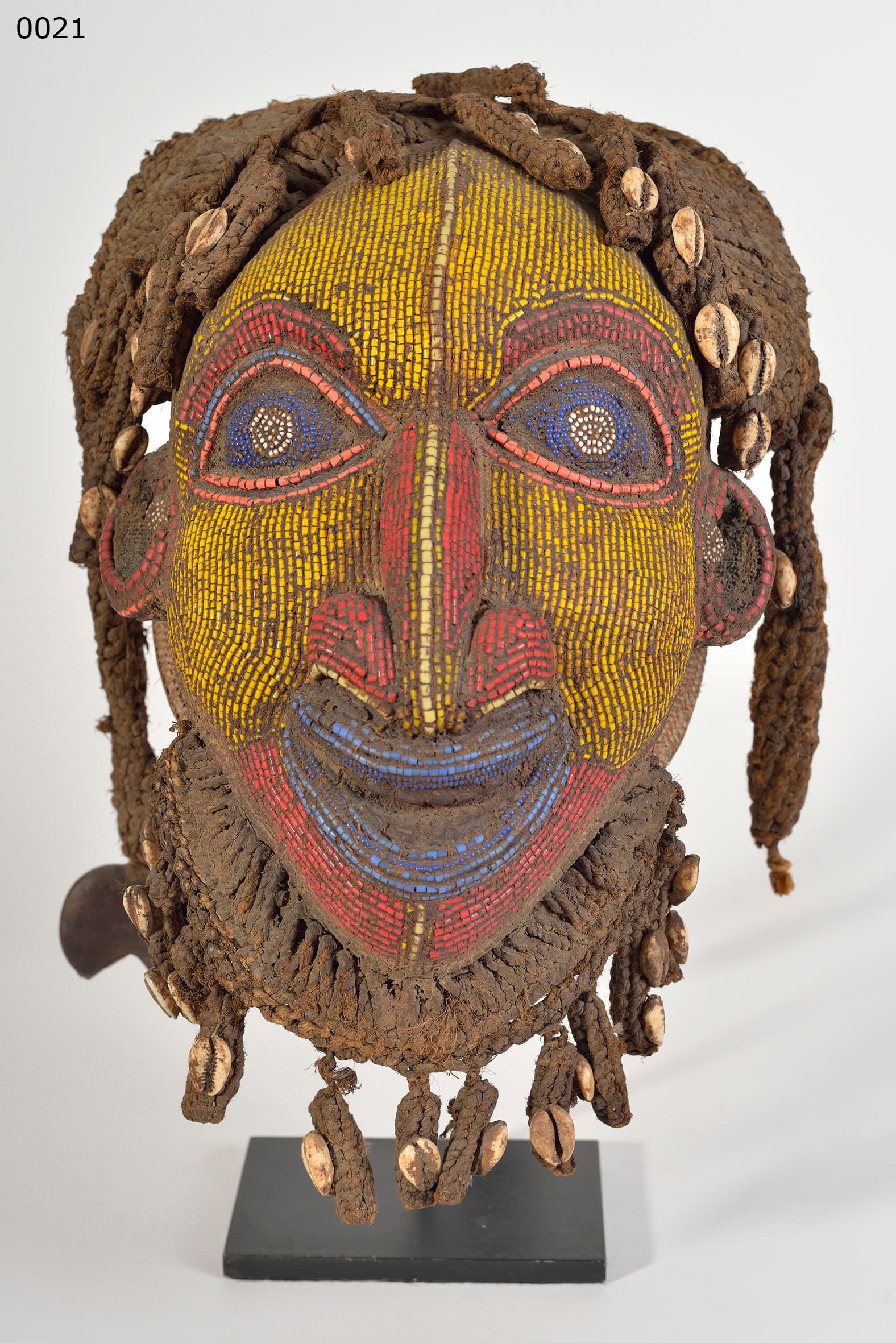
mask (covered with beads - shells on cloth)
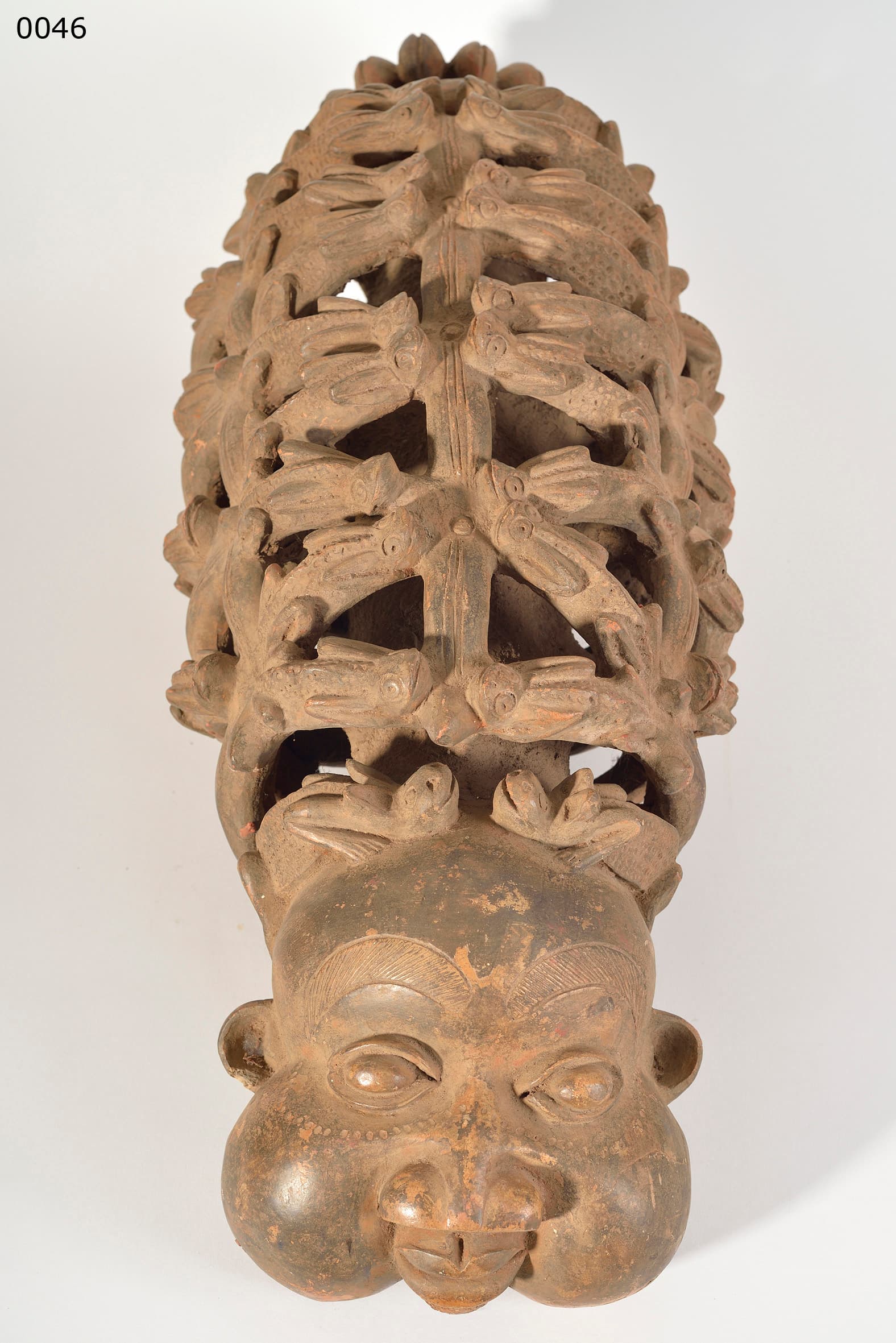
prestige pipe head
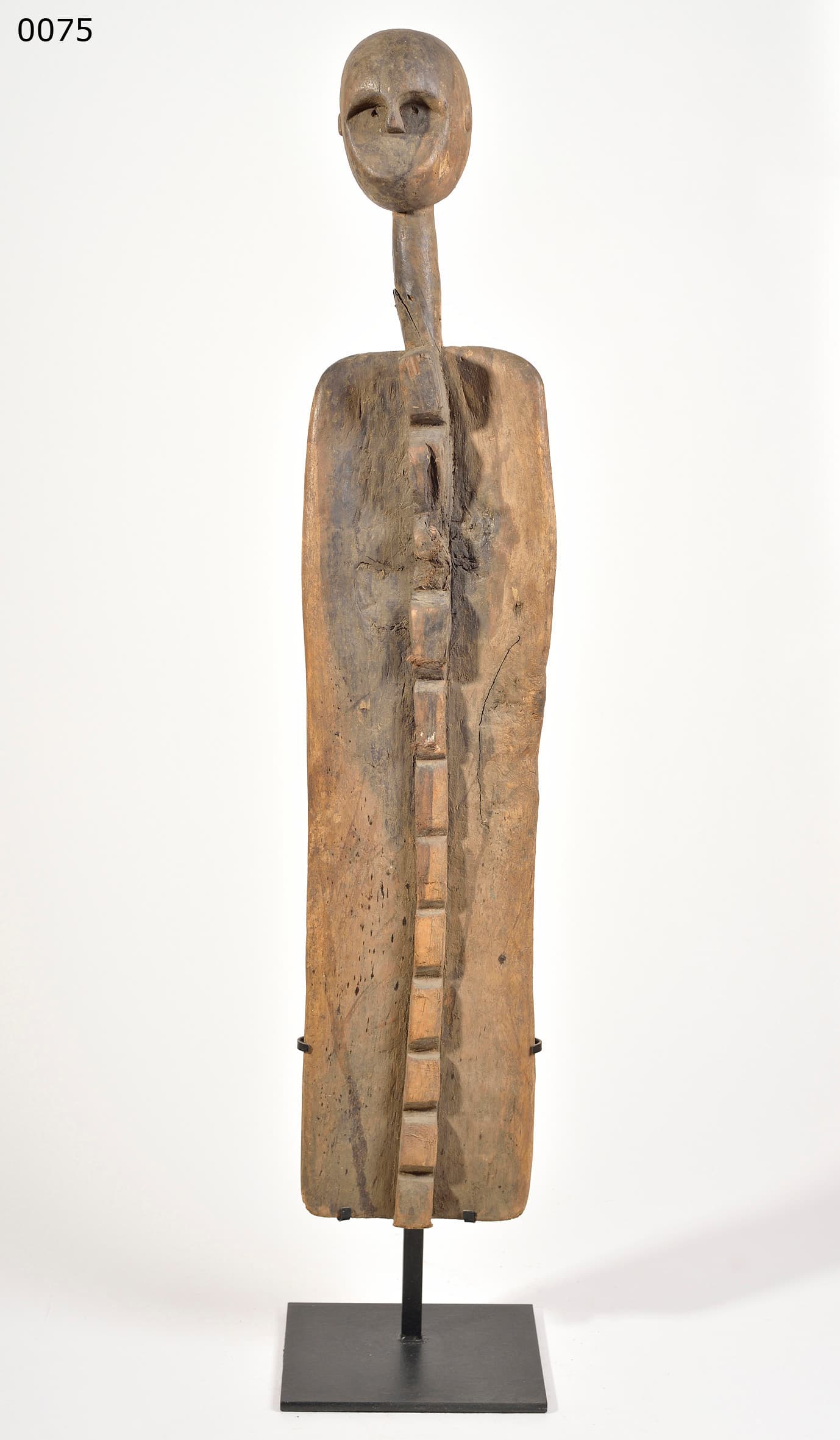
rare friction instrument