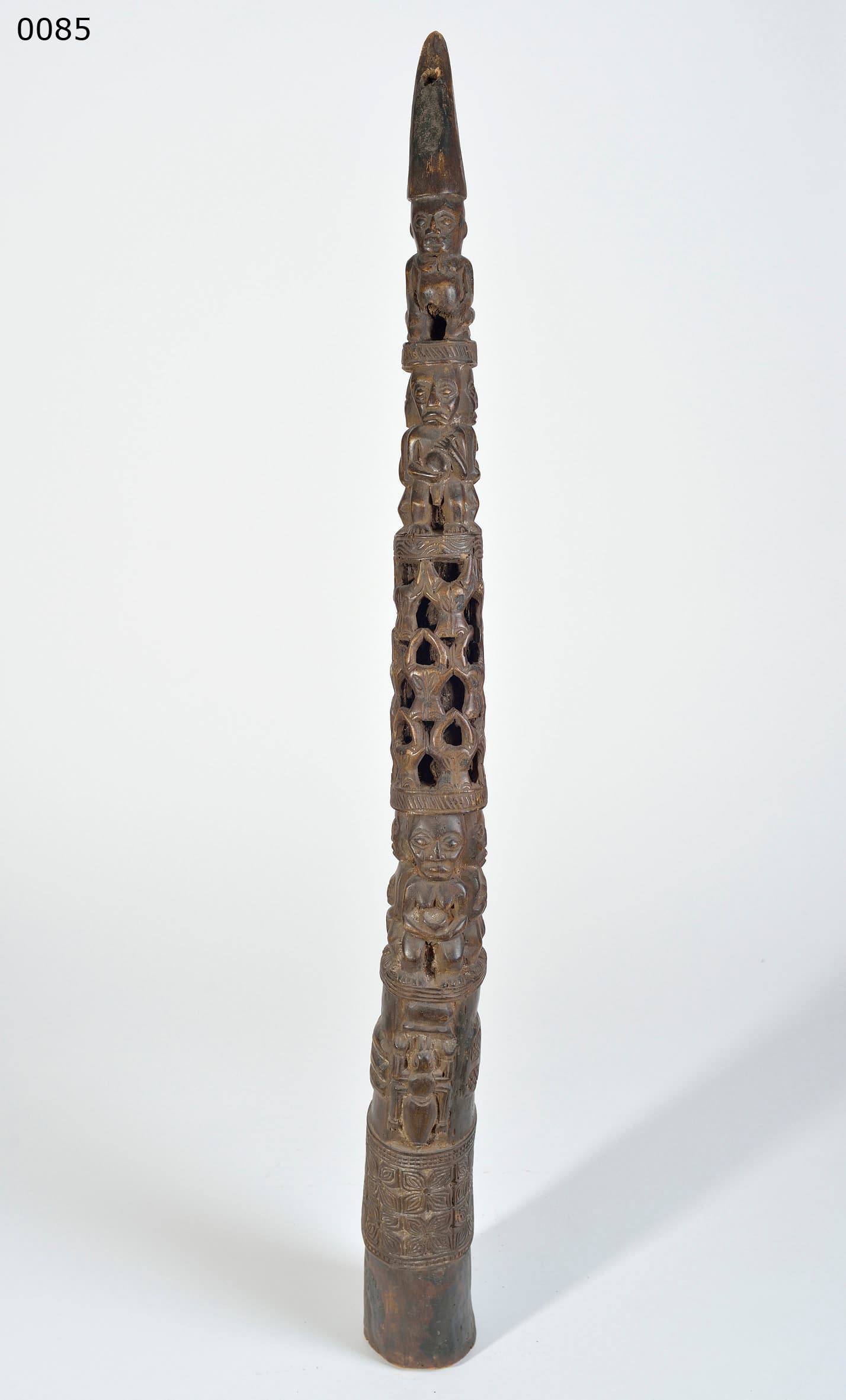
A pair of monumental, 150 cm tall brass bells. The lower, conical bodies are covered with many small figures in relief, while the tops are surmounted by expressive, highly detailed, crouching figures with large rounded cheeks and openwork bracelets; one holds a small figure in its hands.
1. Aesthetic Style and Metallurgical Expressionism
These monumental bells from the Malin Chiefdom represent a hybrid of Bamum casting scale and Tikar stylistic elements. As the collection catalogue documents, although this casting is attributed to the Bamum, the influence of the Tikar is considered evident. The size of the casting (150 cm) represents a significant technical achievement. The aesthetic is dynamic, featuring wide eyes, full cheeks and complex, high-relief bodily ornamentation. The catalogue describes this as a "virtually peerless form of expression."
2. Ritual Function and the Acoustic Reach of the State
According to the collection catalogue, these objects were associated with the authority of the Malin Chiefdom. They were reportedly reserved for significant occasions, when a designated official would strike the inside of the bell's body from below using a wooden stick. The massive brass chamber produced a booming, resonant sound that, in the catalogue's words, "is said to have been heard even in the far reaches of the region." This acoustic reach is said to have functioned as a warning system to communicate across the region during conflicts with neighbouring groups.
3. Patina, Material Weathering, and Surface Wear
The brass surfaces display a dense patina. The bell bodies, covered in relief figures, show oxidation and traces of green verdigris, consistent with prolonged storage in a tropical environment. The interior lips of the bell chambers exhibit smoothed metallic compaction and wear consistent with being struck with wooden mallets. The handling polish on the expressive faces is consistent with use as revered artifacts.
Summary
These monumental brass bell figures represent significant acoustic and visual examples of Grassfields metallurgy. Their presence and their traditional role as a warning system for the Malin Chiefdom make them objects of historical interest.
Written with AI assistance from the collection appraisal, object photography and our own research; editorially reviewed. Mistakes are possible — corrections are welcome. How we work →
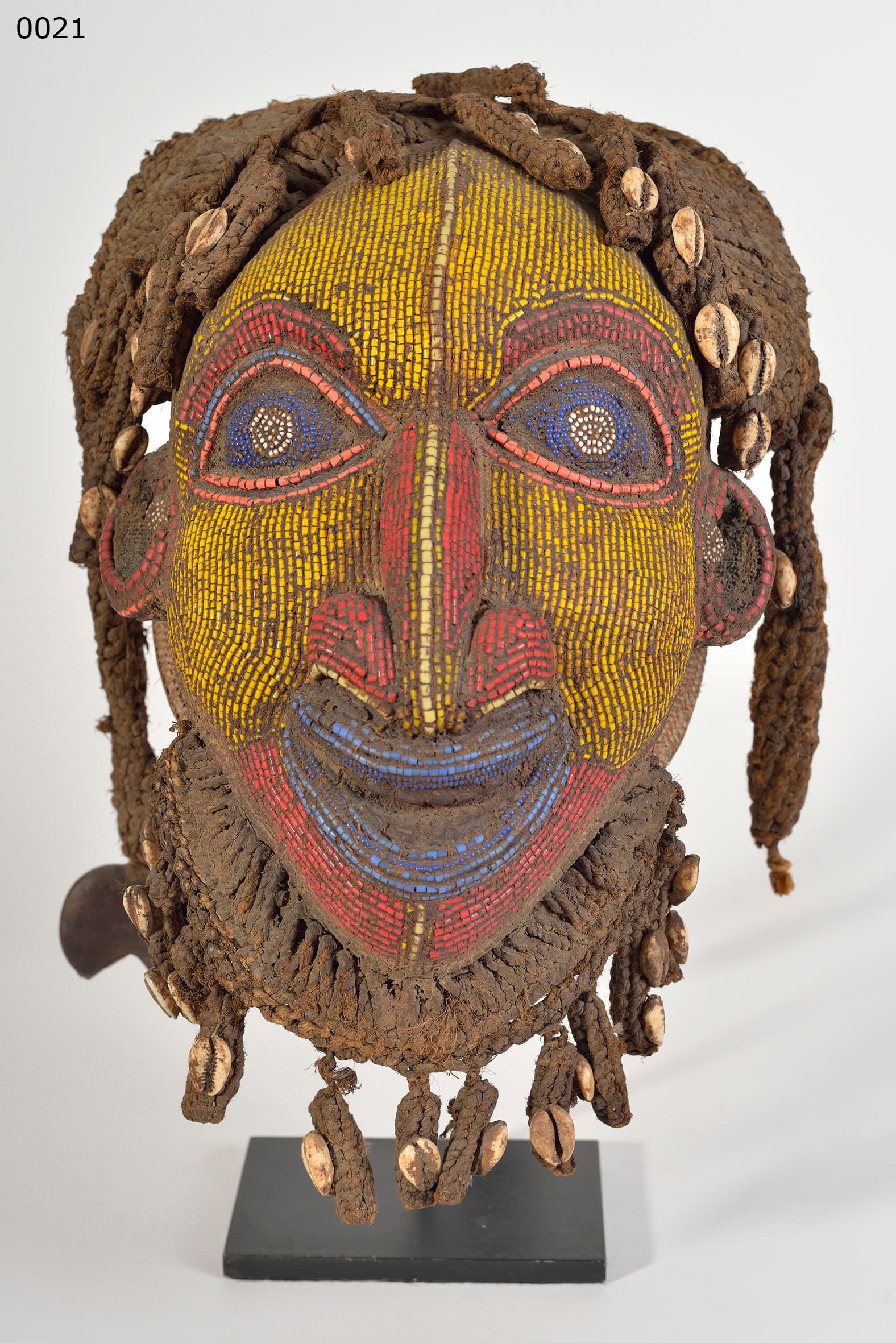
mask (covered with beads - shells on cloth)
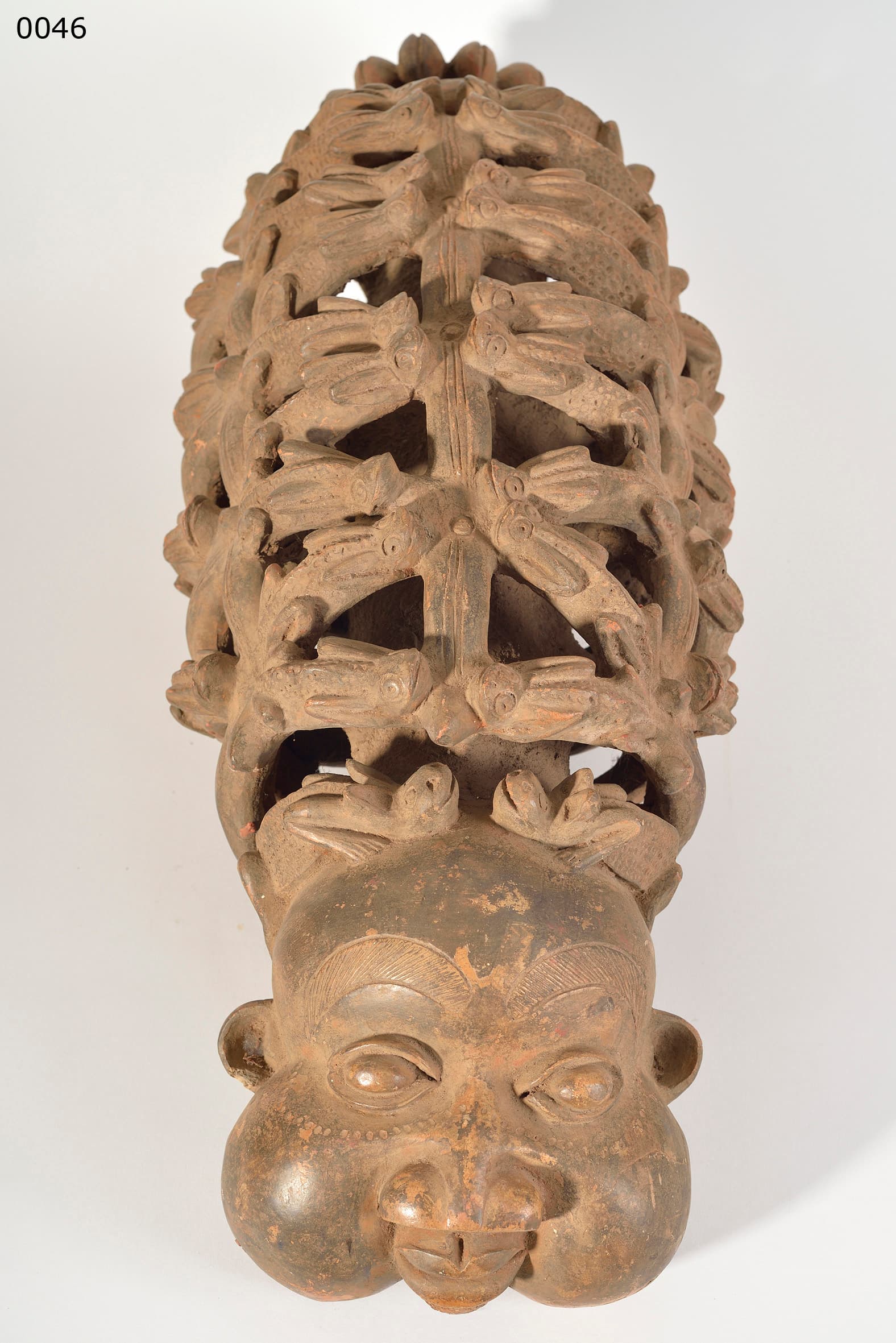
prestige pipe head
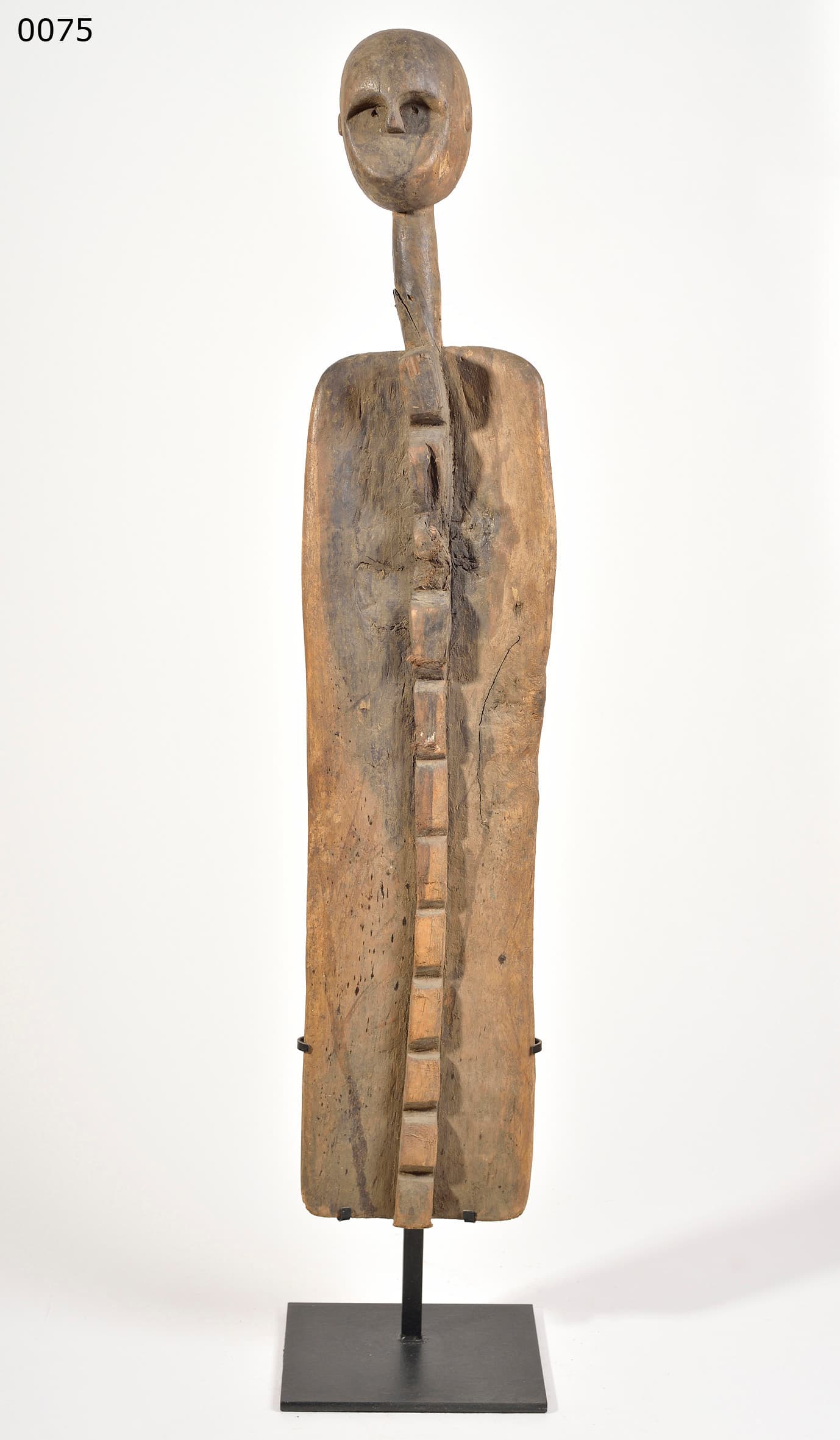
rare friction instrument