A carved wooden stool from the Mabouo chiefdom in the Sultanate of Foumban, Cameroon. An openwork panel of eight small seated figures, in two rows, forms the front of the stool.
1. Form and Carving
The stool is broad and low, with a seat whose ends curve outward. The central panel is pierced openwork: eight small figures sit with raised arms and knees drawn up, four in the upper row and four in the lower, divided by a thin horizontal bar. Each has a carefully carved face and hands held at the front. Broad side posts, set with a pattern of diamonds, frame the panel.
2. Ornament
Zigzag and diamond bands run along the rim of the seat and across the base. At each end of the seat, small faces are carved in a row. The wood is dark brown, with a smooth, worn surface.
3. Use
The collection catalogue concludes from the elaborate ornament and from the powerful male figures supporting the seat, symbolically the chief who sits on it, that the stool was used, if not by the clan chief as an everyday seat, then by one of his closest notables on special occasions. Form and design of a stool, the catalogue adds, allow conclusions about its user. It comes from the Mabouo chiefdom in the Sultanate of Foumban.
Summary
A dark carved Bamum stool from the Mabouo chiefdom, with an openwork front panel of eight small seated figures and zigzag ornament along the seat.
Written with AI assistance from the collection appraisal, object photography and our own research; editorially reviewed. Mistakes are possible — corrections are welcome. How we work →
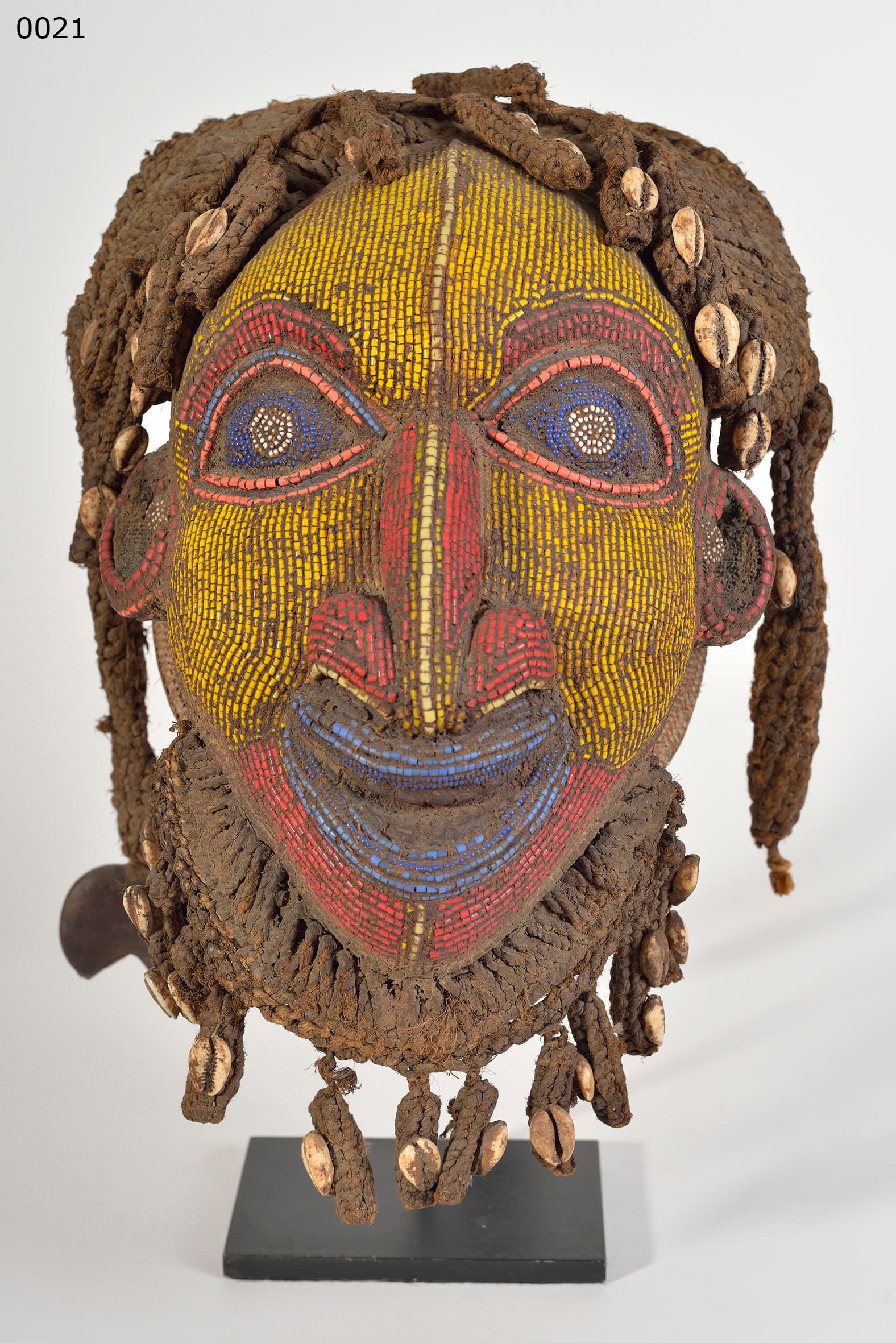
mask (covered with beads - shells on cloth)
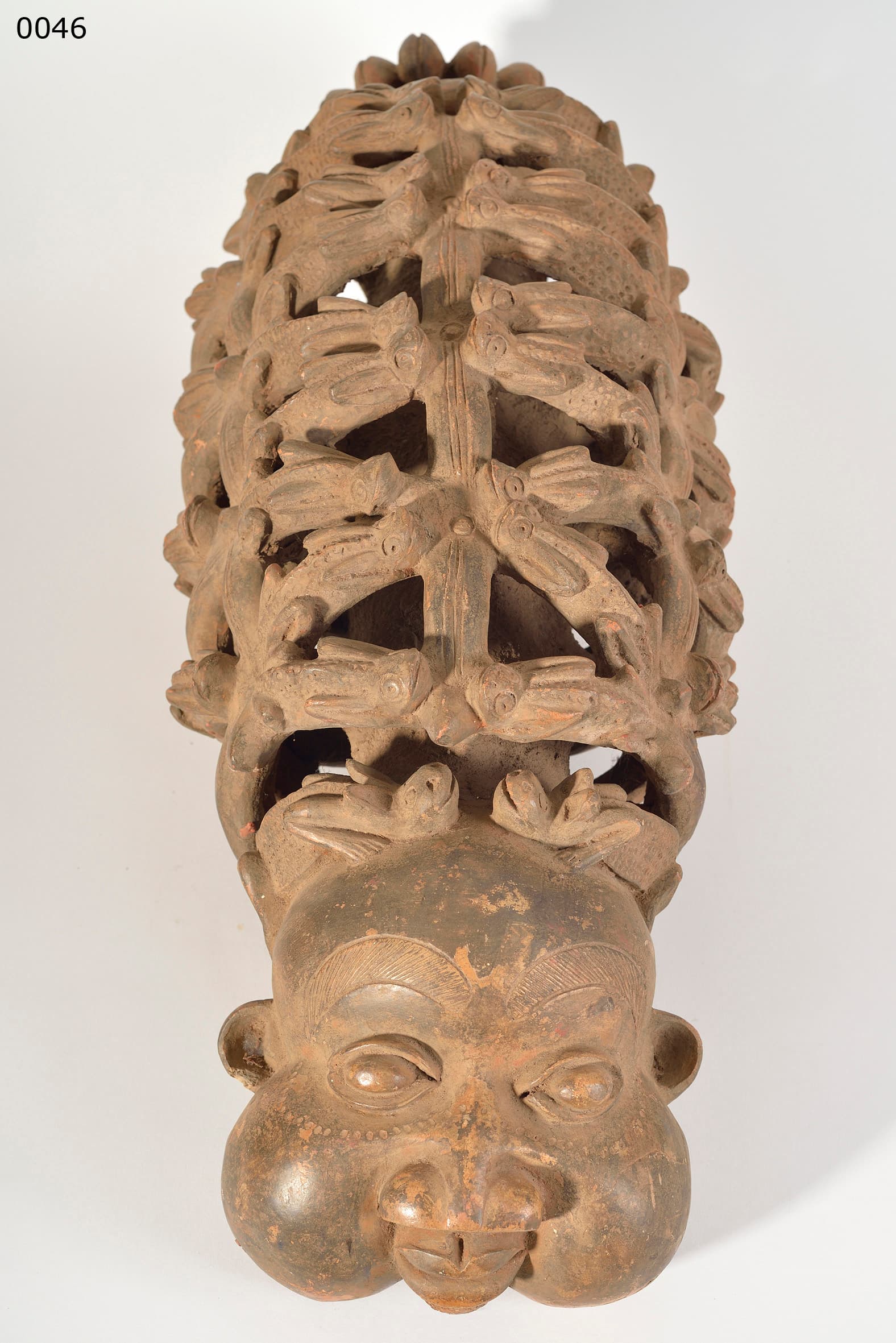
prestige pipe head
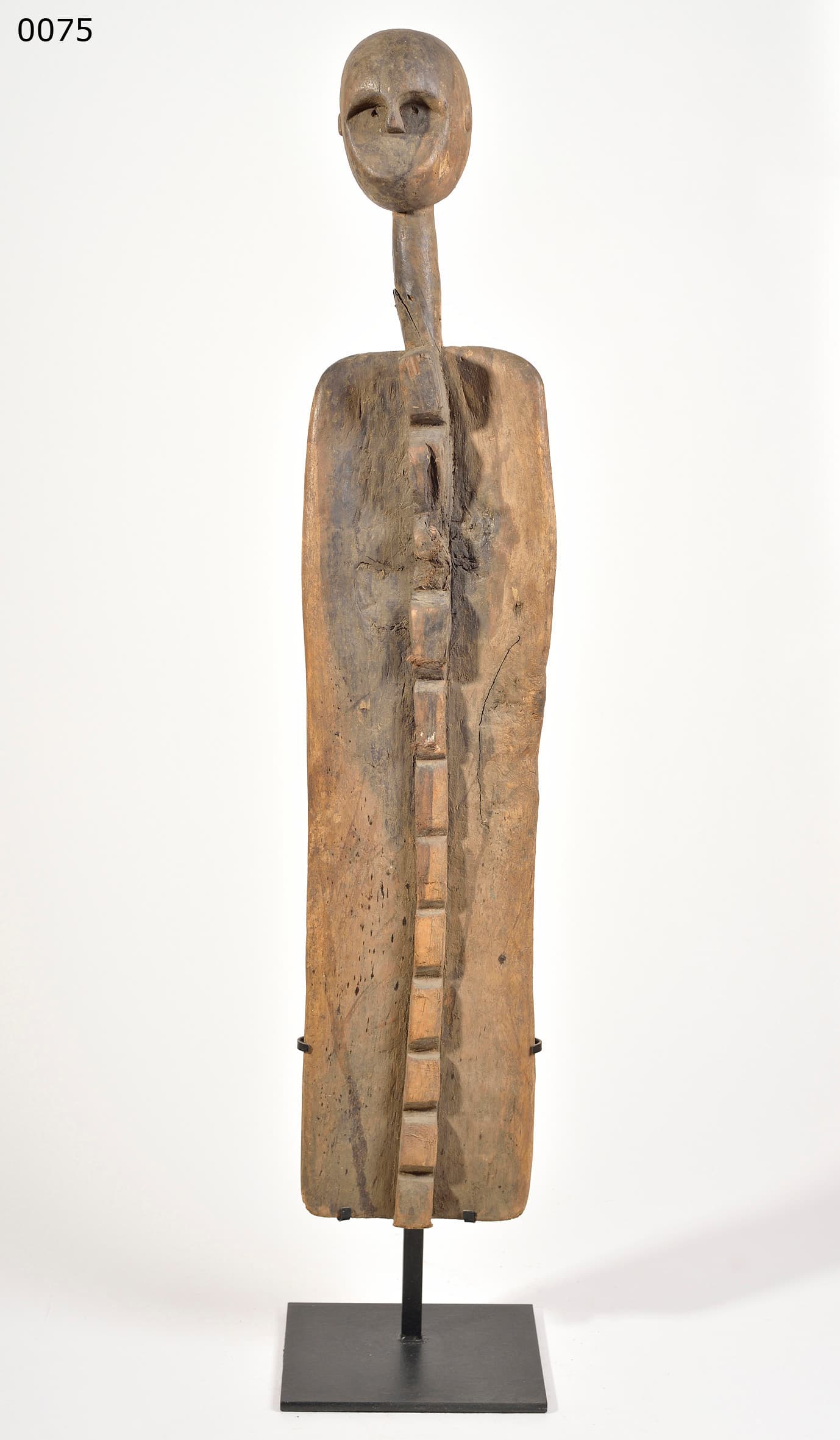
rare friction instrument