A large, organic gourd (calabash) serving as a complex ritual vessel, heavily encased in a structural harness of woven fibers, carved wooden figures, and a dense accumulation of amulets and bound medicine packets.
1. Aesthetic Style and Accumulative Elements
The visual impact of this Bamun vessel from Cameroon derives from its intentional, complex accumulation of materials. The natural, spherical volume of the central gourd is partially obscured by a network of bindings that secure various gris-gris (magical amulets) to its exterior. The ritual specialist has lashed carved wooden figures, a central mask-like face, feathers, and tightly bound cloth bundles directly to the vessel. The stopper is surmounted by a carved wooden head, adding to the object's imposing verticality. Faint incised motifs are visible on the exposed surface of the gourd. This accumulative style is designed to project the supernatural energy associated with the object, intended to bring good luck and ward off misfortune.
2. Ritual Function and the Rainmaker's Tool
This calabash is intrinsically linked to the multi-purpose spiritual practices of the chiefdom's ritual specialist or medicine man. The specialist is responsible for magic-related rituals, restoring the balance between the physical world and the spirit realm via appropriate offerings when negative events occur, such as illnesses, accidents, or crop failures. Contact and communication with ancestors are crucial in this regard to favourably influence their disposition. Furthermore, these specialists are enlisted to bring about positive occurrences, notably successful harvests or the onset of rains through the specialized actions of a rainmaker. This calabash was utilized to store the essential liquids—such as palm wine, millet beer, and plant-extract liquors—which, alongside magical substances of animal or vegetable nature, were required for conducting these offering rituals.
3. Patina, Material Weathering, and Condition
The vessel exhibits surface characteristics consistent with prolonged ritual use. The organic gourd features a dark, aged patina, likely stained by the liquids it held and external handling. The surrounding fiber bindings and cloth bundles are desiccated and caked with earthy residue, suggesting the historical application of sacrificial offerings or ritual substances. The attached wooden figures and amulets show natural weathering, with matte, encrusted surfaces contrasting with the slightly more polished finish of the upper stopper. The presence of fragile organic elements, such as feathers, further underscores the vessel's authentic, functional context.
Summary
This heavily adorned calabash is a notable example of Bamun accumulative ritual art. Its complex surface of bound amulets, carved figures, and encrusted patina aligns with the traditional role of the Grassfields ritual specialist, serving as a vital instrument for offerings, ancestral communication, and rainmaking practices.
Written with AI assistance from the collection appraisal, object photography and our own research; editorially reviewed. Mistakes are possible — corrections are welcome. How we work →
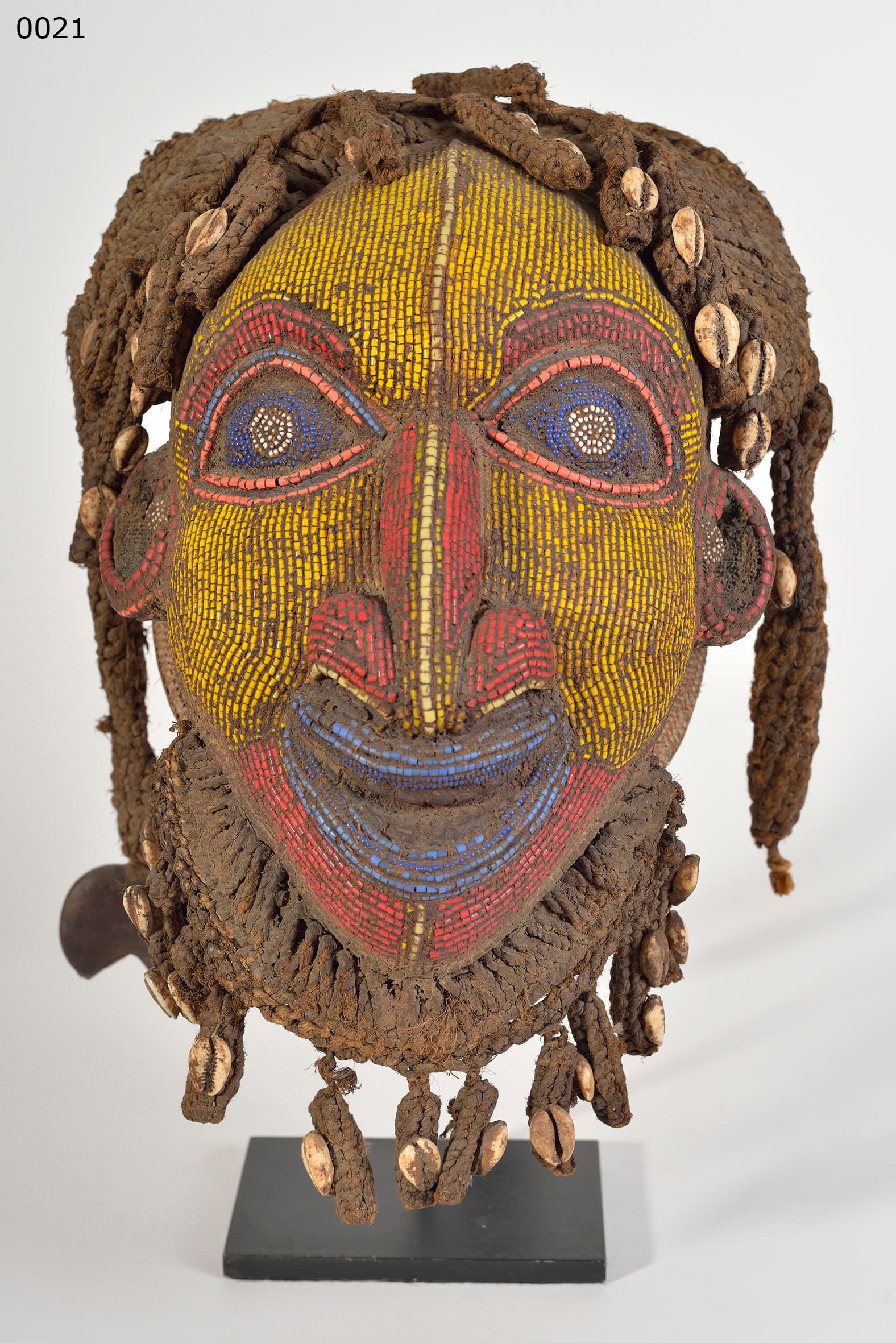
mask (covered with beads - shells on cloth)
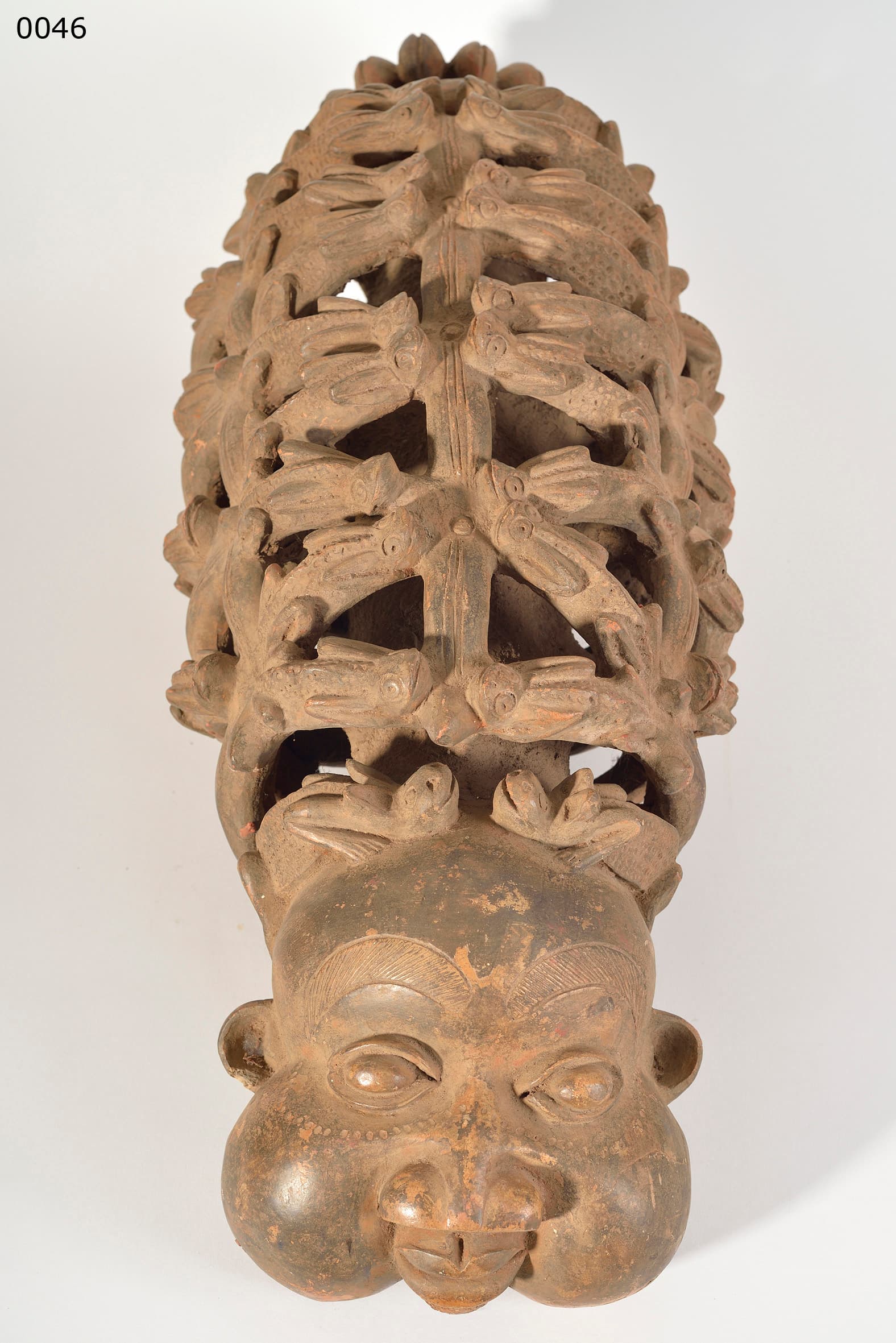
prestige pipe head
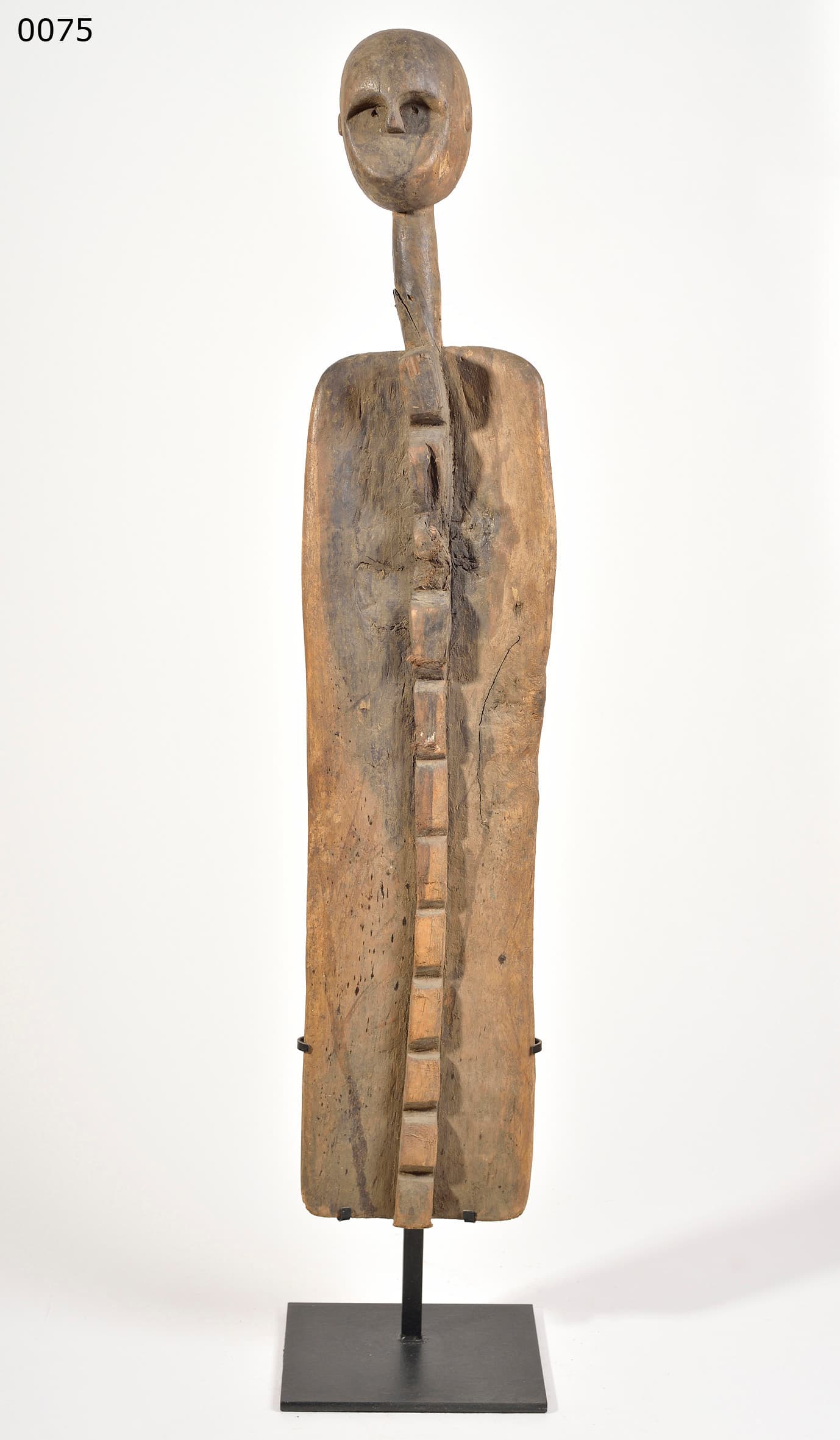
rare friction instrument