A large, 400 cm long textile composed of numerous narrow, hand-woven strips stitched together edge-to-edge. It features a complex geometric array of vibrant threads in reds, yellows, greens, and blues.
1. Aesthetic Style and Bonwire Strip-Weaving
This large stole is an example of Asante Kente cloth, traditionally associated with the weaving village of Bonwire, in the Asante region of Ghana. As Hornek notes, nearly every family in the area is involved in the weaving trade, and the looms stand in front of the huts where people work. Male weavers operate traditional hand-and-foot looms to create strips of fabric merely a few inches wide. The number of strips sewn together depends on the stature of the client. The visual dynamic occurs in the assembly: the weaver intentionally staggers the geometric color blocks across the seams, creating a syncopated optical rhythm.
2. Ritual Function and Status Symbol
In Asante culture, Kente is traditionally a wearable declaration of elite social stratification. As Hornek details: one-piece for men, two-piece for women; combinations of colour and patterns serve as an indication of the wearer's social status. Although the strict hierarchical statement has decreased over recent decades, acquiring such a stole remains costly, historically associating wearers with higher social strata. Hornek notes the client chooses the patterns — the time-intensive creation of which ultimately determines the final price.
3. Patina, Material Weathering, and Wear
The aging of a large Kente cloth is tactile. The original stiffness of the newly woven cotton or silk has broken down into a heavy, supple drape. The dyes exhibit a gentle muting — a soft fading consistent with exposure to the sun during outdoor use. The hand-stitched seams connecting the dozens of individual strips show microscopic pulling and slight fraying, suggesting its history as a hand-crafted garment showing signs of wear.
Summary
This 400 cm Kente stole is a notable example of West African textile design. Its scale and supple, sun-faded fibers reflect its traditional role as a symbol of Asante prestige and social hierarchy.
Written with AI assistance from the collection appraisal, object photography and our own research; editorially reviewed. Mistakes are possible — corrections are welcome. How we work →
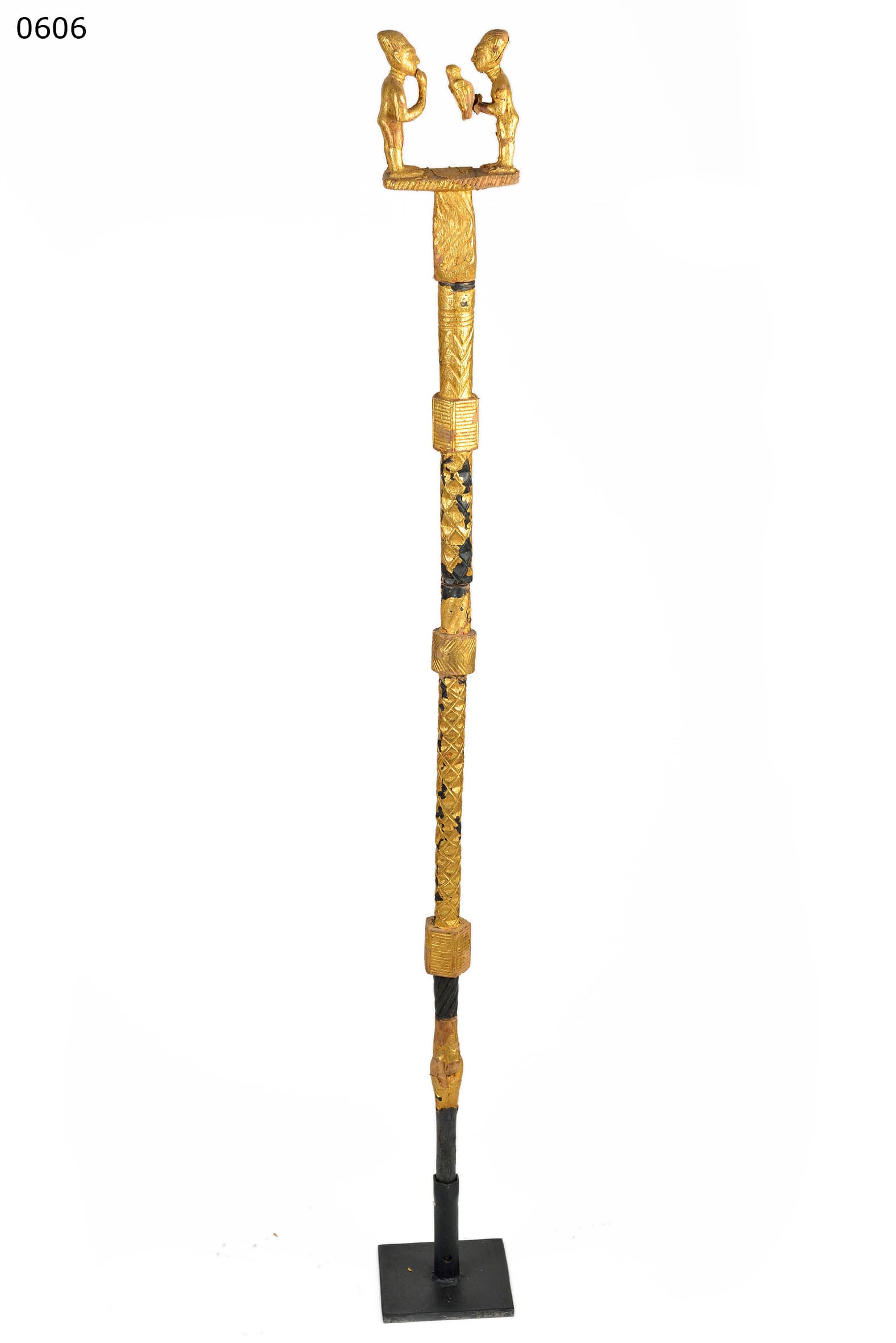
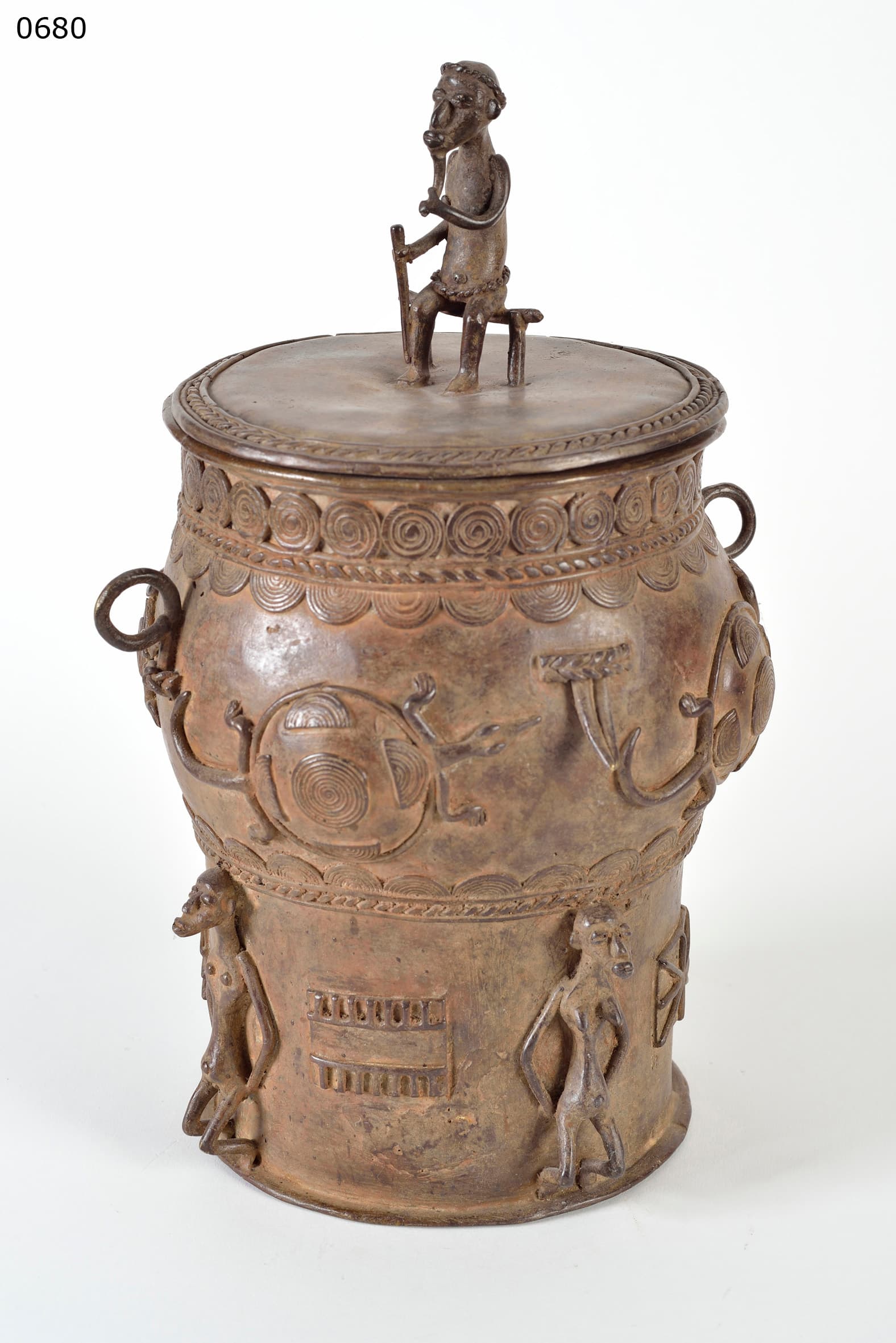
ceremonial staff of an official speaker
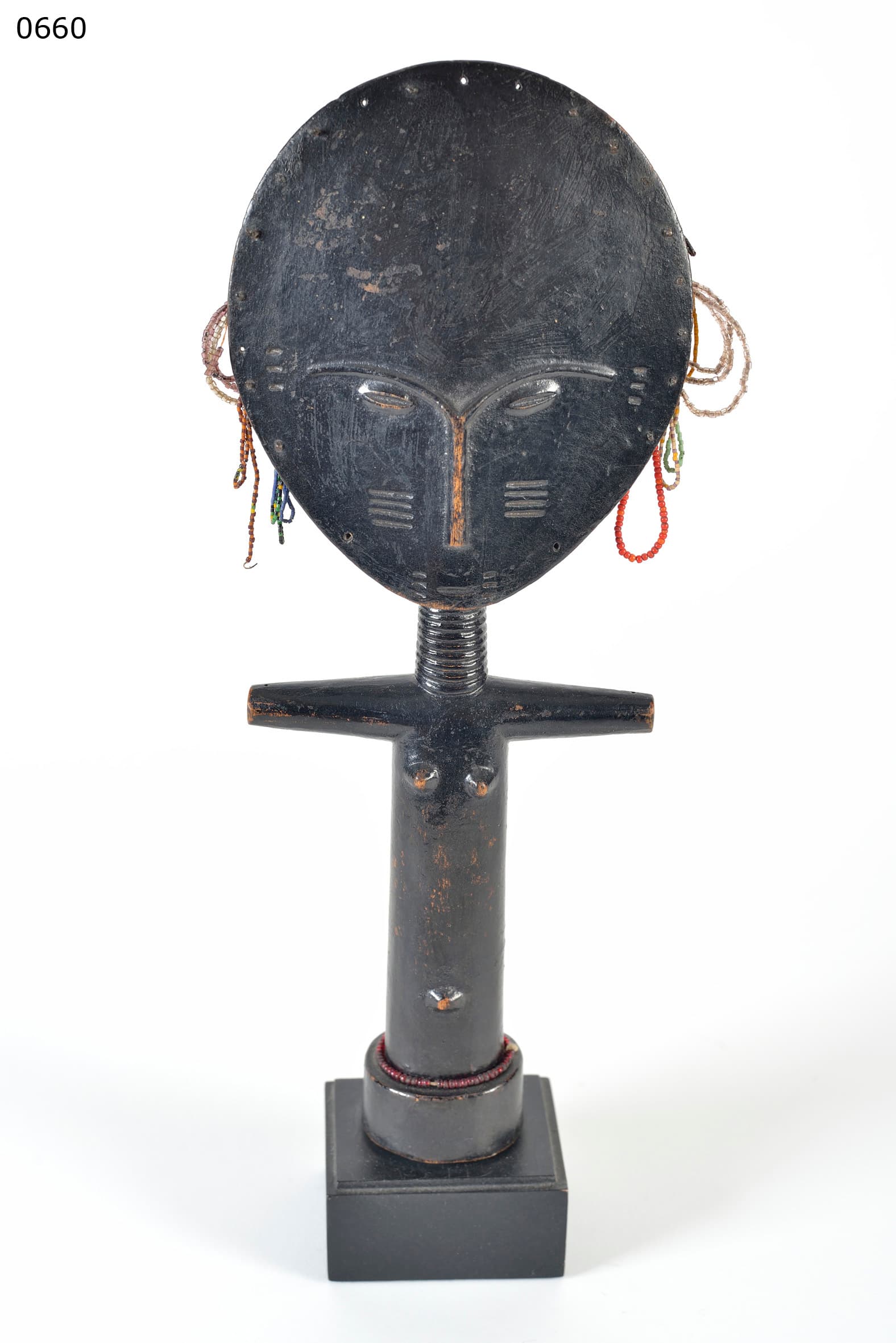
Akua-ba fertility doll (Asante disc-head variant)
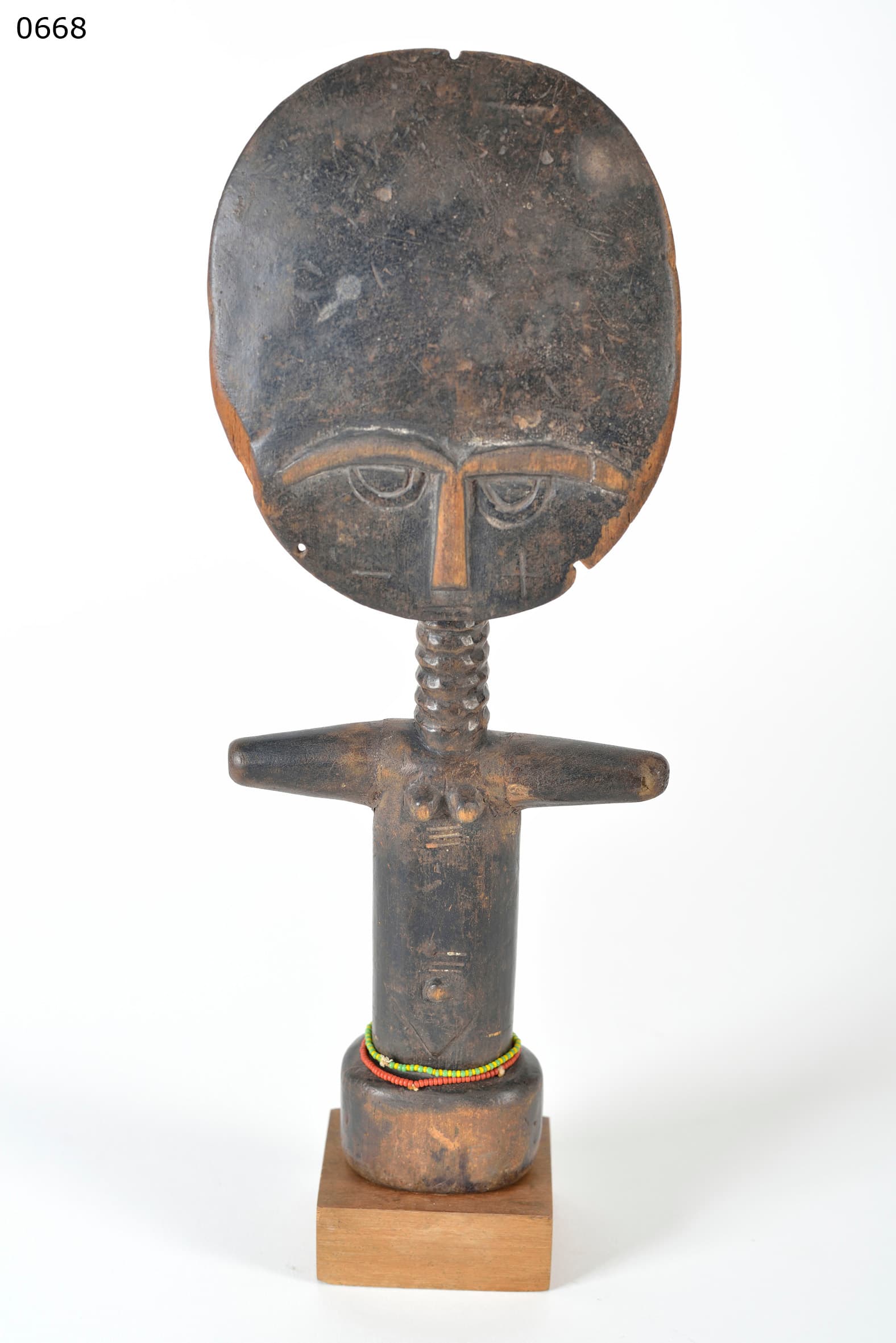
fertility doll (AKUABA)