A standing wooden figure from the Mayap chiefdom in the Sultanate of Foumban, Cameroon. A bearded face between two large round buns, a necklace of amulets and a small pot held in both hands define its appearance.
1. Form and Carving
The body is slim and elongated, with narrow shoulders, long arms that curve inward and slightly bent legs set wide apart. The head is the focus of the carving. Two large, rounded buns stand out at the sides of the hairstyle, above a band across the forehead. The face is darker and smoother than the body, with wide round eyes, a small open mouth and a short comb-like beard on the chin. Around the neck hangs a cord necklace with several amulets, among them pieces of leather and a curved horn. In front of the belly, both hands hold a small narrow-necked pot, and below it a strip of ridged fringe hangs like an apron.
2. Use and Context
According to the collection catalogue, the Mayap chiefdom was one of the most important in the Sultanate of Foumban. Figures of respected men and women of higher social rank were made there for remembrance and worship, and they served as mediators between earthly life and the afterlife, to keep the two worlds in harmony. When this harmony was disturbed, shown in illness, crop failure or other misfortune, appropriate sacrifices were made to the apparently displeased ancestors with the help of these figures, after a ritual consultation. The catalogue notes the striking face, the extraordinary hairstyle and the amulets at the neck, which are meant to give the figure a special ritual power.
3. Surface
The body is covered with a rough, granular crust in earthy brown and dark grey. The face, nose and mouth are smoother and darker, with a faint sheen. The apron is lighter, with ridged, partly worn edges.
Summary
A slim Bamum figure from Mayap with a bearded face, large side buns and a necklace of amulets, made as a mediator between the living and the ancestors.
Written with AI assistance from the collection appraisal, object photography and our own research; editorially reviewed. Mistakes are possible — corrections are welcome. How we work →
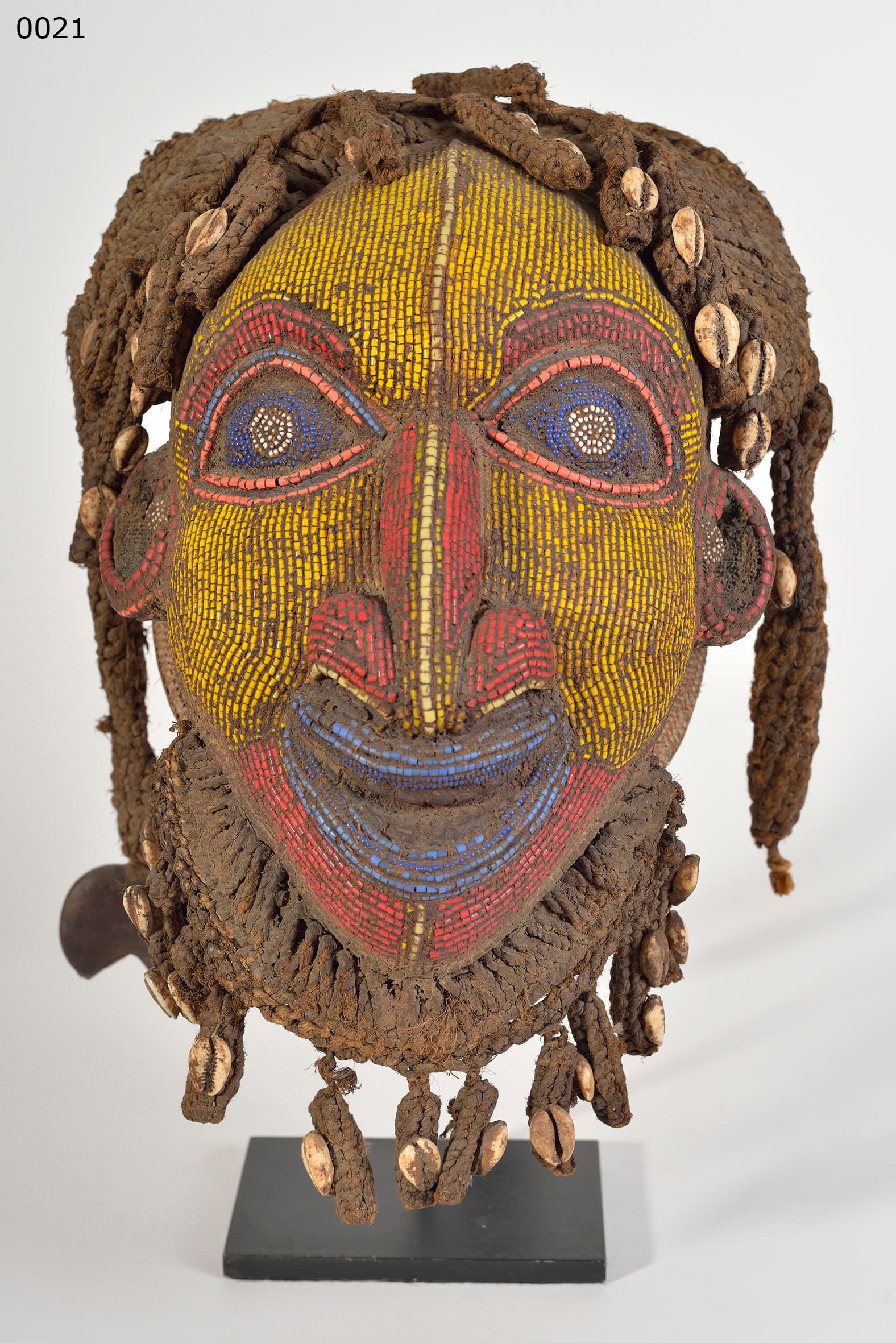
mask (covered with beads - shells on cloth)
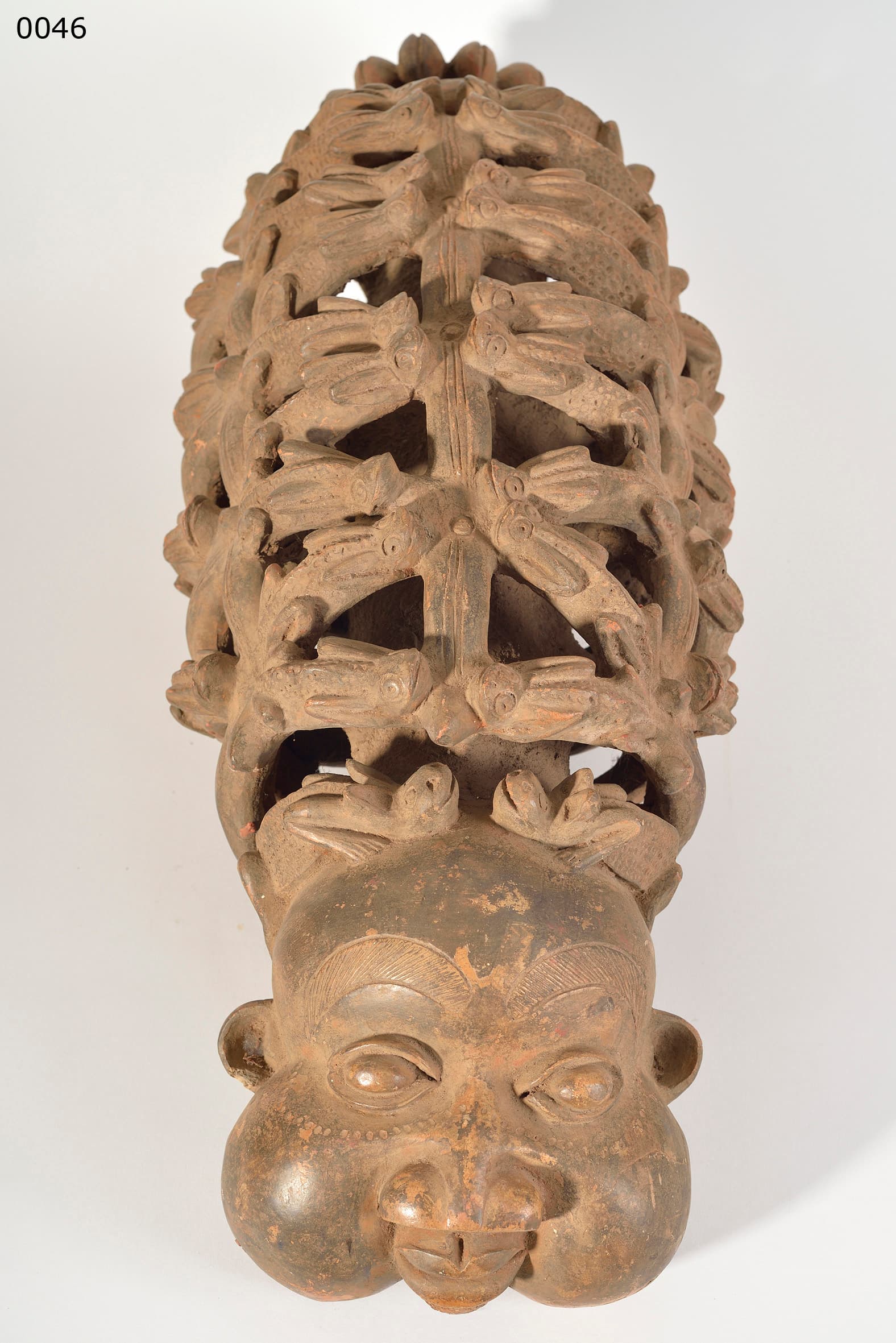
prestige pipe head
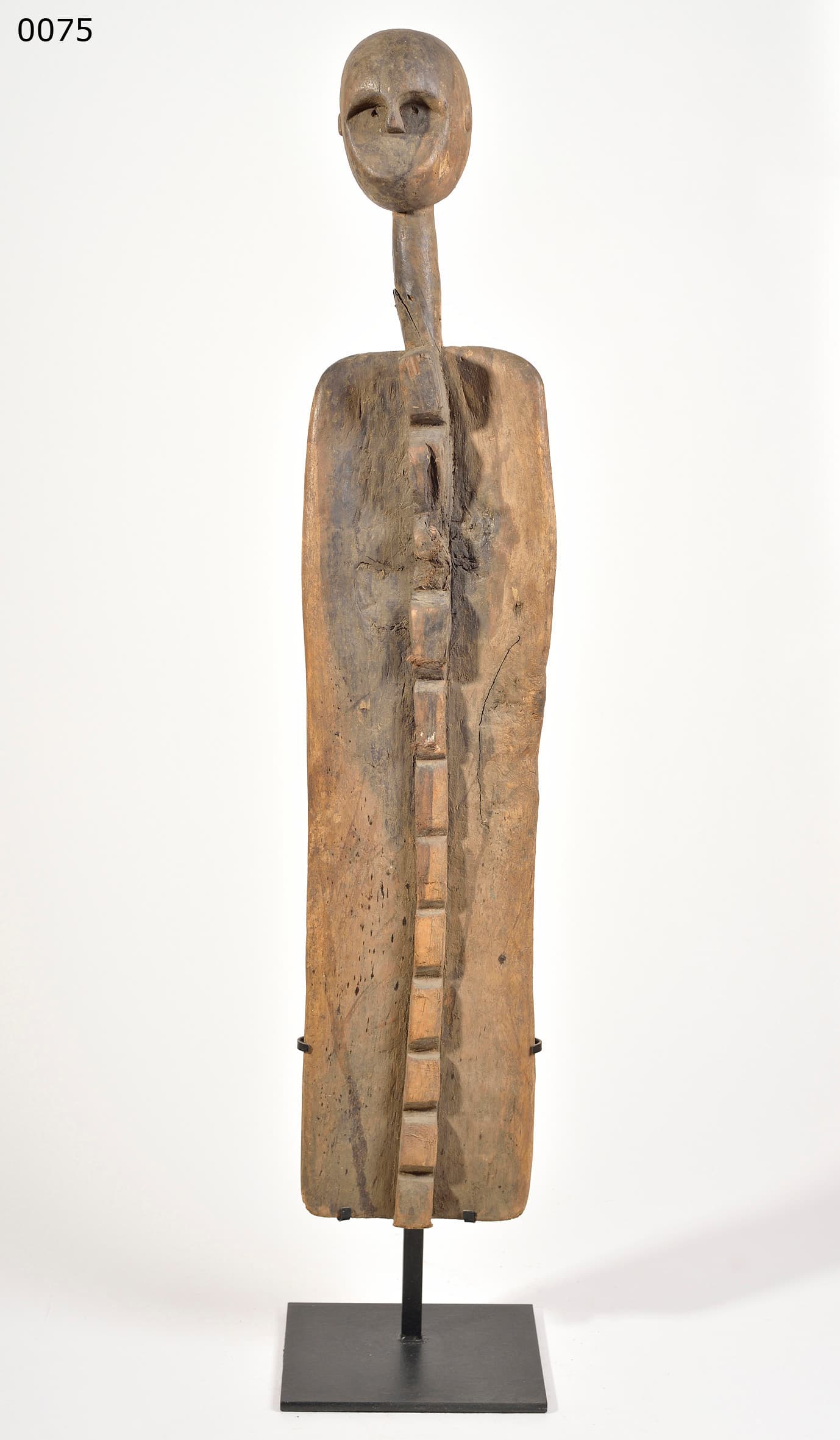
rare friction instrument