A 40 cm wooden face mask tightly stretched and covered with animal leather. Originating from the Kouoboum Chiefdom within the Bamun territory of Cameroon, the object is characterized by naturalistic facial structures, deep-set eyes, prominent ears, and an open mouth with visible teeth.
1. Aesthetic Style and Cross River Influence
Masks and figures covered with animal leather (or, in much earlier traditions, with the skin of slain enemies) represent a distinct anomaly within the core area of the Cameroon Grasslands among the Bamun people. As the appraisal notes, this technique is found primarily in the Cross River region in the south-eastern part of Nigeria, as well as in adjacent western Cameroon. During creation, wet animal hide was stretched over the carved wooden core. As it dried, the leather shrank and bound tightly to the wood, creating a realistic, skin-like texture that departs significantly from classical Bamun aesthetics.
2. Cultural Context and "African Mobility"
The presence of this skin-covered mask in the Kouoboum Chiefdom is attributed to the concept of typical "African mobility." It was presumably a carver from the Cross River region who carried on the stylistic tradition of his homeland in the service of the head of the Kouoboum Chiefdom. The object thus documents interregional exchange and the migration of specialized artisans within West and Central Africa, who brought their specific techniques to foreign royal courts.
3. Material, Patina, and Condition
The mask consists of a solid carved wooden core with a leather covering. The surface exhibits a dark, glossy patina ranging from deep brown to blackish tones with reddish undertones. A prominent vertical line—either a seam in the leather or a stress crack from the underlying wood—runs down the center of the face, crossing the forehead, nose, upper lip, and chin. Around the almond-shaped eye cutouts and the open mouth, where carved teeth are visible, the leather shows signs of shrinkage and micro-tearing. The smooth, rubbed areas on the raised contours of the face suggest active ritual use.
Summary
This dance mask is a remarkable anomaly within Bamun art. It combines the wood carving traditions of the Cameroon Grasslands with the realism of the Cross River region, serving as a testament to the historical mobility of artists working in the service of local dignitaries.
Written with AI assistance from the collection appraisal, object photography and our own research; editorially reviewed. Mistakes are possible — corrections are welcome. How we work →
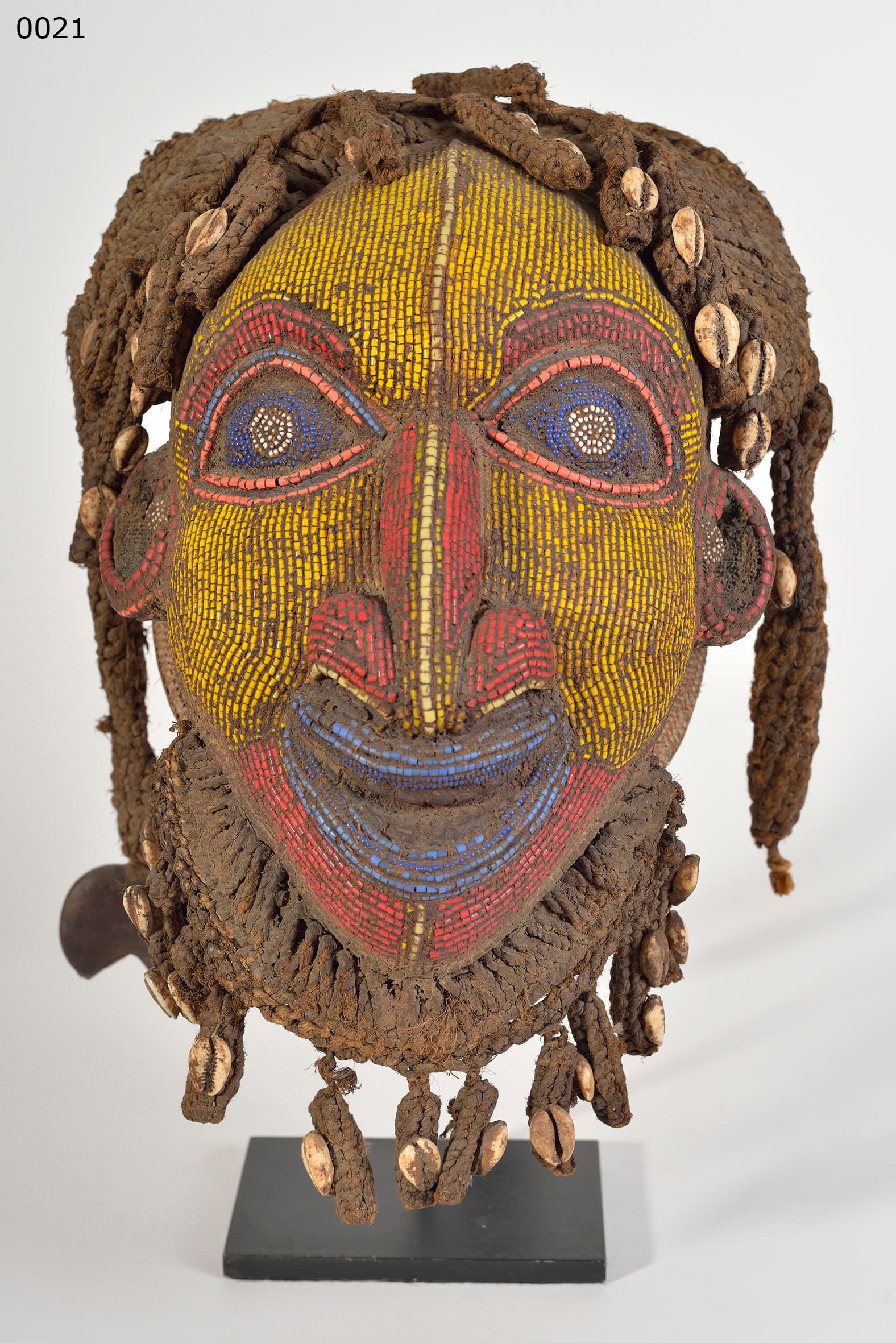
mask (covered with beads - shells on cloth)
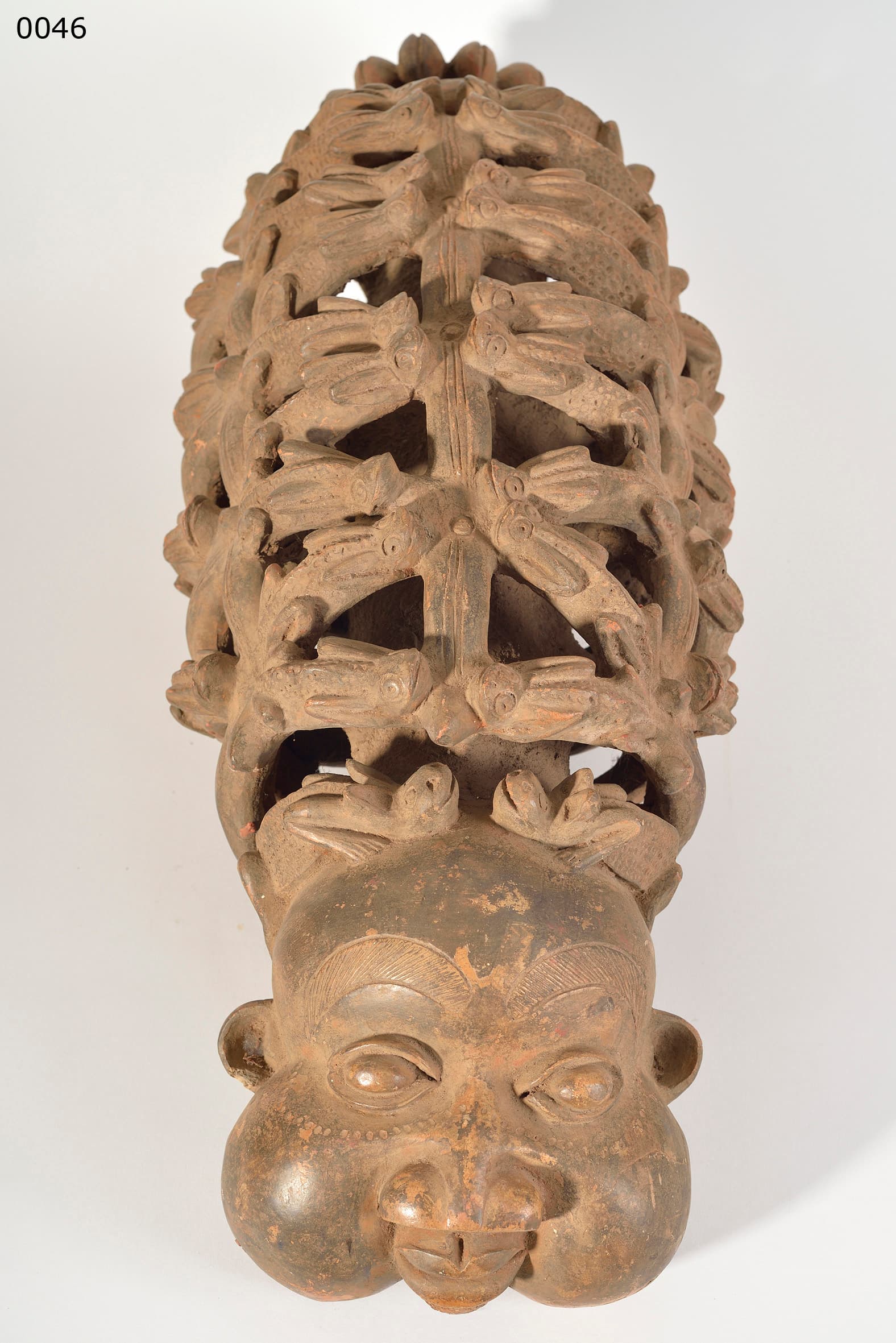
prestige pipe head
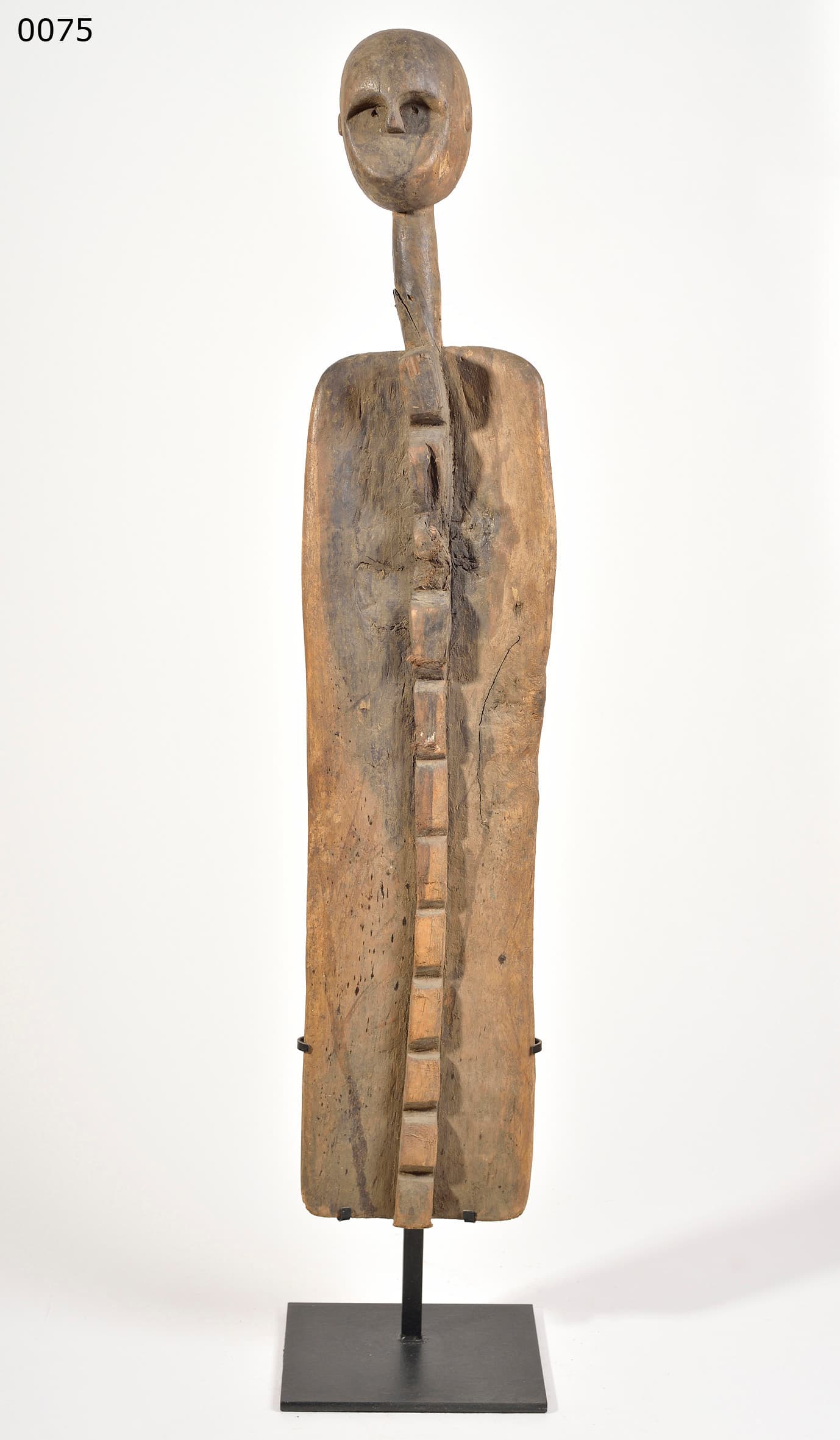
rare friction instrument