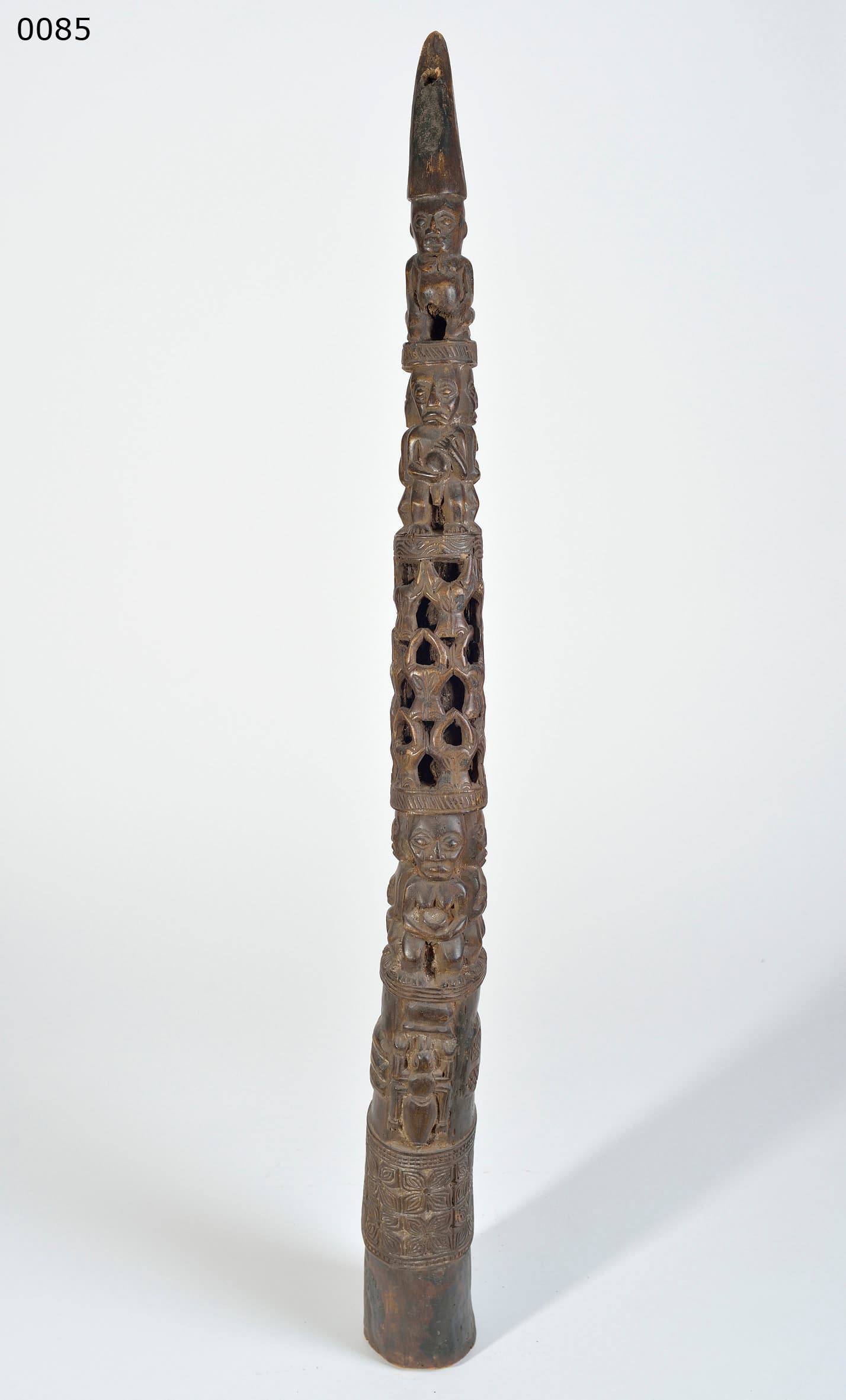
This striking dance mask originates from the Bamun people of the Cameroon Grasslands. Rooted in the cultural context of the Kouoboum Chiefdom, the object features a carved wooden core covered with leather. It exhibits distinct stylistic and material affinities with the traditions of the adjacent Cross River region, illustrating the dynamic cross-cultural exchanges prevalent in historical African art.
1. Cultural and Stylistic Context
The aesthetic vocabulary and material execution of this mask strongly reference the traditions of the Cross River region in south-eastern Nigeria and western Cameroon. In that area, masks and figures were historically often covered with leather or, much earlier, with the skin of slain enemies. The use of skin-covered masks is infrequent among the Bamun in the core area of the Cameroon Grasslands. The fact that these masks nevertheless existed in the Kouoboum Chiefdom is most likely explained by typical "African mobility." It is presumed that a carver originating from the Cross River region carried on the stylistic tradition of his homeland in the service of the head of the Kouoboum Chiefdom.
2. Formal Analysis
The mask is characterized by a bold, expressive physiognomy. Prominent, bulging eyes are set within deep sockets accentuated by light-colored pigment, creating a stark visual contrast that would have been highly effective during dynamic dance performances. The broad nose and open mouth, which reveals carefully articulated teeth, further enhance the mask's animated presence. The head is surmounted by a distinctive, cap-like headdress adorned with raised, rounded nodules.
3. Material and Surface Patina
The object consists of a carved wooden core tightly enveloped in a leather covering, a highly specialized technique requiring significant artisanal skill. The leather surface exhibits a rich, dark, reddish-brown to black patina with a glossy finish, indicative of ritual use. Minor abrasions are visible on the high points of the relief, such as the tip of the nose, the brow ridge, and the nodules of the headdress, where wear on the skin is apparent. Remnants of light-colored pigment, likely kaolin, are preserved in the recessed areas around the eyes, emphasizing the sculptural depth and the texture of the leather binding.
Summary
This Bamun dance mask is a compelling example of regional artistic synthesis. By employing the skin-covering technique and stylistic hallmarks of the Cross River tradition, the object serves as a testament to the mobility of artisans and the fluid exchange of aesthetic concepts between the Kouoboum Chiefdom and neighboring cultures.
Written with AI assistance from the collection appraisal, object photography and our own research; editorially reviewed. Mistakes are possible — corrections are welcome. How we work →
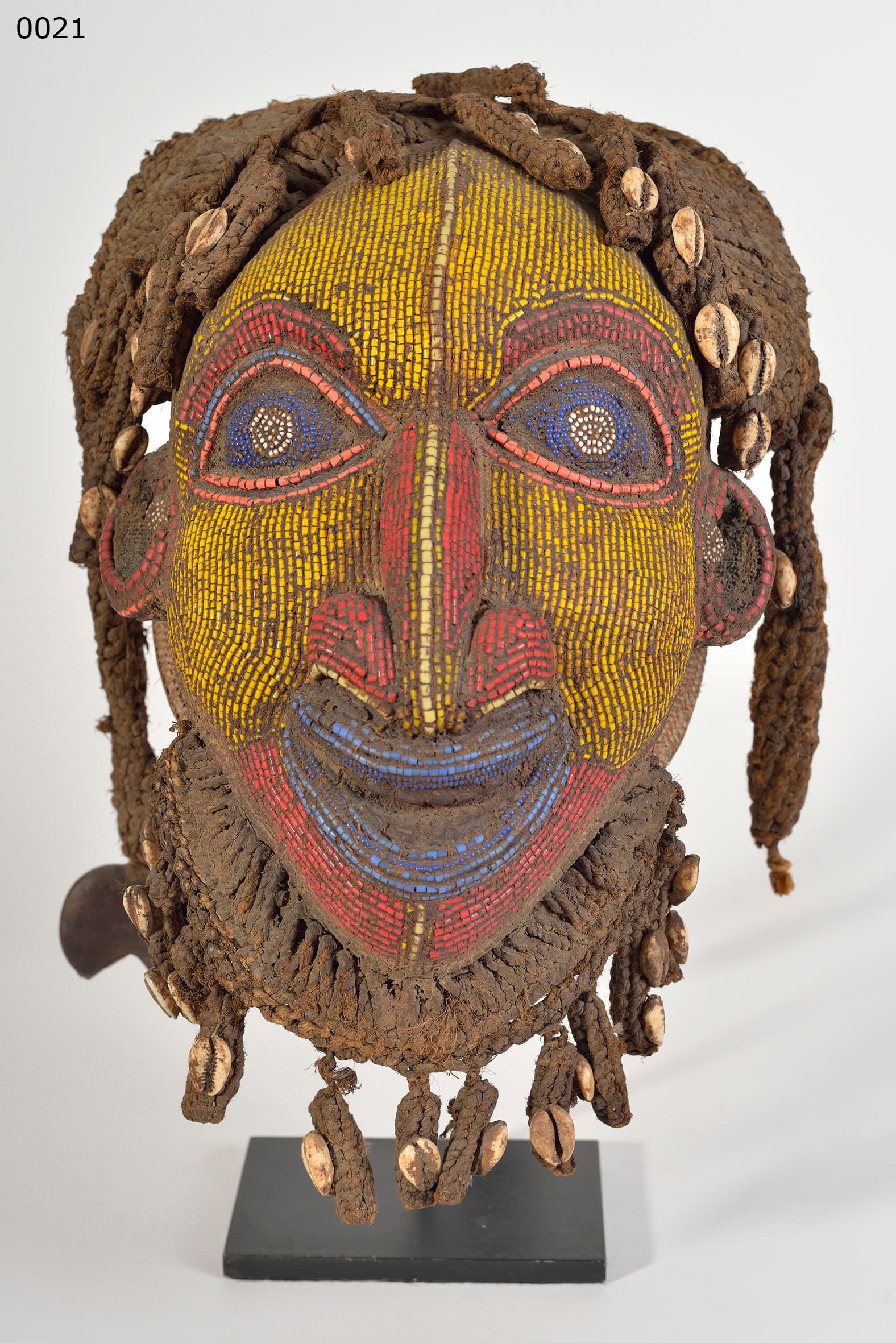
mask (covered with beads - shells on cloth)
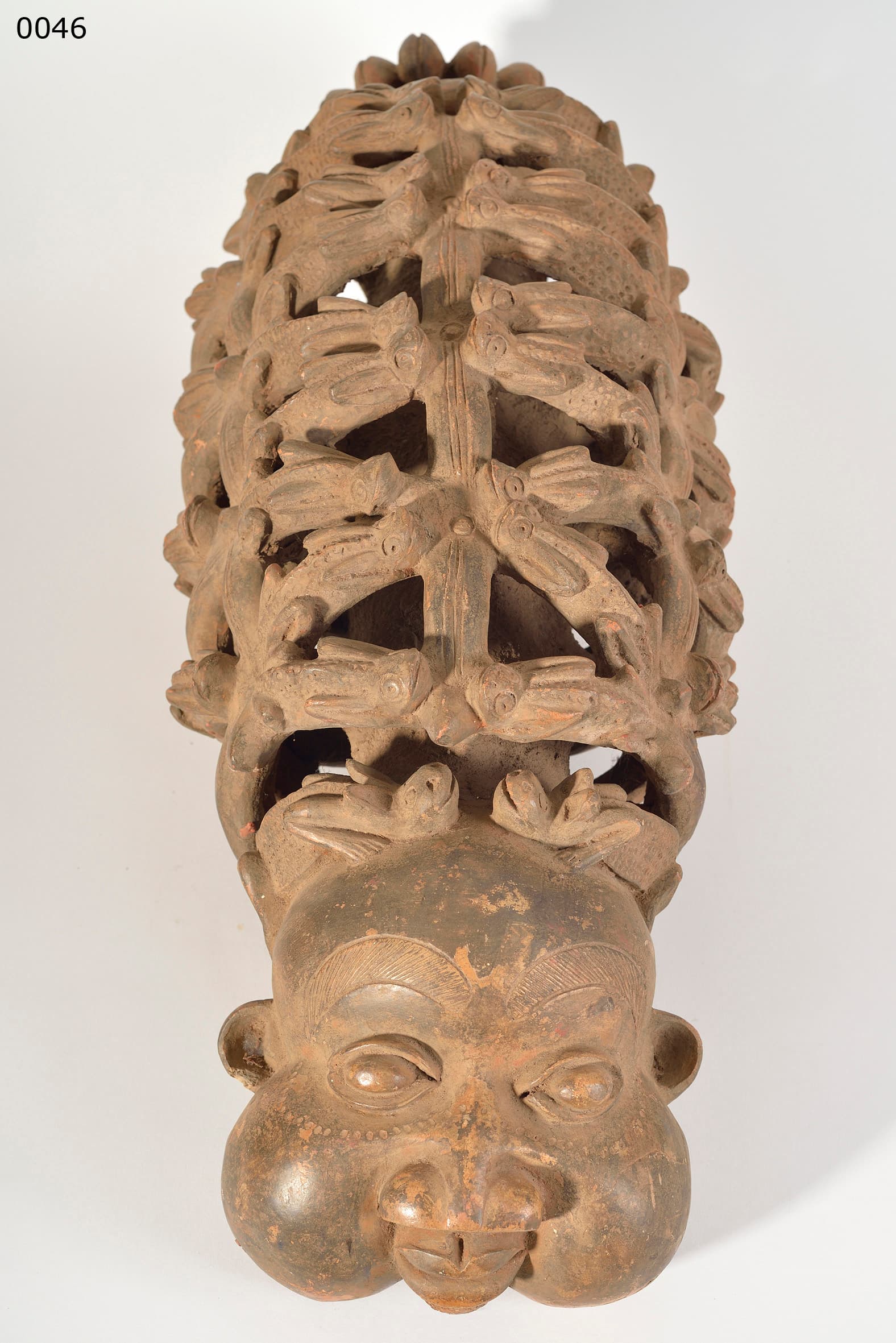
prestige pipe head
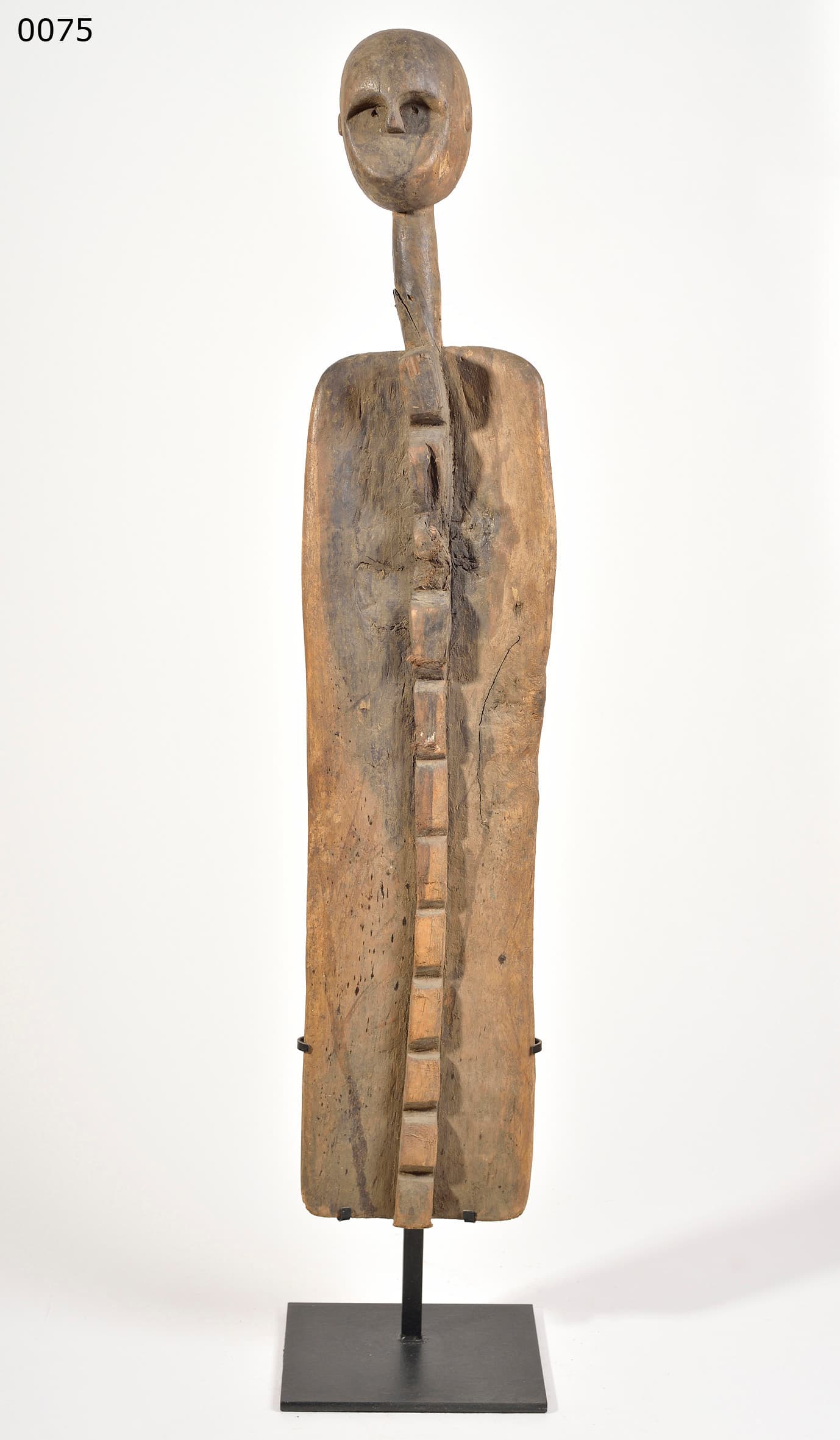
rare friction instrument