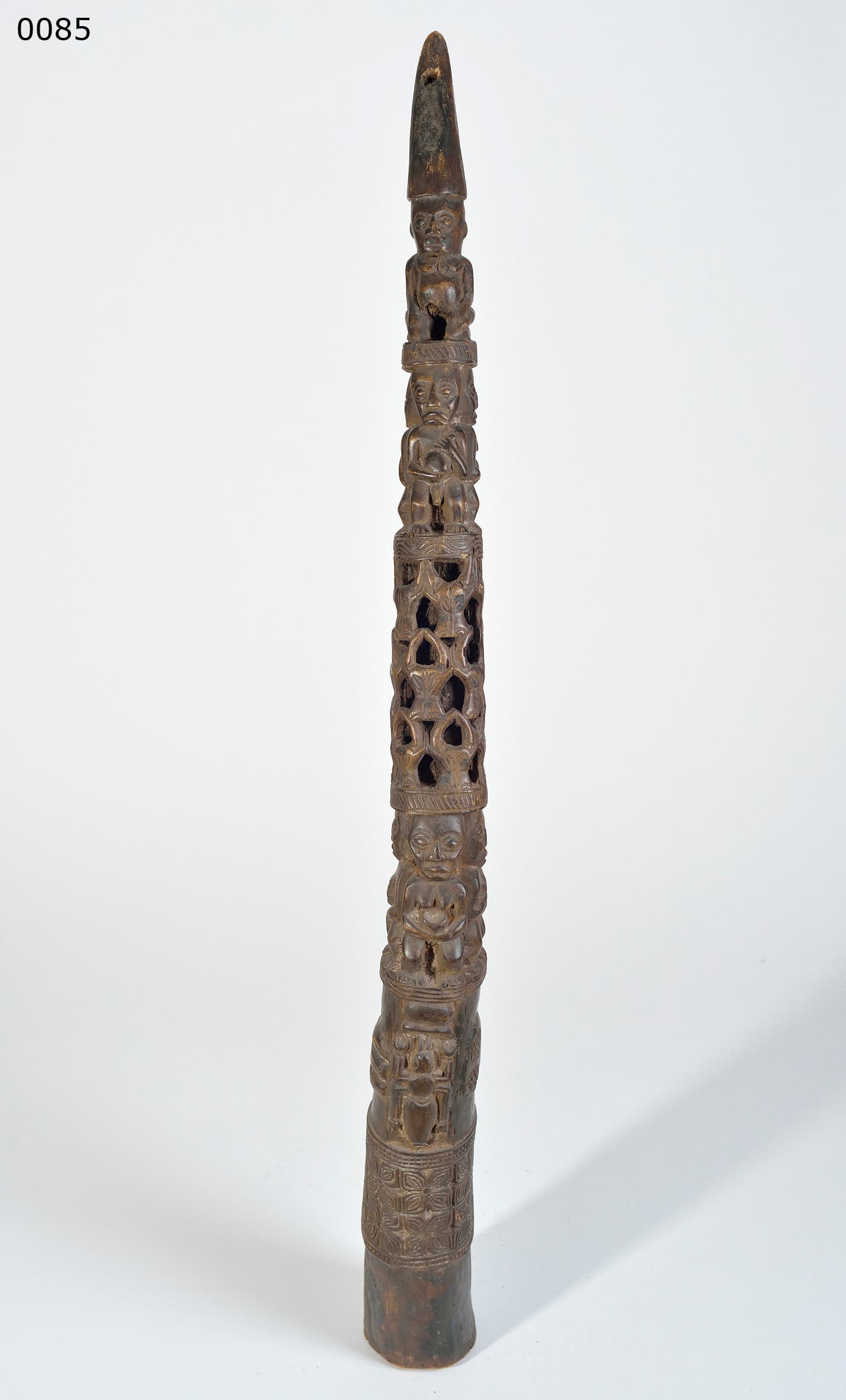
A collection of highly diverse lost-wax cast brass figures. Some (like 251) depict elongated, dynamic, almost abstract postures, while others (like 252 and 253) are dense, highly ornamented figures with bulging, expressive faces and complex bodily details.
1. Aesthetic Style and the Tikar Foundry
Like the previous group of brass figures (object 248 with sub-numbers 248-1A/B, 248-2, 249-1, 249-2 — Hornek directly cross-references this set), these objects originate from the Mantoum Chiefdom but exhibit Tikar-caster artistic hallmarks. The diversity within this single group is striking. The dynamic, almost stick-like abstraction of some figures contrasts with the dense, "horror vacui" ornamentation of others. The Tikar artists excelled at capturing extreme facial expressions — wide, aggressive mouths and bulging eyes — translating the intense psychological presence of Grassfields woodcarving into the fluid, permanent medium of bronze.
2. Ritual Function and the Currency of Status
These objects are entirely secular, serving as the "currency" of social status within the Mantoum Chiefdom. As Hornek classifies them (in the parallel description for 248-249-group): "in short, especially in the case of brass objects, it is very often a matter of outwardly displayed prestige." By exhibiting these diverse, high-quality Tikar castings in his reception room, the chief broadcasted his wealth and expansive diplomatic connections. They were intended to impress and overwhelm visiting dignitaries.
3. Patina, Material Weathering, and Age Verification
The brass surfaces display a superb, unpolished historical display patina. The deep, intricate recesses of the scarifications and the woven-texture garments hold dark oxidation and remnants of the original earthen casting core. The projecting elements — noses, knees, and ceremonial staffs — exhibit a warm, golden handling polish. This specific wear pattern perfectly validates their history as highly prized display objects that were regularly dusted and handled by royal retainers over many decades.
Summary
This diverse collection of brass figures is a magnificent testament to Tikar metallurgical skill operating in the service of Bamum diplomacy. Their polished, non-sacrificial patinas confirm their vital role as pure instruments of political prestige.
Written with AI assistance from the collection appraisal, object photography and our own research; editorially reviewed. Mistakes are possible — corrections are welcome. How we work →
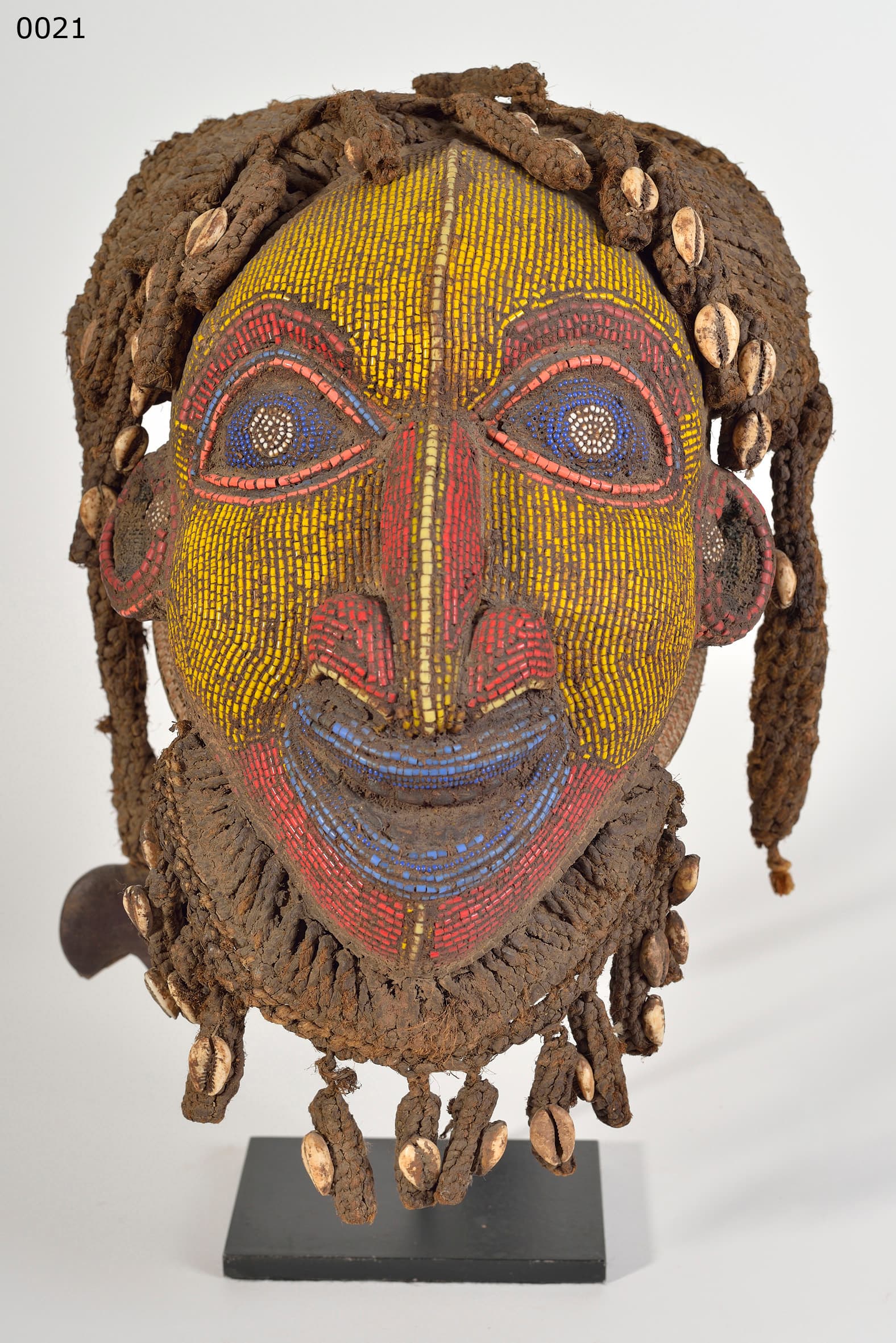
mask (covered with beads - shells on cloth)
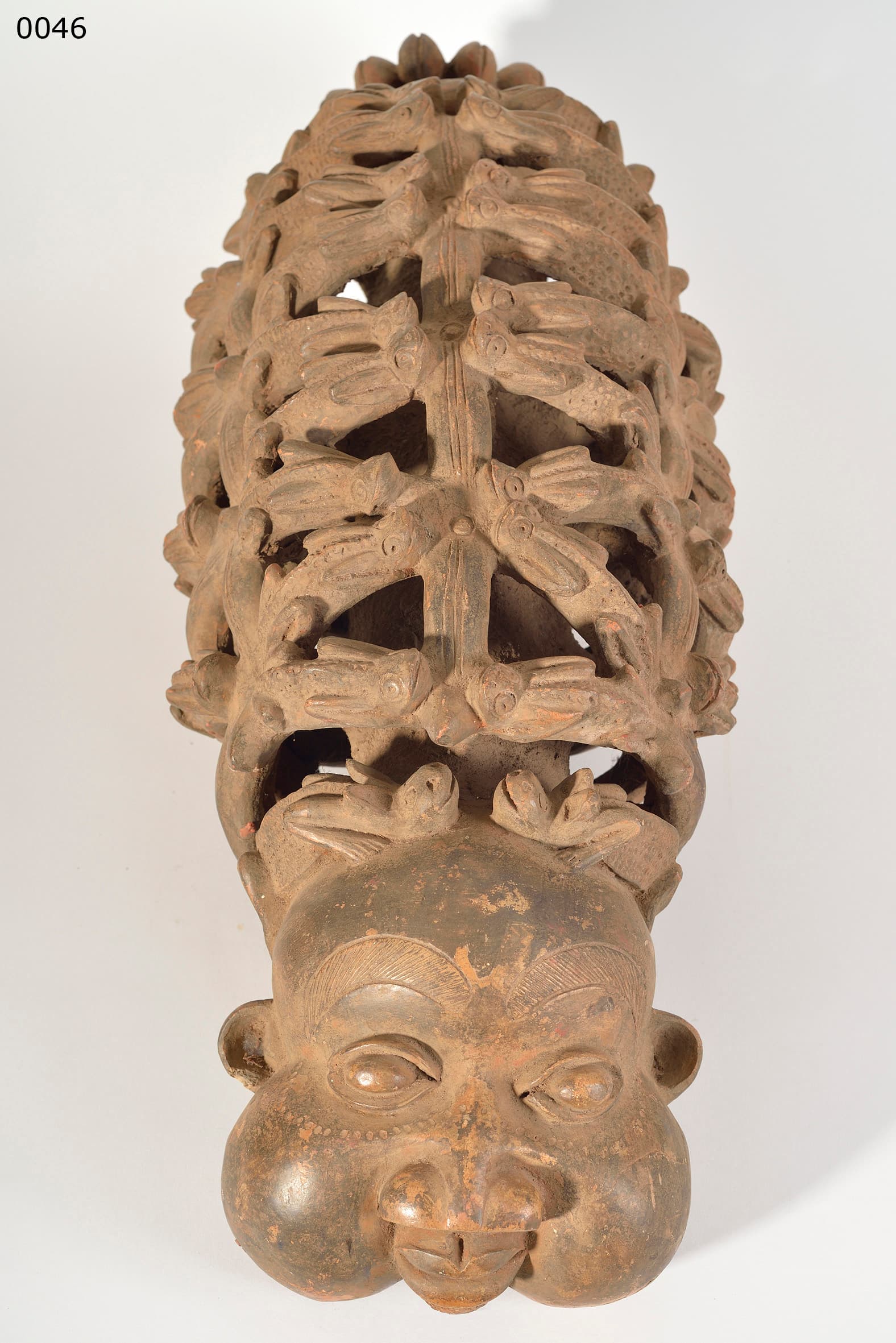
prestige pipe head
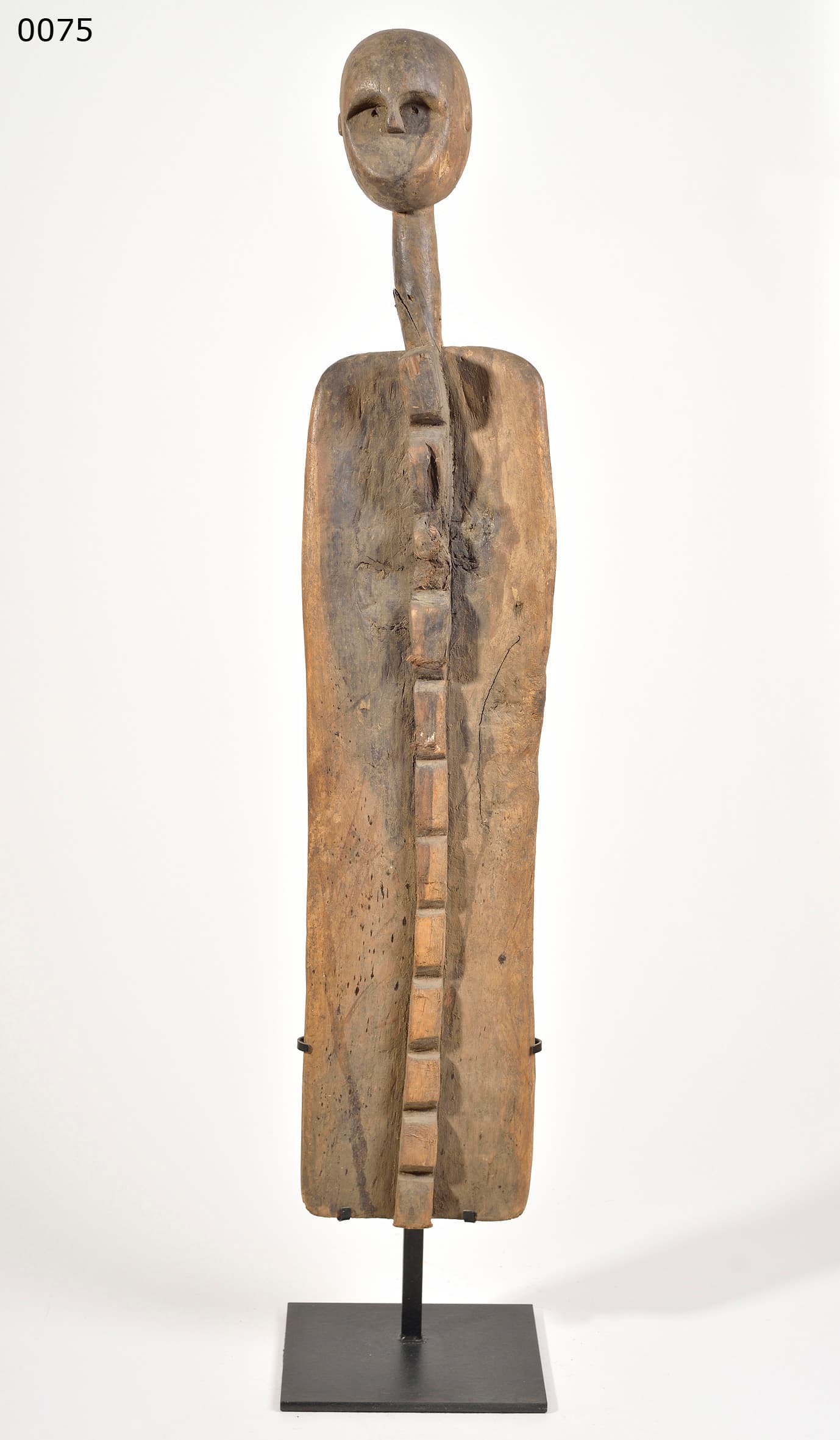
rare friction instrument