A calabash covered completely in beads strung on cords, closed by a stopper in the form of a bird's head. It comes from Bahdab village in the Mantoum chiefdom, in the Sultanate of Foumban, Cameroon.
1. Form and Beadwork
The round body stands on a low foot ring beaded in brick red. Its surface is laid out as a field of diamonds in deep blue and cream, each outlined by a thin red line of beads. The neck rises in pale beads to the stopper, where a red face, a black crest and white-ringed eyes give the bird its character. On the shoulders, two beaded figures climb along the sides, with heads picked out in blue and red. The collection catalogue reads them as probably lizards, a motif that recurs among the Bamun.
2. Use and Context
According to the collection catalogue, the vessel served in traditional judgement. When someone had stolen, set fire or otherwise broken the rules of life in the village, it fell to the chief to identify the culprit. In the presence of the chief and his advisors, suspects had to drink from the vessel, or take powdered herbs, mixed with palm wine or with unfermented dolo. By the belief described there, the guilty person's body swells and, unless he confesses, he dies, while the innocent are unharmed.
3. Provenance
The catalogue records that the chief of Bahdab removed the spiritual power from objects of his treasure house, this calabash among them, which made them ordinary objects that he could sell.
Summary
A beaded calabash with a bird-head stopper that once served as a vessel of traditional judgement.
Written with AI assistance from the collection appraisal, object photography and our own research; editorially reviewed. Mistakes are possible — corrections are welcome. How we work →
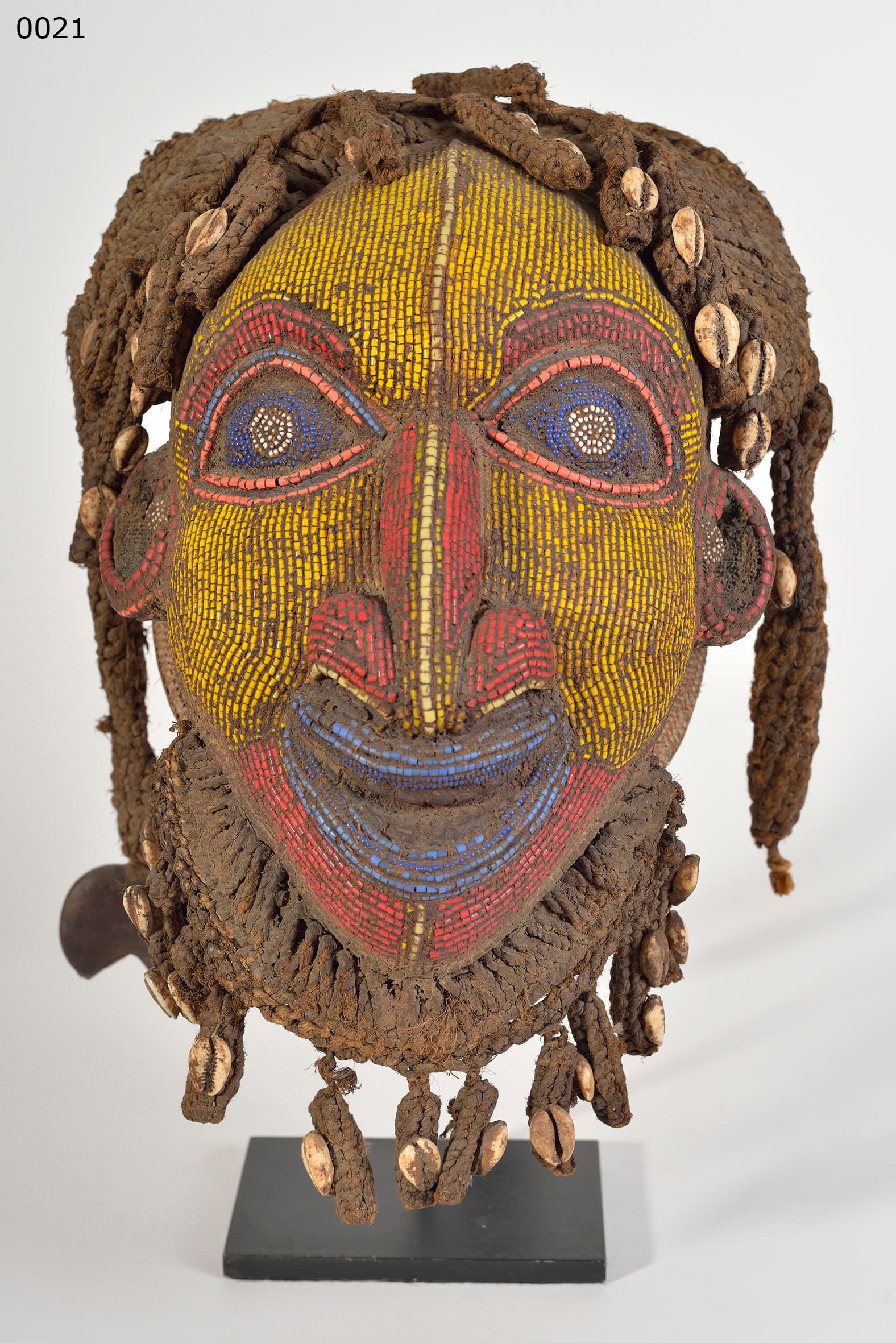
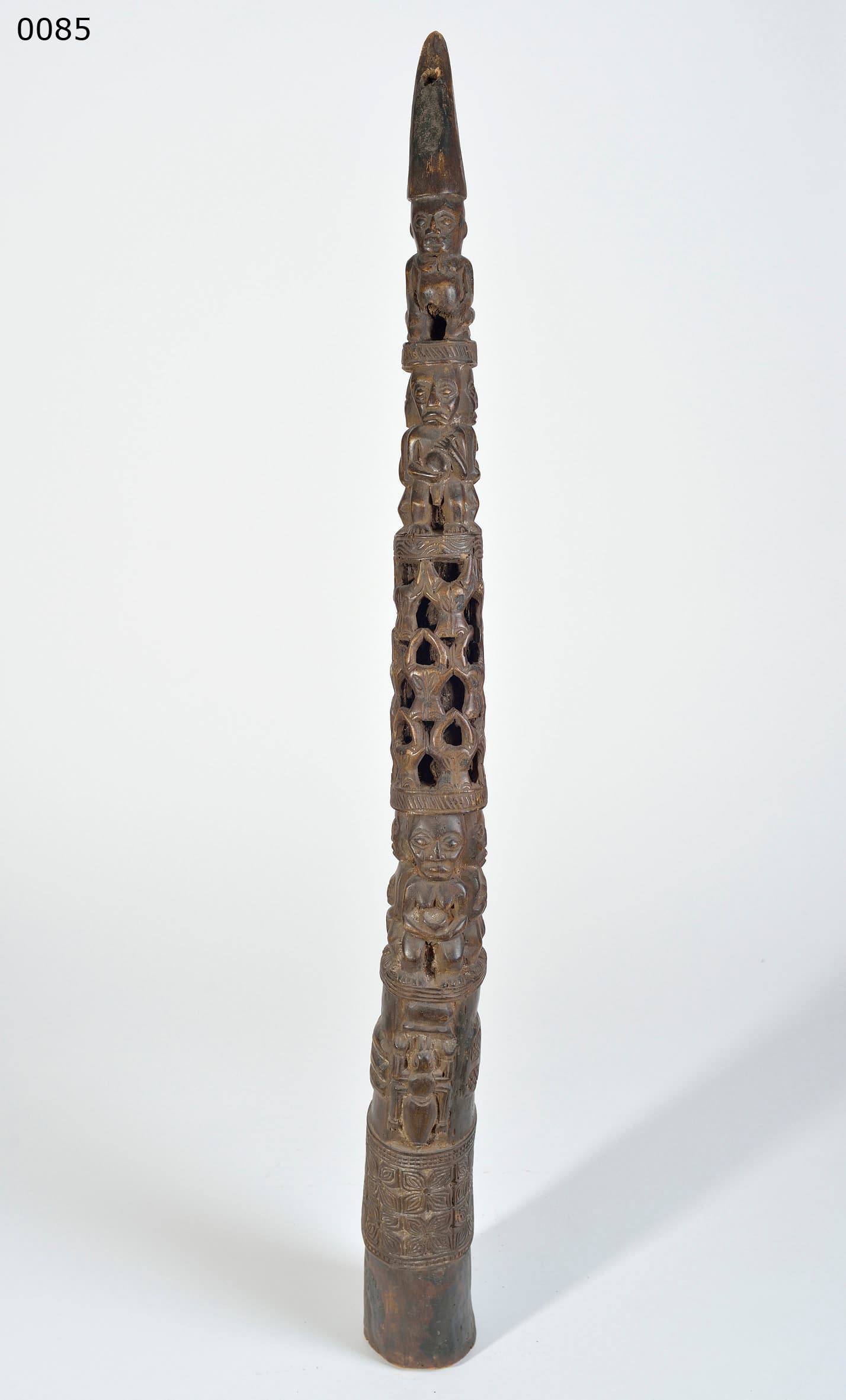
mask (covered with beads - shells on cloth)
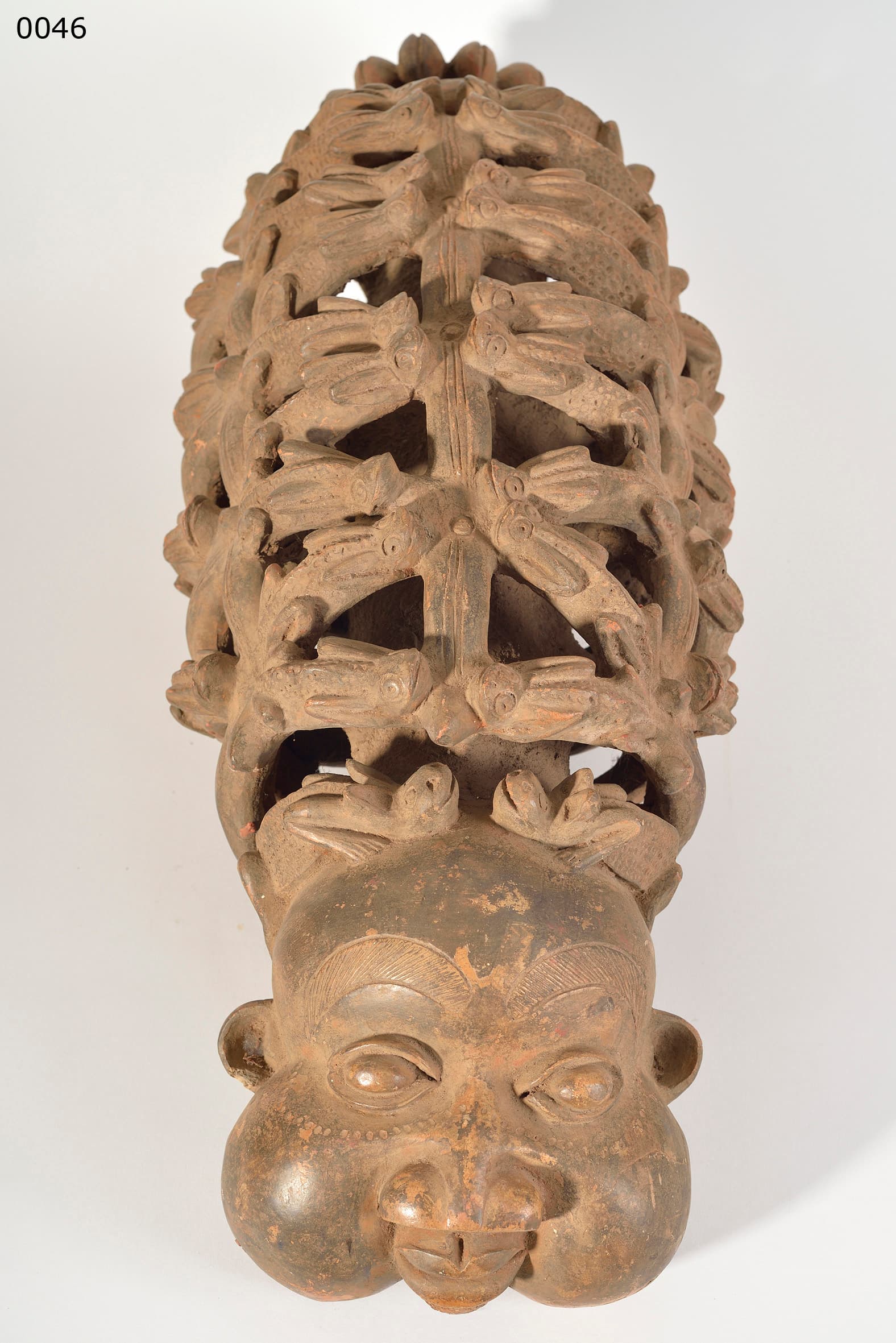
prestige pipe head
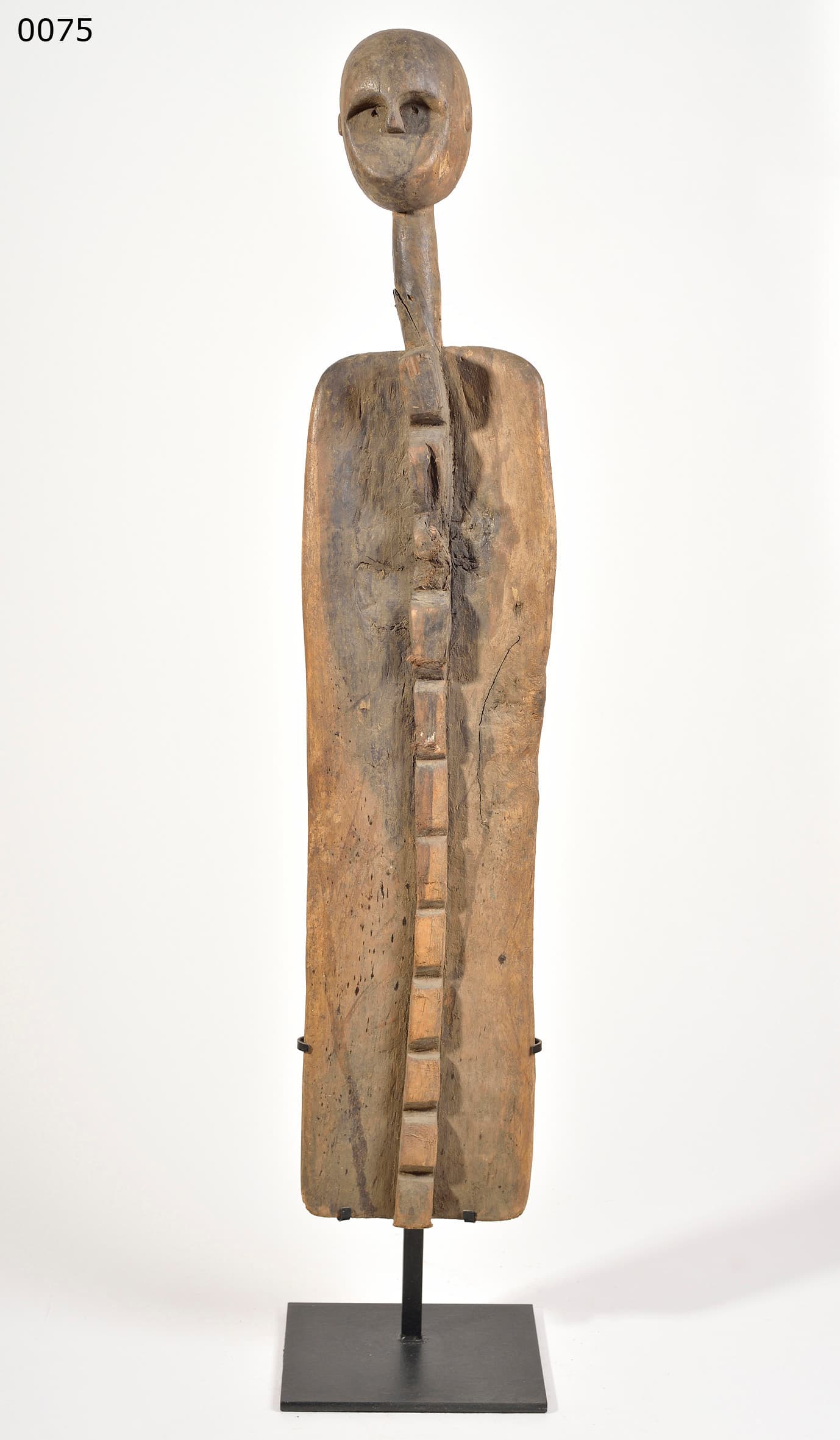
rare friction instrument