A pair of cast bronze figures from the Magbet Chiefdom, called queen and king in local usage. The photograph shows one of the two: a seated, armed figure with a raised arm.
1. Form and Casting
The figure shown sits cross-legged on a round stool with an openwork base of chevron-shaped struts. It wears a pierced, crown-like cap and a beard, and a broad openwork collar with small figures. One arm is raised, with a beaded bracelet at the wrist. The other hand holds a large leaf-shaped blade with a ring-shaped end and horn-like projections. A small figure stands on the stool beside the knee, and a textured, scale-patterned shape lies behind it. Face, torso and limbs are smooth, while the collar, beard, apron and the top of the stool carry fine engraved and raised detail.
2. Meaning and Role
According to the collection catalogue, these bronze figures, called queen and king in the local linguistic usage, are to be classified as prestige objects on the one hand and as ritually important ancestral figures on the other. The so-called queen is depicted with two children in her arms as a fertility symbol, the so-called king as a brave, all-conquering warrior. Both are meant to serve as role models for the entire clan. The photograph shows only one figure of the pair, the armed one, which corresponds to the catalogue's description of the king.
3. Surface and Wear
The bronze has a warm coppery-brown surface, polished on the raised areas, with greenish-brown deposits in the recesses of the collar, the apron and the stool.
Summary
A bronze ancestral pair from the Magbet Chiefdom, intended as prestige objects and as models of fertility and courage for the clan.
Written with AI assistance from the collection appraisal, object photography and our own research; editorially reviewed. Mistakes are possible — corrections are welcome. How we work →
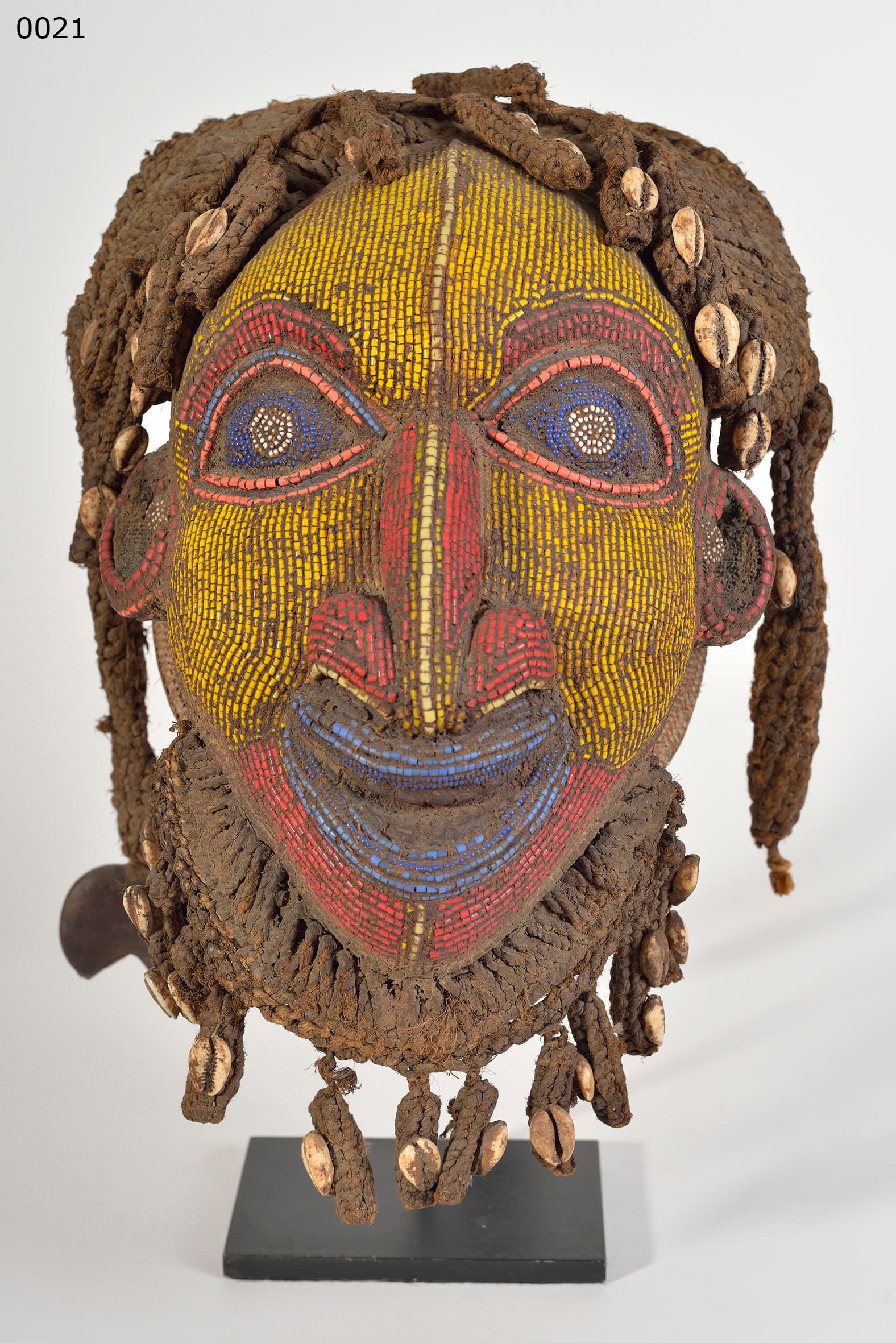
mask (covered with beads - shells on cloth)
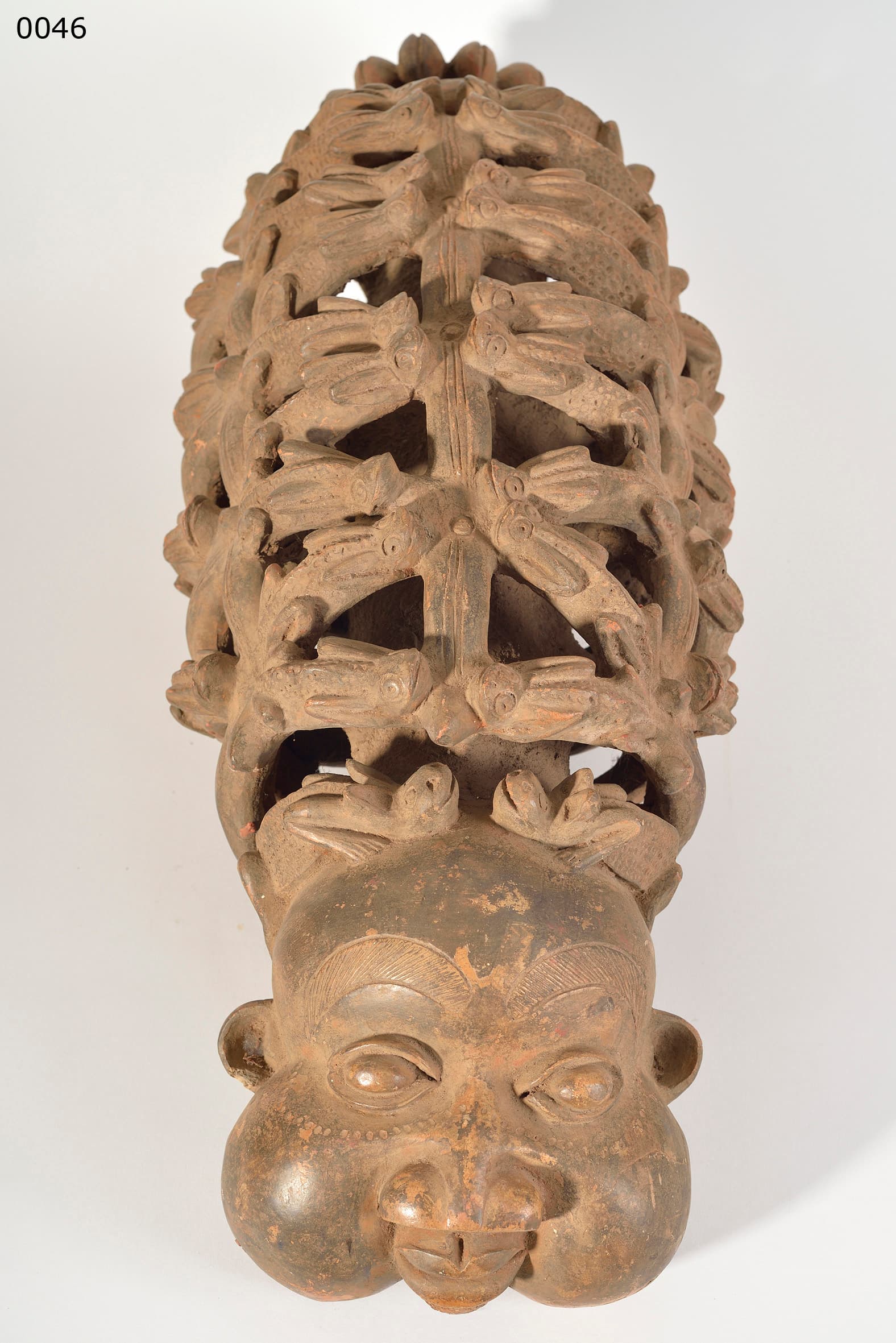
prestige pipe head
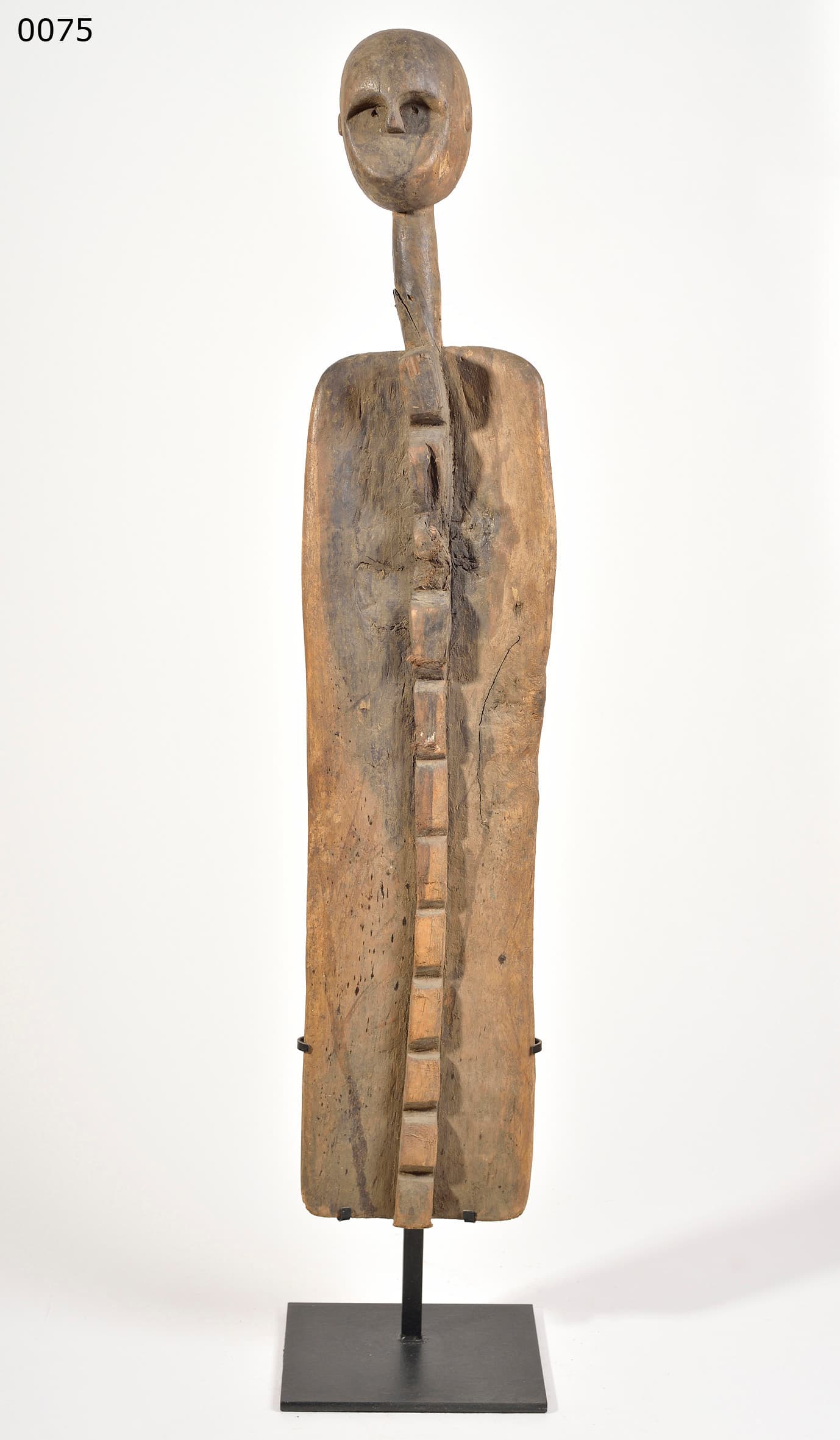
rare friction instrument