Two house-shaped wooden masks covered in leather or cloth, from the Tam Mayoh Chiefdom. One is crowned by an animal head with large upright ears, the other by a human face.
1. Form and Construction
Each piece has a boxy, house-like body whose surface is covered with dark, stitched leather or cloth and marked with faint painted lines in yellow, red and blue, including zigzag bands. On the first, the front is formed by an animal head with a metallic, hammered-looking surface, large ears and a pale, green-rimmed eye. On the second, a carved human face with white-rimmed eyes and open lips looks out under an elaborate headdress with a small animal figure. Carved, horn-like elements are tied to the sides of both pieces. The faces are carved in a firm, volumetric manner, and the painted lines give the boxes a light surface ornament.
2. Use and Meaning
According to the collection catalogue, such masks are worn at large festivities for the reception of guests and for a lively, dance-like greeting. The house-like central structure is meant to symbolize the people of the chiefdom, who receive the guests ceremonially in this way. The masks set on the sides of the house, looking in all directions, guarantee that nothing escapes the wearer's view, again meant symbolically, so that all guests are welcomed.
3. Surface and Wear
The leather or cloth is dark and matte with scattered dust-like residues and some loss of paint. The carved faces are darker and smoother, with the white of the eyes and lips standing out. Ties and stitching are visible at the edges.
Summary
Two house-shaped masks, one with an animal head and one with a human face, worn at festivities to welcome guests with a dance.
Written with AI assistance from the collection appraisal, object photography and our own research; editorially reviewed. Mistakes are possible — corrections are welcome. How we work →
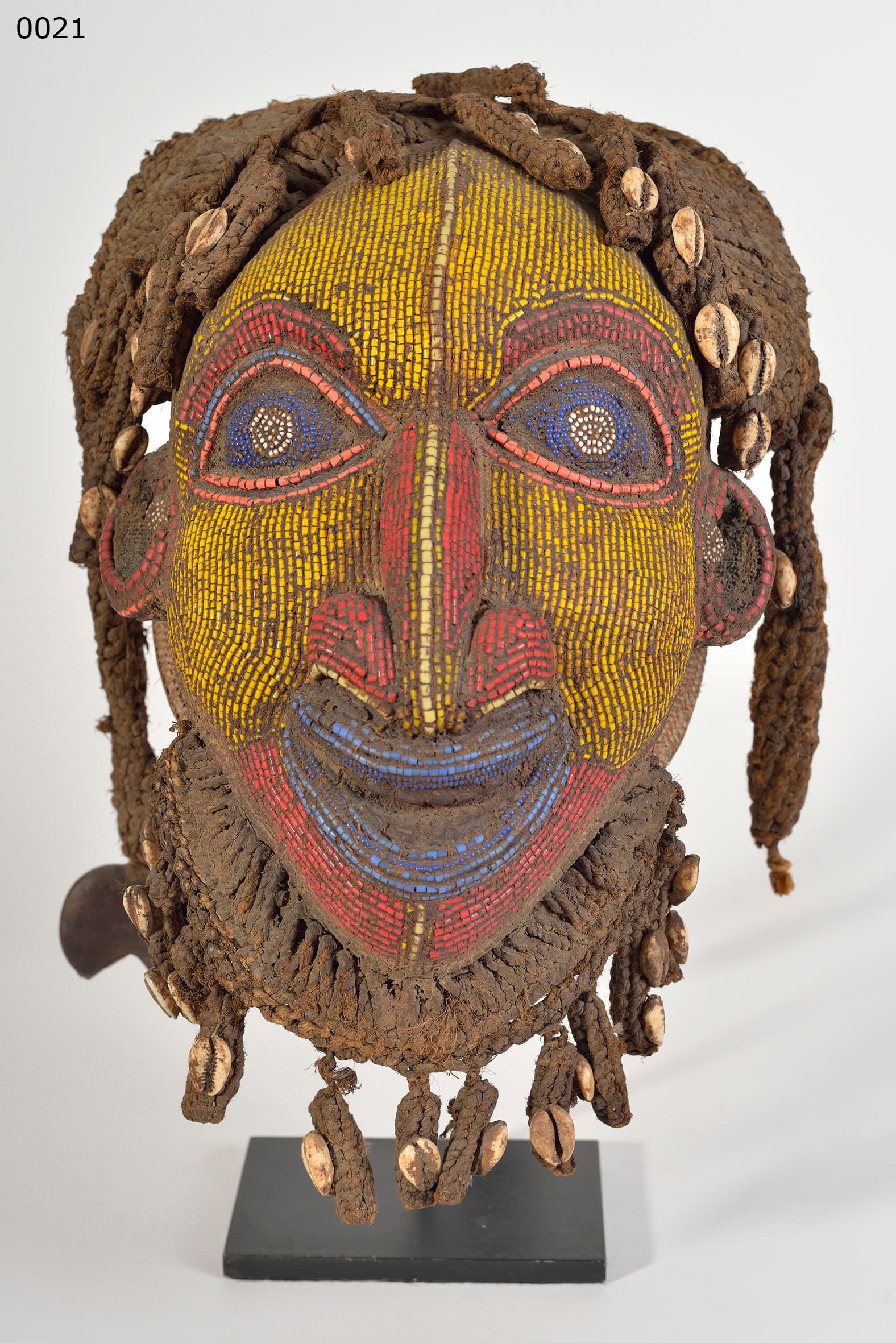
mask (covered with beads - shells on cloth)
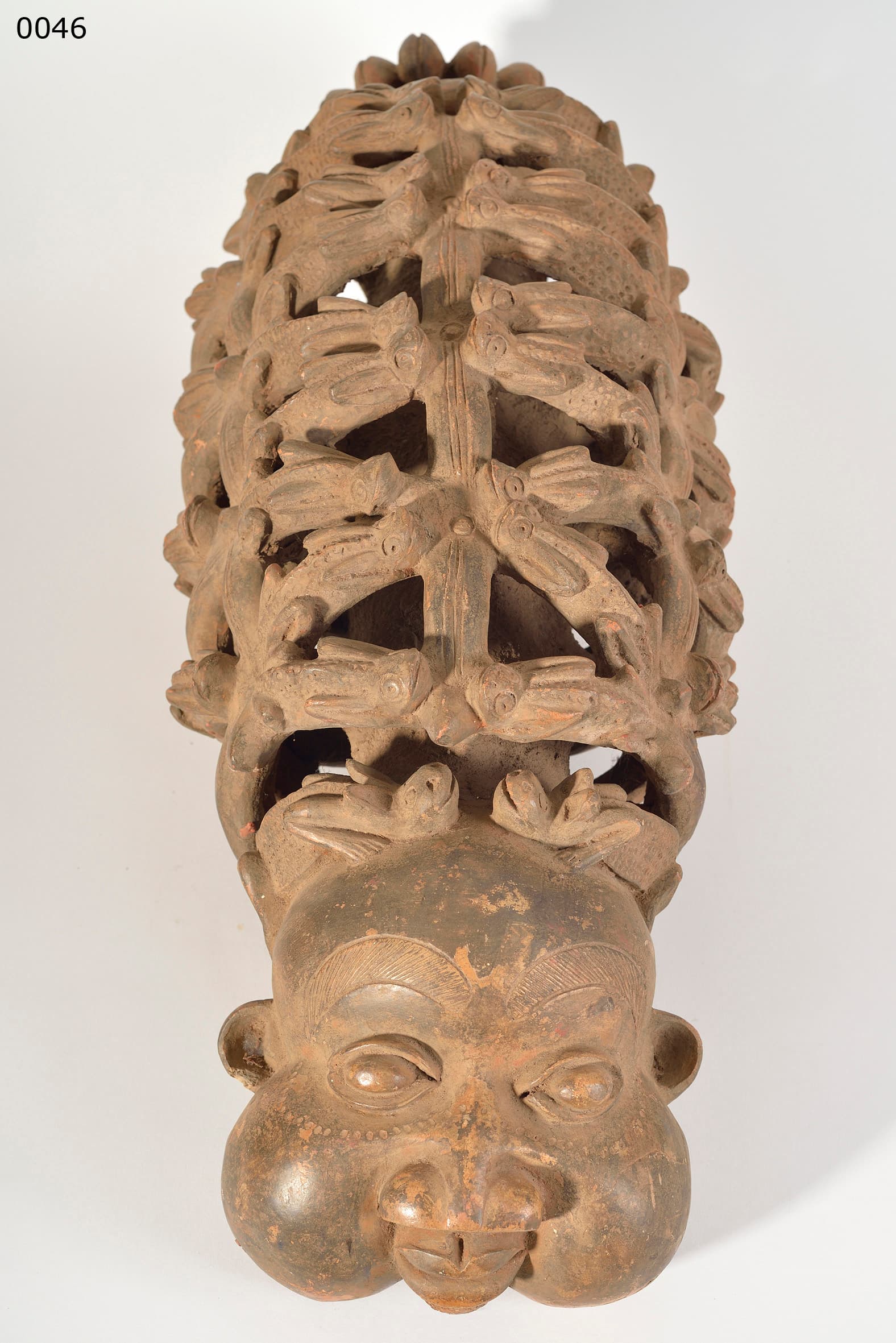
prestige pipe head
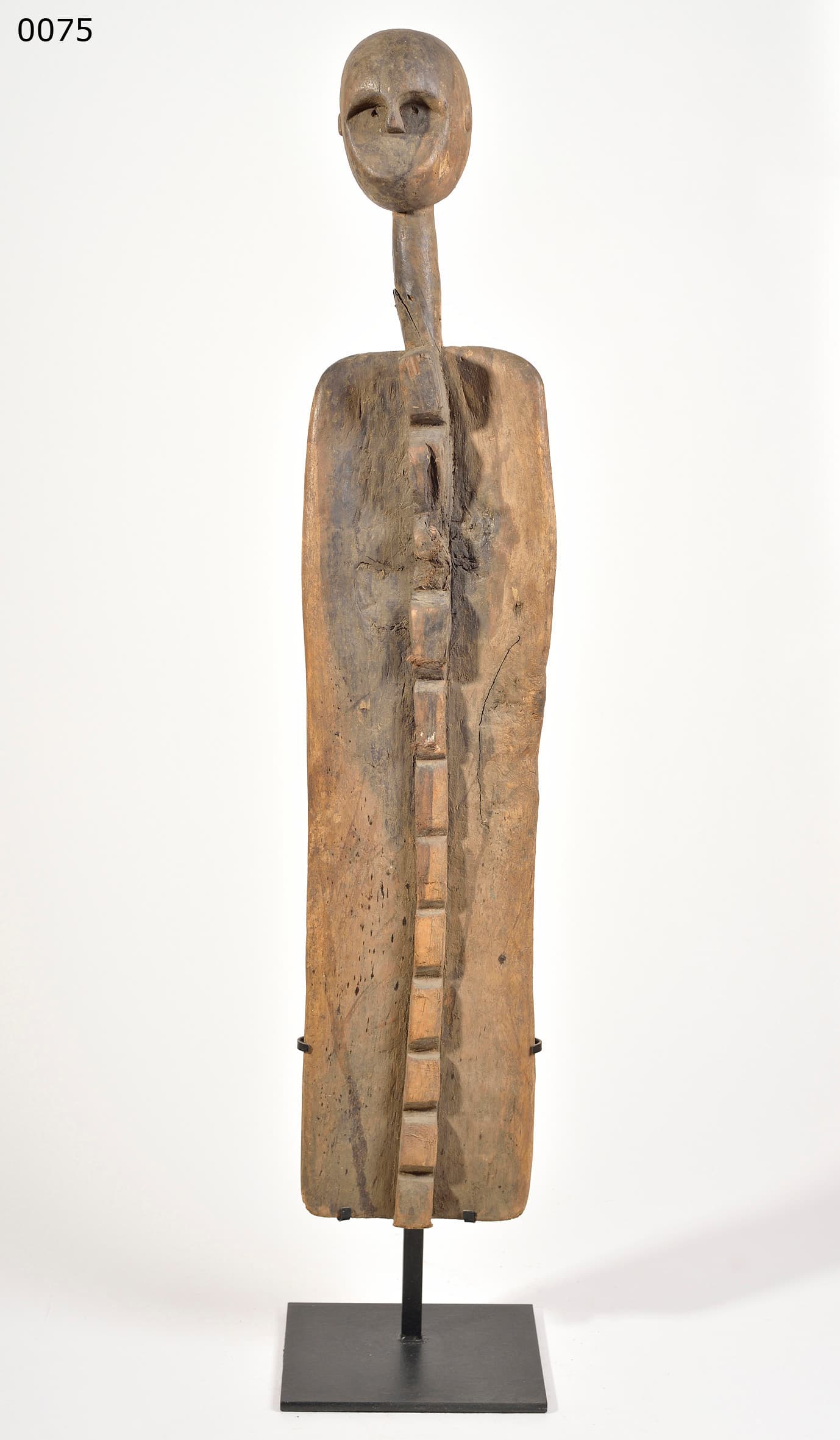
rare friction instrument