A rectangular platform entirely encased in intricate beadwork and edged with cowrie shells, supporting two distinct mythical animals facing outward. Nestled directly between the bodies of the beasts is a sculpted human head, also fully covered in glass seed beads.
1. Aesthetic Style and the Architecture of Subjugation
This piece from the Bamun people is an example of functional royal regalia. The aesthetic is closely associated with the iconography of domination. The chieftain's feet would rest directly upon the backs of the two mythical beasts, visually and physically subordinating these creatures. The beadwork features striking geometric patterns—triangles and diamonds in red, light blue, and black—that distinguish the two animals. The decapitated enemy head, rendered in monochromatic red beads with contrasting facial features, adds a symmetrical anchor to the composition.
2. Ritual Function and the Royal Taboo
Probably only the more important clan chiefs were traditionally not allowed to put their feet on the ground. Therefore, a footrest was placed in front of their throne. This footrest is consistent with that ritual requirement of the earth taboo. However, the footrest also served a crucial psychological and political role. The head between the animals represents a decapitated enemy and should outwardly express the chief's authority—a highly visible reminder of absolute power to those who approached the throne.
3. Material Characteristics, Patina, and Condition
The object's surface is defined by thousands of glass seed beads applied over a structural core, a hallmark of high-status Bamun court art. The base is bordered by a continuous line of cowrie shells, materials historically associated with wealth, trade, and royal prestige. The beadwork remains largely intact, with the glass beads retaining much of their original vibrancy. Minor surface accumulations of dust in the interstices of the beads and natural patination and slight wear on the cowrie shells suggest historical use and age, consistent with a history of use as royal state furniture.
Summary
This royal footrest is a striking material manifestation of the Bamun earth taboo. By resting his feet upon beaded mythical beasts and the representation of a slain enemy, the chief transformed a functional footstool into a powerful, visually arresting expression of authority.
Written with AI assistance from the collection appraisal, object photography and our own research; editorially reviewed. Mistakes are possible — corrections are welcome. How we work →
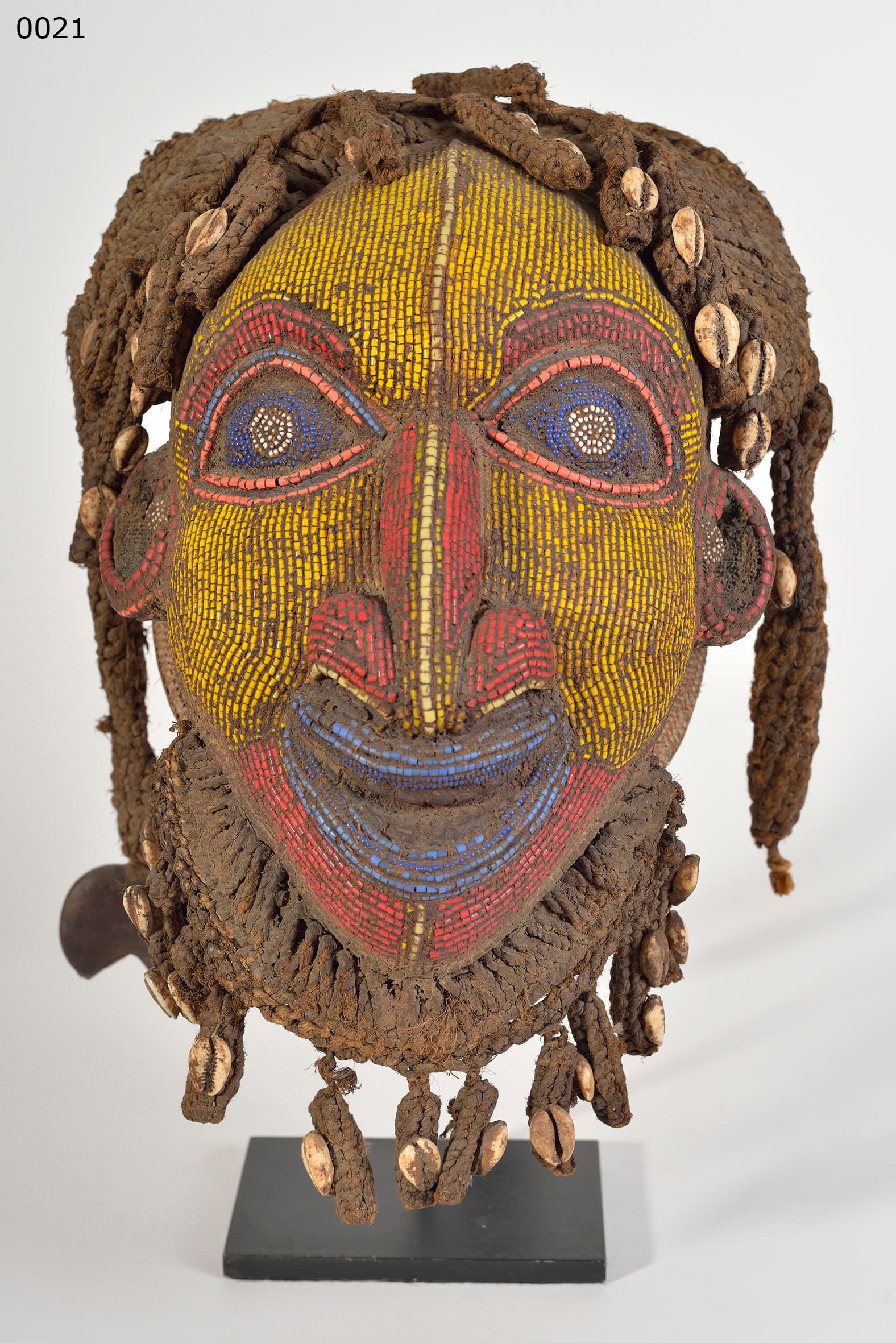
mask (covered with beads - shells on cloth)
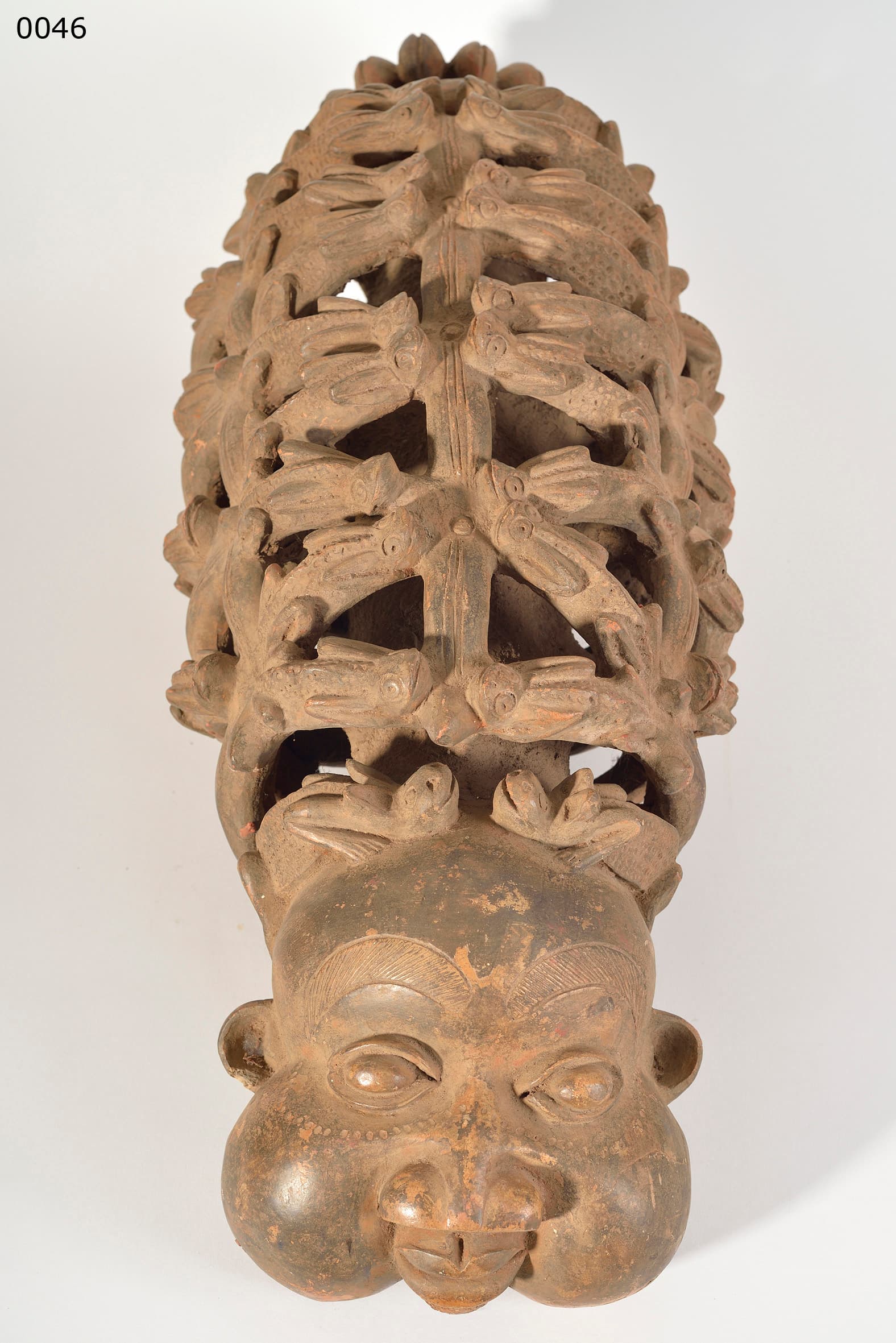
prestige pipe head
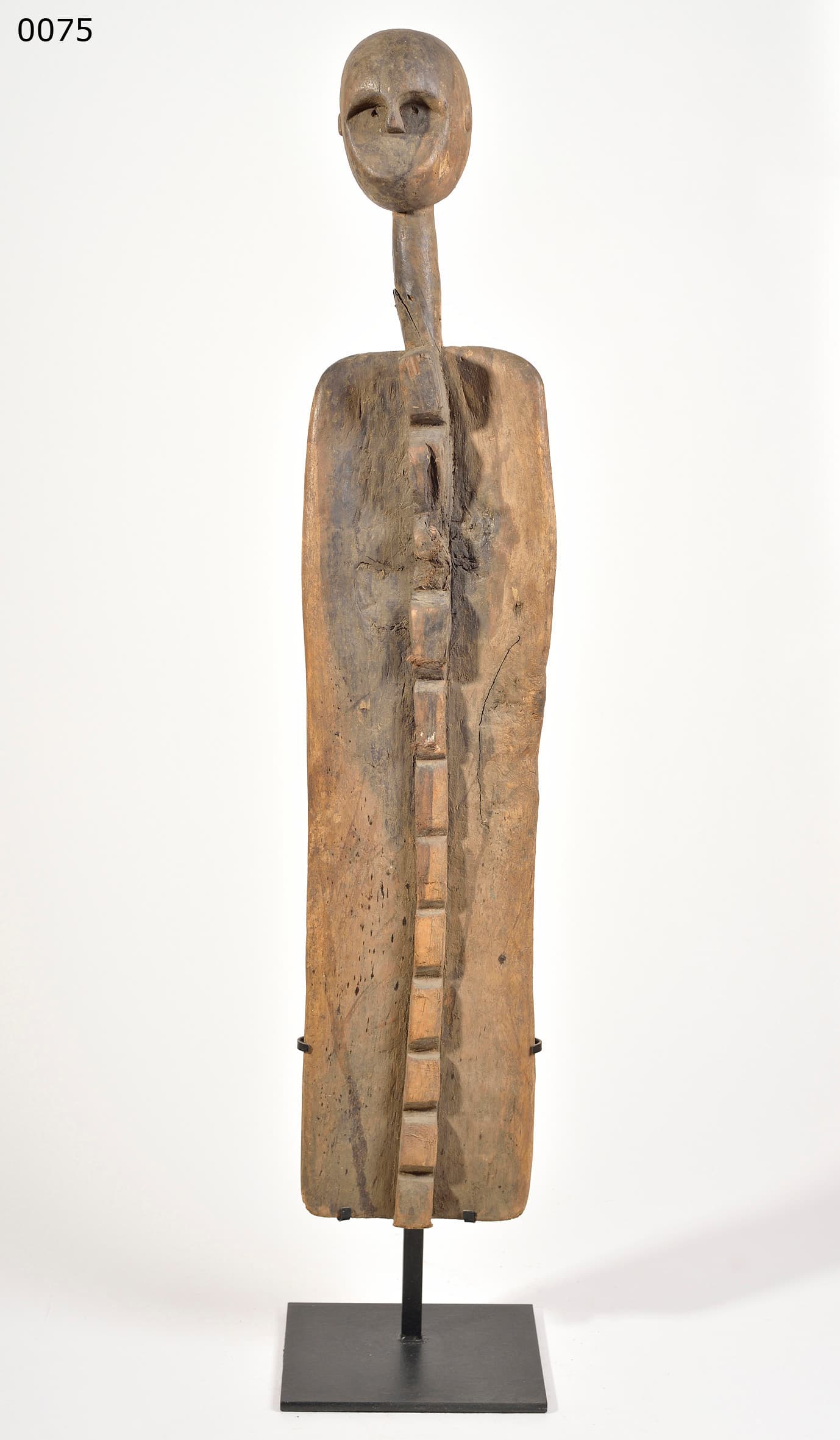
rare friction instrument