A kneeling terracotta figure of dynamic composition, depicting a female subject holding a large circular implement—likely a ritual vessel or drum—before her torso. The modeling is expressive, characterized by an earthy, heavily encrusted surface, inset eyes, and applied metal adornments, reflecting its active role in environmental rites.
1. Aesthetic Style and Composition
This figure departs from the rigid, static frontality often seen in ritual objects. As noted in the register's records, it is "extremely dynamically designed." The kneeling posture, the slightly forward-leaning torso, and the positioning of the arms gripping the large disc-like object create a strong kinetic presence. The facial features are prominent, accented by a metal nose ring, contrasting inset eyes, and a forehead application. The terracotta medium allowed the maker to achieve a rough, hand-modeled texture, visible in the braided coiffure, the choker-style necklace, and the vertically striated skirt.
2. Ritual Function and the Power of the Rainmaker
Because rain—specifically the beginning and ending of the pluvial season as well as the amount of rainfall—is of elementary importance for achieving good harvests and securing food, rituals are performed by a specialized fetishist known as the rainmaker. In the tribal hierarchy, the rainmaker holds a special, dual position: worshipped on the one hand for his supposed ability to bring rain, and feared on the other due to the supernatural powers required to achieve this.
To communicate with the spirits responsible for the rain, the rainmaker requires tangible aids, such as this figure. Sacrifices must be made in its presence to convince the spirits, following a strict escalation mechanism:
- Step 1: Chickens are used as initial sacrificial animals.
- Step 2: If unsuccessful, goats are sacrificed.
- Step 3: If still unsuccessful, cattle are offered.
- Blame-deflection: If it does not rain, it is never the fault of the fetishist performing the act, but of the tribesman who ordered the ritual, who is accused of having made an inferior sacrifice.
The records also note a cynical observation regarding timing: if rainfall does occur, it clearly demonstrates the rainmaker's power to influence the spirit world. Consequently, such rituals are traditionally performed "only shortly before the normal occurring rains."
3. Material, Patina, and Surface History
The object is formed from terracotta (fired clay) and is covered in a thick, opaque, and highly encrusted patina. This earthy, reddish-brown surface suggests a history of repeated ritual applications involving organic matter and earth. The porous nature of the low-fired clay has absorbed these materials over time, resulting in a dry, matte, and rugged texture. The weathered condition of the surface is consistent with long-term use in an active, likely outdoor, ritual environment.
Summary
Vibrating with expressive energy and caked in ritual encrustations, this terracotta sculpture is a notable example of Bamun rainmaking art. It is intrinsically linked to the pragmatic and calculated practices of the rainmaker, anchored by the observation that sacrifices are traditionally scheduled just before the natural onset of the rainy season to ensure the community's agricultural survival.
Written with AI assistance from the collection appraisal, object photography and our own research; editorially reviewed. Mistakes are possible — corrections are welcome. How we work →
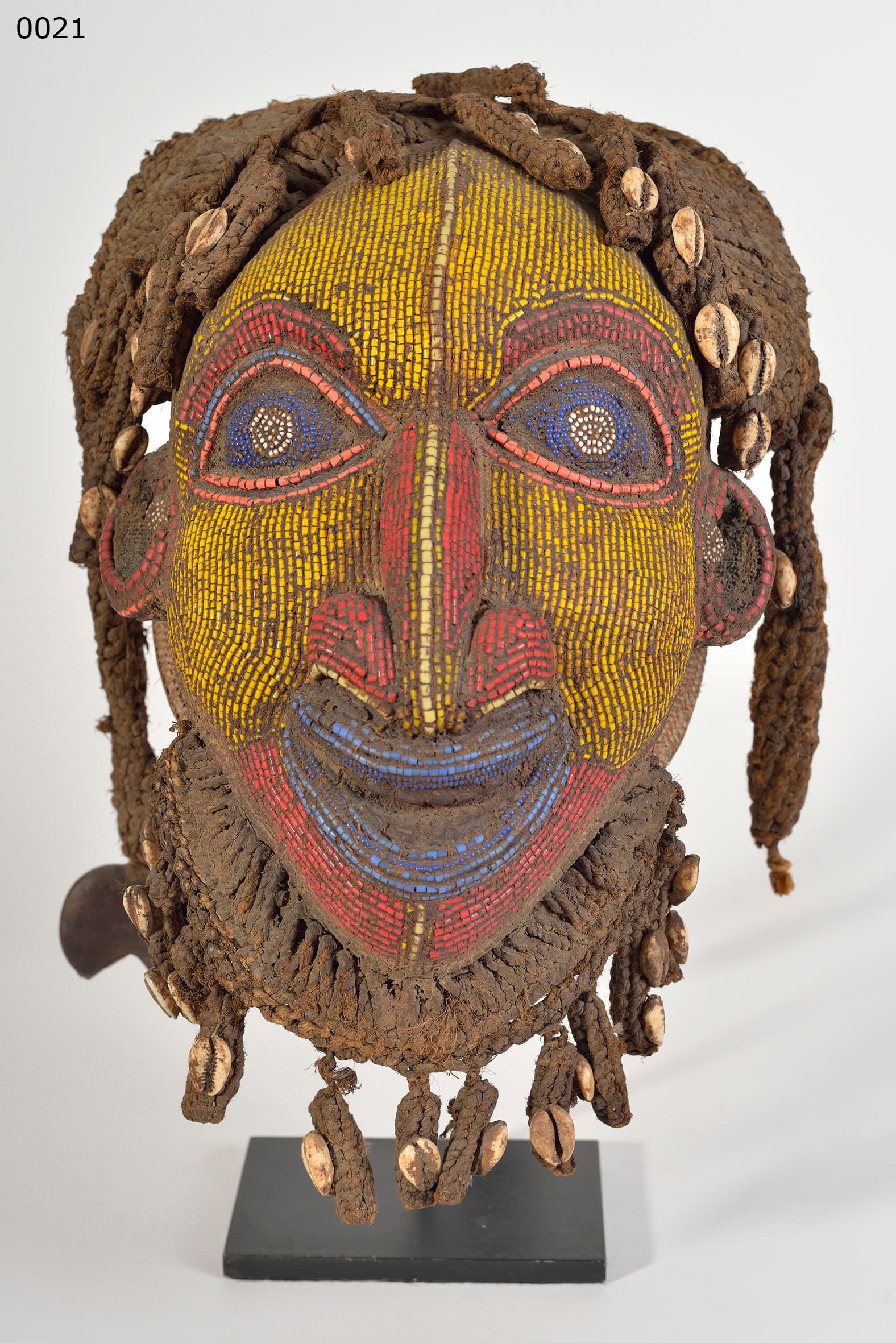
mask (covered with beads - shells on cloth)
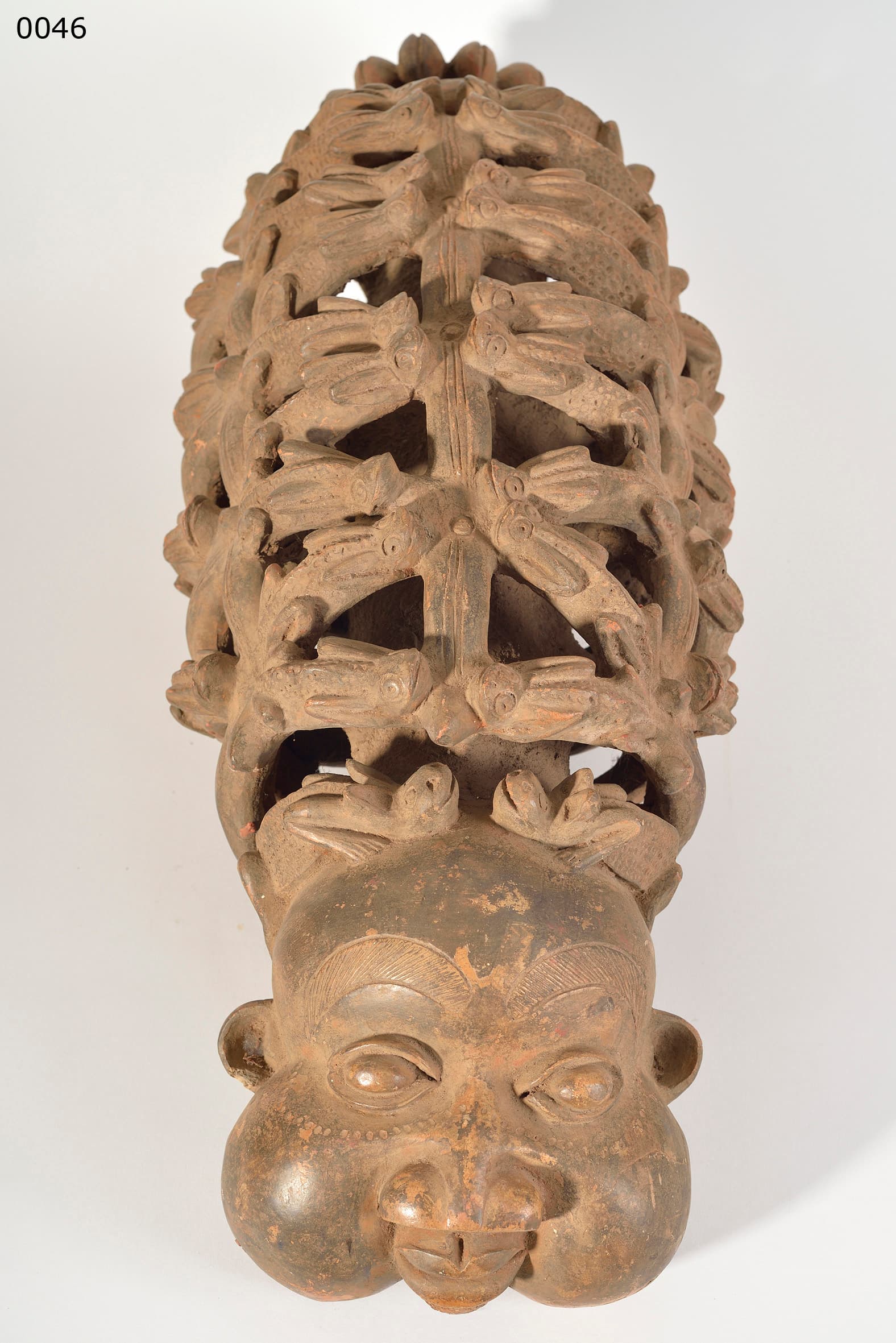
prestige pipe head
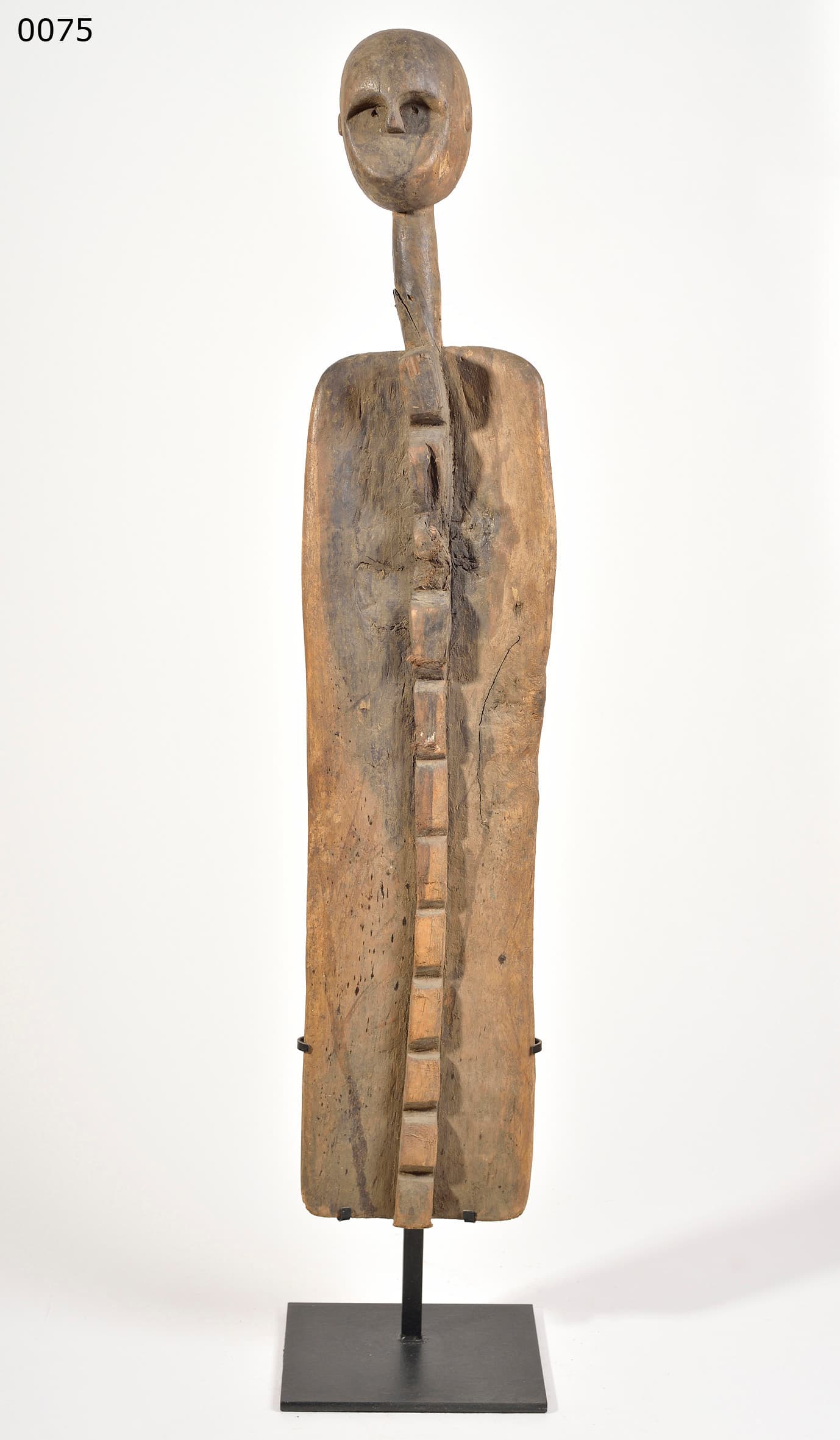
rare friction instrument