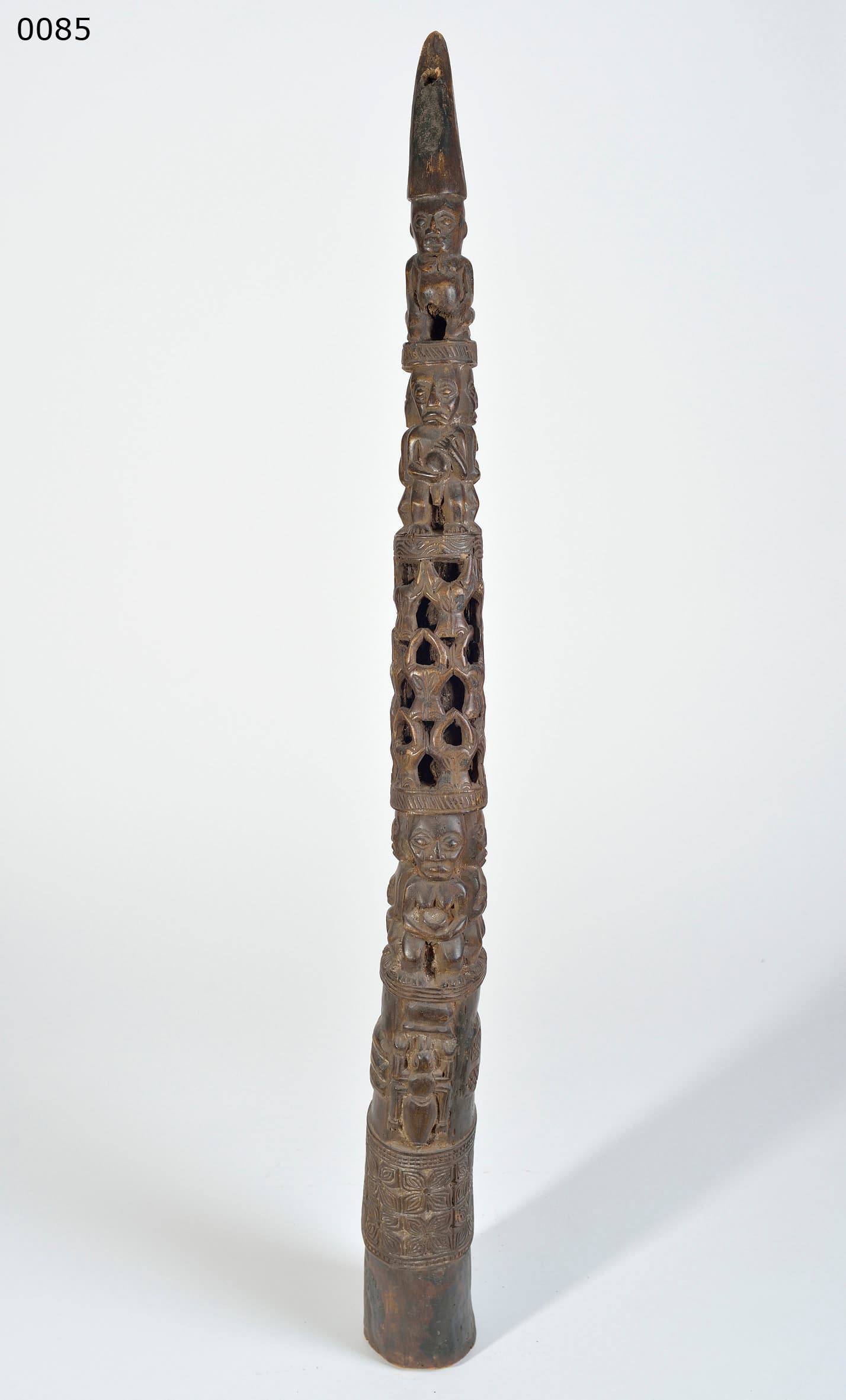
A complex, multi-tiered sculpture constructed from wood and covered with leather, originating from the Bamun people of the Cameroon Grasslands. The composition features a dominant chieftain figure holding a massive lidded bowl, supported from below by a smaller warrior figure, serving a highly specific political and psychological function within the chiefdom.
1. Aesthetic Composition and Materiality
This elaborately designed figure, noted for its outstanding importance to the chiefdom, exhibits a strong, powerful, and expressive charisma. As a special feature, the wooden core of the sculpture is tightly covered with leather. The primary figure wears a distinctive studded hood and a necklace, which serve as clear attributes of a chief figure. The arms of the chief display an intricate, woven or netted texture. The central lidded bowl is decorated with relief carvings and polychrome pigments (green, red, white), and is surmounted by an animal finial on the lid. Below the bowl stands an armed warrior acting as a caryatid.
2. Ritual Function and the Surrender of Authority
As documented in the appraisal notes, this figure stood directly in front of the premises of the clan chief, functioning as a psychological instrument of statecraft. Anyone who visited the chief—whether voluntarily or summoned—had to symbolically put their authority into the bowl in order to step in front of the chief as "powerless." The powerful chief could then deal with the "powerless subject" arbitrarily. After the completion of the audience, the visitors received their power (their pouvoir) back from within the bowl. In order to avoid this "game" of losing power, many tribesmen refrained from voluntarily visiting the chief. The warrior figure positioned below the lid bowl serves as a guardian, observing each visitor as they submit to this ritual.
3. Patina and Surface Condition
The physical condition of the wood and leather construction is consistent with ritual use. The leather covering has cured and hardened, forming a deep, dark patina that conforms tightly to the carved contours of the underlying wood. The polychrome accents on the bowl, the necklace, and the warrior's loincloth show signs of wear and fading. The edges of the lid and the rim of the bowl exhibit smoothed friction wear, suggesting that the vessel was repeatedly opened and closed as part of the submission ritual.
Summary
This leather-covered vessel is a significant example of Bamun political administration. By requiring visitors to physically and symbolically surrender their power into its bowl, the sculpture served as a gatekeeper and a psychological tool to reinforce the absolute authority of the chief.
Written with AI assistance from the collection appraisal, object photography and our own research; editorially reviewed. Mistakes are possible — corrections are welcome. How we work →
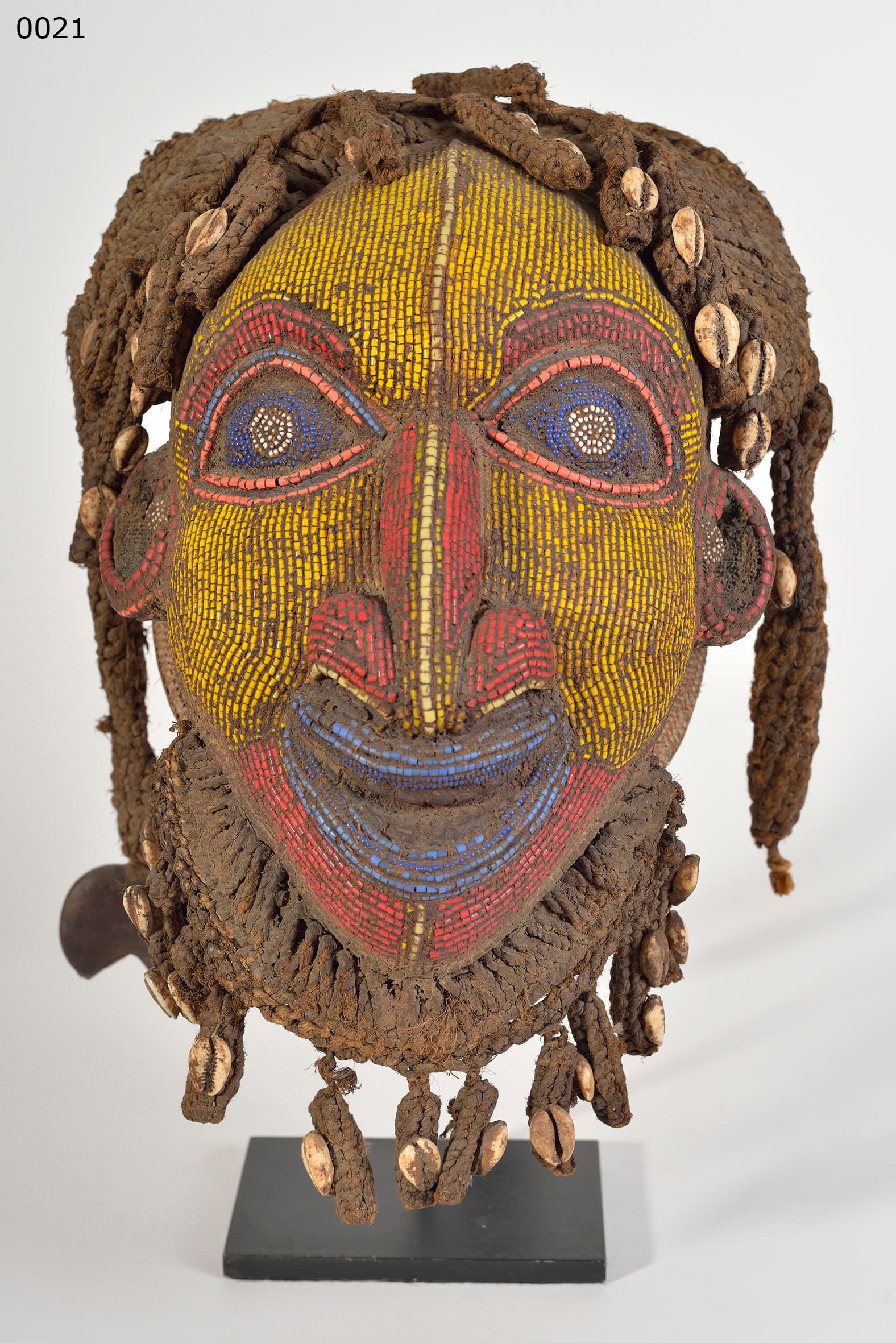
mask (covered with beads - shells on cloth)
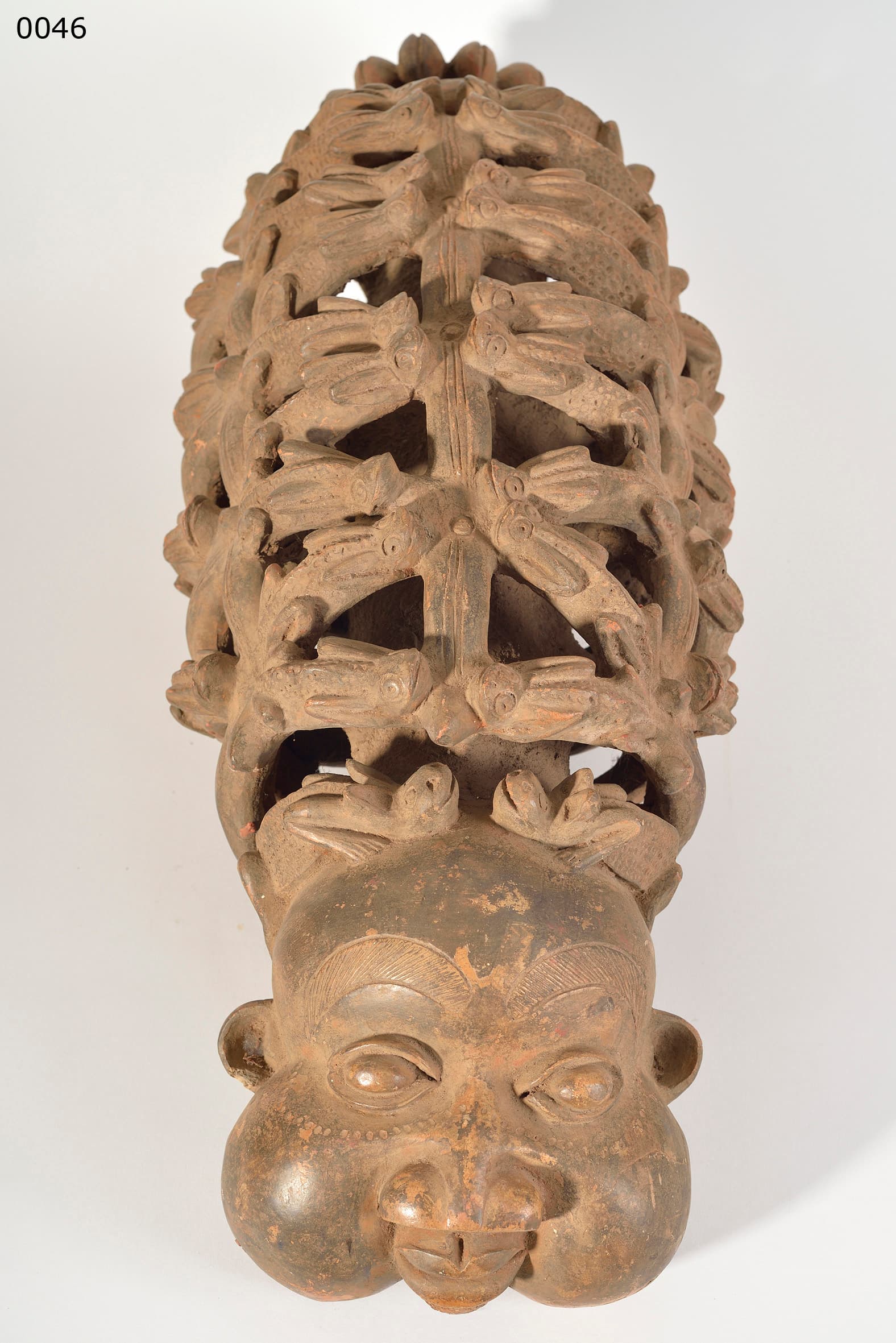
prestige pipe head
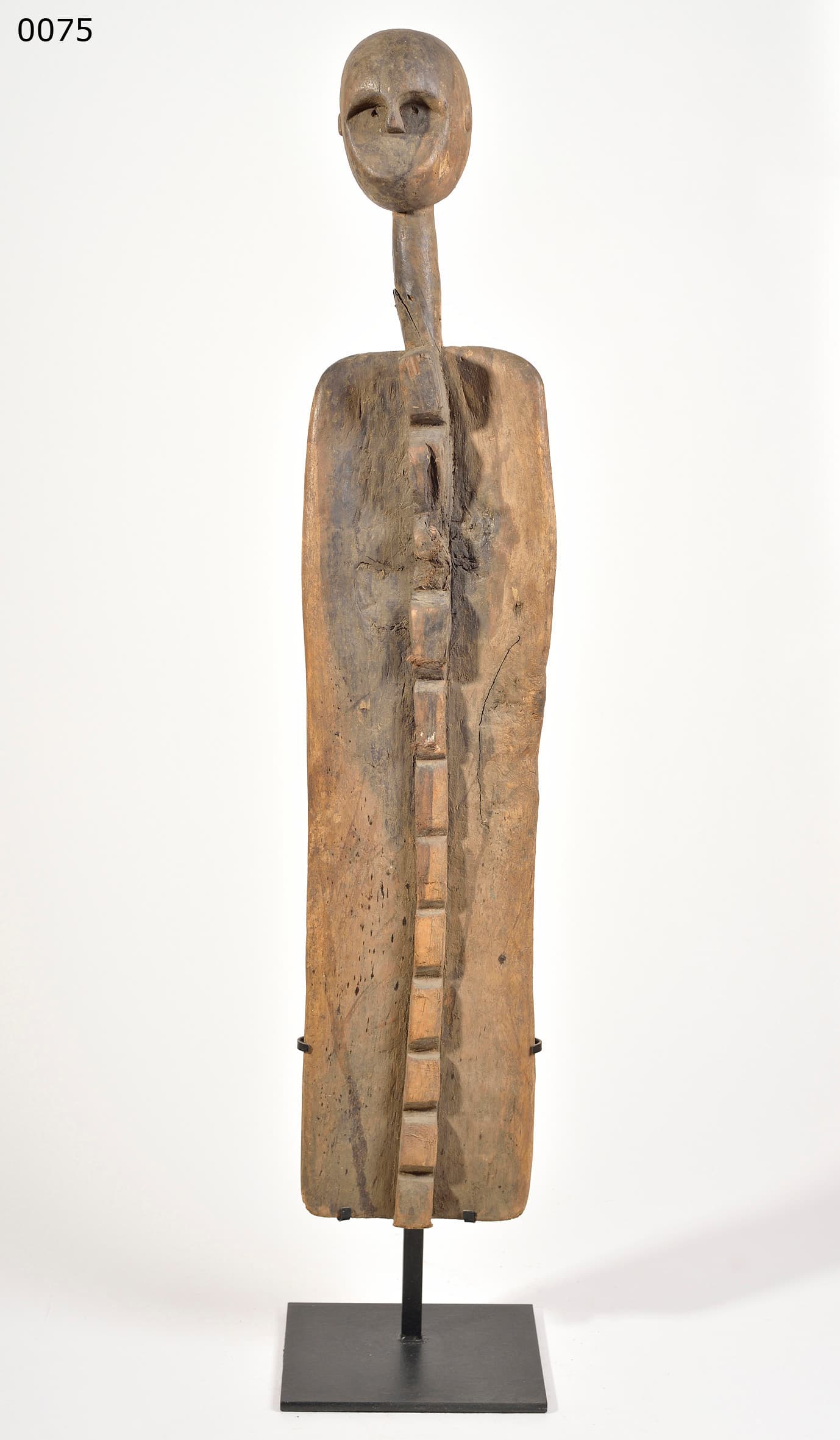
rare friction instrument