A brightly colored, cylindrical cap heavily embellished with glass beads, topped with a highly stylized, three-dimensional zoomorphic figure rendered entirely in turquoise, green, red, and white beadwork with red cloth accents.
1. Aesthetic Style and Beaded Zoomorphism
Originating from the Bamun people of Cameroon, this dance hat is a vibrant example of Grassfields decorative beadwork. The underlying structure is completely hidden beneath a tight mosaic of imported glass beads. The artist has sculpted a three-dimensional quadruped perched on the crown, featuring large, flat, elephant-like ears adorned with a beaded knot motif, a wide-open mouth lined with red fabric, and a long tail. In Bamun iconography, such composite animals often symbolize royal power and adaptability. The bright, contrasting geometric patterns on the cylindrical base are utilized to create a kinetic, vibrating visual effect when the wearer is in motion.
2. Ritual Function and the Joy of the Festival
Unlike encrusted masks used by secret societies to enforce the law, this beaded hat is associated with Lebensfreude (the joy of life)—a festive context typical of Bamun public ceremonies. It was worn during cheerful, traditional celebrations where the community gathered to celebrate agricultural success and social cohesion. The bright beads and dynamic animal motif ensured that the wearer contributed to an atmosphere of communal happiness rather than projecting fear. As noted in the collector's appraisal, the thematic and stylistic execution of this piece invites direct comparison with Object No 273.
3. Surface, Material Weathering, and Wear
The object is constructed primarily of glass beads threaded over an armature, accented with red textile. The glass beads exhibit a subtle, uneven dulling and accumulation of particulate matter in the interstices, consistent with exposure during outdoor performances. The organic cloth elements—visible inside the mouth, along the ear margins, and forming the tail—have become desiccated and faded, showing distinct surface wear. A slight relaxation of the bead rows and minor bead loss on the extremities suggest age and active use in dynamic dances.
Summary
This beaded dance hat is a kinetic sculpture associated with the festive traditions and wealth of the Bamun. Its sun-faded textile elements, muted beads, and structural wear are consistent with a history of use as a centerpiece of communal celebrations.
Written with AI assistance from the collection appraisal, object photography and our own research; editorially reviewed. Mistakes are possible — corrections are welcome. How we work →
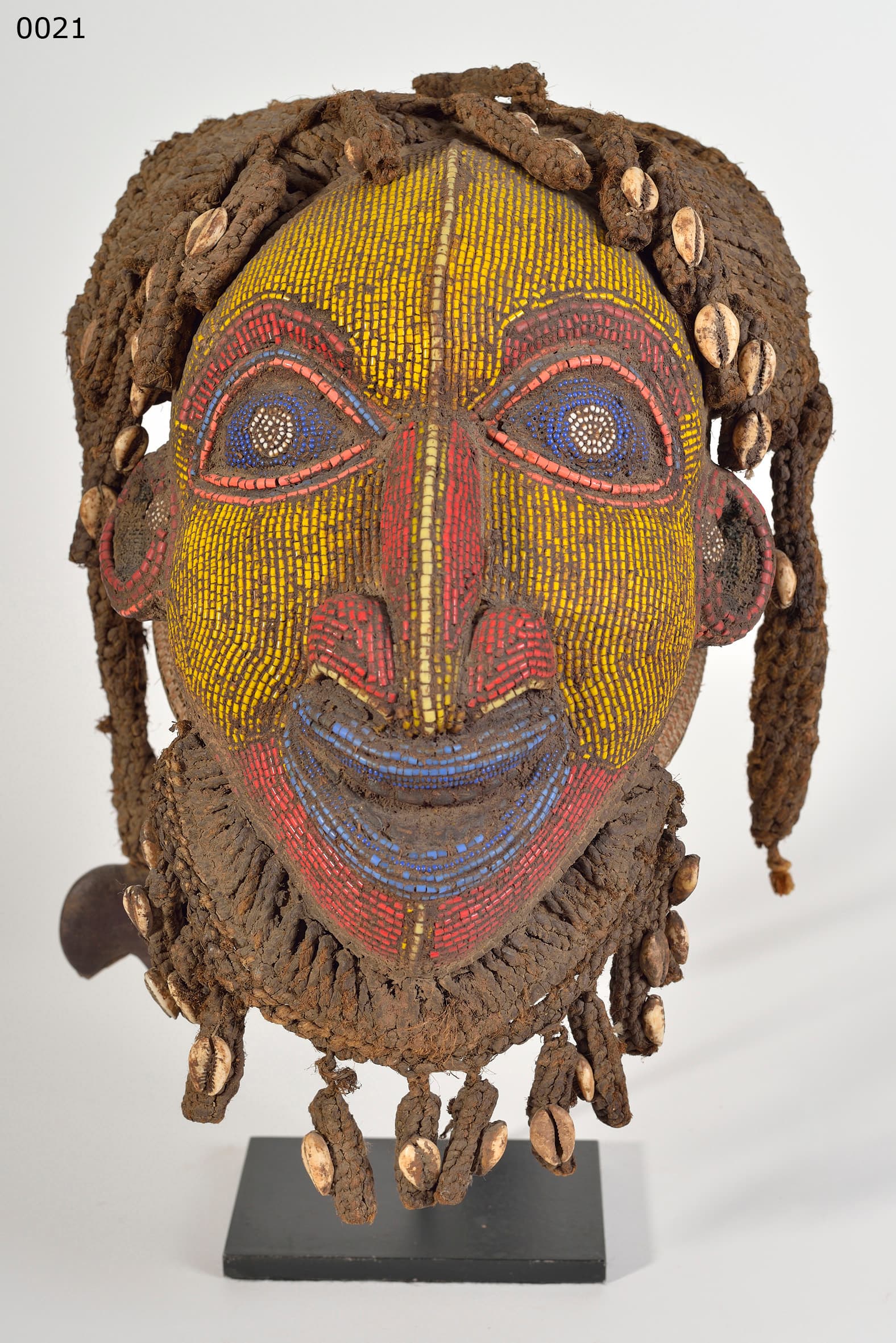
mask (covered with beads - shells on cloth)
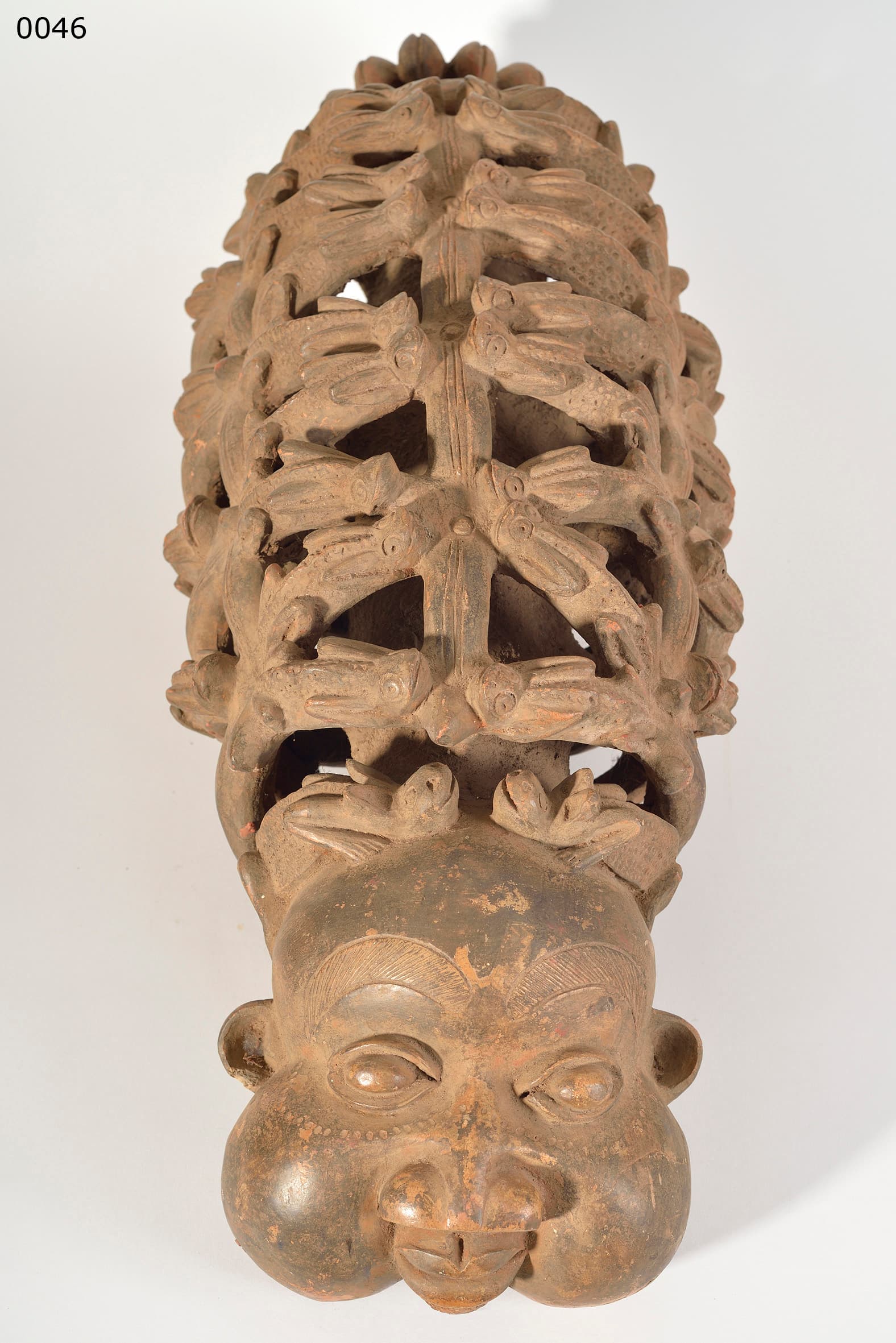
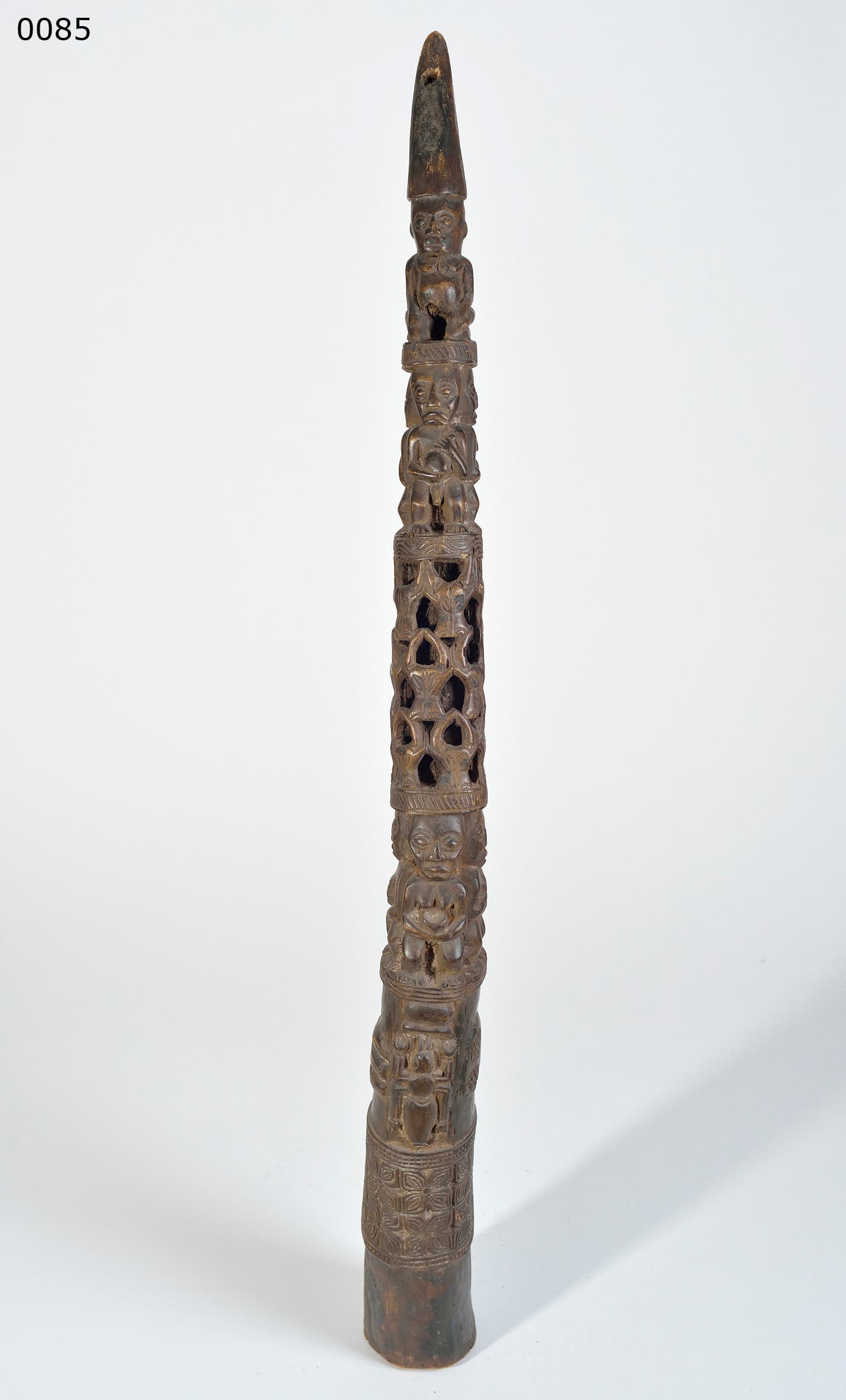
prestige pipe head
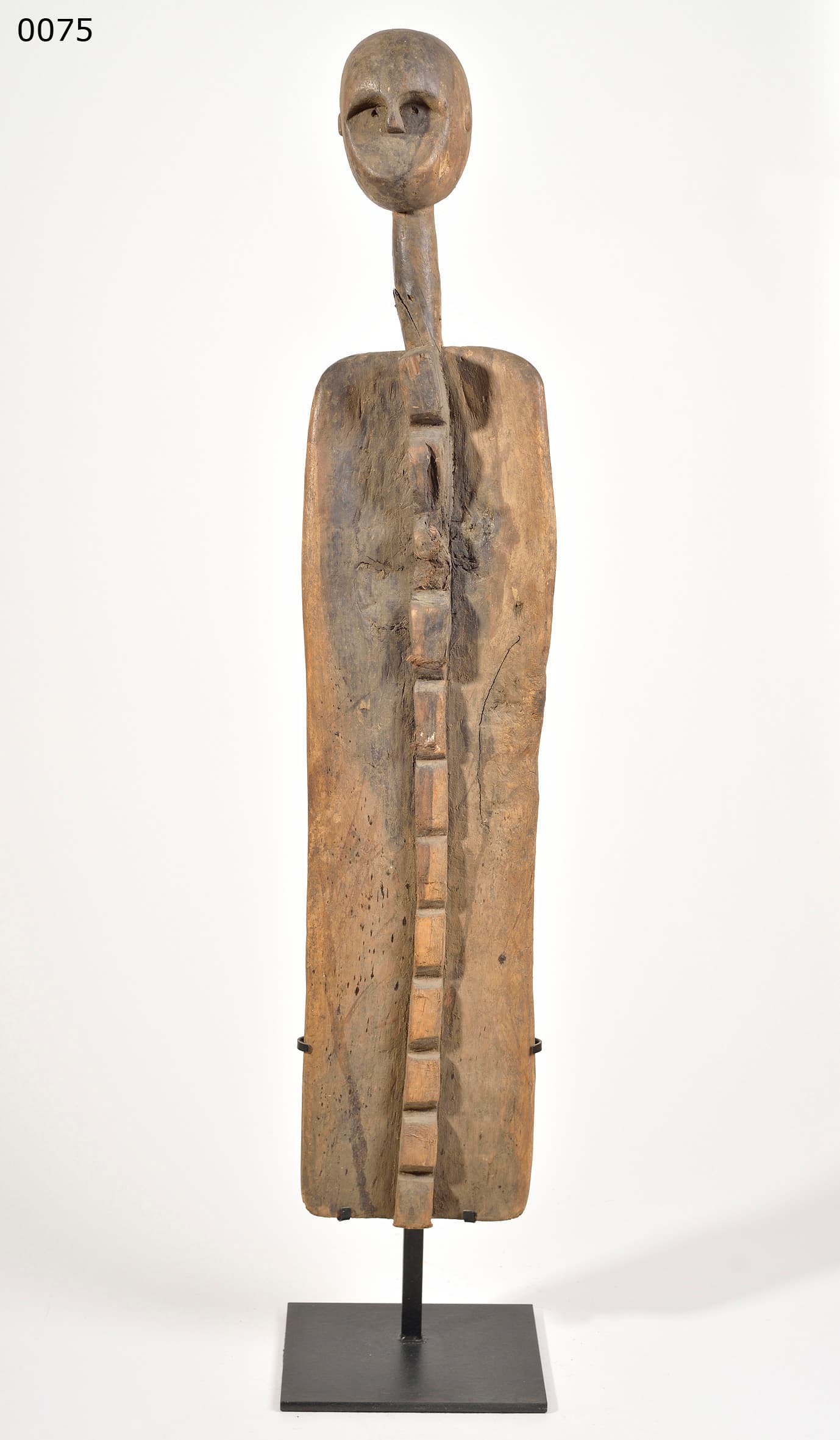
rare friction instrument