A dark, finely carved wooden face mask featuring a prominent headdress, uniquely mounted not to be worn on the face, but securely attached to the very top of a long, sturdy bamboo pole.
1. Aesthetic Style and Structural Adaptation
This piece from the Tam Mayoh (Mabouo) Chiefdom presents a highly unusual structural adaptation of the traditional Bamum face mask. The mask itself features classic Grassfields volumetric carving — large, expressive eyes and an open mouth — but it has been specifically scaled down. The true aesthetic ingenuity lies in its mounting. By fixing the mask to a long bamboo pole, the carver transformed a wearable disguise into a towering, elevated standard, completely altering the visual dynamic of how the mask interacts with a crowd.
2. Ritual Function and the Royal Children
The unique construction is directly tied to the strict social hierarchy of the Bamum court. As Hornek explicitly documents verbatim: "this is due to the fact that these kinds of masks were worn by somewhat more grown-up children of the chief (the so-called princes and princesses). However, since physically they were too small to be seen, the masks were fixed to such bamboo poles." This allowed the royal children to march in the procession and visibly project their royal presence and status high above the heads of common tribesmen.
3. Patina, Material Weathering, and Age
The wooden mask exhibits a dry, historical patina, with darkened recesses retaining soot from storage in the royal treasury. The most telling sign of authentic use is found on the bamboo pole itself. The lower half of the pole, where it was gripped by the royal children, displays a distinct, smooth, and darkened handling polish from the transfer of human sweat and oils. The bindings securing the mask to the pole are brittle and aged, verifying the historical integrity of the assemblage.
Summary
This pole-mounted mask is a brilliant, pragmatic solution to the challenge of royal visibility in the Grassfields. By elevating the mask, it allowed the young princes and princesses of the Tam Mayoh Chiefdom to proudly assert their elite status over the festival crowds.
Written with AI assistance from the collection appraisal, object photography and our own research; editorially reviewed. Mistakes are possible — corrections are welcome. How we work →
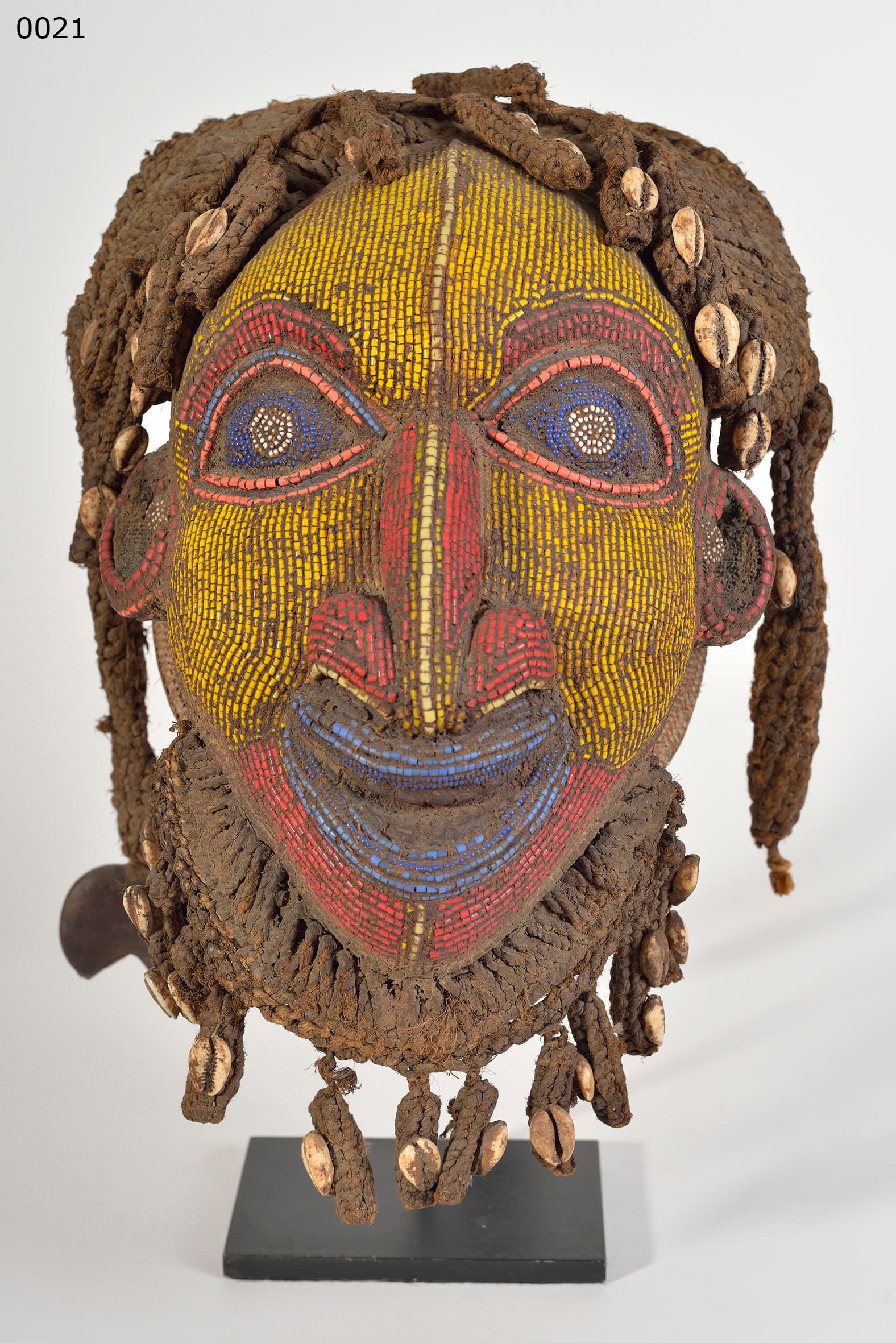
mask (covered with beads - shells on cloth)
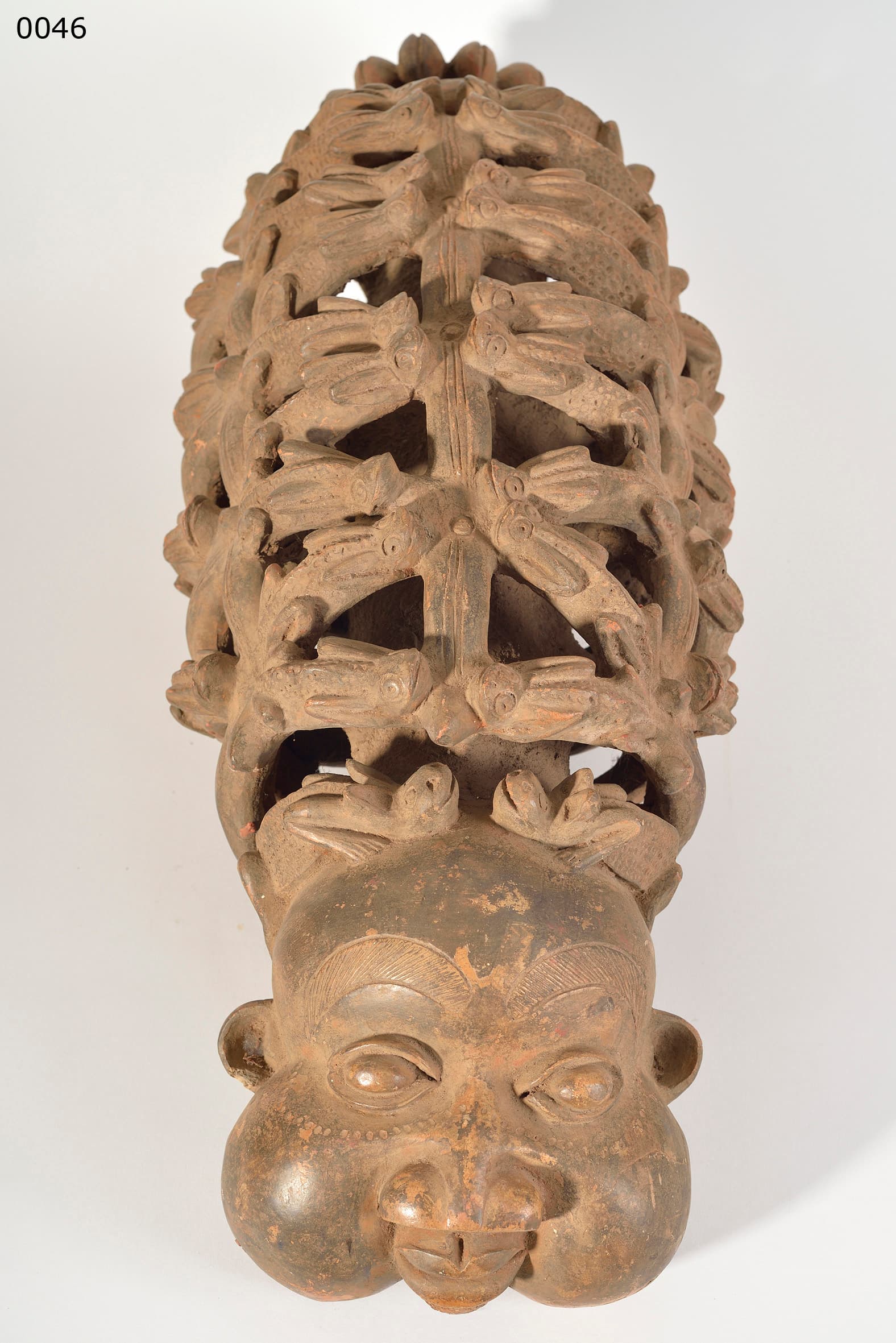
prestige pipe head
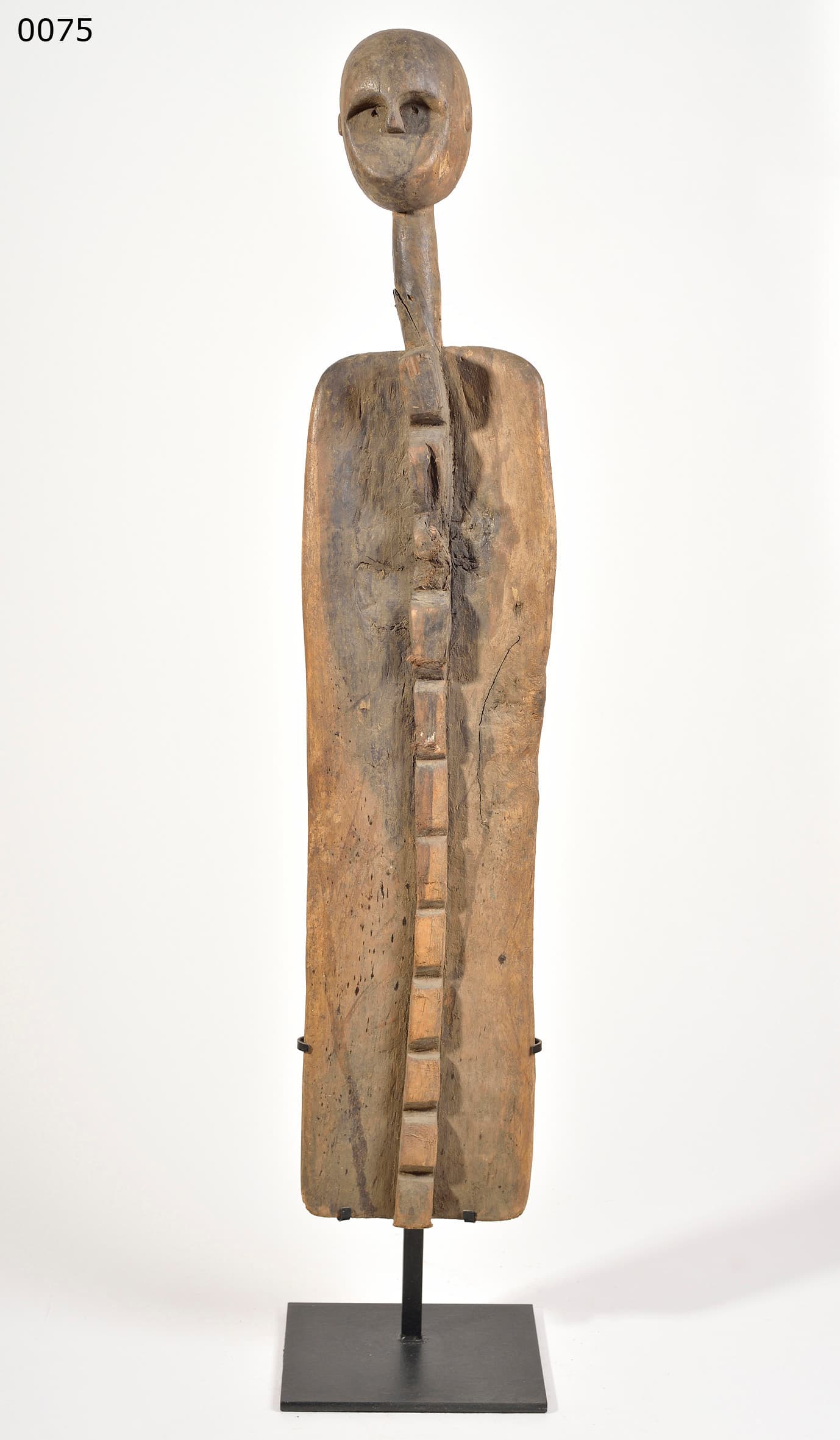
rare friction instrument