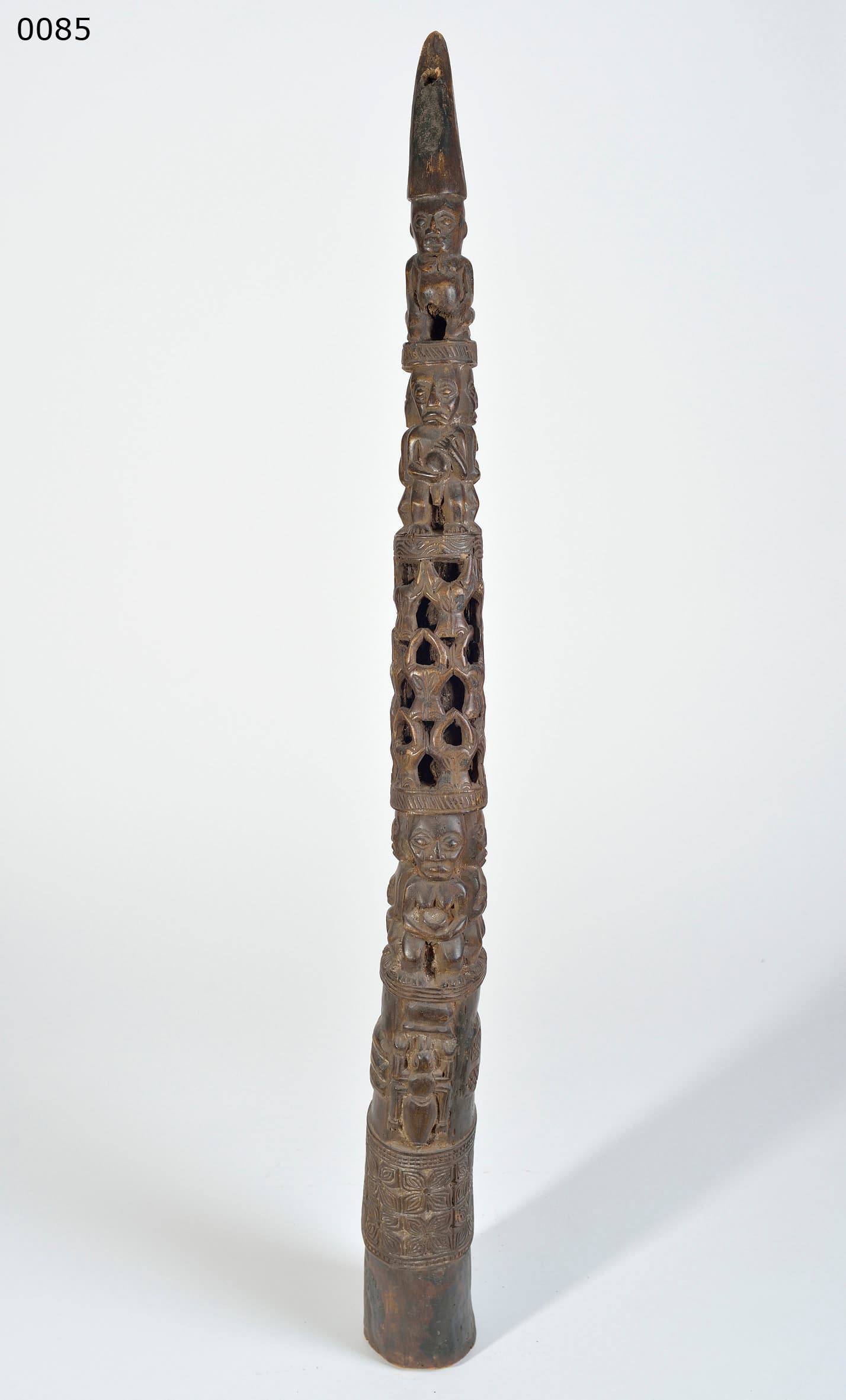
An elongated stone from the Mayap Chiefdom, shaped as a vague, abstracted figure with rounded bosses for eyes and body parts.
1. Form and Carving
The stone is an upright, elongated block with rounded edges. Its upper end forms a head with a round, raised boss for an eye, and further rounded bosses and curving ridges suggest face, arms and body in a very reduced way. The lower part is divided by shallow vertical grooves. There are no incised patterns; the form relies on the swelling volumes alone. The surface is grainy and pitted, with small glittering mineral particles.
2. Use and Context
According to the collection catalogue, such stones are vague portrayals in commemoration of ancestors. They were usually kept in their own places within the mostly extensive chieftain buildings.
3. Surface and Wear
The stone is grey-brown with warmer, reddish tones in the grooves. The carved forms are softened and rounded, and the surface has an even, slightly weathered look.
Summary
An elongated stone figure of the Mayap Chiefdom with softly rounded forms, a vague portrayal in commemoration of ancestors.
Written with AI assistance from the collection appraisal, object photography and our own research; editorially reviewed. Mistakes are possible — corrections are welcome. How we work →
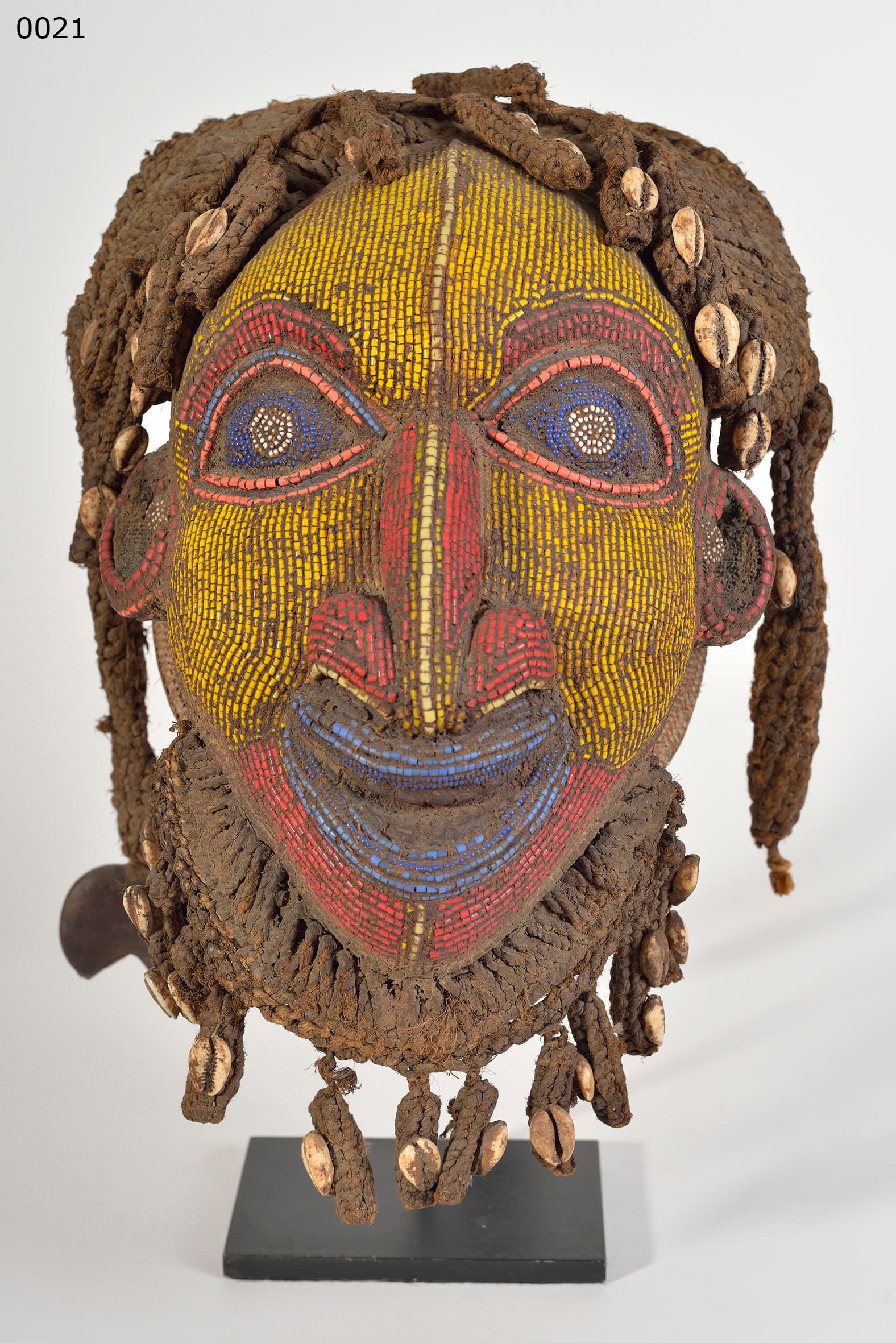
mask (covered with beads - shells on cloth)
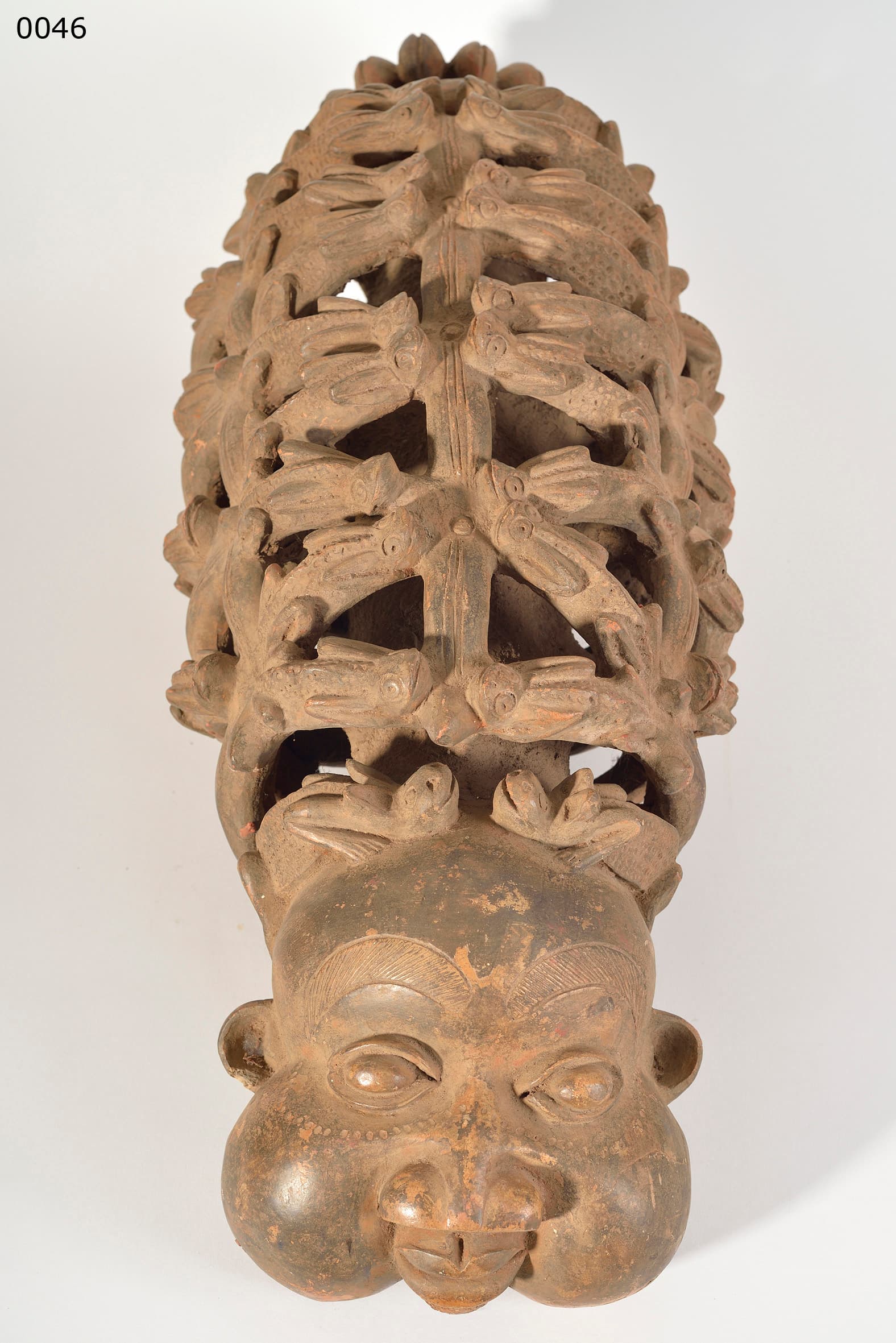
prestige pipe head
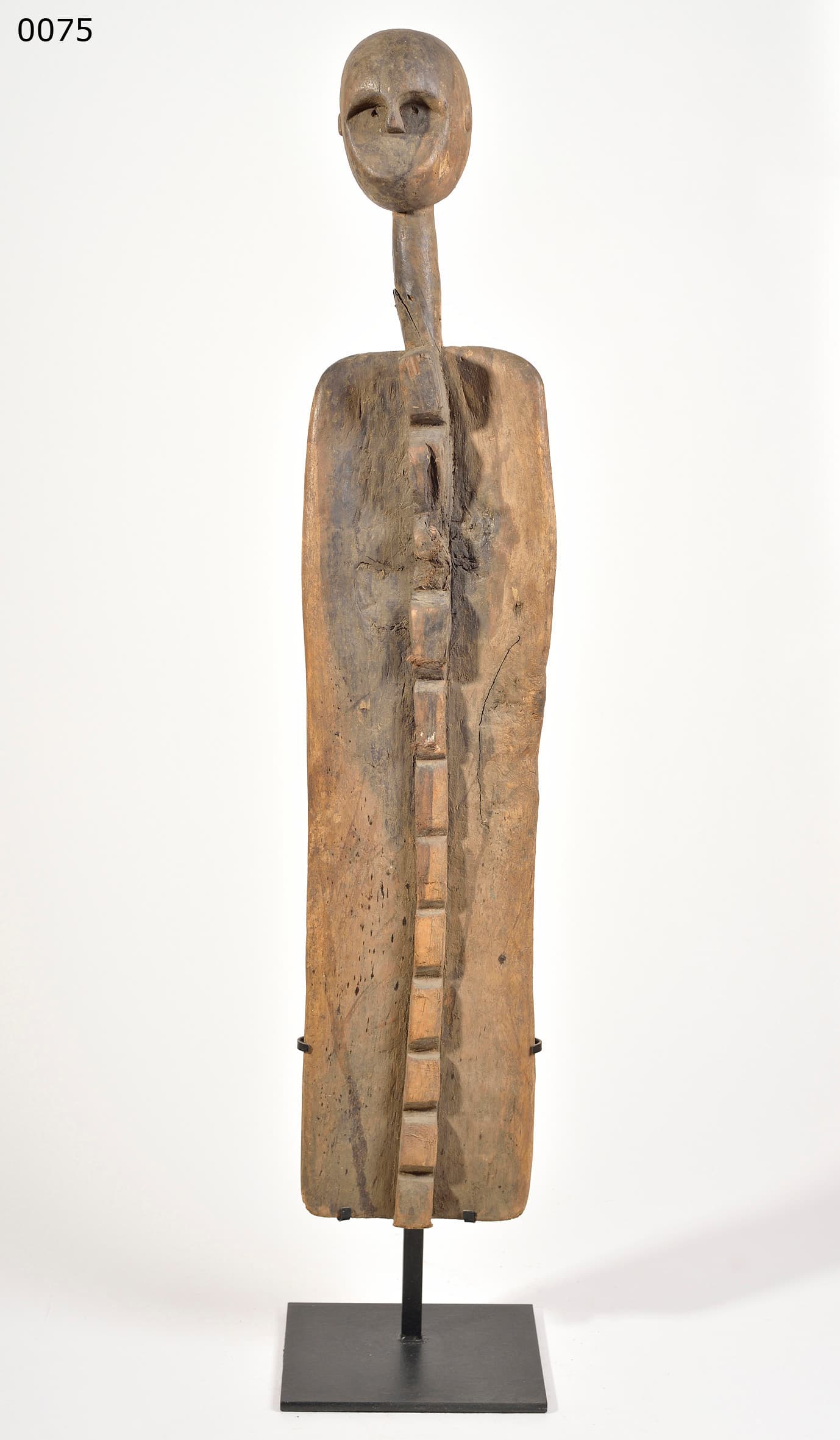
rare friction instrument