A dynamic set of five lost-wax cast brass figures, featuring a king and queen adorned with pipes and complex ornaments, a herald striking a double bell, a musician playing a traditional instrument, and a notable holding a palm wine calabash.
1. Aesthetic Style and Cultural Mobility
While found in the Mantoum Chiefdom (Bamum territory), the artistic execution of this group supports an attribution to a skilled Tikar caster. The Tikar are renowned throughout the Grassfields for their skill in cire perdue (lost-wax) casting. The aesthetic is lively and detailed; the caster successfully translated the textures of woven cloth, beaded necklaces, and intricate coiffures into permanent brass. The dynamic, striding posture of the herald and the animated expressions of the musicians break the rigid frontality often seen in African art, resulting in a tableau of notable vitality and realism.
2. Ritual Function and Secular Prestige
This figure group is understood to be devoid of religious or sacrificial function, serving as a statement of secular political power. Placed in the audience chamber of the Mantoum clan head, these figures likely served to impress visitors by manifesting the chief's wealth. The ensemble replicates a royal procession: the musician and the herald announcing the arrival of the "roi" (king) and "reine" (queen), followed by a high-ranking notary. They are instruments of visual diplomacy, suggesting that the chief possessed the resources to commission skilled Tikar artisans. Hornek rejects scholarly claims of ritual or sacrificial treatment of such pieces.
3. Patina, Material Weathering, and Surface Characteristics
The brass figures display an unpolished historical patina. The deep recesses of the complex ornamentation hold dark oxidation and remnants of the original clay casting core, compatible with indigenous pre-industrial manufacture. The smooth, raised surfaces exhibit a warm, golden-brown sheen consistent with dusting and handling in the royal reception room. The lack of sacrificial encrustations is compatible with their documented history as prestige display objects rather than altar fetishes.
Summary
This brass ensemble is a significant example of African metallurgy and a fascinating document of cross-cultural artistic exchange between the Tikar and Bamum. It is a refined representation of secular royal pageantry and Grassfields political ambition.
Written with AI assistance from the collection appraisal, object photography and our own research; editorially reviewed. Mistakes are possible — corrections are welcome. How we work →
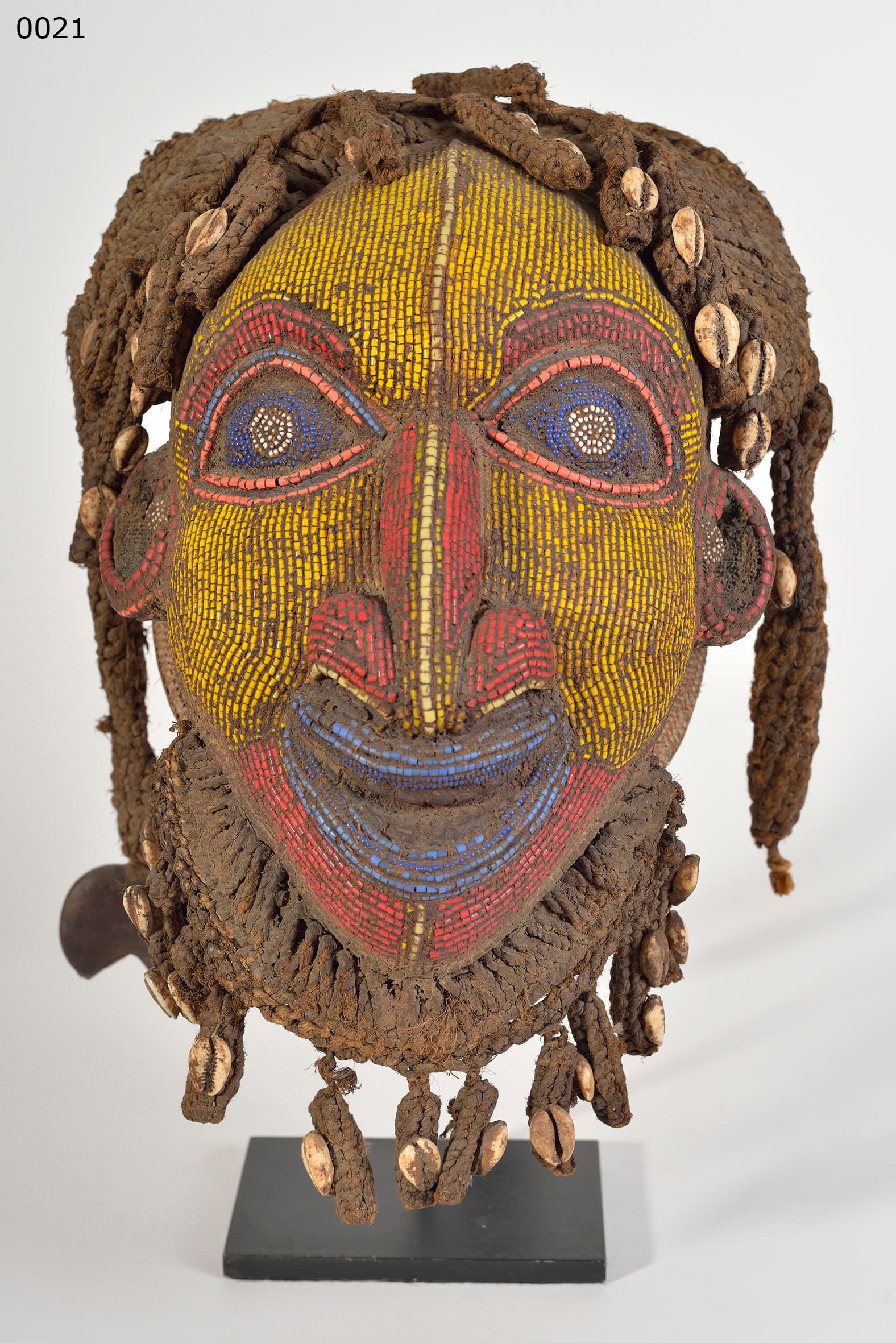
mask (covered with beads - shells on cloth)
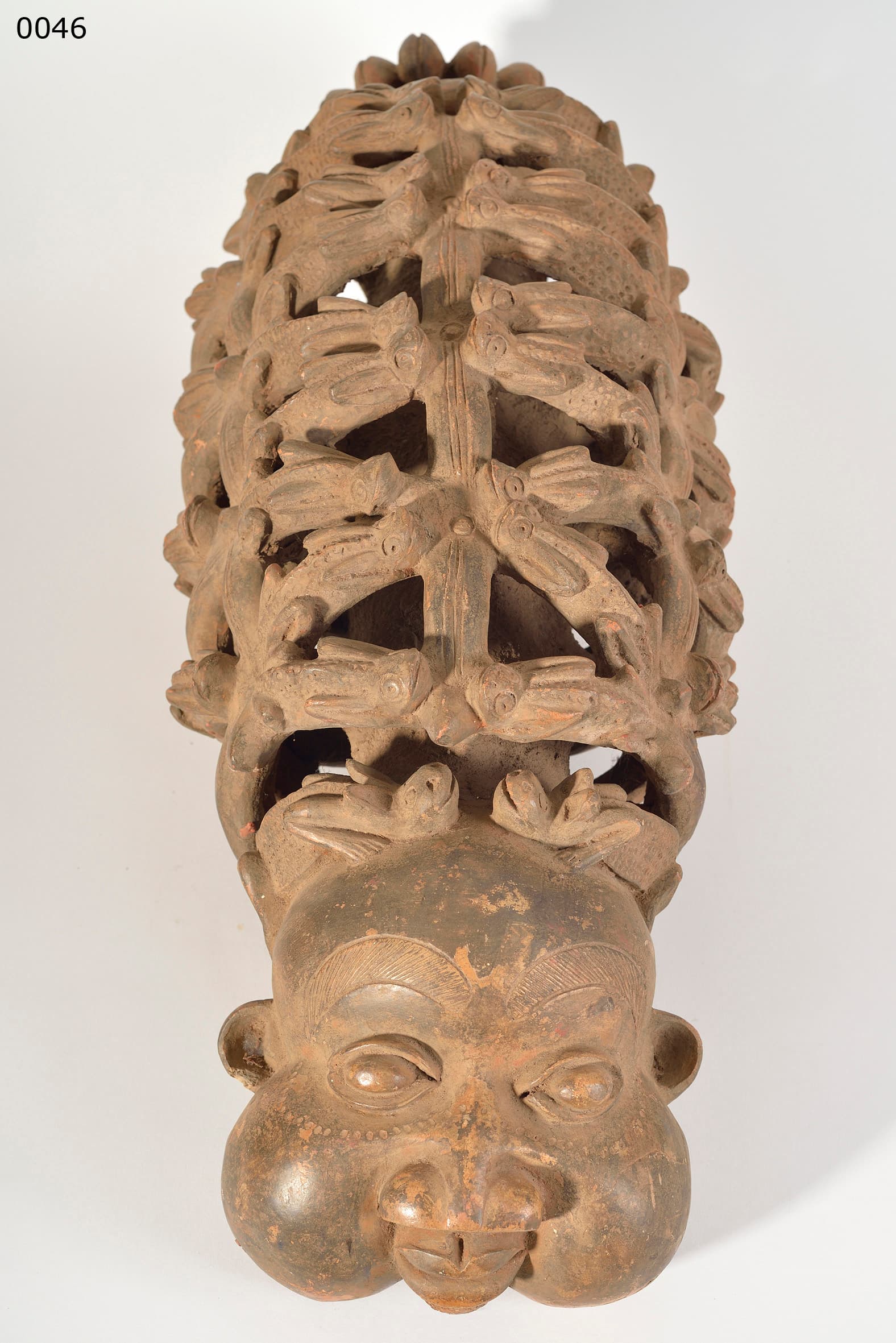
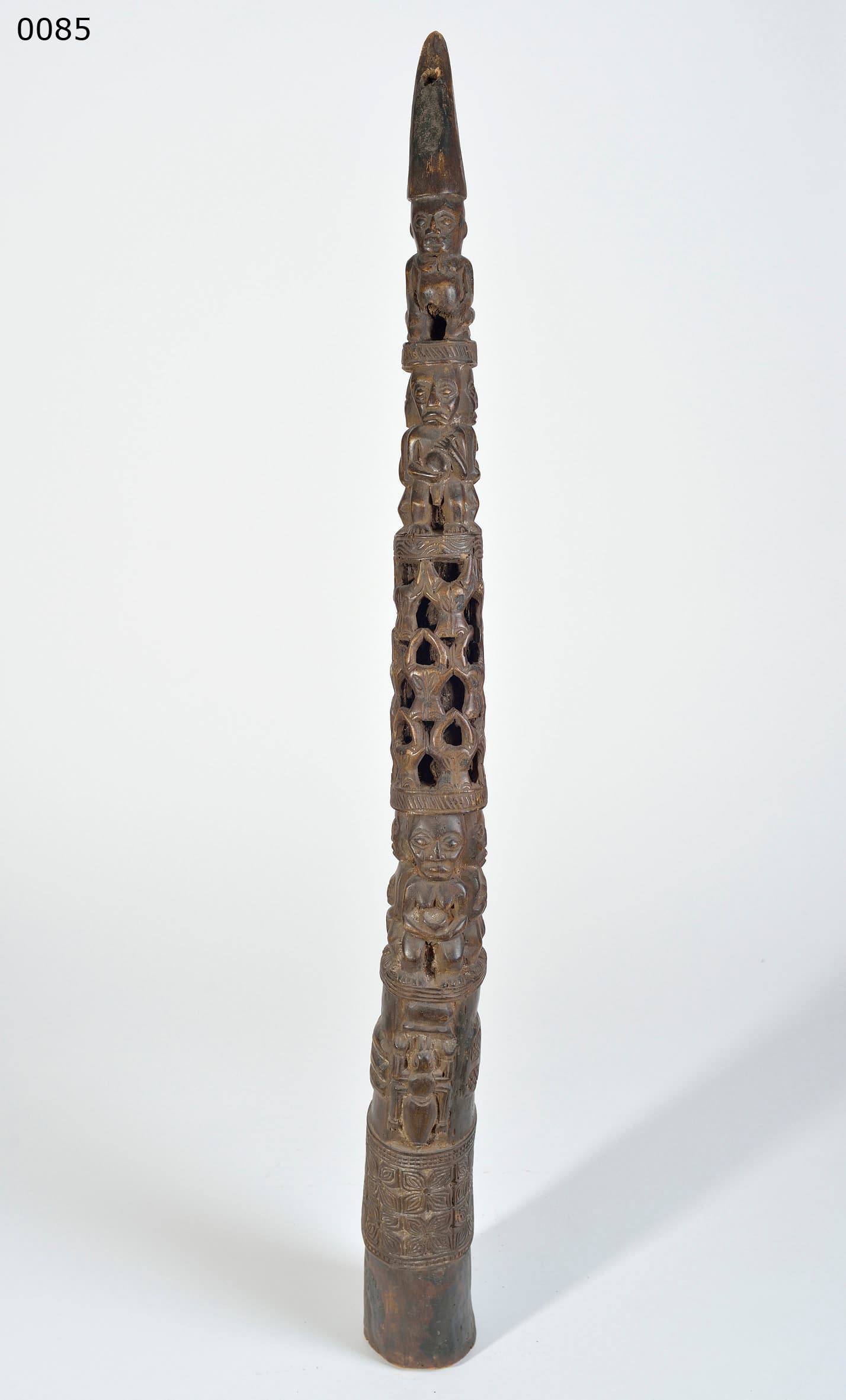
prestige pipe head
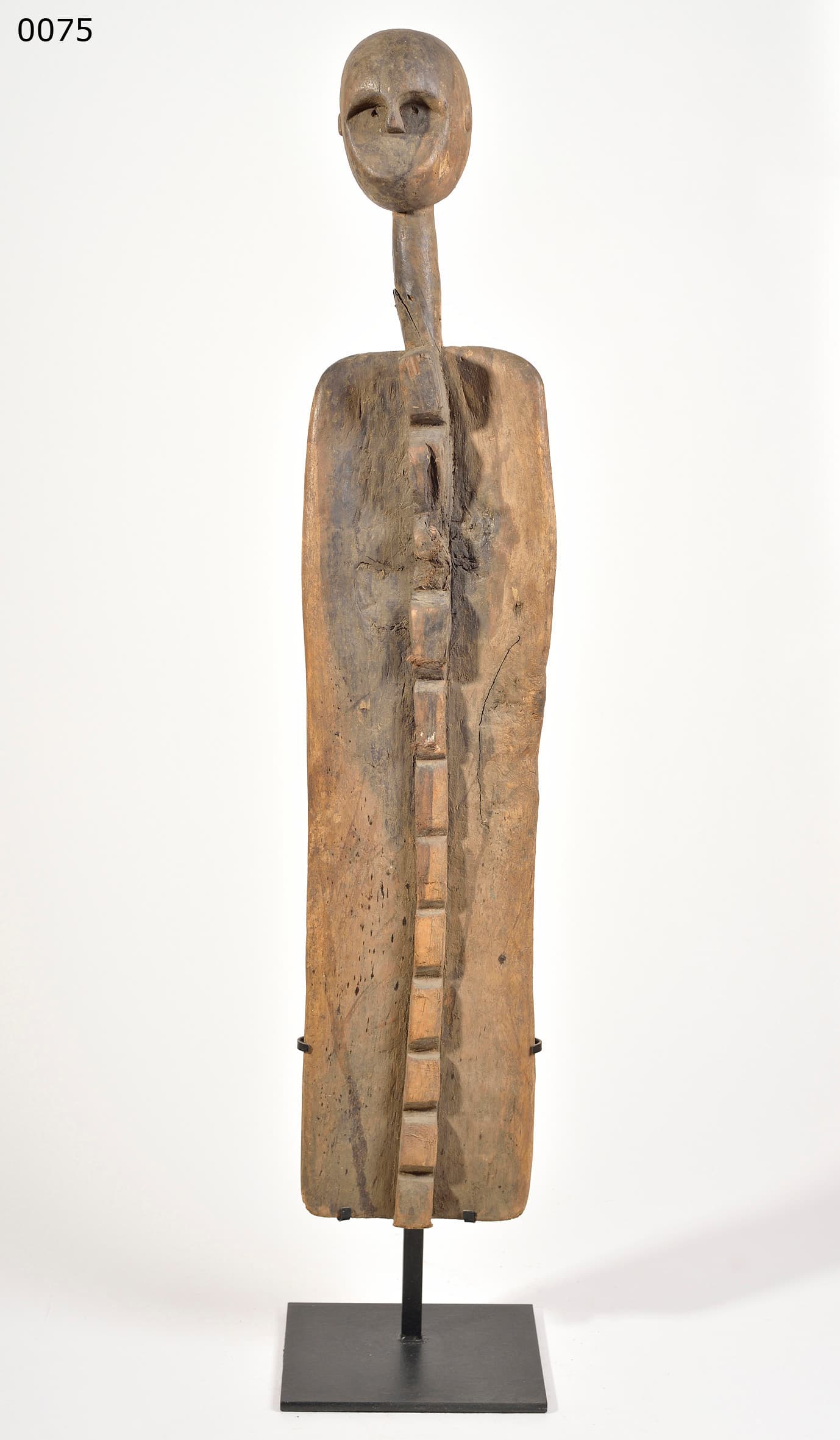
rare friction instrument