A highly expressive copper-alloy cast figure originating from the Bamun people of the Cameroon Grasslands. Produced using the traditional lost-wax casting technique, the sculpture depicts a high-ranking ancestor or notable, serving as a prestige object that reflects the complex social hierarchy and artistic sophistication of the historical Bamun kingdom.
1. Aesthetic Style and Iconography
The figure is characterized by its lively and expressive facial features, which are intended to evoke the memory and presence of a specific ancestor. It features a rather unusual headgear and an almost European-looking beard, elements that highlight the idiosyncratic artistic vocabulary of the Foumban workshop tradition. The inclusion of a typical chief's pearl necklace further underscores the subject's elevated status within the chiefdom.
2. Ritual Function and Prestige Attributes
In the context of Bamun courtly life, specific attributes denote social superiority and wealth. The figure holds a drinking horn in its right hand and a palm wine calabash in its left. These items are deeply associated with hospitality, ritual libations, and the prerogatives of notables and royalty in the Grassfields. As a commemorative portrait, the casting functions as a visual anchor for ancestral veneration and the perpetuation of lineage prestige.
3. Material Characteristics, Casting, and Patina
Cast in a copper alloy (brass) via the lost-wax (cire perdue) process, the figure exhibits the intricate detailing characteristic of Bamun metallurgy. The surface displays a varied, oxidized patina consistent with aged brass, with darker accumulations in the recessed areas of the cast pearl necklace, beard, and headgear. The smooth, tactile wear on the prominent features suggests historical handling and traditional use. The casting remains structurally sound, demonstrating the high technical proficiency of the region's specialized artisan caste.
Summary
This brass ancestral figure is a significant example of Bamun prestige metalwork. Through its precise lost-wax casting, specific status attributes—such as the drinking horn, calabash, and chief's necklace—and expressive physiognomy, it serves as a compelling commemorative representation of a socially superior notable within the historical Cameroon Grasslands.
Written with AI assistance from the collection appraisal, object photography and our own research; editorially reviewed. Mistakes are possible — corrections are welcome. How we work →
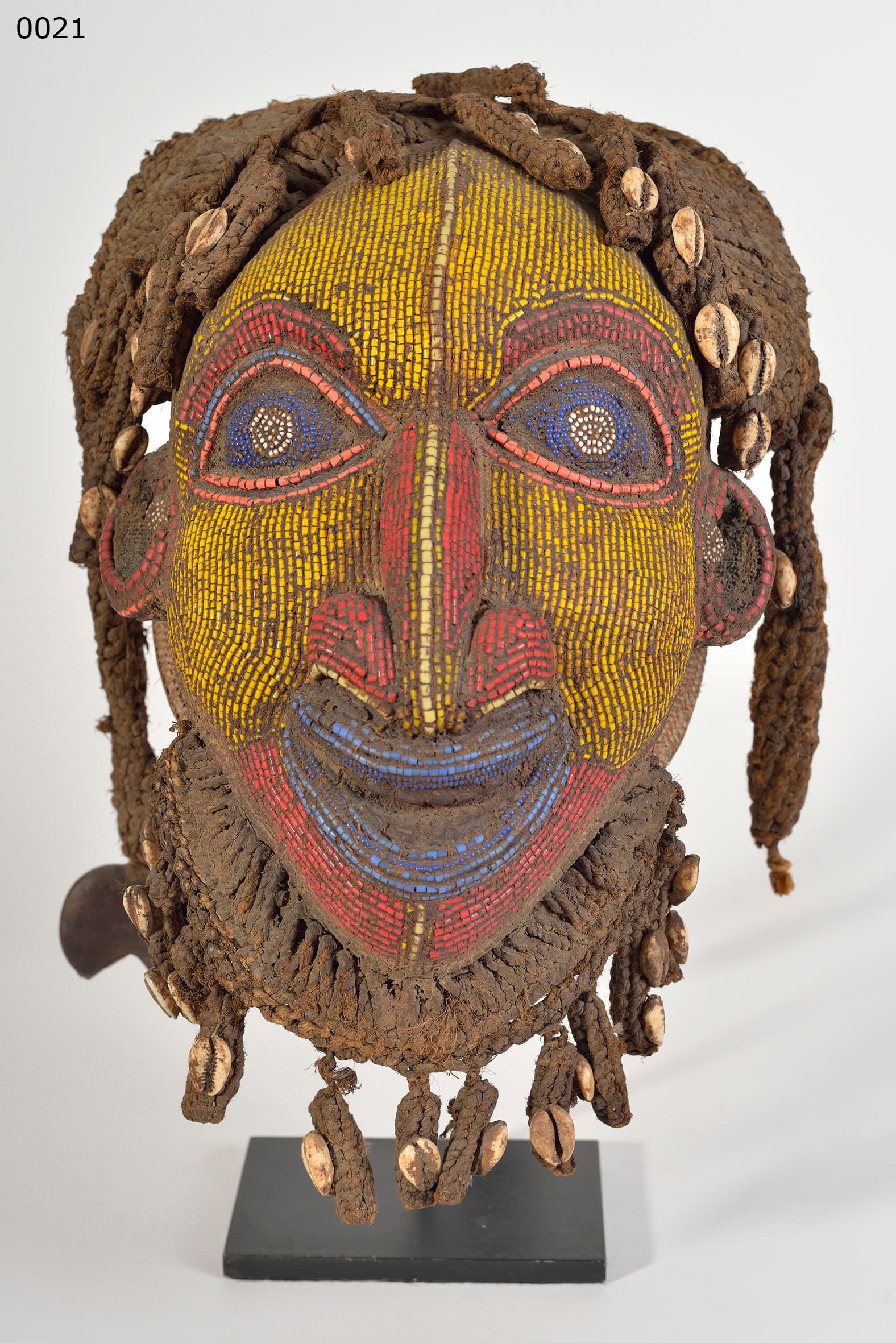
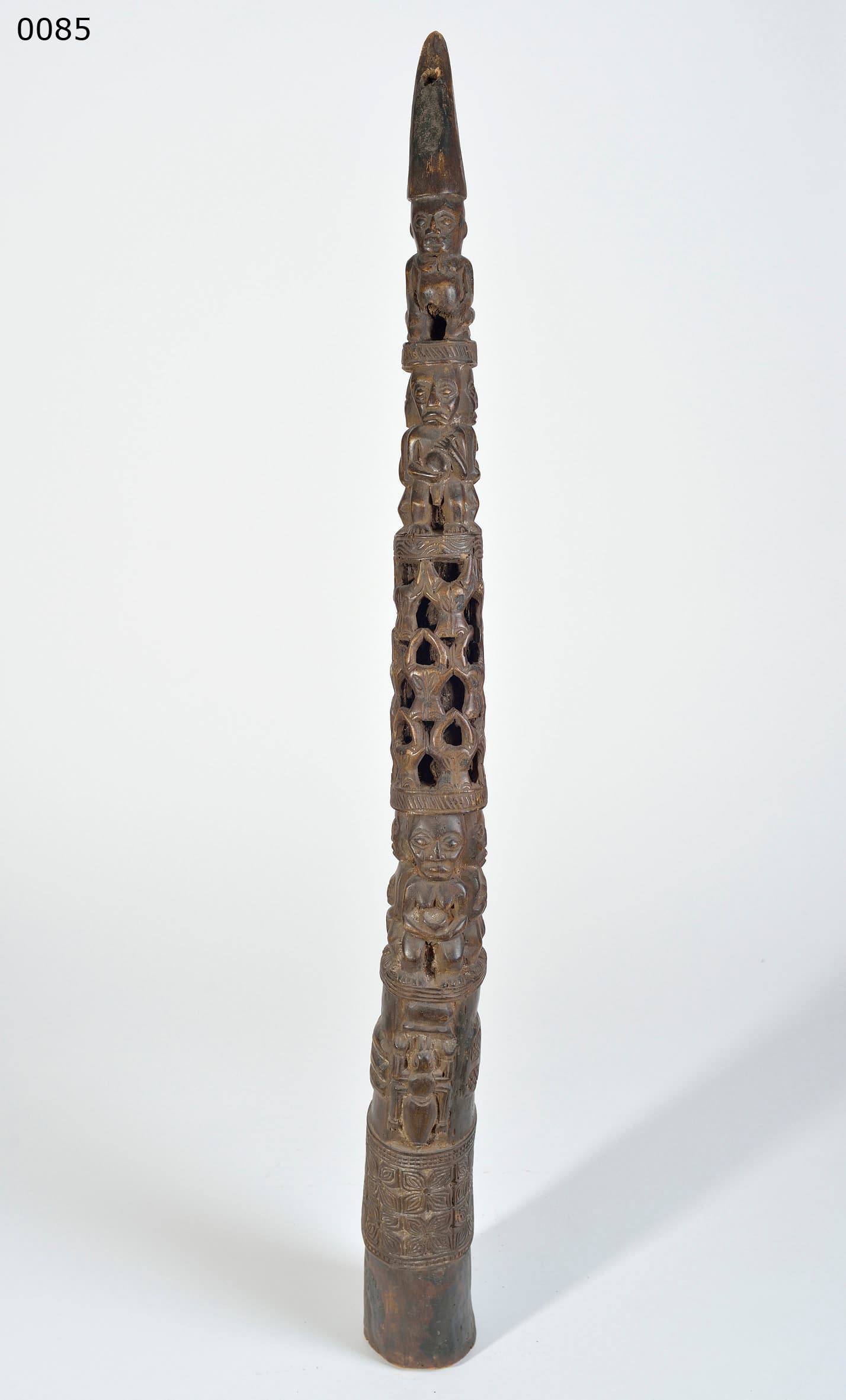
mask (covered with beads - shells on cloth)
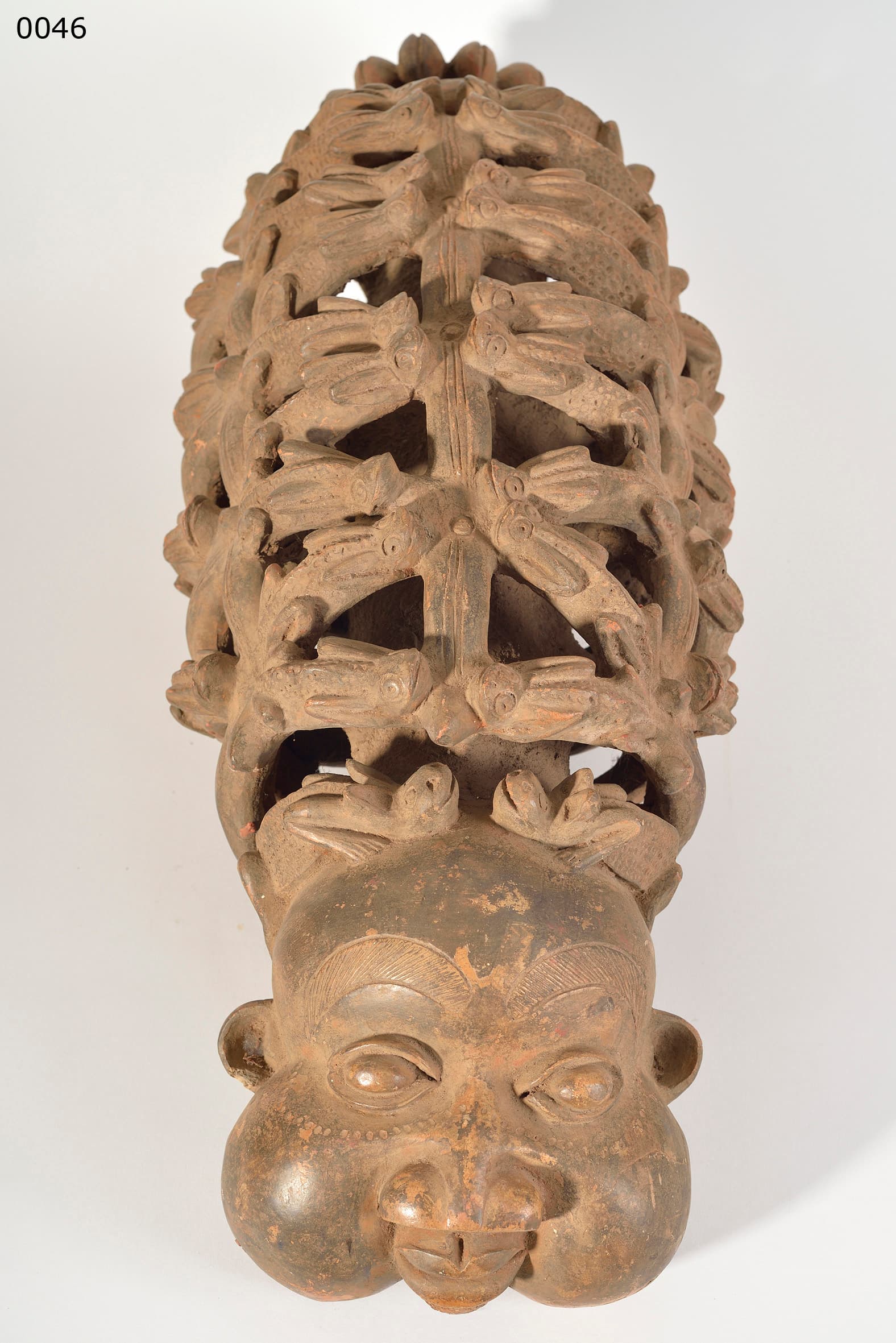
prestige pipe head
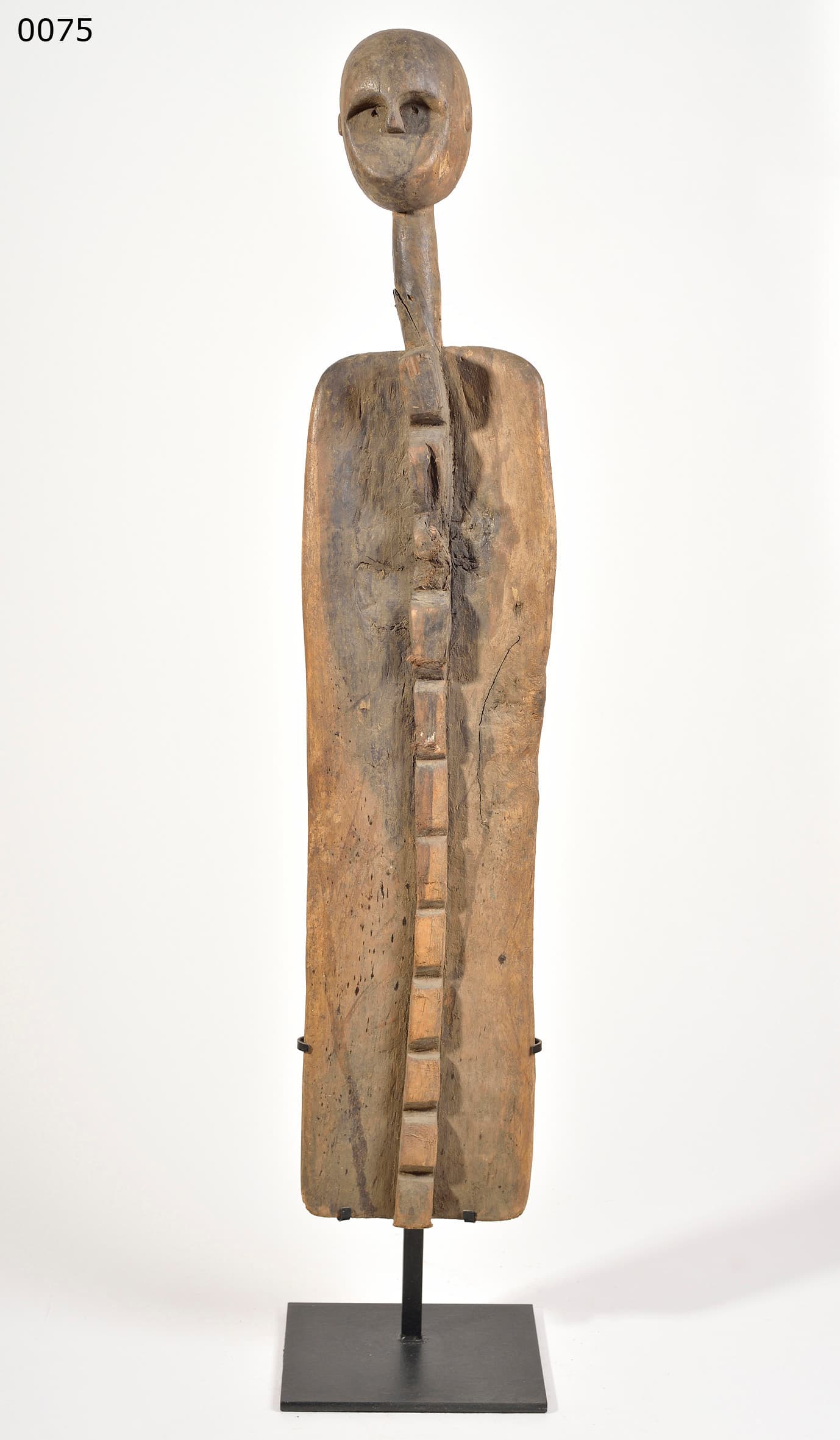
rare friction instrument