A figural scene in wood and straw from the Madiembi Chiefdom, head of the Nji Kouoton Chiefdom, in the Sultanate of Foumban, Cameroon. It shows a scene from daily life in the Cameroon grasslands.
1. Subject and Materials
The piece is made of wood and straw. It shows a wooden hut of square plan that is currently being covered with straw. The roof structure is carried by posts carved as human figures.
2. Meaning and Use
According to the collection catalogue, the hut is not merely a dwelling but a building from the clan chief's estate. Carved figures as roof supports are usually found only on ceremonial houses reserved for men, where palm wine is drunk in a ritual way. The catalogue also considers that it could have been the chief's former prestige room, the hut of one of his wives, probably his favourite, or the treasure house in which the ritually valuable objects of the chiefdom are kept.
This object was itself stored in such a treasure house together with many other artefacts. The catalogue explains that a display figure fulfils its task simply by being placed, for example in the chief's audience room.
Summary
A model hut with figural roof posts, made as a display piece for a chief's house and kept in a chiefdom treasure house.
Written with AI assistance from the collection appraisal, object photography and our own research; editorially reviewed. Mistakes are possible — corrections are welcome. How we work →
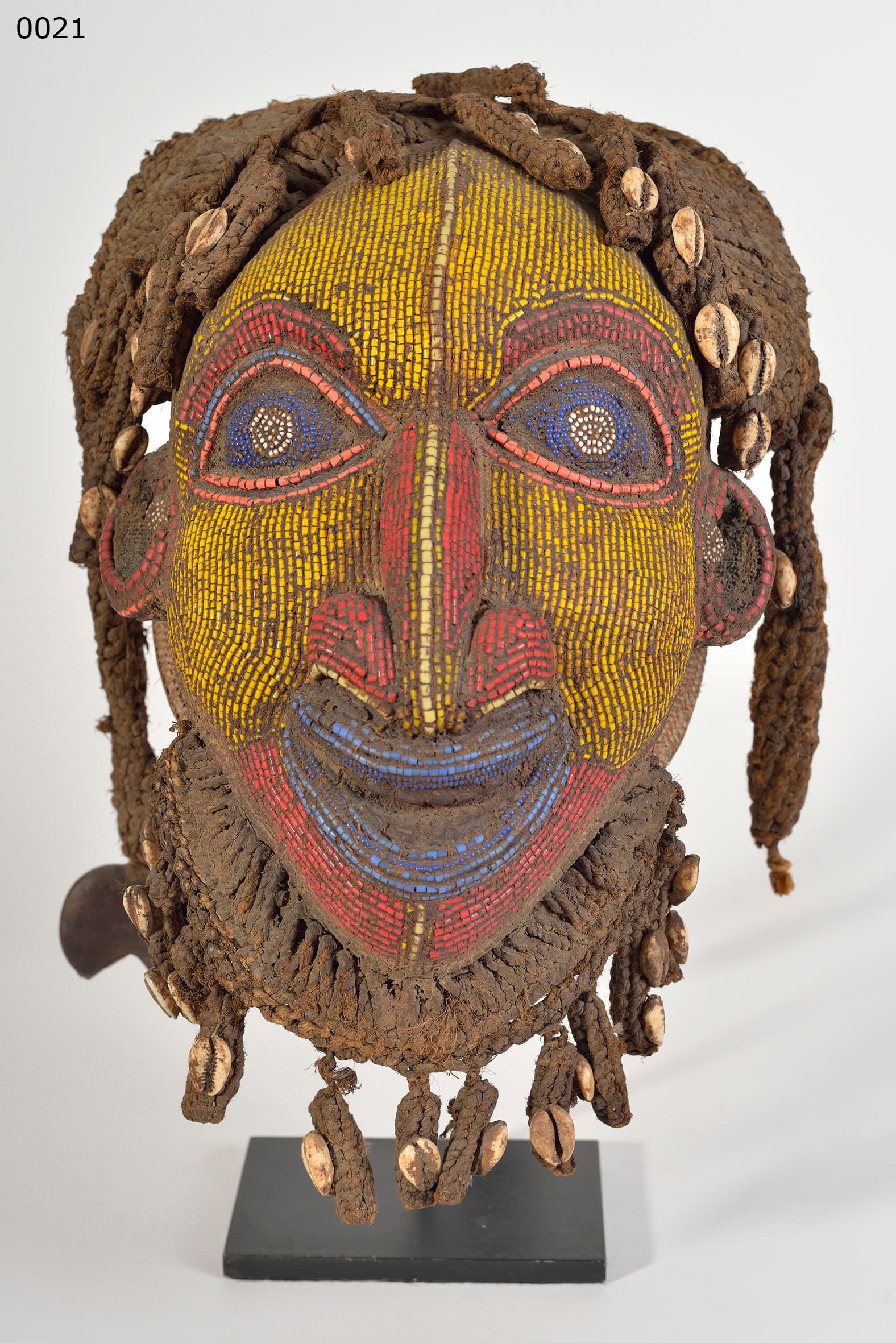
mask (covered with beads - shells on cloth)
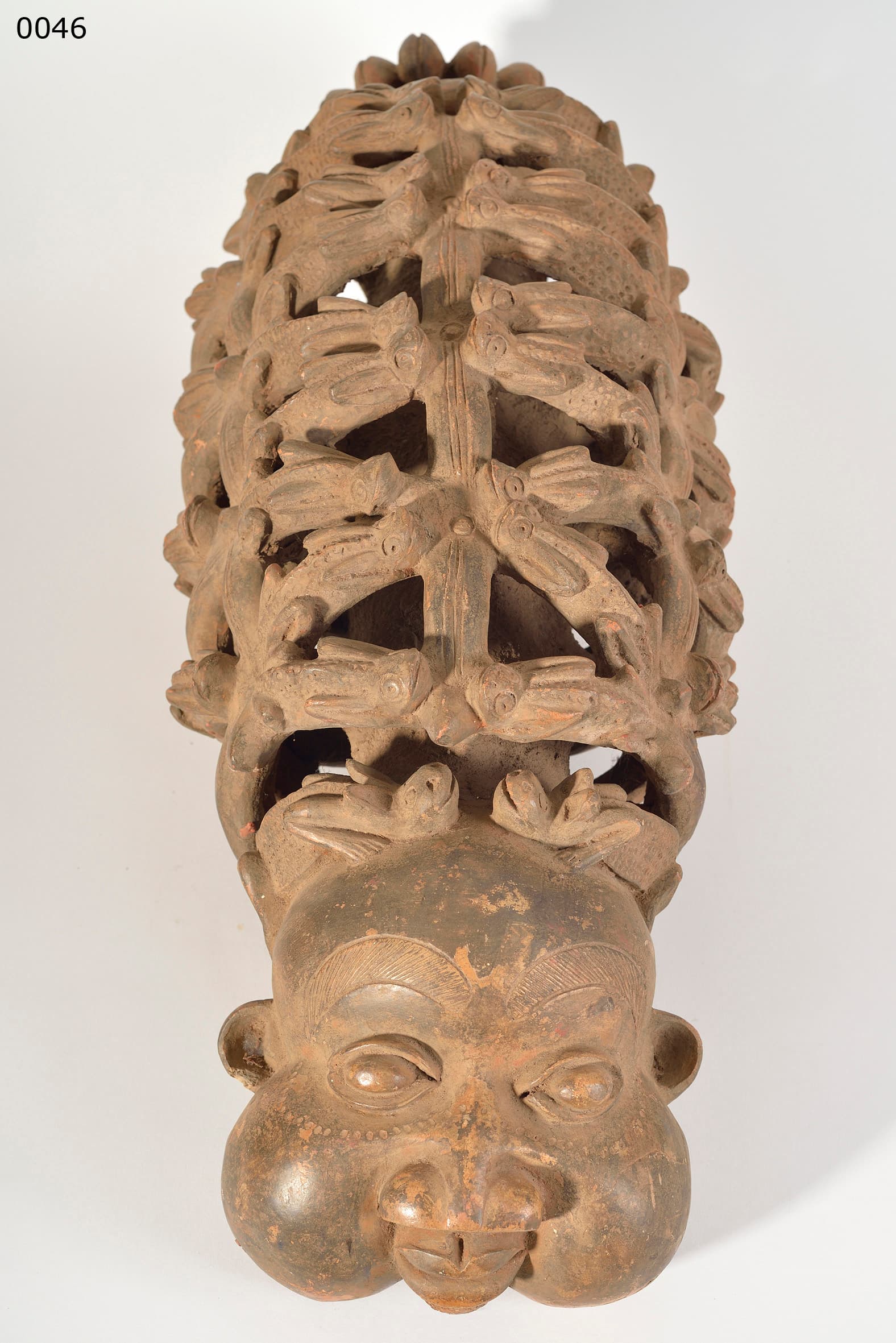
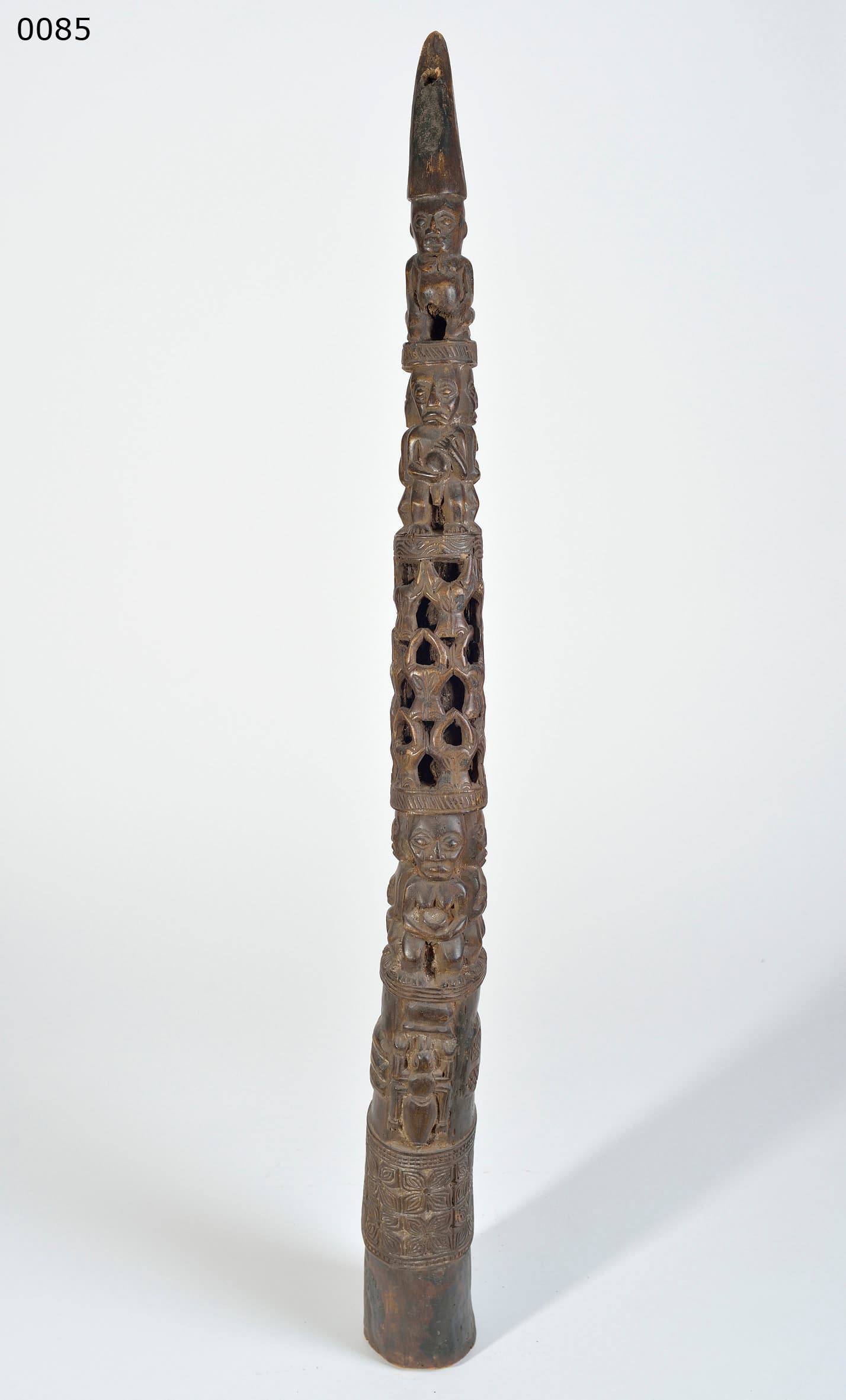
prestige pipe head
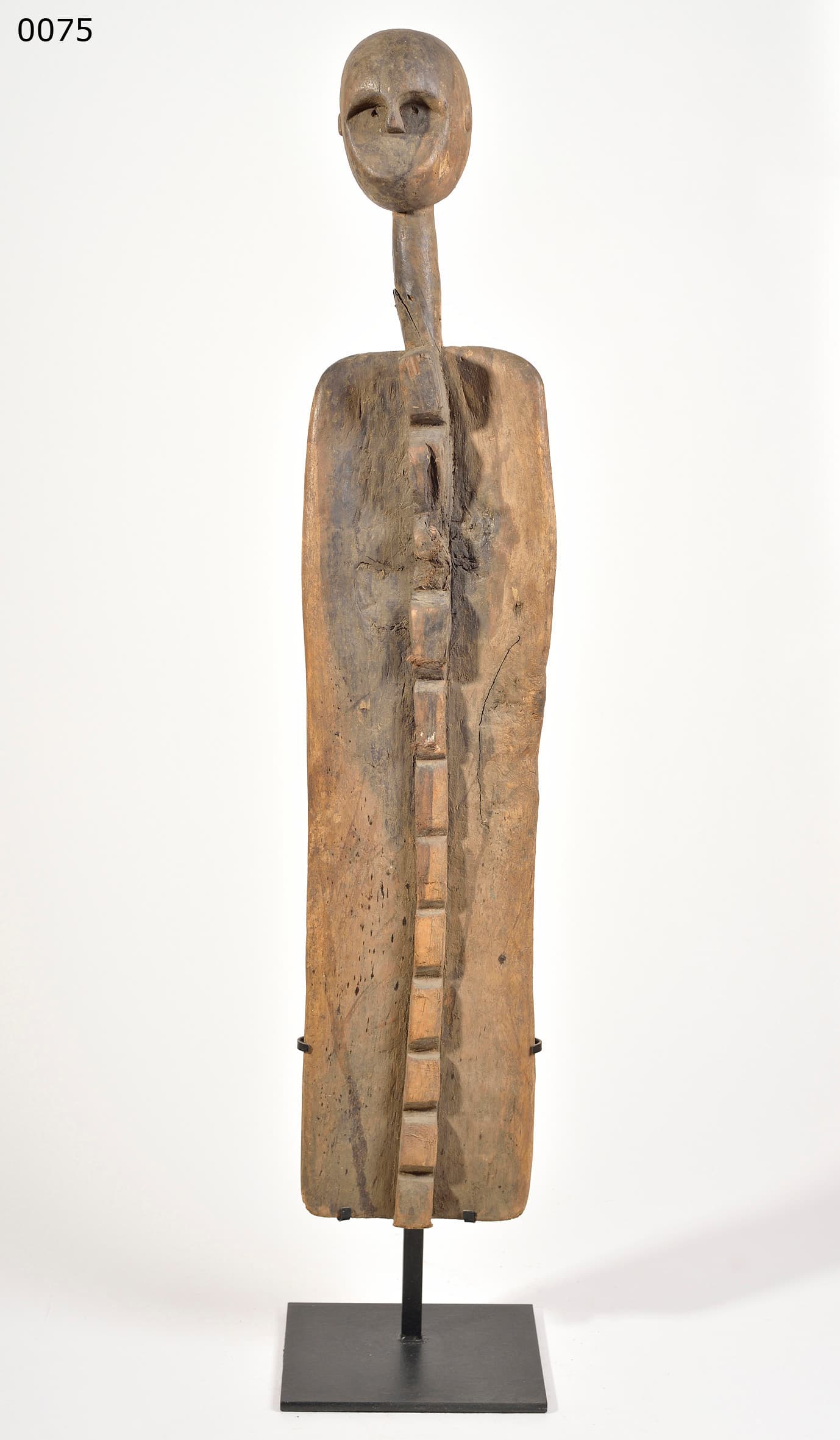
rare friction instrument