An abstracted rooster figure from the Madiembi chiefdom, whose head also leads the Nji Kouoton chiefdom, in the Sultanate of Foumban, Cameroon. It stands for the chief's claim to power over those he rules.
1. Meaning
The collection catalogue reads the rooster as a plain image of authority: as a rooster holds power over his hens, so the chief rules over his tribesmen and subjects. The figure is meant to convey this relationship between chief and subjects in a way anyone can grasp. Its ritual significance, the catalogue notes, is expressed in the elaborate design of the piece.
2. The Cavity
On the back of the figure there is a closable opening to a small cavity. It presumably held magical ingredients that lent strength to the figure and, in a figurative sense, to the chief himself. This hidden space ties the sculpture to the ritual side of chieftaincy, beyond its role as a sign of rank.
3. Context
Dance hats with similar representations of a cock, reserved for the clan family, were also found in the treasure house of this chiefdom. From this the catalogue concludes that the rooster symbolism carried great importance for the chief.
Summary
An abstracted rooster figure from a Bamun chiefdom, standing for the chief's authority over his subjects and fitted with a closable cavity at the back.
Written with AI assistance from the collection appraisal, object photography and our own research; editorially reviewed. Mistakes are possible — corrections are welcome. How we work →
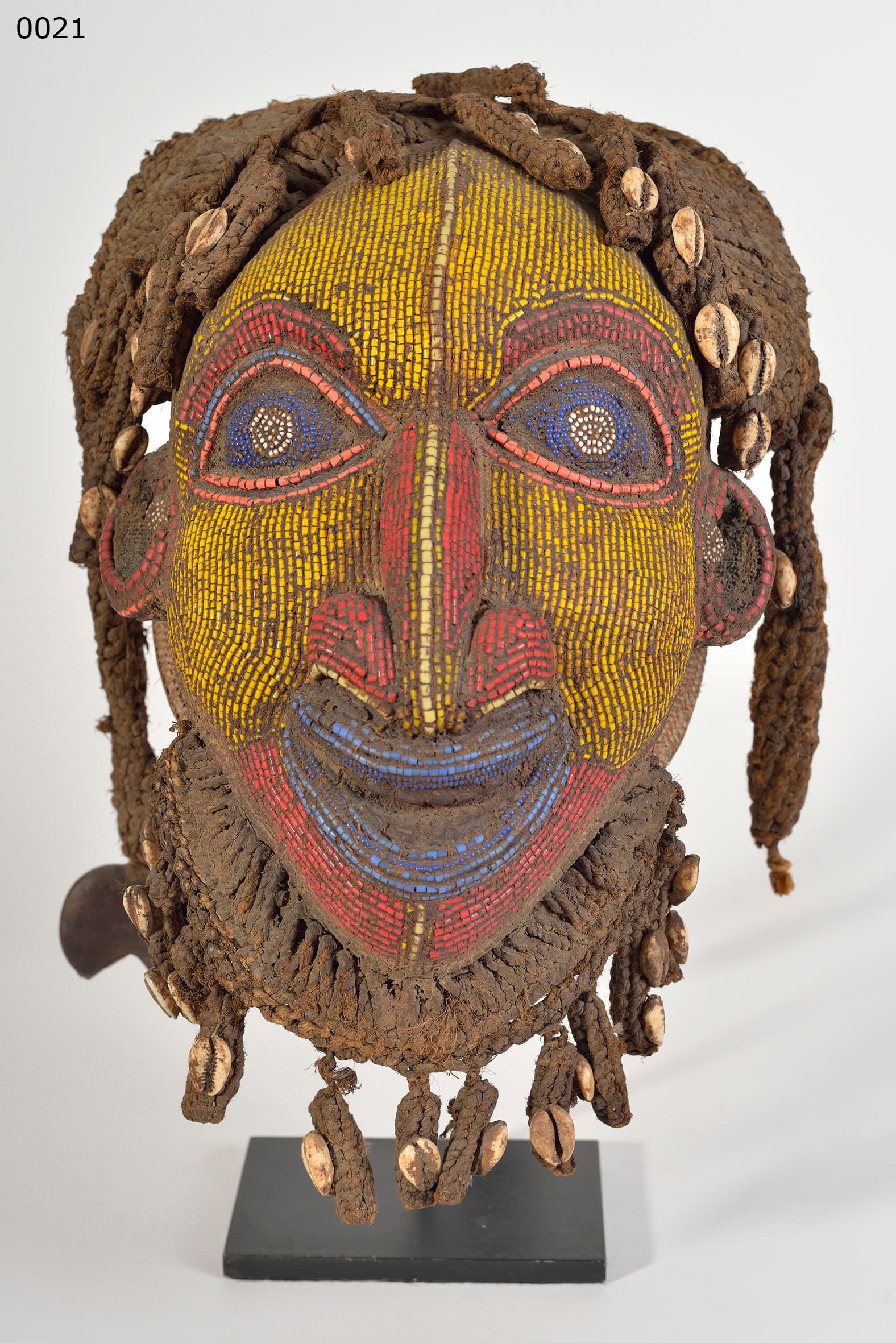
mask (covered with beads - shells on cloth)
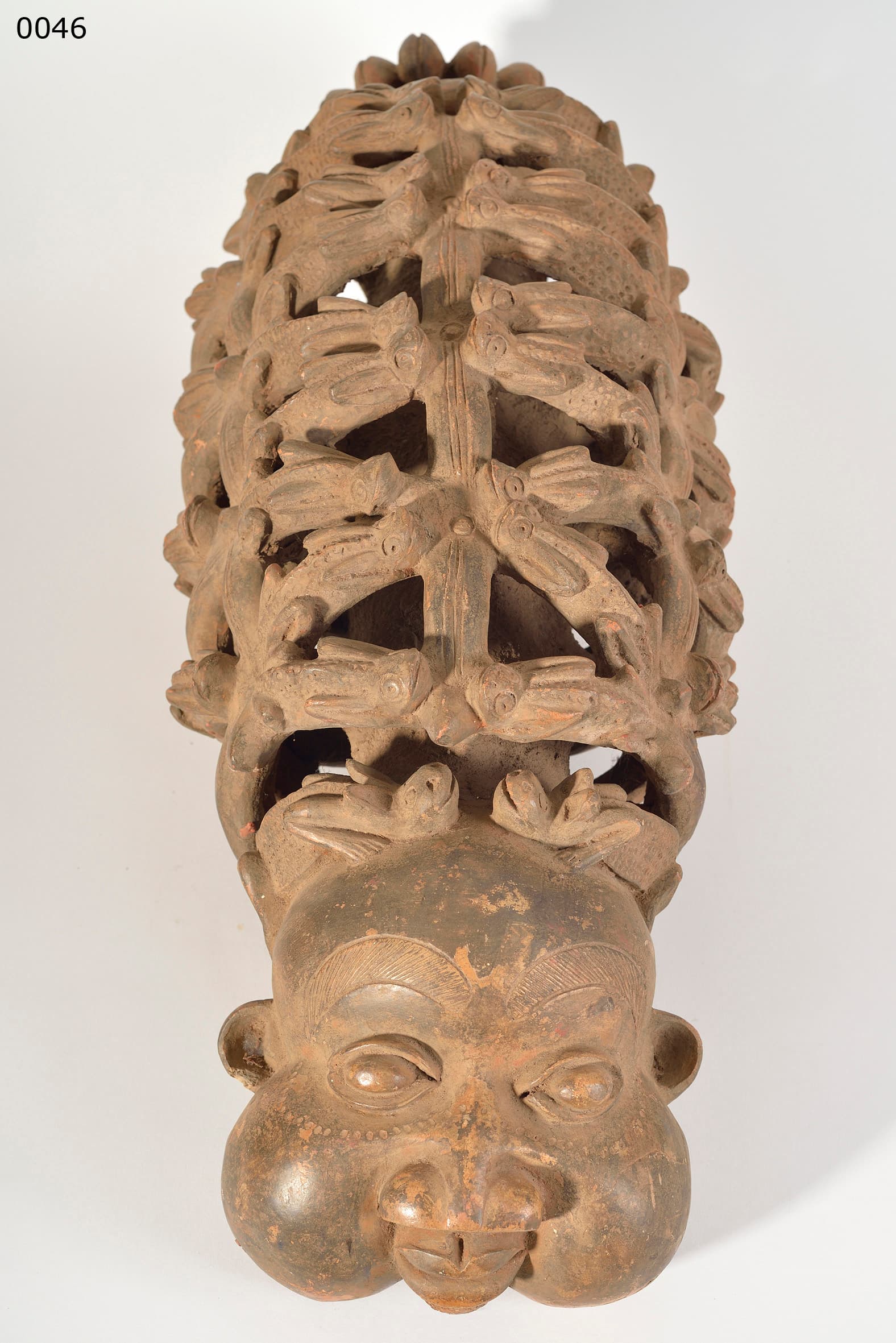
prestige pipe head
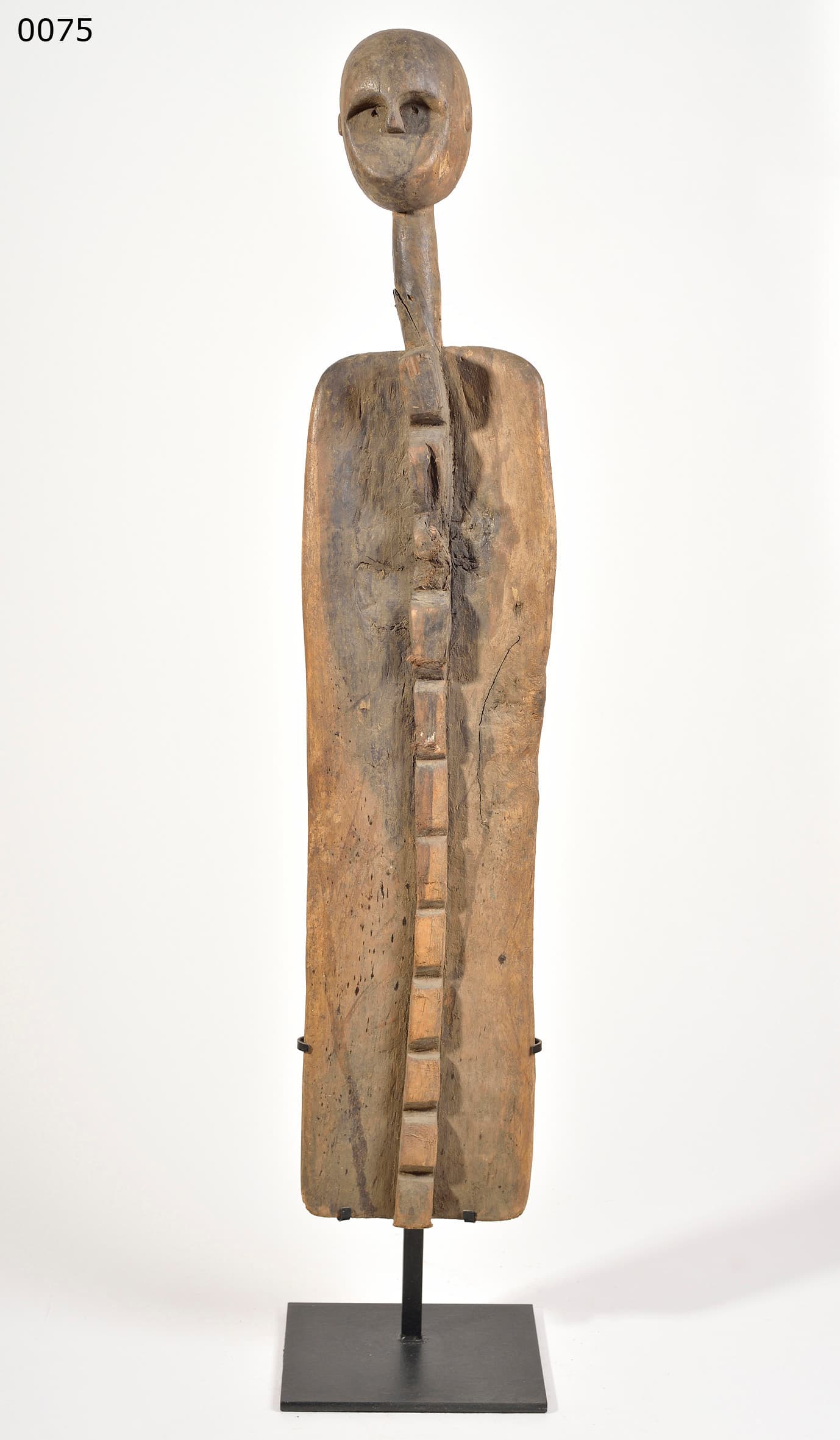
rare friction instrument