A cast mask from the Maram chiefdom in the Sultanate of Foumban, Cameroon, kept as the personal possession of the chief. Dancing with it was reserved for him alone.
1. Casting and Intent
According to the collection catalogue, the caster was evidently not concerned with finely worked detail. He aimed instead at a strong aura created through a certain coarse simplicity, which corresponds to the chief's claim to power. The mask is a cast object, and its effect rests on that deliberate restraint rather than on ornament.
2. Wear and Preparation
The catalogue notes casting defects and signs of wear. Because of these, the mask was underlaid with textiles and probably also covered on top with goatskin. This suggests that the piece was actively used and adapted over time, rather than kept only for display.
3. Use
The privilege of dancing with the mask belonged to the chief himself. Seen this way, the object is less a work of refined court metalwork than a direct expression of authority, made to be worn by the one person entitled to it.
Summary
A cast mask from a Bamun chiefdom, reserved for the chief's own dances, whose plain, forceful form was meant to project his power.
Written with AI assistance from the collection appraisal, object photography and our own research; editorially reviewed. Mistakes are possible — corrections are welcome. How we work →
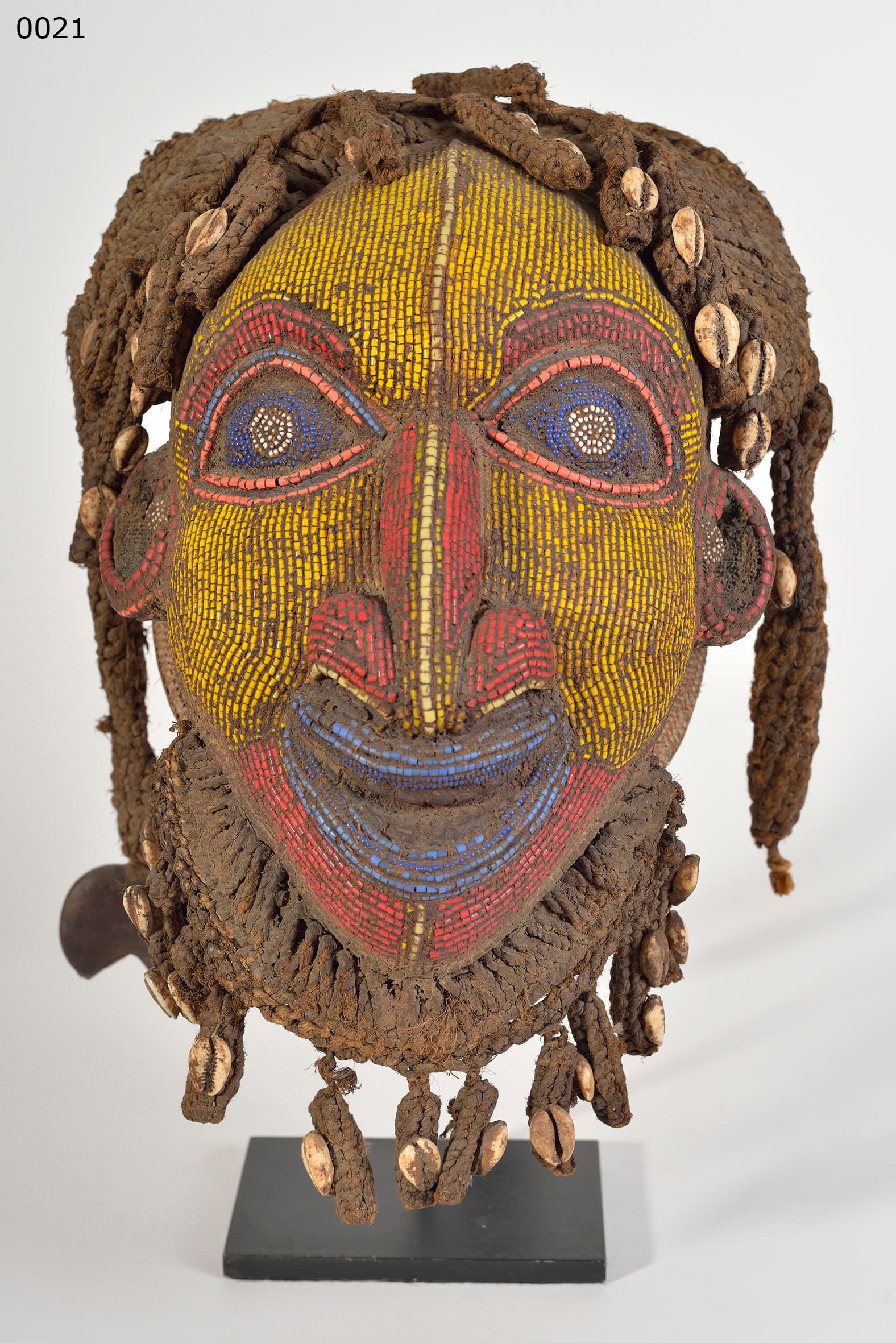
mask (covered with beads - shells on cloth)
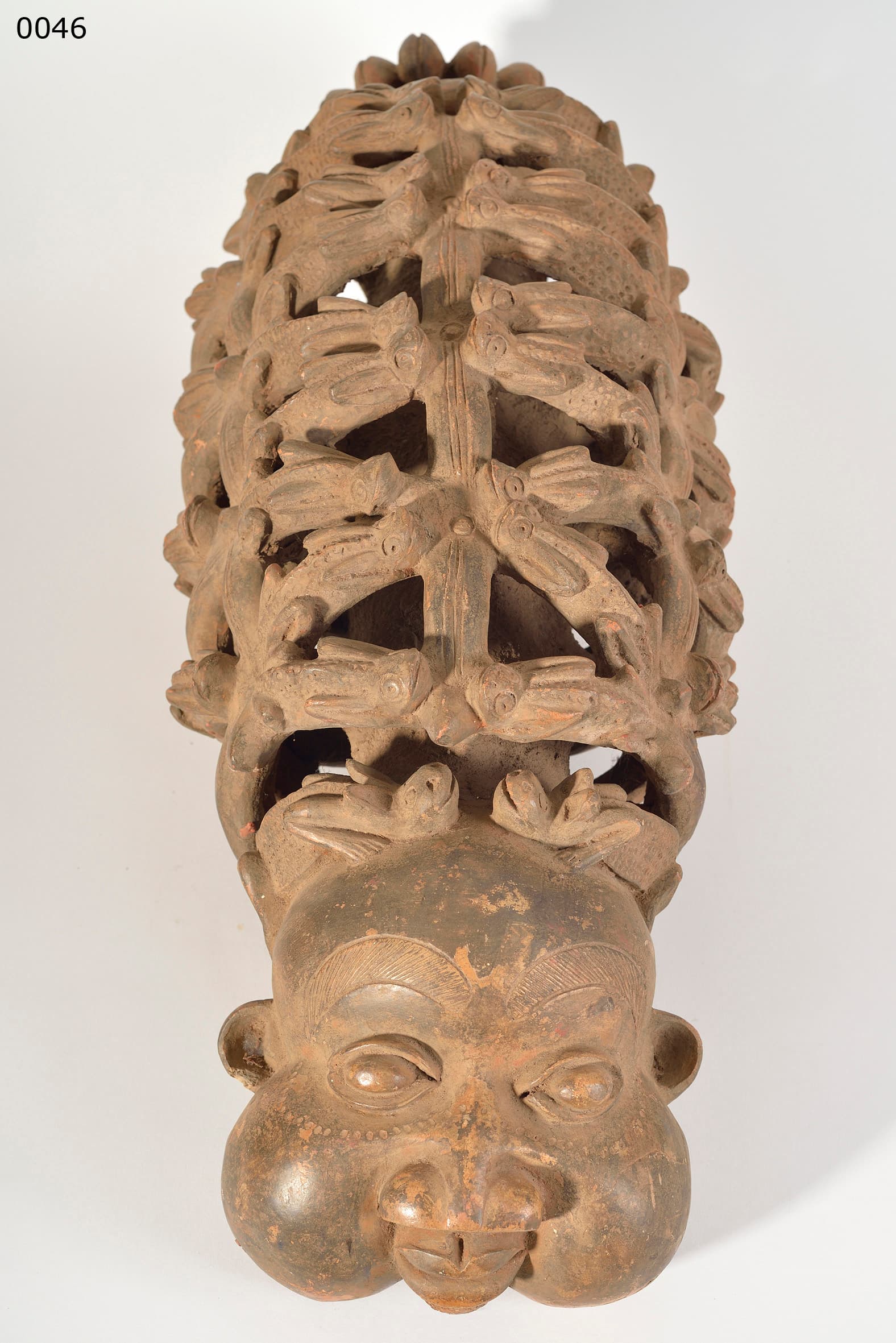
prestige pipe head
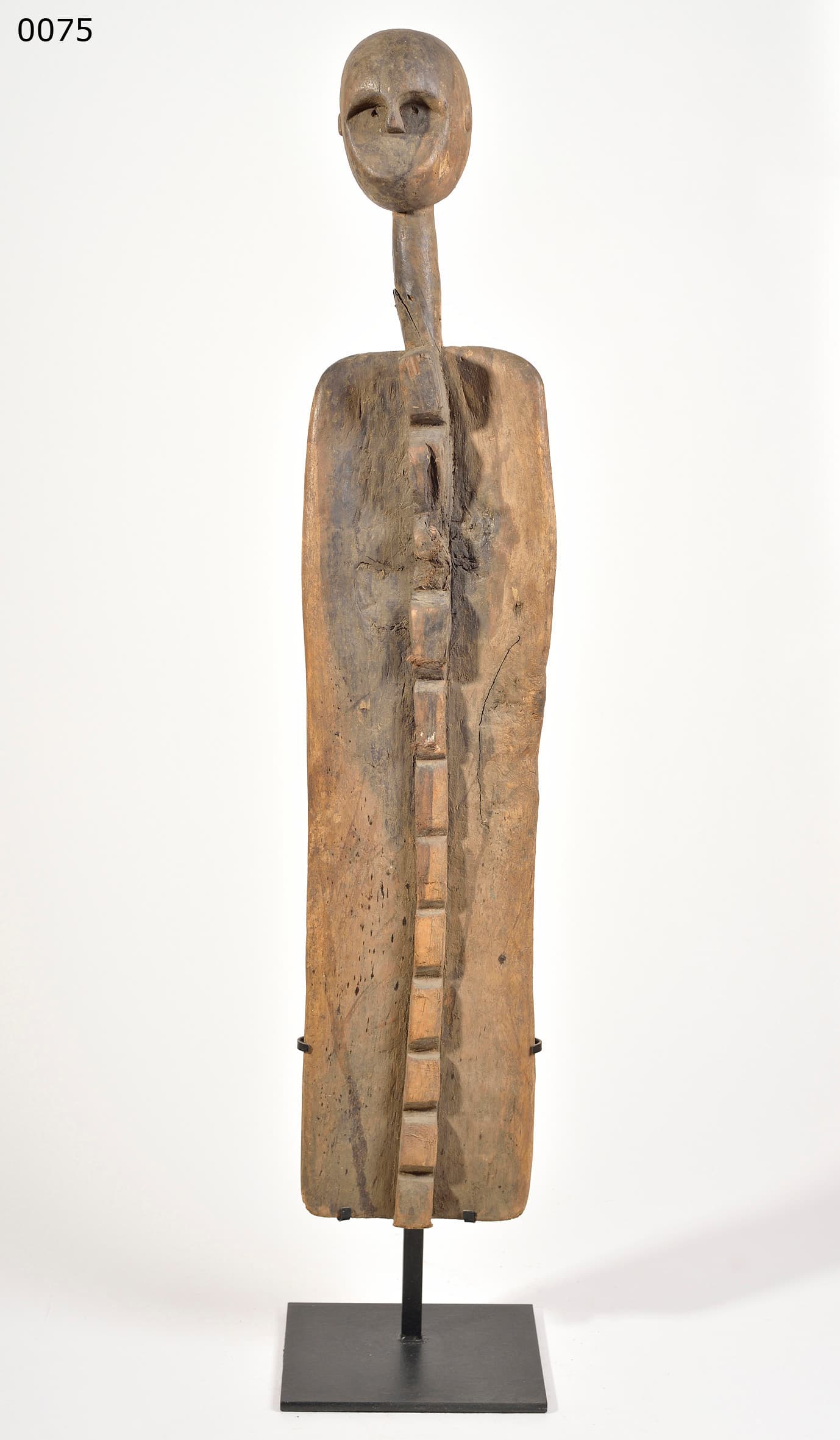
rare friction instrument