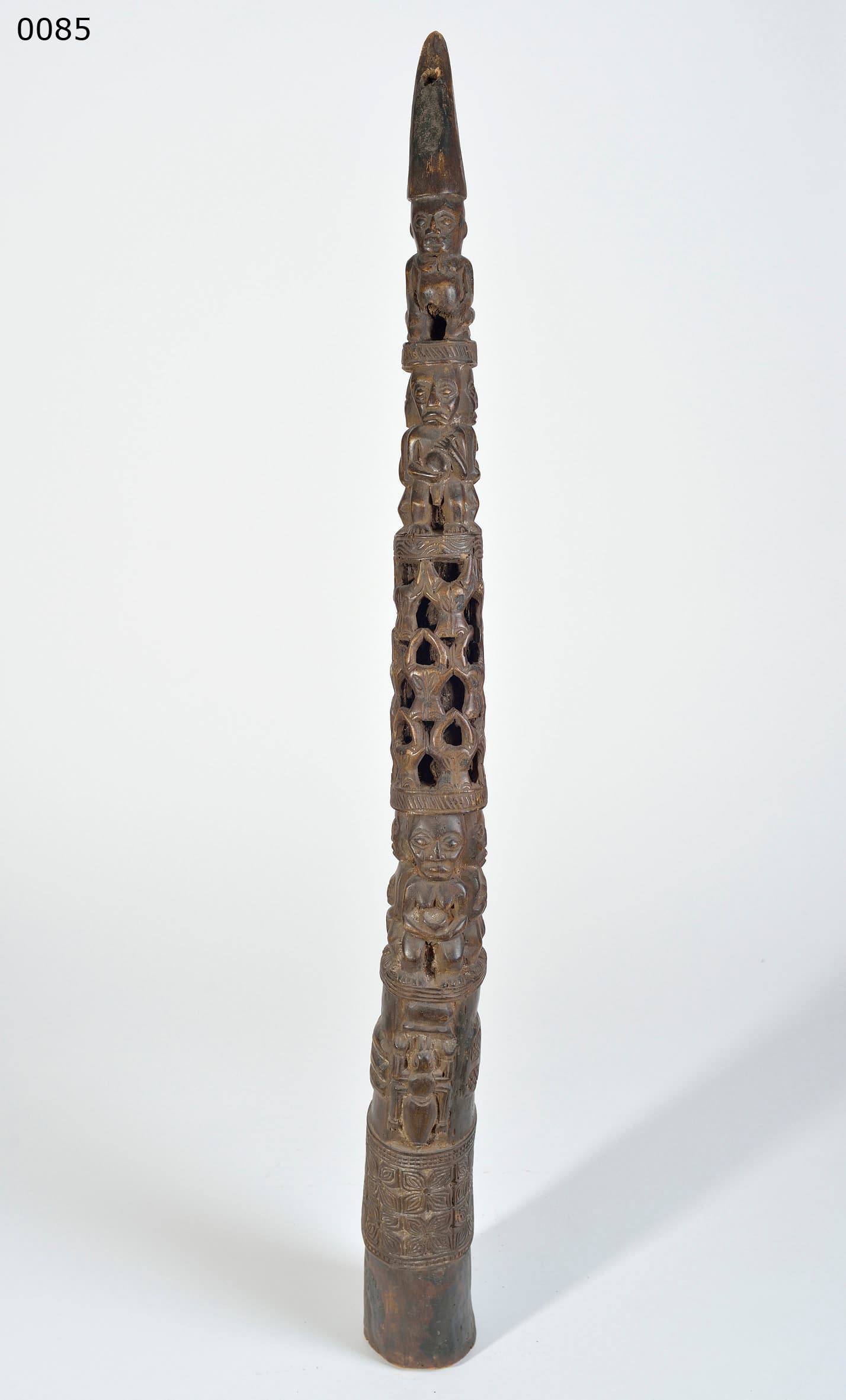
BAMUN Hand-Carried Terracotta Performance Mask (Procession of Notables)
A striking, elongated terracotta face mask from the Bamun people of Cameroon. Characterized by its cylindrical form, minimalist facial features, and a prominent sagittal crest, this earthenware object was designed not to be worn over the face, but to be carried by hand. Historically integrated with elaborate hurdle work (wickerwork), it functioned as a powerful emblem of authority and subservience within royal and secret society contexts.
1. Aesthetic Style and Structural Form
The mask exhibits a highly stylized, volumetric approach typical of specific Bamun terracotta traditions. The face is modeled with restraint, featuring small, pierced eyes, a subtle nose, and an open mouth, all set into a smooth, elongated cylindrical neck or base. A distinct sagittal ridge runs over the crown of the head. The appraisal note indicates that the mask was elaborately produced "with hurdle work," suggesting that this terracotta core was originally mounted onto or framed by a woven wicker structure, dramatically increasing its visual impact during public displays.
2. Ritual Function and the Procession of Obedience
This object served a specific performative role within the chiefdom. Rather than being worn, it was carried by hand by notables during critical ritual festivities, including sowing, harvesting, funerals, and celebrations honoring the chief. Its primary function was to testify to subservience and command obedience. The mask was part of a highly orchestrated procession consisting of six masks of this type, which was contested by a likely secret men's society composed of these elite notables. The combination of the austere terracotta visage and its accompanying hurdle work left a strong expression of commanding authority.
3. Material, Surface, and Condition
Hand-modeled from coarse, iron-rich clay, the terracotta exhibits a porous, highly textured surface. The firing process has resulted in a varied, earthy reddish-brown coloration with distinct darkened, blackened areas—likely firing clouds or the accumulation of soot and organic matter from historical storage and ritual use. The lower edge of the cylindrical neck is uneven and fractured, indicating where it was originally attached to a larger base or mounting armature for its wicker framework. The surface shows authentic weathering, with minor abrasions and a dry, encrusted patina consistent with age and active ceremonial handling.
Summary
This hand-carried terracotta performance mask is a significant instrument of Bamun social and spiritual control. Carried by elite notables and originally enhanced by elaborate hurdle work, its austere earthen form demanded absolute subservience during the most critical chiefdom festivals, serving as a monumental testament to royal authority.
Written with AI assistance from the collection appraisal, object photography and our own research; editorially reviewed. Mistakes are possible — corrections are welcome. How we work →
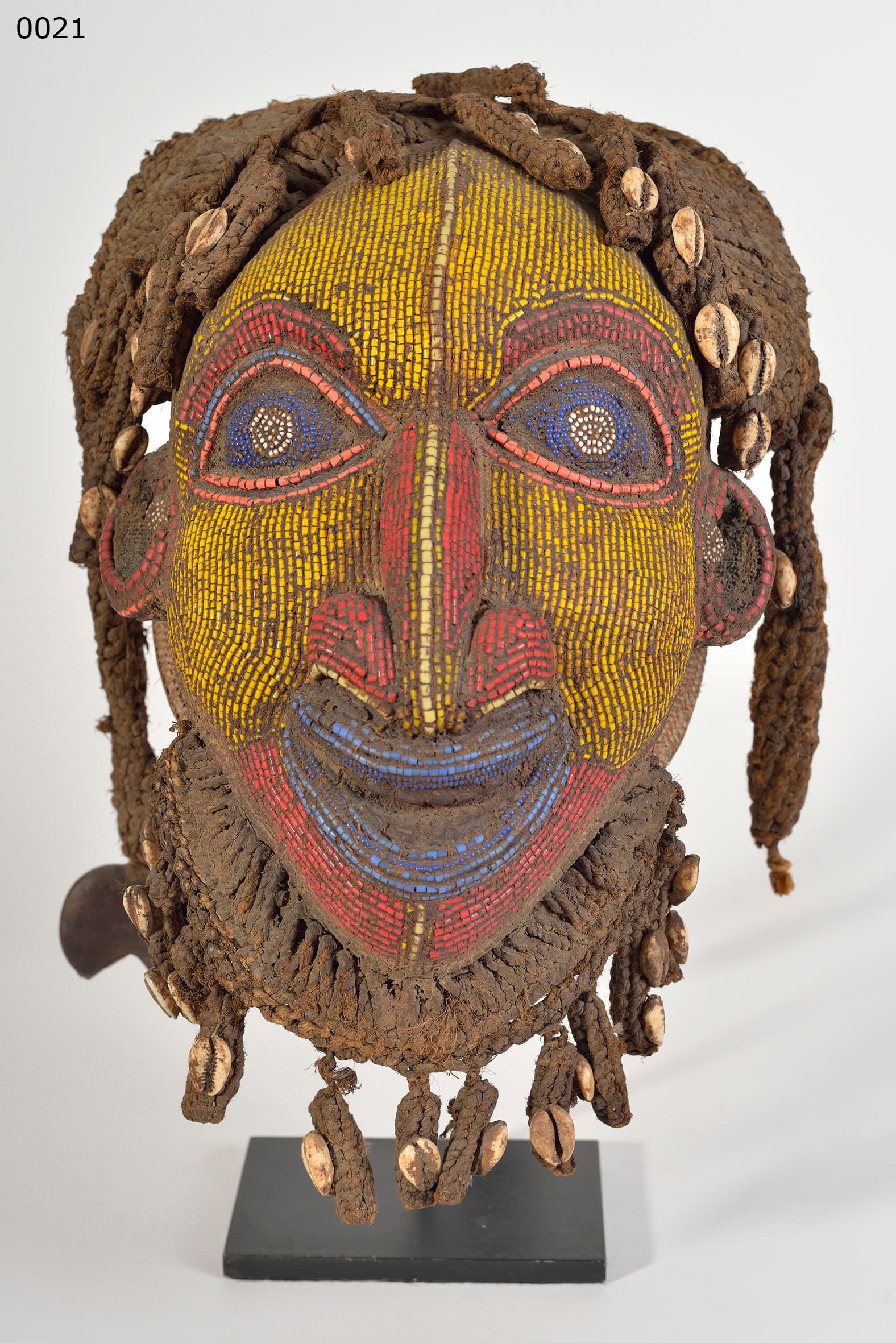
mask (covered with beads - shells on cloth)
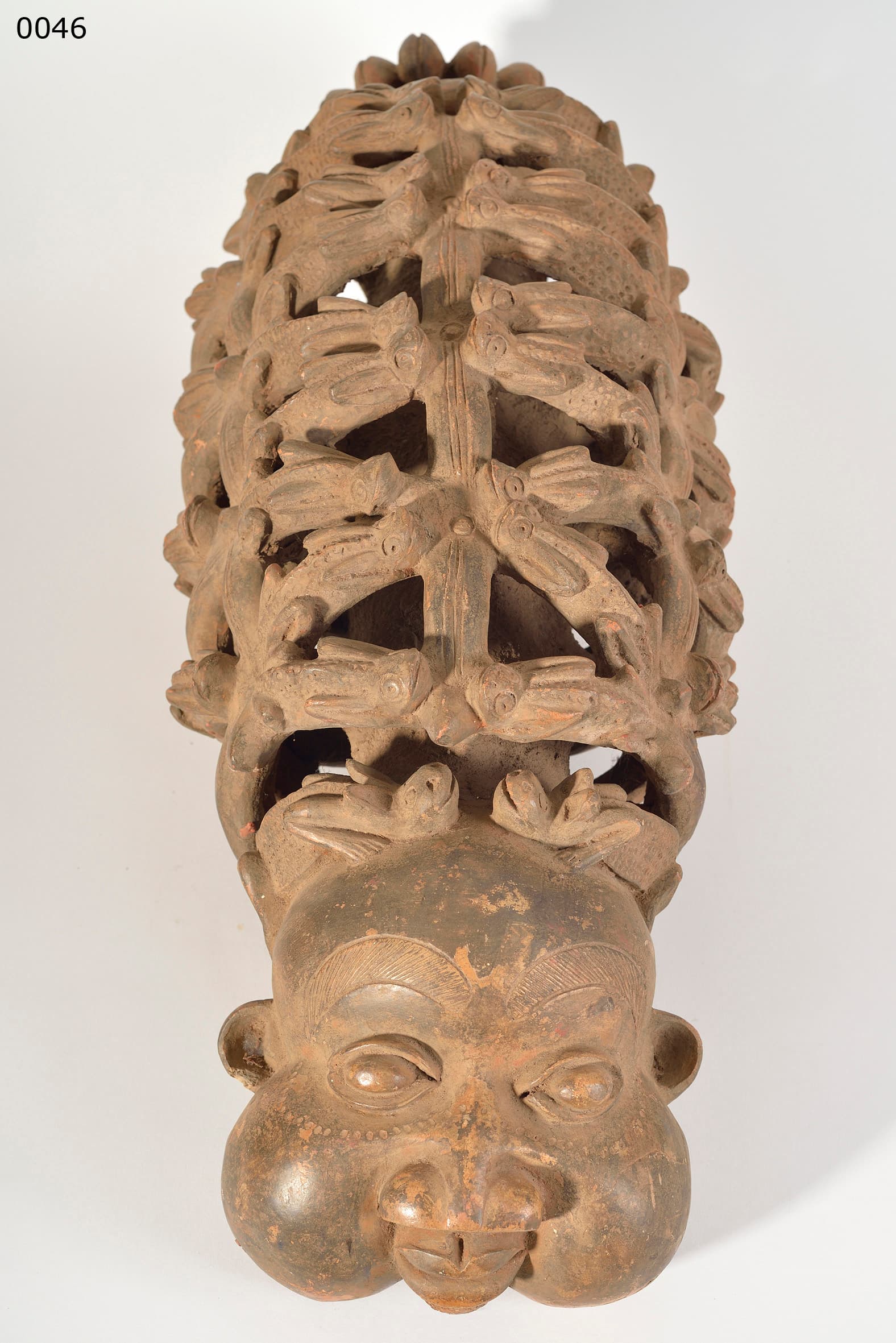
prestige pipe head
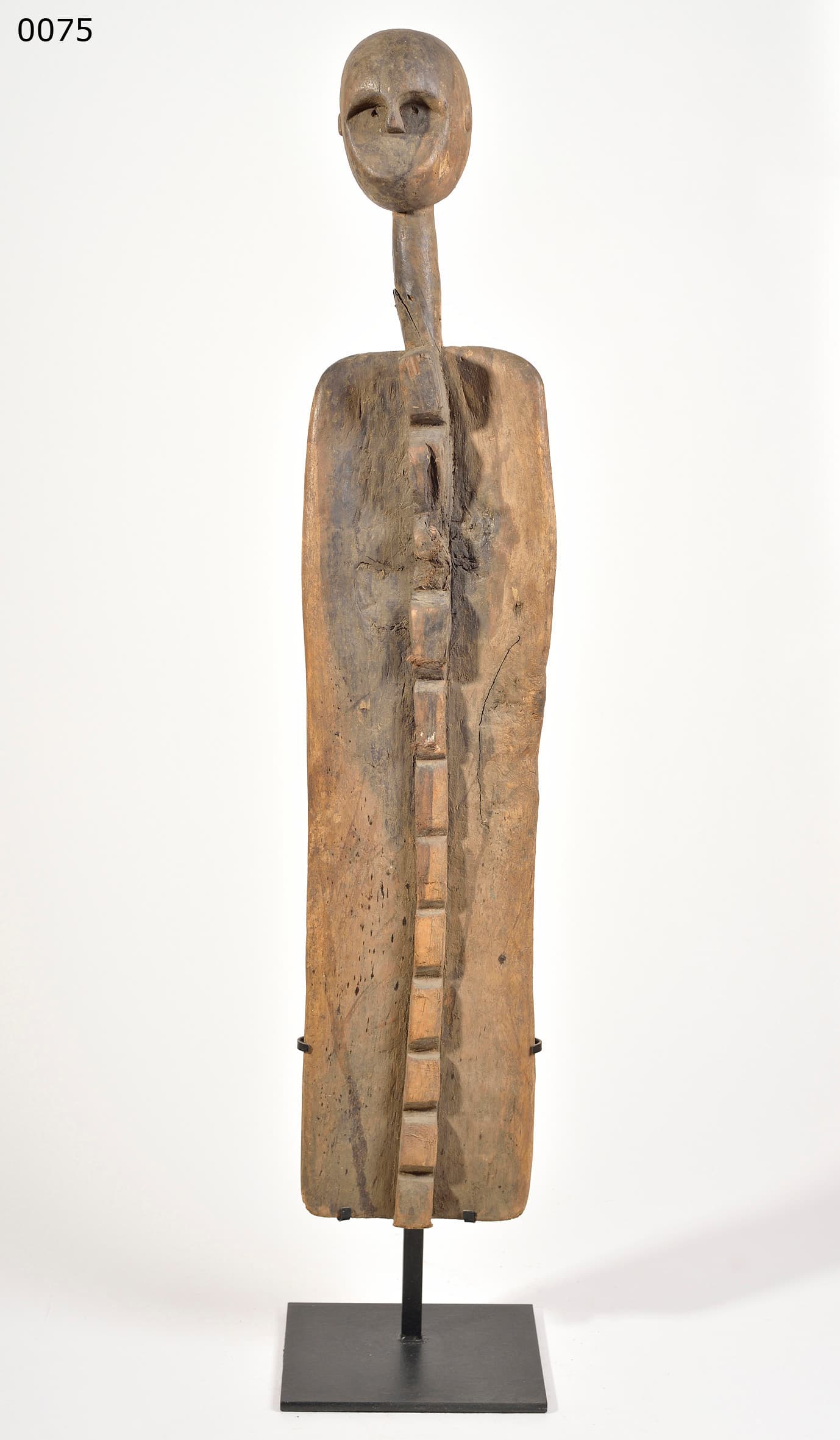
rare friction instrument