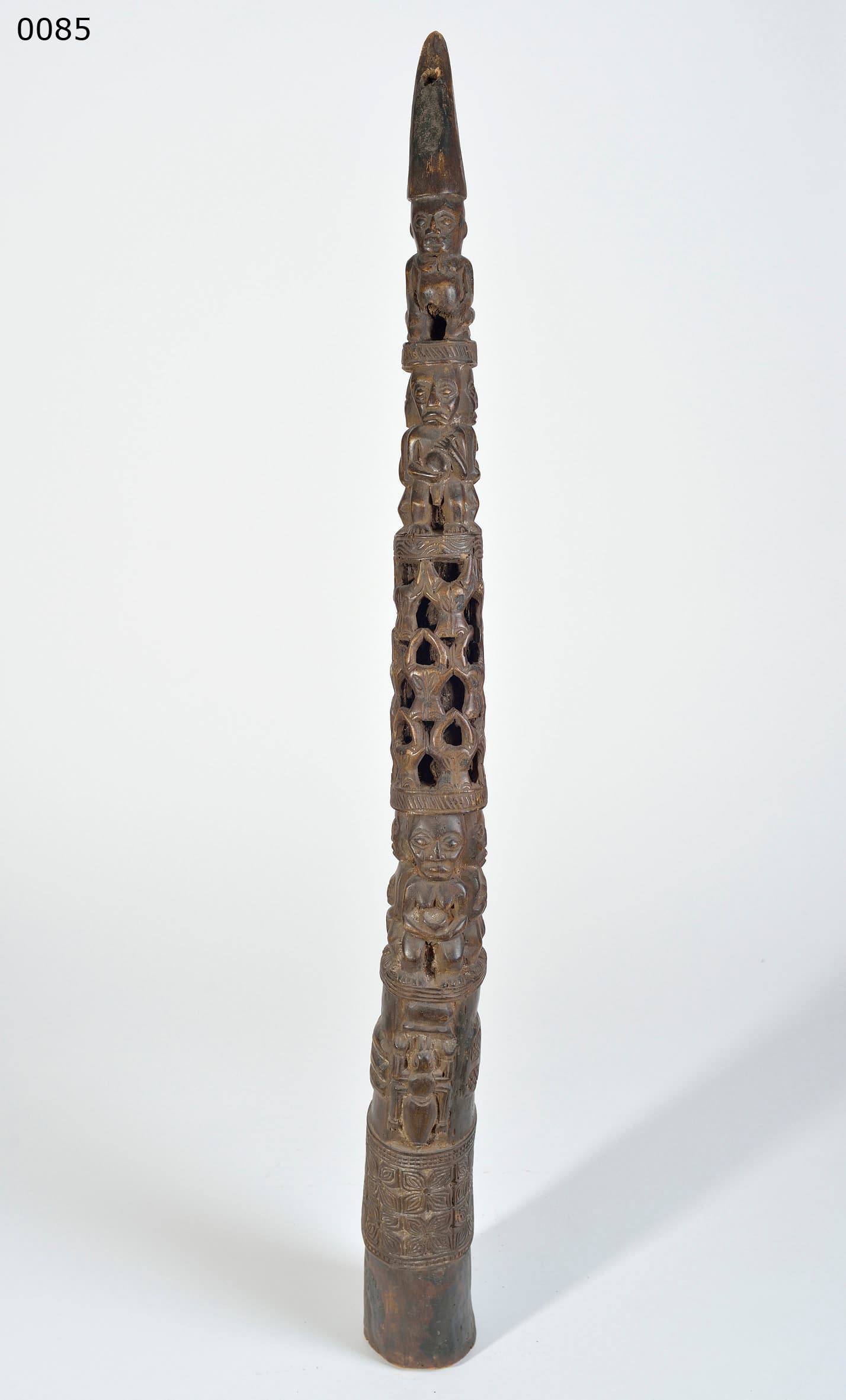
Two prestige pipes from the Maram chiefdom in the Sultanate of Foumban, Cameroon, held as the personal possession of the chief. They were made by the lost-wax method for display only.
1. Making and Quality
The collection catalogue states that both objects were created by lost-wax casting and made for prestige purposes alone. It calls them particularly fine, in artistic quality as well as in craftsmanship. Such pipes were never smoked; their function was to be seen.
2. Figures and Symbolism
The catalogue draws attention to the iconography. On top of the body of each pipe sit the clan chief and his favourite wife. Below them are people and animals, among them crocodiles and an elephant. The arrangement stacks rank vertically, with the ruling couple above and the figures and animals beneath, and the catalogue reads it as another sign of the claim to power.
3. Use
During the chief's audiences, the pipes were set up next to his throne. In that place they showed his wealth to the outside world, so that a visitor would read the ruler's standing before a word was spoken.
Summary
Two lost-wax cast prestige pipes from a Bamun chiefdom, placed beside the chief's throne and topped by the chief and his favourite wife above people and animals.
Written with AI assistance from the collection appraisal, object photography and our own research; editorially reviewed. Mistakes are possible — corrections are welcome. How we work →
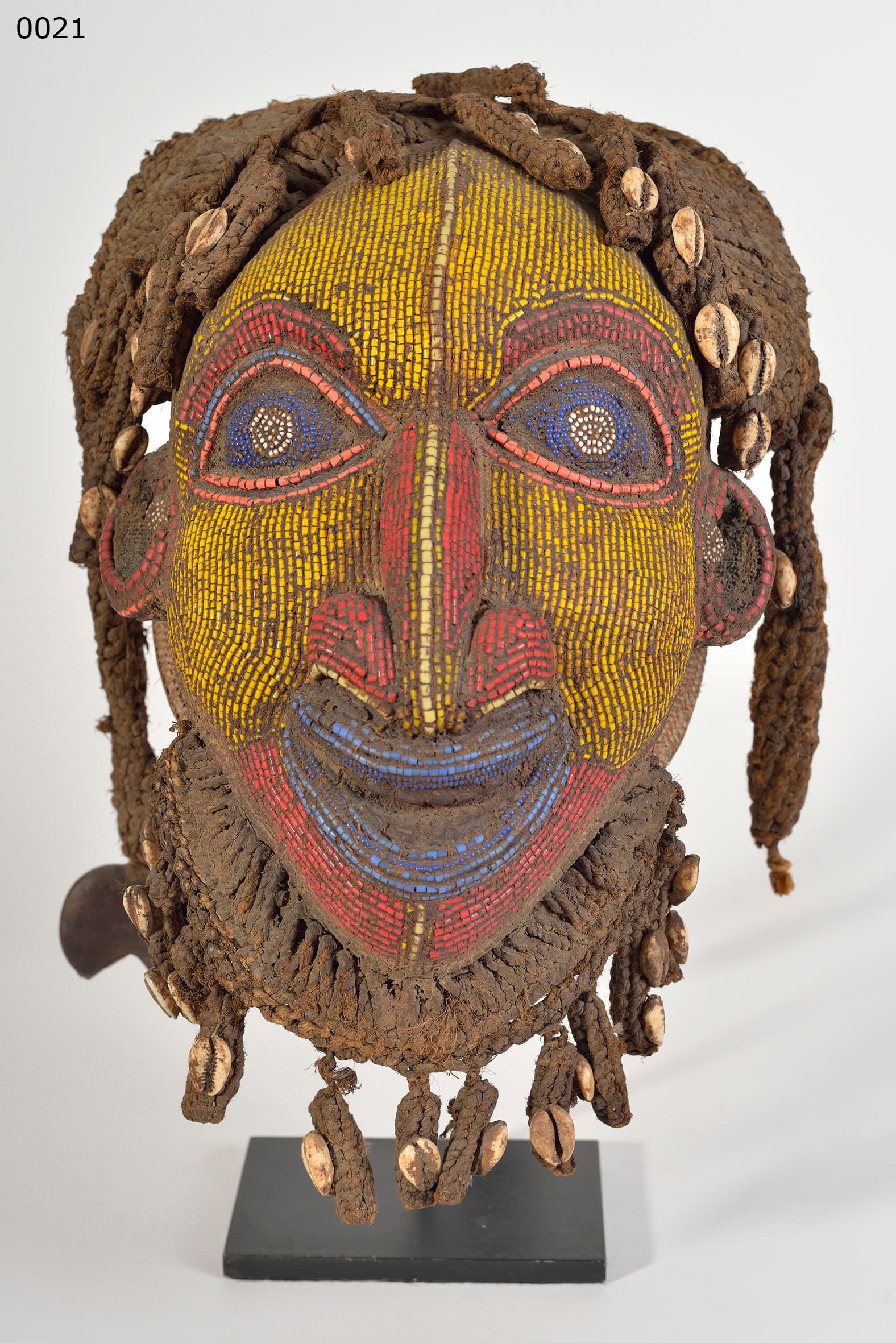
mask (covered with beads - shells on cloth)
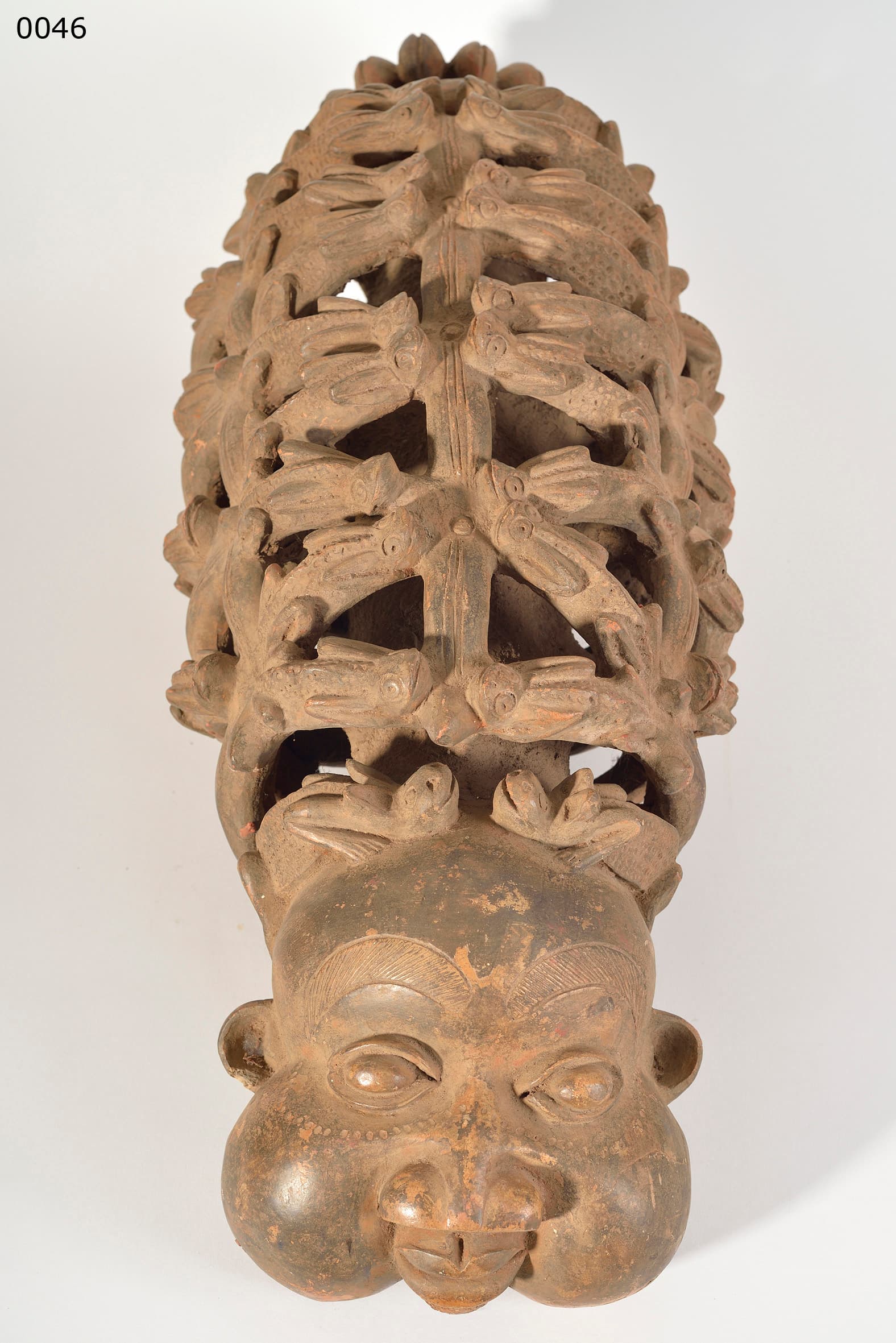
prestige pipe head
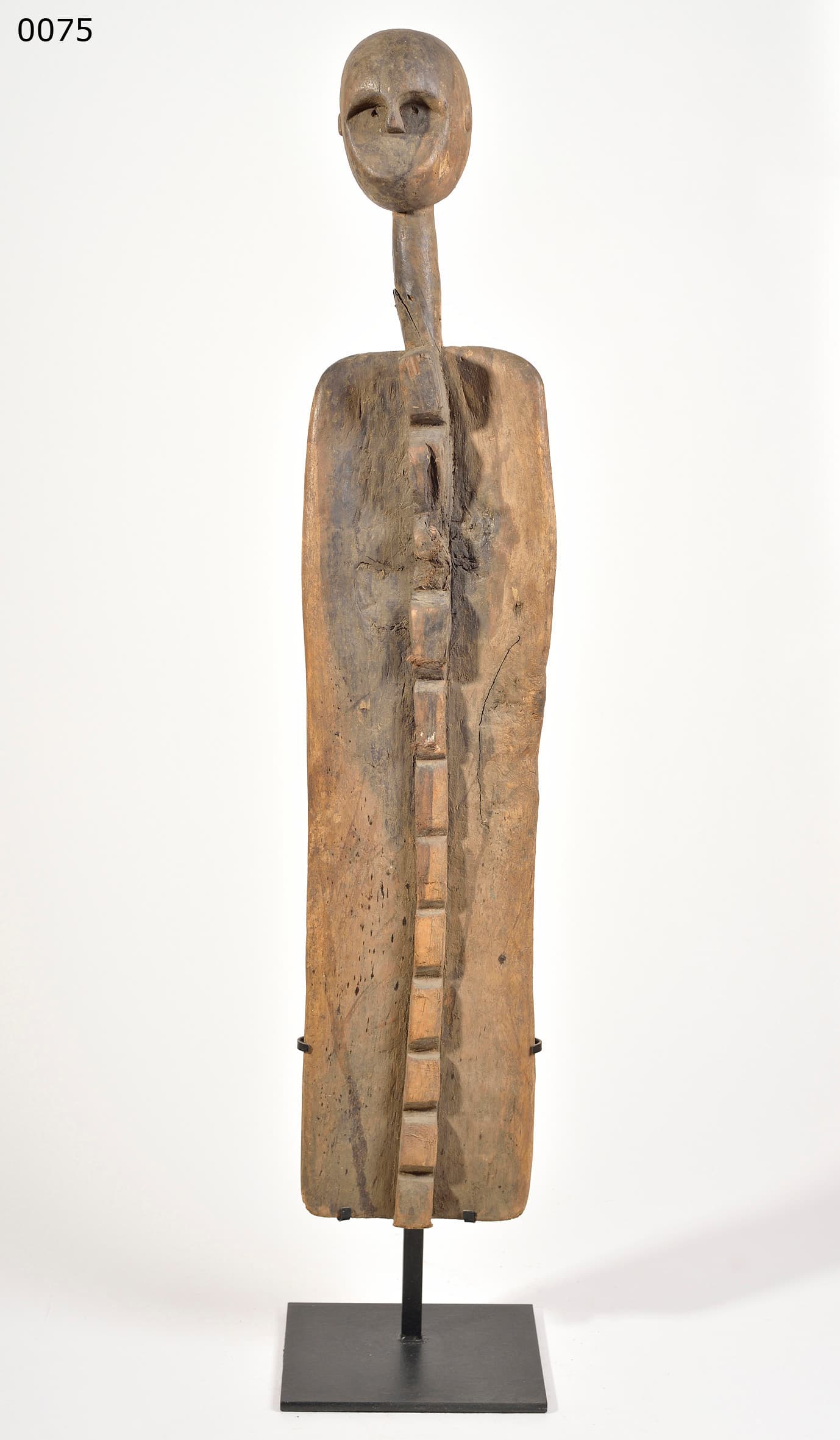
rare friction instrument