A figure of a chief from the Bamum Grassfields of Cameroon, dressed in cloth and crowned with feathers. Its face, its horn and parts of its clothing are covered with brass sheet.
1. Form and Decoration
The figure kneels on a carved wooden base with a zigzag pattern. The face is covered with brass sheet worked with a fine, scale-like texture. It has rounded eyes and a strongly projecting nose. A wrapped cloth band with red accents holds a tall crest of brown and cream feathers.
The body is clothed in cloth patterned in blue-green and tan, with red strips along the sleeves. Round, tasselled pendants hang at the chest. In both hands, which are carved and reddish-brown, the figure holds a horn sheathed in brass sheet. In front of the knee it carries a fan of dark animal fur.
2. Meaning and Use
According to the collection catalogue, this is not an ordinary ancestor figure. Its attributes identify a deceased head of the clan, and they present the power and splendour of the chiefdom to the outside. The partial sheathing in textile and the feather headdress, attached to the carved-out chief's hood, are called striking and somewhat outlandish. Brass sheet ornament is usually reserved for high-ranking persons.
The catalogue leaves open whether the horn is meant as a ritual flute or a drinking horn. A bag hanging from the arm is not an object of daily use but symbolises the hidden power carried in it. Chiefs also give such bags to deserving subjects as an honour, announcing that the wearer stands in the chief's favour.
Summary
A richly dressed Bamum chief figure with brass-clad face, feathers, horn and fur fan, which the collection catalogue reads as a portrait of a deceased clan head displaying the power of the chiefdom.
Written with AI assistance from the collection appraisal, object photography and our own research; editorially reviewed. Mistakes are possible — corrections are welcome. How we work →
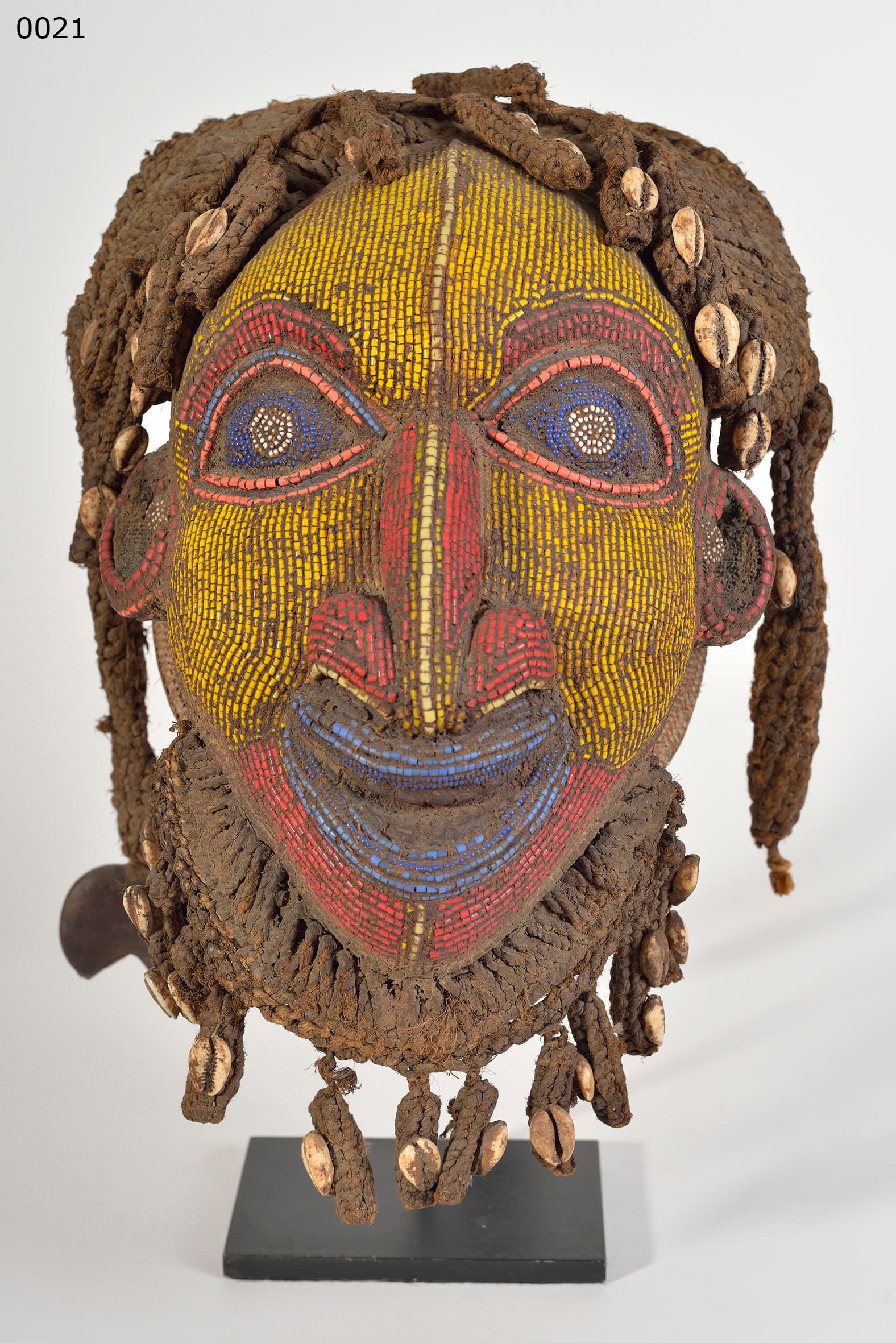
mask (covered with beads - shells on cloth)
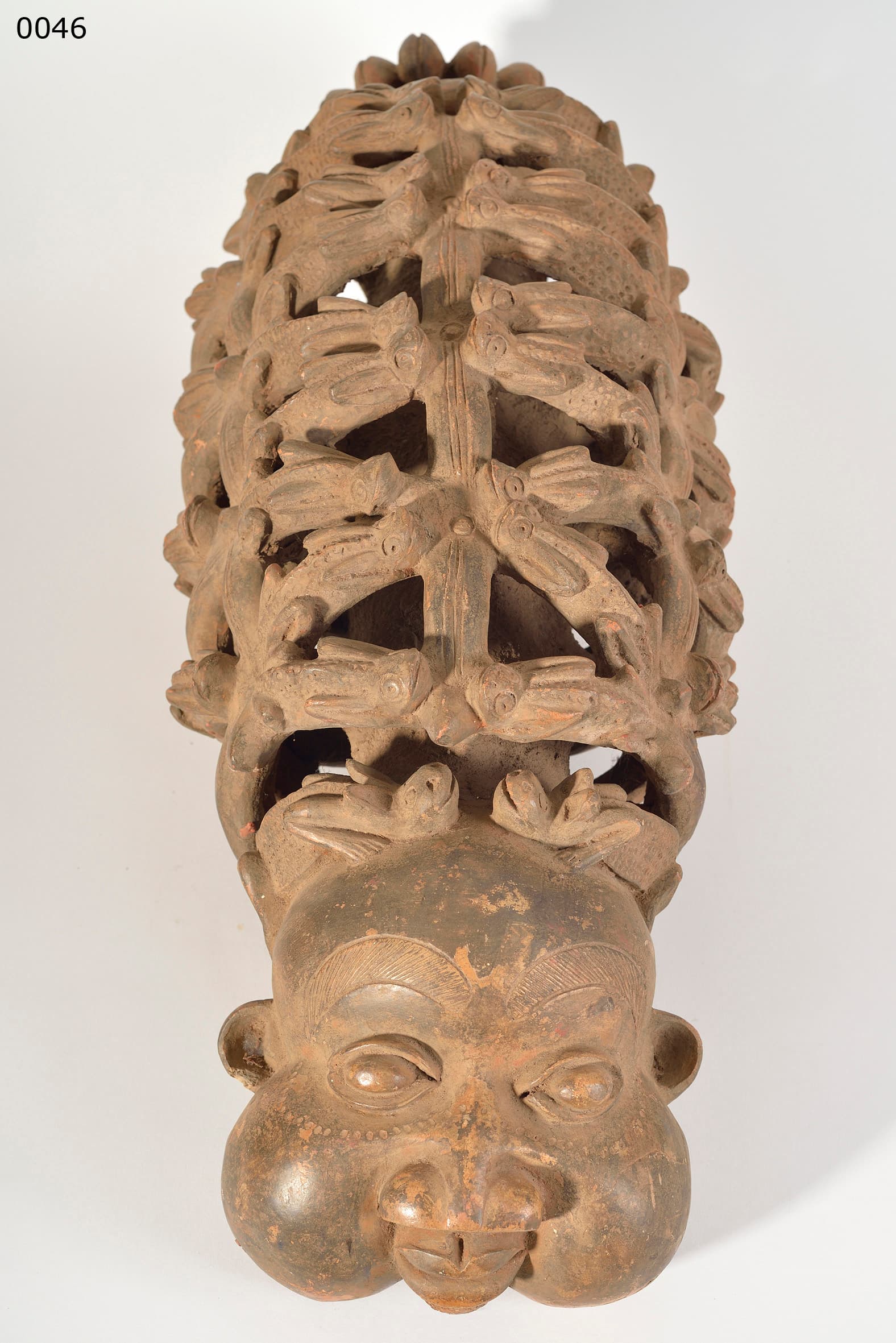
prestige pipe head
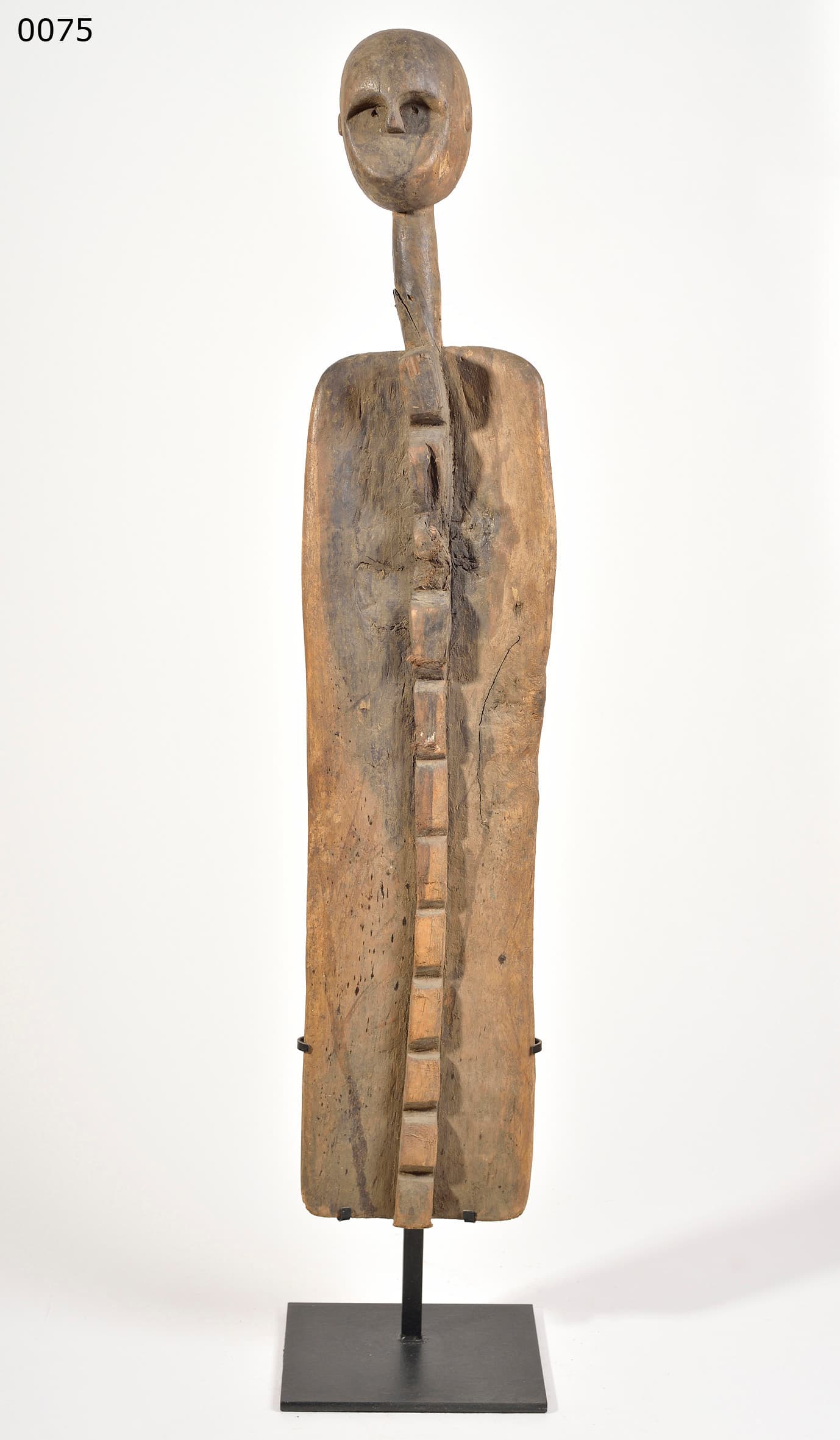
rare friction instrument