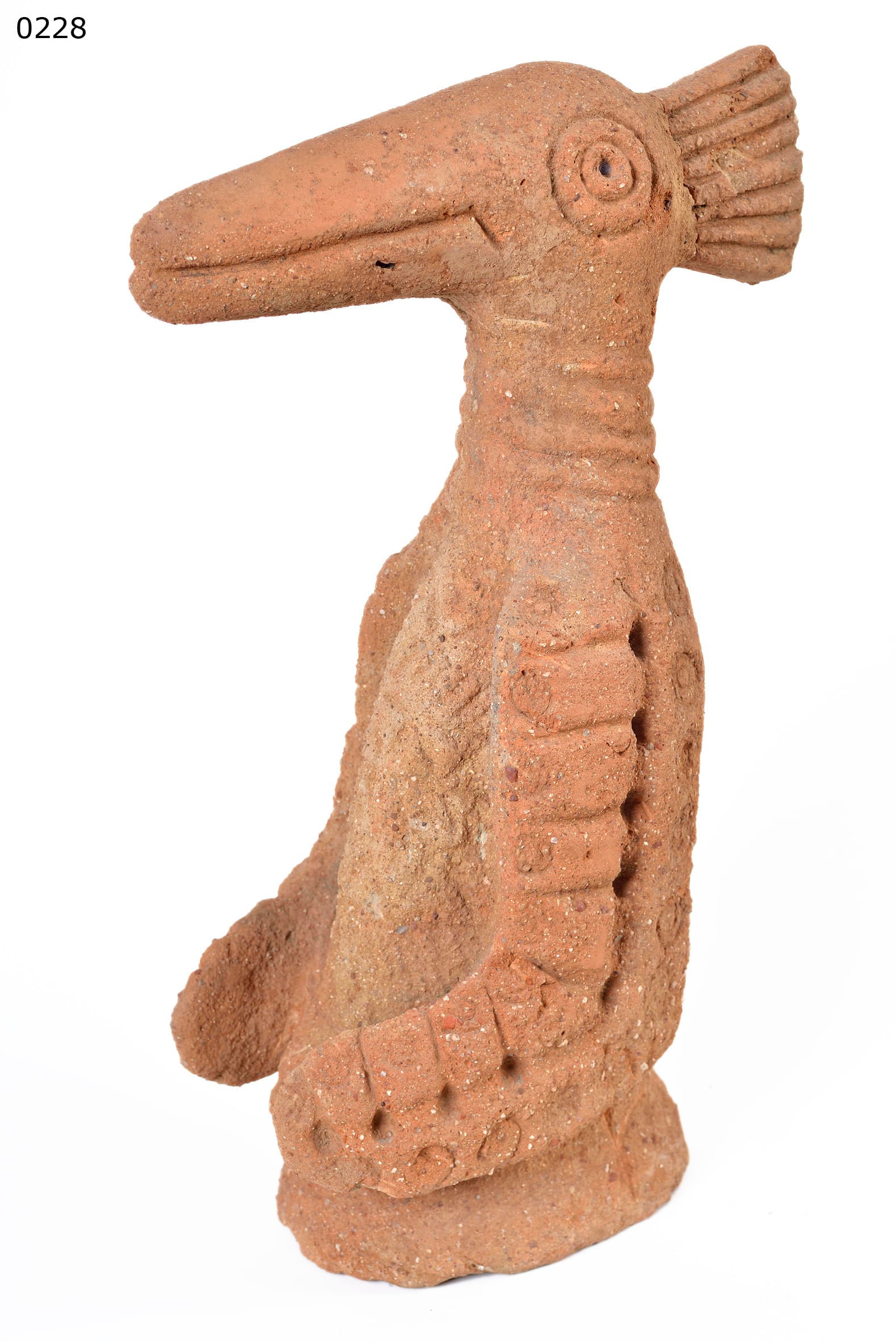
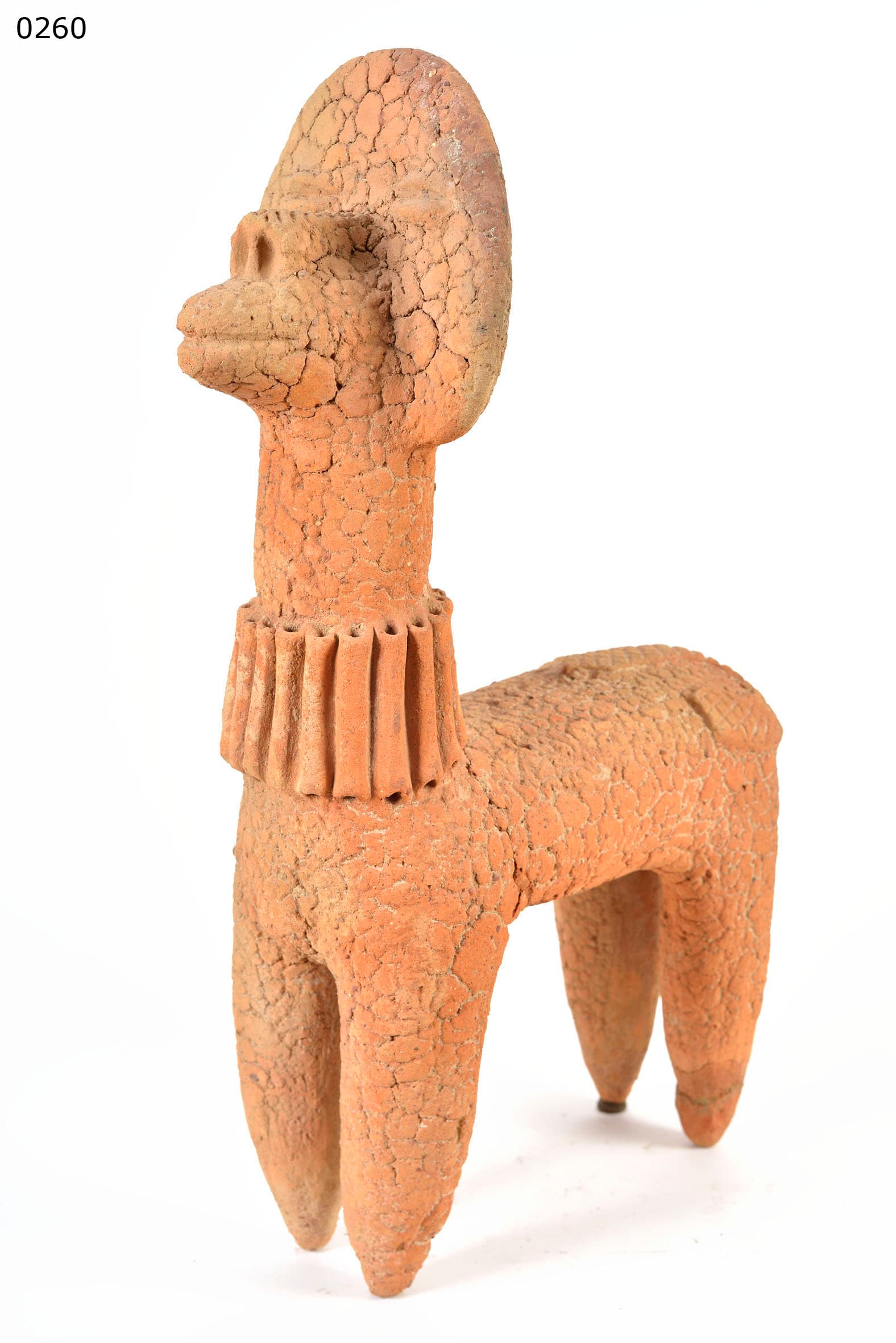
This massive 52 cm terracotta figure kneels with arms crossed over its chest in a posture of deep submission, with a smooth torso, a beaded collar at the neck, stacked bracelets on the forearms and a sharply projecting chin. The ancient clay presents a dry, archaeological patina with extensive, calcified soil encrustations and localized erosion.
1. Aesthetic style — djenne-jeno realism
The ancient Inland Niger Delta civilization (Djenne-Jeno) produced some of Africa's most remarkable and haunting ceramics. This figure is characterized by its concentrated realism: the raised head with a scarified temple, the collar of impressed dots, the stacked bracelets and a row of small knobs along the thigh. These are ornaments and body marks, not signs of disease; the torso itself is smooth. Figures with bodies covered in bumps do exist in the Inland Niger Delta corpus, but this piece is not one of them.
2. Ritual function — supplication and healing cults
The figure's posture — kneeling, head tilted back, with arms tightly crossed over the chest — is universally recognized in the region as a gesture of absolute supplication, desperate prayer, and submission to the divine. Where and how this sculpture was used is not recorded; kneeling figures of this kind are generally thought to have stood in shrines or houses as a lasting address to the ancestors.
3. Physical patina — inland Niger delta excavation
The 12th–16th century age of this piece is consistent with the timeline of the Djenne-Jeno civilization's collapse. The thick, calcified soil deposits are deeply embedded into the cellular structure of the porous terracotta, and the surface exhibits the heavy, asymmetrical erosion typical of objects subjected to the annual flooding of the Niger River for over half a millennium. The survival of a 52 cm piece in this complete, un-fragmented state makes it a highly significant example of this ceramic tradition.
Summary
With its raised head and posture of prayer, this massive Djenne figure is a notable example of ancient emotional realism. Its heavy calcification and river-weathered clay are consistent with a 12th–16th century origin.
Written with AI assistance from the collection appraisal, object photography and our own research; editorially reviewed. Mistakes are possible — corrections are welcome. How we work →