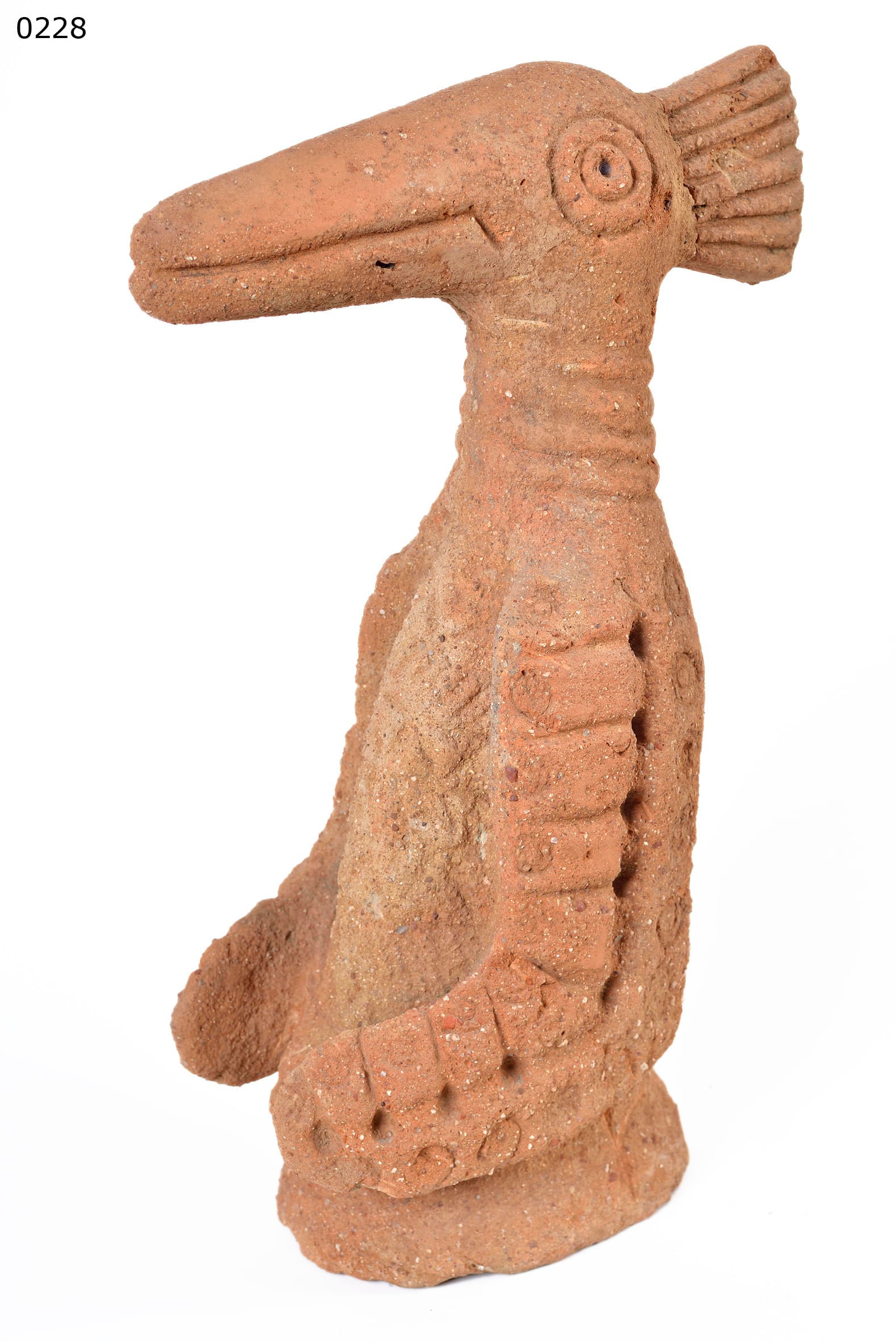
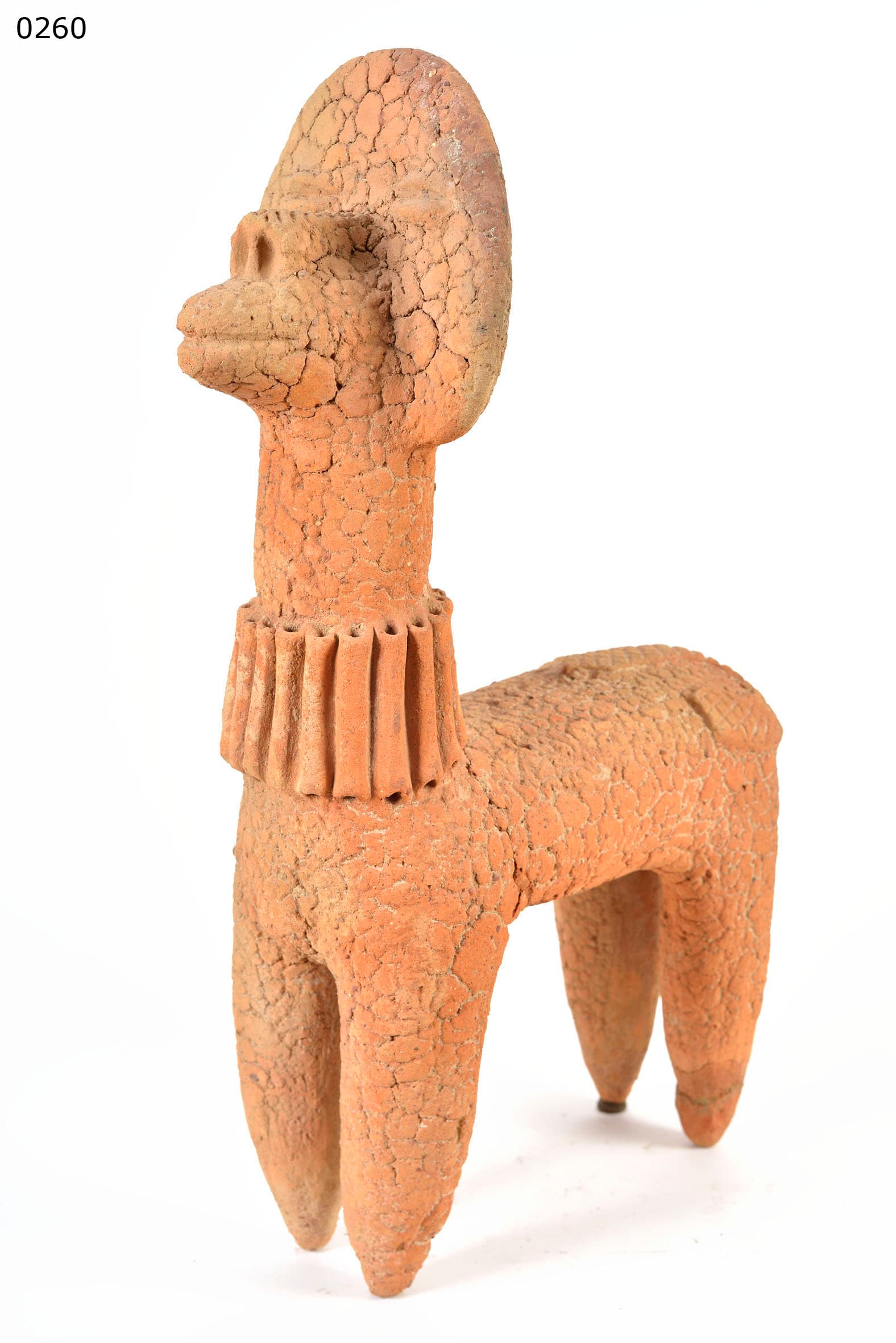
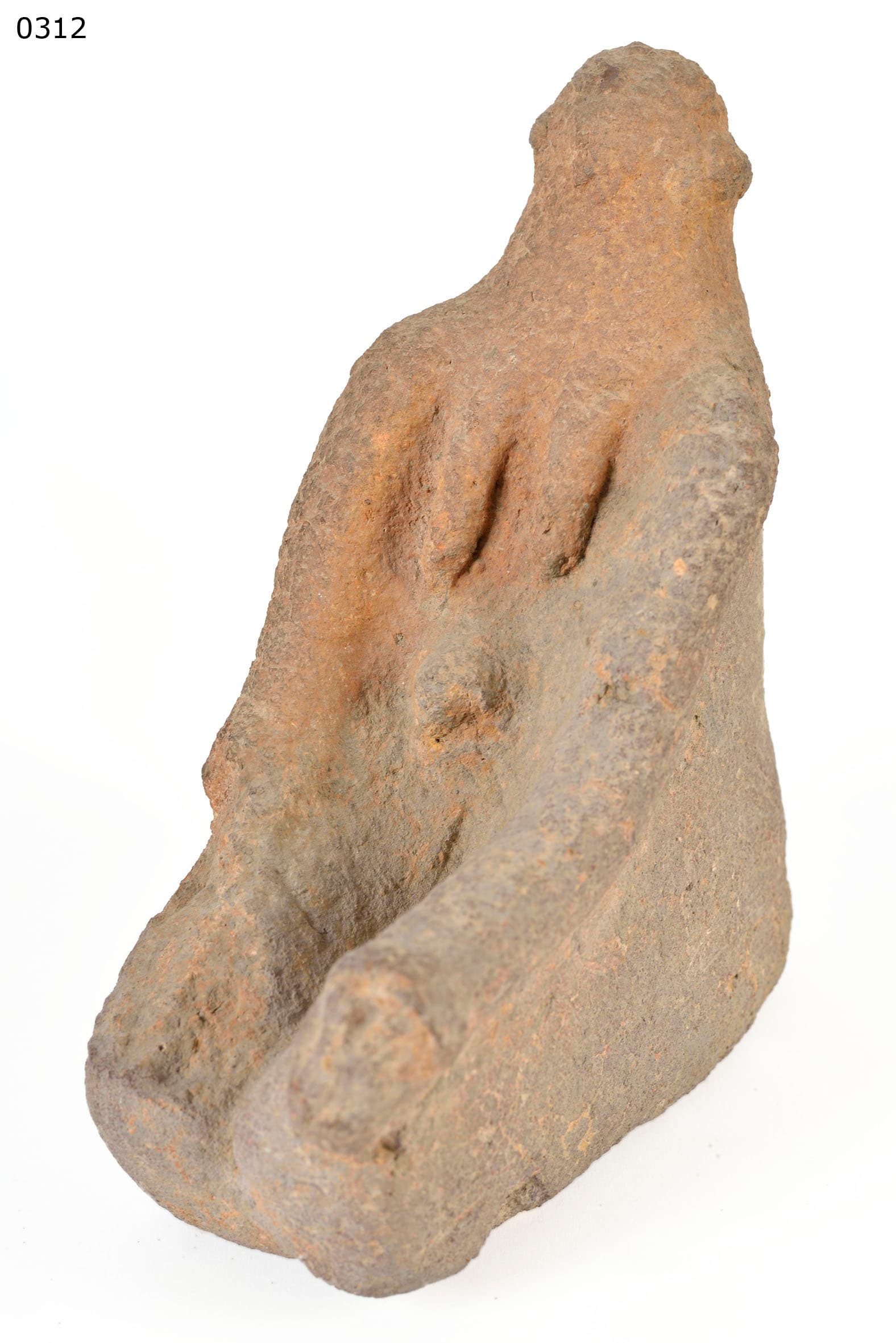
The Djenne are a Mali people of the inland Niger Delta, known for their monumental Islamic mud architecture and classic terracottas.
Overview
The inland delta of the Niger River (Inland Niger Delta, often abbreviated as IND in the Anglo-Saxon literature) in what is now the Republic of Mali forms the geographical, ecological and historical setting of one of the earliest and most important urban civilisations in the whole of sub-Saharan Africa (McIntosh & McIntosh 1980: 57). The archaeological site of Djenné-Jeno (literally translated from the Songhay for "Old Djenné" or also called "Do-Djoboro") is located about three kilometres southeast of the modern city of Djenné, famous for its monumental Islamic mud architecture, whose old town - including the archaeological mound of Djenné-Jeno - was inscribed as a UNESCO World Heritage Site "Old Towns of Djenné" in 1988 (McIntosh 1995: 12). The geomorphological conditions of this region - a seasonally flooded, extremely fertile alluvial plain that historically covered an area of over 160,000 square kilometres and is formed by the confluence of the mighty Niger and its tributary Bani - created a unique, highly dynamic micro-ecosystem (de Grunne 2016: 25). This system enabled a highly specialised and productive subsistence economy, which in turn laid the foundations for an unprecedented population agglomeration.
Current demographic estimates and archaeological surveys for ancient Djenné-Jeno and its immediate satellite settlements - referred to in research as the "Jenne-jeno Urban Complex" - assume a population of at least 20,000 to 26,000 inhabitants in the immediate vicinity alone for the absolute peak phase of settlement (approximately between 800 and 900 AD) (McIntosh 1995: 393). The settlement area comprised not only the main mound (tell), which was more than 33 hectares in size, but also a conglomerate of over 70 physically separate but functionally closely interwoven settlement mounds, such as the neighbouring Hambarketolo (McIntosh & McIntosh 1981: 19). The source situation is ambiguous with regard to direct modern ethnic continuity. There is a broad consensus in archaeological and ethnographic research that there is no isolated, unbroken line of descent to a single modern ethnic group. Rather, today's Soninke, Bozo, Nono and Fulbe (Peul) represent the genetic and cultural heirs of this plurivocal, multiethnic ancient society (McIntosh 1998: 285). The ethnographer and art historian Bernard de Grunne locates the primary producers of the classic Djenné terracottas more specifically in the environment of the Kagoro, a sub-clan of the Mande-speaking Soninke, who, according to oral traditions, migrated from the Mande heartland in later centuries due to dynastic conflicts and progressive Islamisation (de Grunne 2014: 46).
Linguistically, the historical population of the Djenné-Jeno culture can almost certainly be assigned to the Mande language family, a broad subgroup of the Niger-Congo languages (Williamson & Efere 2002). The actual proper name (endonym) of the ancient population has not survived; the term "Djenné-Jeno" is a purely linguistic construct of the later Songhai language speakers and was adopted by Arab chroniclers (McIntosh & McIntosh 1980: 57). Foreign designations in early Arabic sources repeatedly reference the region as an unparalleled haven of abundance, but operate primarily with exonymic categorisations that do not adequately capture the complex internal structure of the city (Levtzion 1973: 15).
The subsistence strategy of civilisation was based on a delicate, almost symbiotic exploitation of the ecological niches of the inland delta. Archaeobotanical analyses (especially the work of Shawn Murray) and archaeozoological findings (Kevin MacDonald) document the early domestication of African rice (Oryza glaberrima) and various types of millet, coupled with intensive, specialised fishing in the floodplains and a pronounced cattle, sheep and goat pastoralism (MacDonald 1995: 319-347). What is remarkable here is the geopolitical and economic paradox of the region: although Djenné-Jeno was extremely self-sufficient agriculturally due to the flood regime and produced enormous food surpluses, the alluvial plain lacked elementary resources that were strategically vital for survival, such as stone for grinding stones, iron ore for weapons and tools, copper for ritual objects and salt for food (McIntosh & McIntosh 1980: 444). This compelling shortage forced the establishment of a far-reaching, pre-Islamic interregional trade network, which required the import of copper from the Sahara region over 1,000 kilometres away and iron ore from the peripheral areas 50 kilometres away. One result of this network was the mass production of locally smelted steel and high-quality ceramics, which were exported upstream and downstream as barter goods (McIntosh 1995: 380-393).
The socio-political model of the early Djenné-Jeno represents one of the most central and far-reaching points of contention in West African archaeology, the implications of which extend far beyond Mali. For decades, the classical, Eurocentric "Hamitic hypothesis" postulated that urbanisation and state complexity in sub-Saharan Africa had been initiated exclusively by external, North African-Islamic impulses in the course of the trans-Saharan trade (Togola 1996: 91). The groundbreaking excavations by Susan Keech McIntosh and Roderick J. McIntosh empirically refuted this narrative by demonstrating that Djenné-Jeno had already reached urban dimensions of enormous complexity a millennium before the arrival of Islam (McIntosh 1995: 12).
In addition, the McIntoshs established the concept of "heterarchy" for Djenné-Jeno in the academic debate (programmatically in Cities Without Citadels, 1999). In direct contrast to Mesopotamian or Egyptian models of city formation (the so-called Childe criteria), which link urbanisation to a vertical hierarchy, a central palace complex, an elitist veneration of the dead and a ruling, coercive elite, the heterarchy model for the Niger inland delta describes a functional "city without a citadel" (McIntosh 1999b: 161). Socio-political authority here was not concentrated in the monopoly of a charismatic leader in the Weberian sense or a bureaucratic dynasty, but was distributed horizontally among corporate, highly specialised guilds and professional castes, such as the blacksmiths, fishermen and potters (McIntosh 2005: 19-35). These groups lived deliberately segregated lives in the more than 70 physically separate but closely spaced hills of the Urban Complex and co-operated through reciprocal economic relationships to counteract the unpredictability of the flood system (McIntosh 2000: 21).
This Afrocentric theory of complex heterarchy massively revolutionised the understanding of pre-colonial power structures, but also sparked controversy as some researchers questioned the complete absence of hierarchy in a society that could build massive city walls (McIntosh 1998: 209). The respected Malian archaeologist Téréba Togola and other researchers (such as Kevin MacDonald) later supplemented and supported this model with extensive survey data from the neighbouring Méma region, which has now dried up. Similar decentralised, highly specialised cluster cities (such as Akumbu) were found there, underpinning the heterarchy as a deliberate, supra-regional system principle of the Mande region that served to resist despotic centralisation (Togola 2008: 12-15). In the Musée national du Mali in Bamako, this decentralised, work-divided settlement structure is contextualised using numerous stratigraphic find complexes as examples of the indigenous urbanisation of West Africa and the African contribution to global urban development.
Cultural context
The religious foundation of the Djenné-Jeno culture operated diametrically opposed to dogmatic monotheism and manifested itself in a dense, polyvalent animistic and ancestor-centred cosmos. In this belief system, spirits of the earth, water and ancestors were omnipresent and continuously intervened in the fate of the living. The structural peculiarity of this Mande religion compared to neighbouring systems lies in the extreme emphasis on the physical and spiritual transaction with a volatile environment - a religious system that was largely dictated by the unpredictable nature of the inland delta, by droughts and floods (McIntosh 2004: 59-75).
A central paradigm of the local cosmology, which is absolutely essential for the interpretation of the elaborate terracotta sculpture, can be found in the founding myth of the Wagadu Empire (the ancient, splendid Ghana Empire). This myth complex centres around the figure of Dinga, the spiritual founding father of the Soninke clan, and his animalistic, supernatural offspring, the magical giant snake Wagadu Bida (de Grunne 1980: 27-29). As a spiritual guarantor of fertility, sufficient rain and economic prosperity, Wagadu Bida, according to tradition, demanded regular, bloody human sacrifices, which historically are often coded as the ritual sacrifice of a virgin. The myth culminates in the killing of the mythical serpent by a desperate Soninke warrior, which triggered a catastrophic metaphysical curse in the form of a permanent, all-destroying drought (Simpson in Van Dyke 2016: 12). This ecological and spiritual catastrophe drove the Soninke into the diaspora - and consequently also into the protective wetlands of the inland delta. The almost obsessive, mass depiction of snakes and reptiles in the iconography of Djenné-Jeno is therefore interpreted by de Grunne as a compelling reflection of this Wagadu Bida ancestor cult and the desperate spiritual coping with drought and historical suffering (de Grunne 2014: 112).
In the strictly horizontally organised, heterarchical society of Djenné-Jeno, artisanal production and spiritual authority merged in an inseparable way. The nyamakala (the endogamous, specialised artisan castes in Mande space) functioned not only as producers of goods, but also as primary, feared mediators between the profane world of the living and the sacred, dangerous world of the spirits. The blacksmiths (numu) and the legendary masons (sorobana) controlled the transformative, potentially destructive powers of fire and earth, which is why they often lived in social isolation on the fringes of settlement clusters (LaViolette 2000: 45).
Women played a prominent role in the cult, which was far less pronounced in many neighbouring cultures. Pottery - and thus necessarily also the production of the sacred, highly emotional terracotta sculptures - was almost exclusively the profession of women, mostly the wives of the ironsmiths, who were organised in a separate, hermetically sealed corporation (McIntosh & McIntosh 1983). Through the physical act of moulding from the specific soils of the Niger bank (ebumba), these women became irreplaceable ritual authorities. They created not only profane water vessels, but also active vehicles for spirits and ancestors using secret recipes that had been passed down through the generations (such as the addition of specific emacients and potent herbal decoctions) (Mayor 2011). These "power objects" were the indispensable ritual instruments for priests and diviners to fall into a possession trance, diagnose illnesses and restore the cosmic order.
A sharp interpretative disagreement in contemporary scholarship, largely between Bernard de Grunne and Kristina Van Dyke (and in part Robert Farris Thompson), concerns the structural essence of Djenné's religion, explicated in the drastic depiction of 'disease', pustules and snakes.
Kristina Van Dyke (2016: 11) states in her brilliant analysis of the holdings, including those in the Musée du quai Branly - Jacques Chirac in Paris, that a massive percentage of the figures - around 42% of the known works in the so-called "Sick Corpus" - exhibit severe pathological deformations. She interprets the ubiquitous snake motifs not purely mythologically as representations of Wagadu Bida, but hermeneutically and medically as naturalistic depictions of terrible parasitic worms (such as the Guinea worm, Dracunculus medinensis, or the eye worm Loa loa), which shock the viewer by bursting out of the orifices of the infected person (Nozais et al. 2000: 291). Religion was thus a relentless practice of "tragic necessity", a divinatory emergency system to ward off real epidemics in the dense urban clusters, in which illness was considered a severe spiritual test of the individual (Van Dyke 2016: 15).
In stark contrast, Bernard de Grunne (2014) insists on a more metaphorical, political-genealogical reading. Although he recognises the drastic depiction of endemic diseases such as smallpox, he reads the snakes as a direct metonymic reference to ancestor worship and the elitist Soninke foundation myth (de Grunne 2016: 25). Robert Farris Thompson, in turn, interjected into the debate that the massive pustules on the sculptures may represent neither smallpox nor parasites, but symptoms of the highly contagious frambösie (yaws) or even extreme forms of ritual keloid scarification (ornamental scars) that served as initiation badges and status markers (Thompson in de Grunne 1995: 72). This profound controversy illustrates the radical ontological difference between the Djenné religion and that of the neighbouring, later Dogon: while Dogon wood sculptures often depict posthumous, intact and stoic ideal portraits of ancestors (tellem), the Djenné terracotta functioned as an acute, suffering body that relentlessly fused physical trauma, social anxiety and spiritual intervention (de Grunne 2014).
Aesthetic features
The classic terracotta sculptures of the inland delta bear witness to an empirically highly developed ceramic technology that defied the adverse climatic conditions. The basic material was an extremely ferruginous, highly plastic and fine-grained clay, which was extracted directly from the deep alluvial soils of the Niger and Banibette. In order to ensure the structural integrity of the often massive figures during the critical drying and firing process and to avoid fatal heat cracks, the potters systematically mixed fireclay (grog) made from crushed, old clay shards and, in some cases, organic materials such as rice husks as a leaning agent into the clay (Bedaux et al. 1978: 145).
After the elaborate manual shaping, in which details such as jewellery, amulets and pustules were either applied or deeply incised into the soft clay, the objects were often coated with a fine, highly iron-rich reddish slip (engobe) and elaborately polished with stones or cores (S.K. McIntosh 1995). The subsequent kiln firing (an open field firing without a closed, temperature-controlled kiln) at temperatures between 600 and 800 degrees Celsius resulted in variable, highly aesthetic surface colours, ranging from pale, sandy ochre to deep, reductive black-grey.
The often extremely thick and encrusted patina of the preserved ritual objects visible today is a direct result of their centuries-long sacred use: blood from sacrificial animals, fermented millet porridge, vegetable decoctions and rancid palm oil were applied to the sculptures in thick layers in countless ritual acts. These layers mineralised in the soil over centuries. The fundamental distinction between a ritually 'activated', magically charged object and profane utilitarian ceramics (e.g. the ubiquitous bonãn rice cooking pots or bā oil vessels) can be seen macroscopically primarily in these opaque, encrusted, stratified sacrificial patinas and the non-utilitarian iconography (Mayor 2011).
The formal and iconographic range of Djenné terracottas is completely unprecedented in sub-Saharan Africa. In his monumental monograph, Bernard de Grunne (2014) catalogued no fewer than 66 distinct sacred postures and gestures, making the corpus the richest reservoir of religious postures on the continent. The artists' canon of proportions deviates radically from Western naturalism and emphasises extreme verticality and expressivity: strongly elongated, cylindrical necks, raised, almost test-tube-like skulls, wide, hemispherical or striking coffee bean-like eyes and strongly protruding chins. The limbs are often tubular in shape and exhibit a fluid, seemingly boneless elasticity that allows for physically impossible contortions (Van Dyke 2016). The size spectrum of the figures is considerable and ranges from intimate amulet sizes (10 cm) to monumental, almost life-size statues almost 100 cm high.
| Canonical type | Iconographic significance & aesthetic specifics |
|---|
| Kneeling / Crouching figures | Statistically the most common form (approx. 149 recorded examples in reference collections). Arms often crossed protectively, hands covering the face or heavily supporting the head. Associated with deep mourning, intense spiritual trance or the humble, desperate request for healing at the shrine (de Grunne 1995: 75). |
| Equestrian (equestrian figures) | Highly elaborate symbols of worldly dominance or spiritual authority and extreme status. Horses were an extremely rare and expensive luxury import in the tsetse-infested IND. Often in combination with armour, daggers and heavy amulets (Cissé 2017: 88). |
| Pathological figures | Figures covered in countless pustules, scarifications or bulging protrusions (snakes/worms). Often depicted with severely emaciated, skeletal torsos (cachexia/kwashiorkor). Refer to epidemics (smallpox), parasitic infections or the extreme physical toll of ritual initiation (Van Dyke 2016: 22). |
| Shackled prisoners: oppressive figures with their hands brutally bound behind their backs. Presumably represent prisoners of war, slaves or ritual offenders who were intended as human spiritual offerings. | |
| Mother and child groups emphasise fertility, matrilineal continuity and the protection of the bloodline, often with strongly accentuated genitalia and exposed breasts to symbolise the nourishing life force. | |
A decisive intellectual breakthrough in the art historical reappraisal - away from the colonial paradigm of the anonymous, collective "noble savage" towards the definitive recognition of individual, brilliant authorship - was achieved through the precise identification of specific "masters". Bernard de Grunne (2001: 46-48) established this classification on the basis of meticulous stylistic and morphometric congruence analyses.
Particularly noteworthy is the Master of Ireli (an artificial makeshift name based on the location of a specific figure in the Dogon region, although the actual production necessarily took place in the IND). His figures (often hermaphrodites) are characterised by an unmistakable canon: an extremely broad pelvis, strikingly narrow shoulders, vertical-oval heads with ribbed nipples and massive rectangular amulets hanging low on the chest (Schweizer 2014: 27). Another prominent, individually identifiable artist is the master of the Pierre Loeb Collection, whose works feature extremely fine, parallel scarification lines, which, according to de Grunne, link him directly to the aristocratic facial tattoos of the Kagoro Soninke (de Grunne 2016: 25).
Such masterful examples of this period are documented in leading world museums, such as the Metropolitan Museum of Art in New York, where the famous "Seated Figure" (Inv. 1981.218), with its leg drawn up in front of the chest, extreme expression of melancholy and immaculate, untouched patina, serves as the absolute reference object of canonical master quality (Van Dyke & Zucker 2016). The Museum Rietberg in Zurich also has excellent reference pieces as part of its ground-breaking catalogues on African masters (Fischer & Homberger 2014), which underpin the handwriting of individual geniuses.
The massive, sustained market demand for Djenné terracottas has led to a flood of highly complex, scientifically sophisticated forgeries in recent decades. Under forensic examination, authentic pieces often exhibit specific micro-characteristics: sintering deep in the pores, in rare cases fine heartwood cracks (if extremely rarely modelled on organic cores) or deep, calcified root marks (root marks). Today, a fake patina is often produced in workshops from a toxic mixture of local sand, modern industrial binders (PVA resins) and cow dung, which is then artificially aged thermally in blast furnaces (Neunteufel 2001: 130). A primary exclusion criterion for the serious collector is absolute physical flawlessness: genuine originals exhibit micro-damage, tiny flaking and mineral incrustations caused by centuries of rough earth storage, which are inseparably fused to the ceramic structure under the electron microscope and do not, as with cheap fakes, merely adhere superficially or can be washed off with solvents.
Ritual practice
In their original context, the terracottas of Djenné-Jeno were never conceived as autonomous, aesthetic art objects in the Western sense, but as highly functional, dangerous components of a magical-ritual apparatus. The rigorous archaeological evidence, particularly the surface excavations by Susan Keech McIntosh, clearly demonstrates that the figures operated in specialised, shielded spatial contexts. They were often walled directly into the solid mud-brick walls (banco) of dwellings or placed on dedicated, concealed domestic altars and in foundation trenches, often flanked by ritually sacrificed animals, grinding stones or other specific sacrificial vessels (McIntosh 1995: 56). The ritual performance at the altar was an intimate, tabooed act that was kept from public view. The Nyamakala priests acted as sole intermediaries; they placed the figure as a physical relay station to temporarily bind fleeting ancestral or aggressive earth spirits in the material world.
The so-called "activation" of a newly fired terracotta figure marked the ontological transition from profane, malleable clay to sacred, powerful agent. This irreversible process was carried out through esoteric incantations and the first ritual application of offerings (libations). The specific type of offering correlated directly with the reason for the consultation (illness, drought, threat of war). Typical, archaeologically verifiable sacrificial materials included thick millet porridge, melted shea butter, red palm oil and, on a massive scale, the blood of sacrificial animals (chickens, goats, occasionally dogs). In extreme social situations - such as the threat of destruction due to drought or epidemics - the figures were wrapped in massive, centimetre-thick crusty layers of these organic materials. These layers literally "nourished" the object and renewed its essential magical life force (nyama). One such artefact, covered in extremely thick, authentic sacrificial layers, which documents the ritual reality without embellishment, can be studied in the Royal Museum for Central Africa (RMCA) in Tervuren, for example, where the complex materiality of the ritual charges has been preserved in an exemplary manner (Livingstone Smith et al. 2017: 76).
The specific figures that immortalise diseases such as smallpox or the repulsive excrescences of parasites in clay functioned as cathartic mirrors in the ritual: the priest metaphysically transferred the physical suffering of the sick patient to the terracotta figure through ritual formulas. From then on, this served as a kind of spiritual scapegoat to bind the hostile entity (the spirit of the disease) in the clay shell, appease it and thus heal the patient (Van Dyke 2016: 15).
A central aspect of Djenné culture that is systematically ignored or misunderstood in the Western art market is the compelling ritual deactivation of the objects. Terracotta sculptures in Djenné-Jeno had a clearly defined life cycle. When the specific ritual goal was achieved, the consulting priest died, or the accumulated magic (nyama) was considered "exhausted" or even toxically corrupted, the object could not simply be kept; it had to be ritually "killed". Archaeological excavations show impressively that completely intact figurines are an absolute rarity in the cultural strata. The overwhelming majority of objects found in situ were intentionally and violently fragmented - often through a targeted ritual decapitation (the clean cutting off of the head) or the systematic smashing of the extremities in order to release the bound energy (McIntosh & McIntosh 1980: 444-461).
These ritually smashed artefacts were not carelessly discarded afterwards, but deposited in dedicated ritual waste zones of the tell settlement or, as increasingly observed in more recent strata, ritually 'buried' as protective fillers or amulets in the form of large shards in new house floors. Ironically, the almost flawless, intact condition of many magnificent objects on the modern art market is almost always the result of posthumous, market-dictated restorations (pastiches) by Western dealers and restorers who undo the intentional destruction of the priests in order to fulfil Western aesthetic ideals.
Historical context
The macro-chronology of Djenné-Jeno comprises an impressive, almost continuous colonisation of over 1600 years, which redefines the history of West Africa. It began according to radiocarbon evidence around 250 BC (Phase I, characterised by the first iron smelting and fineware pottery), reached its demographic, urban and artistic zenith between 400 and 900 AD (Phase III, characterised by Painted Ware and dense cultivation) and slowly faded after 1000 AD, until the final archaeological abandonment of the mound around 1400 AD (Phase IV) (McIntosh 1995: 12-15). Scholars debate the causes of the decline: a combination of climatic droughts, the devastating effects of the plague (Black Death), which invaded via the trade routes, and - crucially - the aggressive Islamisation of the region led to the abandonment of the site. The animist elites gave way and the population moved to the modern, orthodox Muslim trading centre of Djenné. The ancient terracotta cults associated with ancestral spirits were strictly marginalised in the urban centres.
When the French colonial powers moved into French Sudan (now Mali) in the 19th and early 20th centuries, they dismissed the remaining animist practices as "primitive" accessories. Early colonial archaeology, which was strongly guided by racist premises, surprisingly showed little interest in the vast, deep strata of the Tell of Djenné-Jeno, stoically starting from the premise that sub-Saharan Africa had no independent, complex pre-colonial urban history without white or Arab influence (McIntosh 1998: 209). This ignorance of colonial history delayed the scholarly exploration of art production by decades.
Tragically, the actual breakthrough of the Djenné terracottas on the elite Western art market was not achieved through methodical, patient archaeology, but through a humanitarian catastrophe. In the late 1970s and 1980s, years of devastating droughts in the Sahel forced the starving local population to systematically break open and loot the ancient, sacred settlement mounds in order to sell the artefacts they found to Western traders and middlemen for sheer survival (Bedaux et al. 1978: 140). These massive, industrial-style looting excavations suddenly flooded the art market in Europe and North America with thousands of completely de-contextualised, silent objects.
Pioneering collectors such as the Frenchman Pierre Harter and early, sometimes uncritical exhibitions in the 1980s quickly established these mysterious objects as absolute highlights of African art history. This led to an unprecedented explosion in prices; absolute top works (such as those from the famous collection of Charles B. Benenson) today easily realise high six-figure sums at international auctions (Lamp 2012: 66).
This morally questionable gold rush ultimately triggered one of the biggest and most bitter controversies in African art history. In order to stop the complete, irretrievable disappearance of Mali's archaeological heritage, the International Council of Museums (ICOM) intervened and placed the Djenné terracottas on the "Red List of West African Cultural Objects at Risk" (ICOM Red List Mali Emergency) in 2000 (and in an extended form in 2016). This led to a radical, painful paradigm shift in institutional collecting practices in the Western world. From then on, major museums refused to reacquire these objects, and more recently there have been prominent, politically charged restitutions: In February 2022, the Museum of Fine Arts (MFA) in Boston returned two high-calibre, illegally exported Djenné figurines to the Republic of Mali in an official ceremony (Teitelbaum 2022). Private collectors operating on the market today must therefore demand complete, watertight provenances that prove beyond doubt that the object was legally removed from the country before 1970 (or before the UNESCO conventions).
From the 1990s onwards, the exponential price development on the art market gave birth to a highly professional, scientifically savvy counterfeiting industry that operates primarily in the greater Bamako area, but increasingly also in Asian workshops. The classic physical instrument for determining the age of antique ceramics, thermoluminescence analysis (TL dating), reached its absolute limits. TL measures the absorbed natural ionising radiation in the quartz inclusions of the pottery since the last high-temperature burial. Counterfeiters began to pulverise worthless archaeological shards (which lie en masse on the mounds), bind this ancient material with modern industrial synthetic resins (PVA) and press it into the canonical Djenné moulds (the so-called "Artificial Terracotta"). A naïve TL test of this manipulated material provides exactly the ancient age of the shards used, but not that of the modern, fraudulent moulding, and falsely suggests absolute authenticity to the buyer (Neunteufel 2001: 130).
In addition, TL tests carried out without precise knowledge of the exact soil radiation and humidity at the original site have a considerable scientific margin of error of +/- 20 to 30 % (Neunteufel 2001: 130). The historical source situation with regard to purely TL-based authentications in old auction catalogues must therefore be evaluated extremely critically and sceptically today.
In recent years, high-resolution computer tomography (CT scans) has established itself as the undisputed gold standard in forensics for unmasking these perfidious pastiches (modern sculptures glued together and painted over from antique fragments of completely different figures) and sophisticated resin forgeries. Forensic radiologists such as Dr Marc Ghysels use medical 3D CT scans to reveal density differences in the material, hidden stabilising metal pins, modern adhesive joints deep inside and the homogeneity of the wall thickness in an absolutely non-destructive manner (Ghysels 2003).
| Forensic method | Focus / aim of the investigation | Weaknesses / limitations |
|---|
| Thermoluminescence (TL) | Determination of the time of the last firing (age estimation). | Can be deceived by "Artificial Terracotta" (antique powder + modern resin). Margin of error up to 30 % without soil samples. |
| Computed tomography (3D-CT) | Non-destructive testing for internal fractures, modern glue joints, metal pins and deviating material densities (pastiches). | Does not provide absolute dating, but only verifies the structural integrity of the object. |
| Microscopic surface analysis | Identification of root marks, deep-seated mineral sintering and termite damage. | Modern forgers etch surfaces with acids or burn in cow dung, which often deceives laymen. |
Today, a private collector of standing must demand that a high-priced object has been tomographically tested for its structural integrity in addition to the obligatory TL certificate. This is now absolutely standard practice for exhibits in renowned, scientifically working museums such as the Museum Rietberg in Zurich or the Musée du quai Branly in all cases of suspicion (Fischer & Homberger 2014). Only through this interdisciplinary combination of rigid art-historical style analysis, thermoluminescence and state-of-the-art imaging forensics can the enormous financial and historical risk be professionally minimised in today's market environment, which is rife with forgeries.